







How the V60 dripper fits into coffee manufacturing countries
The V60 is a conical pour-over dripper made by Hario, a Japanese glass company founded in Tokyo in 1921. Hario began in heat-resistant glass instruments for research, entered home equipment in the 1940s and 1950s with the siphon, and later drew on laboratory funnel shapes to design the V60. Its 60-degree cone, large outlet hole and spiral ribs together shape a fast, even extraction.
Those three features explain the flavor direction: the wide opening and ribs speed up flow, which suits light roasts and their floral, fruity notes. The article also compares resin, ceramic and glass versions for brewing behavior, notes that one shop uses the V60 over a thousand times a year, and links the dripper's popularity to the third wave of coffee.
In the world of pour-over coffee, the V60 dripper is a classic piece of equipment that almost every enthusiast cannot avoid. This article will start from the background of the V60's birth, tracing how Hario drew inspiration from laboratory funnels and ultimately designed this conical dripper that changed the pour-over landscape. At the same time, it will analyze in detail how the V60's three major extraction characteristics—the 60° cone angle, the large outlet hole, and the spiral rib structure—work together to shape the flavor direction of coffee. In addition, the article will explore the connection between the third wave of coffee and the popularity of the V60, explaining why the delicate floral aromas and fruity acidity of light-roasted beans need fast extraction to be fully expressed, and compare the practical effects of different materials such as resin, ceramic, and glass on brewing, as well as the reason Front Street Coffee has long chosen the resin version of the V60.
If you have just started getting into pour-over coffee and ask an experienced friend what dripper you should buy—one that is practical, easy to use, and not too bad-looking—then chances are they will blurt out: V60.
The V60 is affordable and has an excellent reputation, making it almost the standard tool for pour-over enthusiasts. Taking store output as an example, Front Street uses the V60 at least a thousand times a year, so it can be considered a long-term, heavy user of this device. Drippers on the market come in all shapes and forms, so why is it the V60 that has won the title of the "heartthrob" of the pour-over world?
Who invented the V60?
Hario, the company that designed the V60 dripper, was founded in Tokyo, Japan, in 1921. It is a well-known local glass manufacturing company that mainly served research institutions in its early days, designing and producing heat-resistant glass instruments and equipment. The heat-resistant glass server commonly used for pour-over coffee is one of Hario's star products.
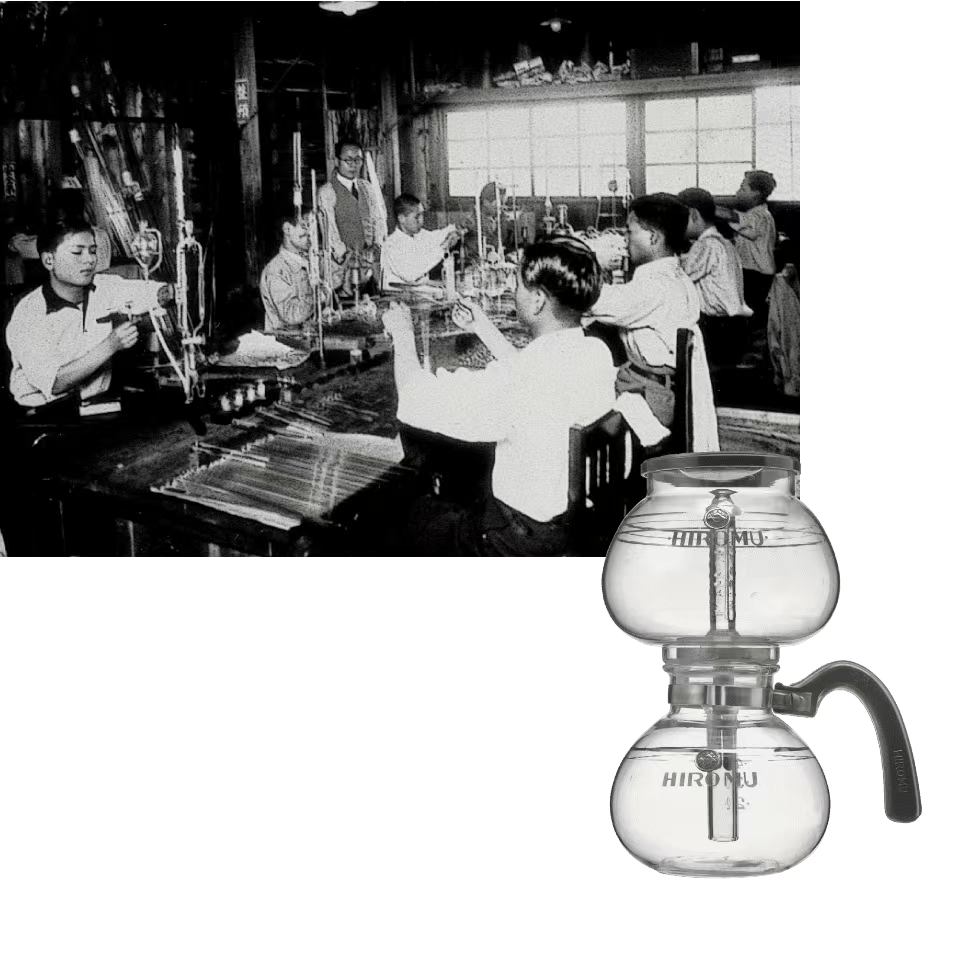
By the 1940s and 1950s, Hario officially entered the household equipment market, and its first coffee extraction device was the siphon. At that time, slow immersion extraction dominated the market. Devices such as the Melitta dripper, cloth filters, and siphon pots either had holes that were too small or involved lengthy and cumbersome operating steps, and they generally took a long time. Therefore, Hario came up with the idea of creating a brewing filter that was easy to operate and had a faster flow rate.
In 1964, Hario's designer tried using a laboratory funnel to extract coffee, but it was not put into commercial use at the time, and the related records that remain are quite limited. Entering the 1980s, Hario developed a paper drip filter that looked somewhat similar to the Chemex, with a funnel-shaped filter in the upper part connected to a container in the lower part, and it was officially put into production starting in 1980.
In 2004, Hario redesigned the prototype of the V60 to make its shape closer to what we are familiar with today, and named it according to its unique 60° cone angle and "V" shape. It was officially launched for sale one year later. On HARIO's official website, the early prototype of this dripper can still be found: a conical ceramic dripper with 12 toothpicks neatly glued to its inner wall to simulate guiding grooves.
The extraction principle of the V60 dripper
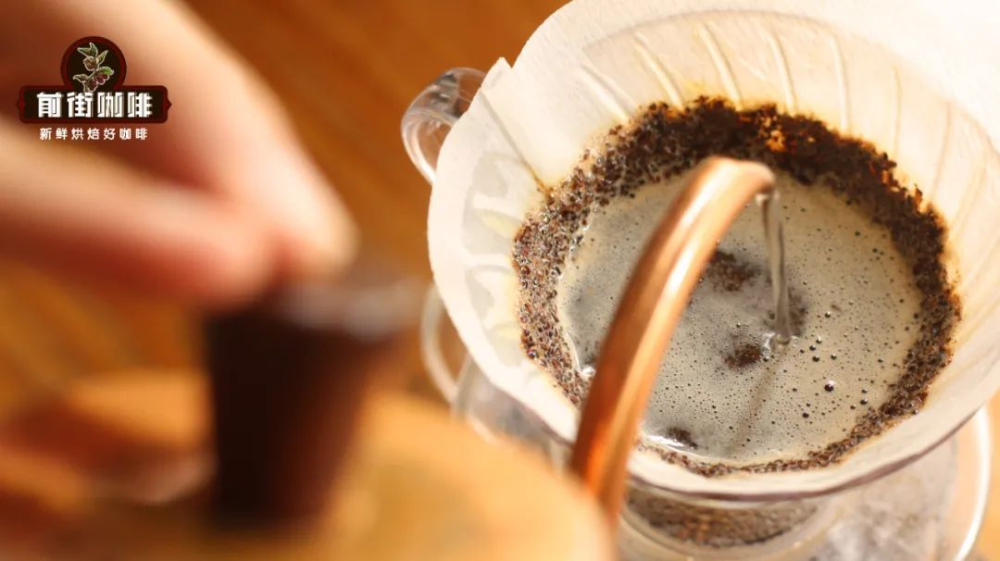
1. Compared with other drippers, the conical shape and 60° angle mean that when brewing with a V60, the water flow must first converge to the center point before dripping into the server, so the contact area between water and coffee grounds is extended, allowing aromas and flavors to be released more fully.
2. Its iconic large outlet hole allows water to flow unobstructed. To a large extent, the flow rate depends on the brewer's flow control and is directly reflected in the coffee's flavor. If the pouring is too large or too rapid, the flavor compounds have not yet been extracted from the coffee before extraction ends, and the resulting coffee will most likely taste thin and lack complexity. Therefore, if you want to make a cup of coffee with excellent flavor and prominent sweetness using a V60, you really need to repeatedly practice and adjust your pouring technique to better present a balance of acidity and sweetness.
3. The spiral raised ribs on the side wall vary in length and run through the entire dripper. First, they prevent the filter paper from fully adhering to the dripper, leaving enough space for air circulation and maximizing the coffee particles' need to absorb water and expand; second, the spiral groove design causes the downward-flowing water to press against the coffee bed, bringing a richer sense of layering, while also lengthening the water flow path and compensating for possible under-extraction caused by the large outlet hole.
What made everyone start paying attention to the V60 dripper?
Before the millennium, medium-dark roasting was the mainstream in the coffee market, and brewing flavors also leaned toward expressions such as richness, body, high sweetness, and a sweet aftertaste, as well as the caramelized flavors brought by dark roasting, such as chocolate, maple syrup, nuts, and vanilla. With the rise of the third wave of coffee, people began to pursue flavors of origin, such as Ethiopian white florals and Kenyan berry acidity. The roasting direction shifted from dark to light, and flavor appreciation also shifted from rich sweetness to delicate acidity and aroma.
Before the V60 came out, slow extraction methods that leaned toward immersion gave coffee an overall rounded, thick, balanced, and sweet character, but they struggled to bring out the floral and fruity aromas and light acidity of light-roasted beans. For example, slow drippers such as Melitta and KONO focused on a full-bodied profile. Front Street Blue Mountain No. 1 and Front Street PWN Golden Mandheling were the most popular specialty coffee beans of that era;
while the V60's fast extraction characteristics happen to allow coffee to show more three-dimensional aromas and acidity, enabling delicate flavors such as floral notes, fruity acidity, clean sweetness, and tea-like aromas to be fully expressed. For example, Front Street Fruit Ding Ding with the classic Yirgacheffe flavor, Front Street Butterfly with Geisha flavor, and Front Street Mozart with raisin characteristics are all very suitable for brewing with the V60 dripper.
All are V60s, so which material is better for brewing coffee?
At present, V60 drippers on the market come in a wide variety of materials. In addition to the resin version that Front Street especially favors, there are also different versions such as ceramic, glass, copper, and stainless steel. The material not only affects the dripper's appearance and weight, but its thermal conductivity during brewing can also bring subtle extraction differences. However, the structural design of the dripper always remains consistent.
There are several reasons why Front Street is so fond of the resin version of the Hario V60: first, the resin material can effectively block heat loss; second, in standardized industrial mass production, resin material is the easiest to shape and has the smallest error; moreover, who doesn't like a dripper that won't break when dropped?
The above content is compiled by CoffeeHunters, a coffee news website.


