







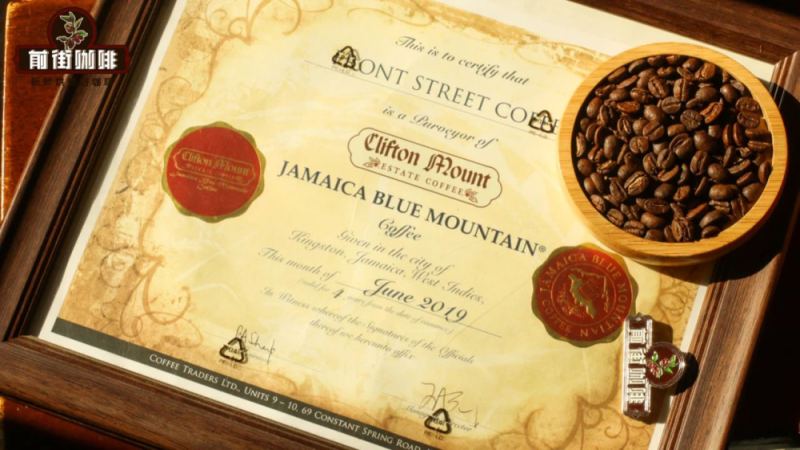
What Coffee-to-Water Ratio Suits Blue Mountain Coffee?
For Front Street Jamaican Blue Mountain brewed in a Kono dripper, the working ratio is roughly 1:15, with water around 88-90C, a medium-fine grind, and a slow, steady pour. Blue Mountain is a washed Typica variety, so the goal is to draw out its layered sweetness without flattening the delicate acidity that defines the cup.
Jamaican Blue Mountain is graded by screen size and defect count, and only coffee grown above 666 meters in the Blue Mountain region qualifies for the name. The top grade requires large screen size, a low defect rate, and about 13 percent moisture. The same beans also work as a Blue Mountain SOE, Americano, or Latte.
Jamaican Blue Mountain coffee, as a classic representative of specialty coffee, has always drawn attention for its brewing methods. This article takes Front Street Jamaican Blue Mountain coffee as an example to detail the grade classification and processing techniques of this washed Typica variety, and shares the complete parameters for hand-brewing with the Kono dripper—including coffee dose, water temperature, grind size, coffee-to-water ratio, and pouring technique. In addition, it will also introduce the extraction recipe for Blue Mountain SOE, as well as the preparation details for Blue Mountain Americano and Blue Mountain Latte, helping coffee enthusiasts recreate the full, layered sweetness of Blue Mountain coffee at home.
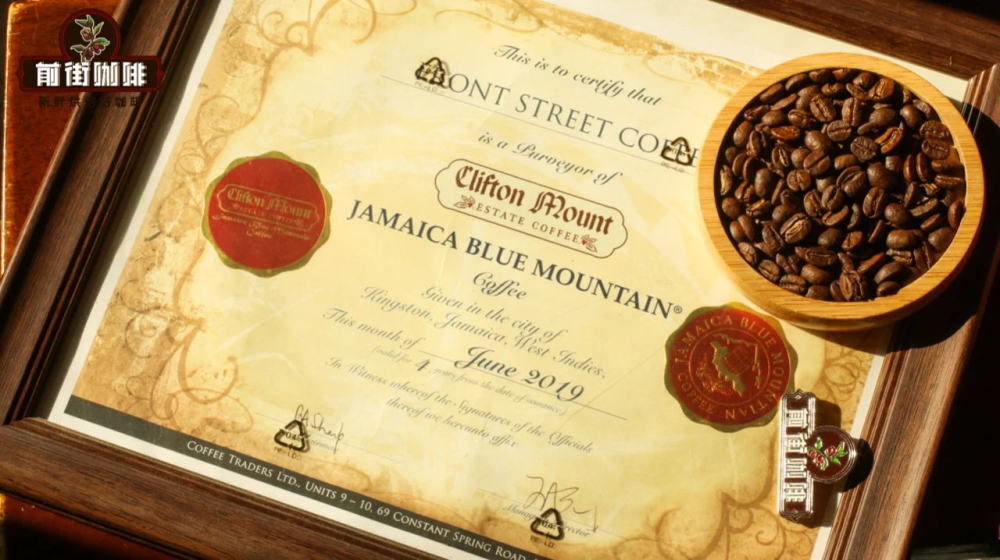
Front Street Jamaican Blue Mountain Coffee Brewing Method Sharing Front Street Jamaican Blue Mountain coffee uses only the washed processing method, removing the skin, pulp, and mucilage from the coffee beans through a combination of washing and fermentation. The specific process is: first remove the skin and pulp, let the beans ferment for 12 to 18 hours, then move the fermented coffee beans into a water tank, continuously running fresh water through them, and using the friction between the beans as well as the scouring force of the water flow to wash the coffee beans until their surface is smooth and clean.
Jamaican Blue Mountain coffee is divided into four grades by quality, from highest to lowest: NO.1, NO.2, NO.3, and PB, with PB referring to peaberry. According to the standards set by the CIB, only coffee grown above 666 meters in elevation can be called [Jamaican Blue Mountain Coffee]; coffee produced below 666 meters in Jamaica's Blue Mountain region is called [Jamaican High Mountain Coffee]; and coffee grown outside the Blue Mountain range is collectively called [Jamaican Coffee].
Front Street Jamaican Blue Mountain coffee belongs to the highest grade, NO.1, also known as Front Street Blue Mountain No. 1. Its green beans must meet several basic criteria: beans of 17 mesh or larger, a defect rate within 3%, a moisture content of about 13%, etc., and the variety is Typica. Kono Dripper Brewing: Coffee brewed with a Kalita wedge-shaped dripper, cake cup, or Kono dripper tends to have a fairly full-bodied mouthfeel and better flavor persistence. During extraction, the Kono dripper relies on the air pressure generated by the siphon effect to complete extraction, so the coffee grounds can reach a relatively high saturation level in the early stage of water absorption. This is an immersion-style extraction, so the concentration increases accordingly, and soluble substances are also carried out by the water flow. If you prefer a heavy-bodied Blue Mountain, this dripper will be quite suitable. Prepare 15 grams of coffee grounds, control the water temperature at 88 degrees, choose BG 6M for the grind size (based on the Chinese standard No. 20 sieve, with a passing rate of 75%), and use a water-to-coffee ratio of approximately 1:15.
Technique: First, bloom with 30 grams of water for 30 seconds, pouring close to the coffee bed surface. For the first pour, stop when the water reaches 120 grams. When the water level drops to between one-third and one-half, begin the second pour and stop when it reaches 225 grams. Keep the brewing time at around 2 minutes 15 seconds. If the time is up but there is still liquid that has not drained, this portion of liquid can be discarded. Blue Mountain SOE In addition to hand brewing, Front Street Blue Mountain No. 1 can also be used to make espresso, namely Blue Mountain SOE. What is the specific method? First, use the correct distribution technique to level the surface of the coffee bed, then tamp, with a pressure of about 25 kg/m2 (we use a calibrated tamper, so the tamping force remains basically consistent). Set the grind size to #1.9, which is an extra-fine level, with a particle size similar to salt. For a single spout, use 13.5 grams of coffee to extract 20 grams of liquid, with an extraction time of 27 seconds; for a double spout, use 20.5 grams of coffee to extract 40 grams of liquid, with an extraction time of 26 seconds (single spout full capacity 14 grams, double spout full capacity 22 grams). Because the beans are relatively fresh, the crema is at a medium level, golden in color, with a rich caramel aroma. When tasting, the first thing you notice is a gentle fruit acidity, followed by caramel sweetness gradually emerging, while the finish shows chocolate and brown sugar flavors.
Adding hot water to Blue Mountain espresso to make [Americano] greatly enhances the sweetness, making it lighter and reducing the fruit acidity, leaving a highly concentrated dark chocolate taste in the mouth. [Blue Mountain Latte]: We use Vitasoy fresh milk, steam it to 60 degrees, allow the milk foam and milk to fully blend evenly, then mix with espresso. It presents a hazelnut-like sweetness, with a very obvious creamy chocolate flavor, while at the same time not masking the fresh sweetness of the milk itself. The overall taste is striking.
The above content is compiled by CoffeeHunters, a coffee news website.


