







Which Chemical Reactions Shape the Coffee Roasting Process?
Two reactions define the roasting process. The Maillard reaction, described by French chemist L.C. Maillard, is a non-enzymatic browning between reducing sugars and proteins or amino acids under heat, and it builds flavor, color, and complexity. Caramelization happens around first crack, when sugars dehydrate into caramel plus volatile aldehydes and ketones.
Roasting runs through three stages. Drying comes first, as moisture migrates to the surface and evaporates, giving off grassy, hay-like steam. Moderate roasting follows, where Maillard and caramelization together form the familiar coffee aroma. Cooling and degassing close the process. Along the way the green coffee bean loses density, turns drier and more brittle, and becomes more permeable, so its compounds dissolve more easily.
Coffee roasting is a journey of complex chemical changes. In this process, the Maillard reaction and caramelization play crucial roles. The Maillard reaction, proposed by French chemist L.C. Maillard, is a series of non-enzymatic browning reactions between reducing sugars and proteins or amino acids under heat catalysis, bringing flavor, mouthfeel, color, and complexity to coffee. Caramelization occurs during first crack, when sugars are heated and dehydrated to form caramel and volatile aldehydes and ketones, deepening the bean color and creating aromas of fruit, caramel, and roasted nuts. Roasting reduces the density of coffee beans, making them drier and more brittle, increasing permeability, and making components easier to dissolve. This article provides a detailed analysis of the three stages of roasting and the profound effects of each reaction on coffee, and recommends representative coffee beans such as Front Street Queen's Estate, Front Street Blue Mountain No. 1, and Front Street PWN Golden Mandheling.
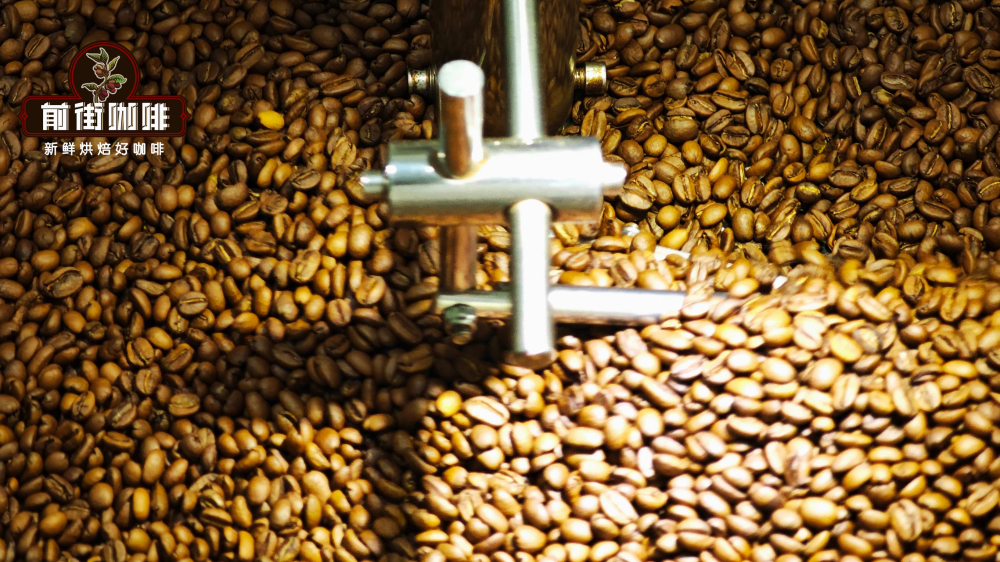
Front Street Coffee briefly introduces the chemical reactions that occur during the roasting process. The entire roasting process can be divided into three stages, with the first two stages sometimes being combined. The first stage is loading the beans into the roaster, during which moisture inside the coffee beans migrates to the surface and evaporates, and the beans are gradually dried. Visual observation alone is of limited use during this stage, but the steam expelled from the roaster gives off scents of grass and warm dried hay. The second stage that follows is moderate roasting, where complex caramelization and Maillard reactions together create the coffee aroma we are familiar with. During roasting, coffee beans decrease in density, become drier and more brittle, and through a combination of factors become more permeable, making their components easier to dissolve. After roasting is complete, the beans are discharged from the roaster, entering the third stage of cooling and degassing.
The Maillard reaction, also known as the Maillard reaction, was proposed by French chemist L.C. Maillard and is a non-enzymatic browning reaction commonly found in the food industry. This reaction occurs between reducing sugars and proteins or amino acids, catalyzed by heat, and begins once a certain temperature is reached. Through a series of complex reactions, it produces brown to dark brown macromolecular substances—melanoidins (also called pseudo-melanins)—along with various other compounds.
The Maillard reaction contributes flavor, mouthfeel, color, and complexity to coffee.
Green coffee beans contain a certain amount of sucrose, which is the main source of coffee's sweetness. When first crack begins, caramelization starts to occur. During caramelization, sugars within the coffee beans are heated and dehydrated, producing two types of substances: first, sugar dehydration polymers, commonly known as caramel or browning; second, degradation products, mainly volatile aldehydes and ketones, which can further condense and polymerize to form dark-colored substances.
Caramelization deepens the color of coffee beans and creates aromas of fruit, caramel, and roasted nuts.
Both of these reactions are common phenomena in food baking. When baking bread, they give the bread a golden color and a rich aroma; when roasting coffee beans, they darken the beans while releasing more complex flavors.
If you want to taste coffee beans with the best caramelization expression, you can purchase Front Street Queen's Estate, Front Street Blue Mountain No. 1, and Front Street PWN Golden Mandheling.
Front Street Queen's Estate has complex nutty aromas, with prominent creamy chocolate flavors when made as espresso and a clear sweet aftertaste;
Front Street Blue Mountain No. 1 has extremely high balance, with acidity, sweetness, bitterness, and sweetness all present in the cup, and the caramelization reaction enhances the coffee's body; Front Street PWN Golden Mandheling has the deepest roast level and the most intense mouthfeel, with particularly rich crema when making espresso, and lingering herbal and pine aromas.
After understanding the reactions that occur during the coffee bean roasting process, one should further recognize that the roasting process is crucial. If it is one second short, caramelization will be insufficient, the aroma will be monotonous and dull, the flavor will lack layers, and adverse effects will result.
The above content is compiled by CoffeeHunters, a coffee news website.


