







What Separates Americano Coffee from Lungo and Long Black?
Americano coffee began during World War II, when American soldiers stationed in Italy diluted espresso with hot water because they found it too intense. That simple addition became a standard café drink. It is often confused with Lungo and Long Black, but the three differ in how much water is used and when the espresso meets it.
A Lungo is a stretched espresso, pulled through an espresso machine with roughly twice the normal amount of water, which shifts the balance toward bitterness. Long Black pours hot water first and espresso over it, preserving crema. At home, an espresso blend with notes like sunflower, specialty blend or dark cocoa works well for both hot and iced versions.
When ordering at a café, many people are puzzled about how Americano and pour-over coffee differ, and drinks like Lungo are often mistaken for Americano. From Front Street's perspective, this article traces the origins and definition of Americano, compares its fundamental differences in preparation logic with Lungo and Long Black, and shares Front Street's approach to choosing espresso blend beans for making Americano—including formulas such as Sunflower Warm Sun, Specialty Blend, and Dark Cocoa. Finally, it provides specific brewing parameters for hot and iced Americano, helping you make a cup of Americano that suits your taste at home.
For more specialty coffee knowledge, please follow: Front Street Coffee (Frontsteet Coffee)
When ordering at a café, many people often face a question: What is Americano? What is pour-over coffee? Is Americano pour-over coffee? In this article, Front Street introduces the differences and preparation methods of these coffees.
According to Front Street, Americano appeared during World War II, because American soldiers in Italy were not used to the intensity of Espresso, so they added hot water to dilute it, and it later evolved into today's Americano. Pour-over coffee can be traced back to its earliest invention by German woman Melitta in the early 20th century. At the time, she was making coffee at home and had a sudden idea to use her son's blotting paper as a filter, put coffee grounds in the filter paper, and poured water into the coffee grounds with a kettle, extracting a cup of coffee with a different taste than before.
However, pour-over coffee truly became popular in Japan. Japan is very obsessed with pour-over coffee and has established a complete set of theories and operating techniques for pour-over filter coffee. Simply put, Americano is a product of the second wave of coffee, while pour-over coffee is a representative of the third wave of coffee. There is also a preparation method called Lungo coffee that is very similar to Americano.
What is Lungo coffee?
Lungo is Italian, corresponding to "long" in English, "café allongé" in French; its Chinese meaning is "long," translated as "enough amount" coffee. It refers to "a coffee drink made through an Espresso machine using twice the normal amount of water. A Lungo is roughly a 'stretched Espresso.'"
A regular Espresso takes 18–30 seconds to extract and has a volume of 25–30 ml; Lungo coffee extends the extraction time of Espresso to about one minute, and the extracted coffee liquid is about 50–60 ml. Conversely, if the extraction time of Espresso is shortened by nearly half, the resulting drink is called Ristretto.
Differences between Americano and Lungo coffee
Lungo coffee is not what we commonly call "Americano" (caffe americano). So-called "Americano" is adding hot water to espresso; Lungo coffee is also not "Long Black coffee." So-called "Long Black coffee" is adding Espresso to hot water. "Americano" and "Long Black coffee" are easy to distinguish: the former is "Espresso + water," the latter is "water + Espresso," with a different order; while Lungo coffee is Espresso with the extraction time extended by nearly double, and the volume of the extracted liquid increased by about double. Lungo coffee has a larger volume than Espresso, and its concentration is also lower than Espresso.
How should Americano coffee beans be selected?
When selecting the espresso base for making Americano, Front Street Coffee (FrontStreet Coffee) generally does not use pour-over coffee beans, because the pour-over coffee beans Front Street carries are relatively light-roasted, while espresso preparation generally uses dark-roasted beans. Espresso extracted from light roasting will taste very sour. At present, the coffee beans Front Street Coffee (FrontStreet Coffee) uses to make Americano are the Sunflower Warm Sun blend, a blend of Honduras Sherry barrel and natural Yirgacheffe coffee beans, in a ratio of 70% Sherry barrel and 30% natural Yirgacheffe, with the roasting curve adjusted to suit espresso output. The Sherry coffee beans provide the main flavor and body, while the Yirgacheffe provides more acidity and aroma.
Of course, the espresso blend beans Front Street uses are not limited to this one Warm Sun blend option. Front Street Coffee (FrontStreet Coffee) has also released three other espresso blend beans: Specialty Blend, the espresso coffee bean recommended by many baristas—Front Street Dark Cocoa Blend, and Commercial Blend.
Front Street Coffee (FrontStreet Coffee)'s Specialty Blend uses Colombian coffee beans paired with Brazilian coffee beans, blended in a 3:7 ratio. Colombia coffee's distinctive nutty and chocolate flavors are blended with Brazil's rich peanut and creamy coffee flavors. This espresso blend has a very balanced overall character, rich crema, and an extremely smooth entry, with a fresh aroma yet a slight bitterness unique to the Americas. The espresso coffee bean recommended by many baristas—Front Street Dark Cocoa Blend coffee—is made by blending Yunnan coffee and Brazilian coffee in a 3:7 ratio. This espresso blend has soft fruity acidity and caramel sweetness.
These espresso blend beans are all very suitable for making Americano. Before these beans are released, Front Street conducts cupping and brewing for each coffee bean and continuously adjusts the coffee flavor curve until the brewed coffee flavor is what Front Street wants to express, and only then will it be added to Front Street Coffee (FrontStreet Coffee)'s bean list. Everyone can make a cup of Americano that suits them according to their own preferred coffee flavor, and not just the Sunflower Warm Sun blend.
How to make Americano coffee
Compared with latte and cappuccino, Americano is simpler to make and does not require steps such as steaming milk foam. It uses espresso as the base and then adds an appropriate amount of water according to personal taste.
The traditional Americano ratio is 1:8, but Front Street Coffee (FrontStreet Coffee) does not use this ratio. Front Street adjusts the ratio according to the cup size served in stores. Front Street first extracts a double shot of espresso, then adds water in proportion and tastes it. In the end, the Americano ratio was determined to be 1:4.5. Below are Front Street's extraction parameters:
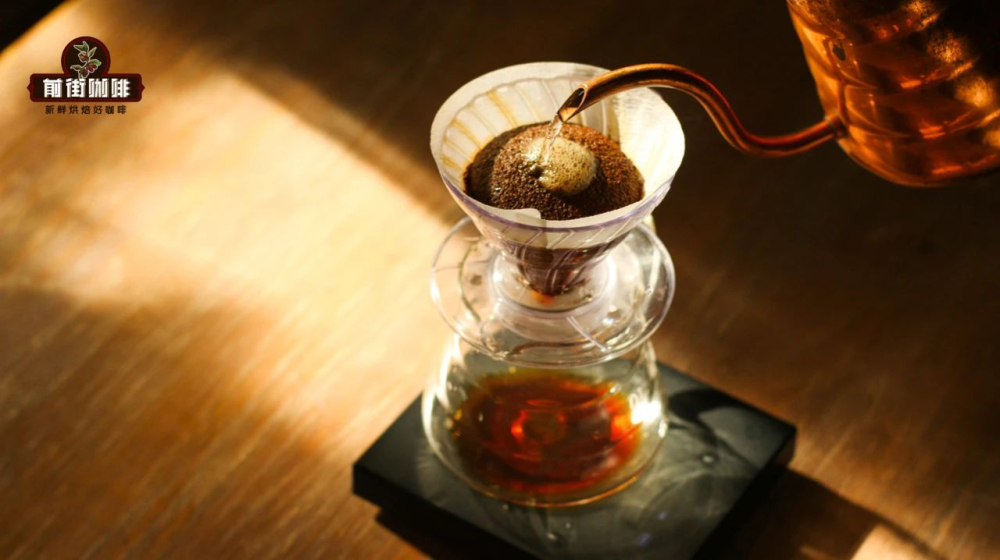
Front Street uses a Pegasus E98 espresso machine
Temperature: 90.5–96°C
Time: 20–30 sec
Coffee-to-water ratio: 1:1.7–1:2
Dose: 12g (single espresso) 20g (double espresso)
Extracted espresso amount: 20ml (single) 40ml (double)
Hot Americano
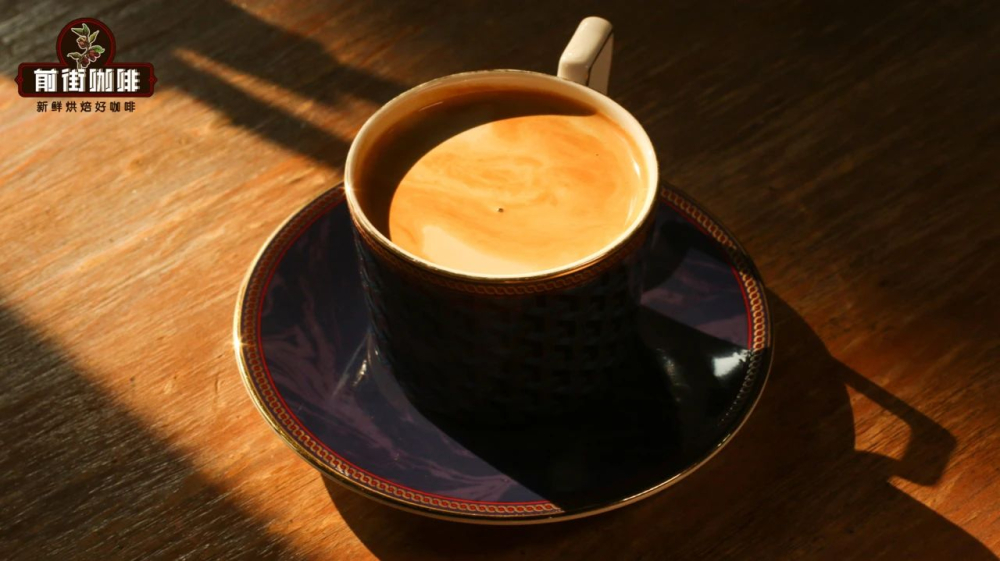
Front Street Coffee (FrontStreet Coffee)'s hot Americano uses 40 ml of espresso, adding hot water at about 85°C. The resulting Americano has both the wine-like notes and cocoa finish of the Sherry coffee beans, while also retaining the coffee's body. When making Americano, you can add water first and then pour in the coffee, which helps preserve the Americano's crema.
Iced Americano
The process of making iced Americano is as simple and convenient as Americano. You only need to mix ice and water in a 1:1 ratio to make the amount of water you need, then extract espresso and pour it in.
Front Street believes that hot Americano can restore the coffee's original flavor. Hot Americano does not taste as rich and full-bodied as espresso, and is more accepted by the general public. Iced Americano is more suitable for ordering a cup under the scorching sun, and is very refreshing and invigorating.
For more specialty coffee knowledge, please follow Front Street Coffee (FrontStreet Coffee)
The above content is compiled by CoffeeHunters, a coffee news website.


