








Is cold brew coffee a delicious coffee?
Cold brew and iced pour-over differ mainly in extraction temperature. Ice drip coffee is a low-temperature slow extraction, while pour-over is a high-temperature fast extraction, so the two methods produce clearly different flavor and mouthfeel. Hot water releases oils, acids, and sugars quickly, giving bright acidity and sweetness, while cold water draws out fewer bitter compounds over a longer time.
Temperature changes how fast coffee oils, acids, and sugars break down. High-temperature extraction quickly releases tannic acid as pyrogallic acid, bringing sourness, sweetness, and bitterness, but can also pull woody fiber notes if pushed too far. Brewing with Sherry coffee beans from the Honduras Moka Estate shows these differences clearly, and a balanced ratio and grind help reach a delicious coffee.
What exactly is the difference between ice drip coffee and iced pour-over coffee? This is a question Front Street gets asked every day. Simply put, ice drip is low-temperature slow extraction, while pour-over is high-temperature fast extraction, and the two present completely different characteristics in flavor and mouthfeel. This article will start with the influence of temperature on extraction, analyze in detail the respective characteristics of high-temperature extraction and low-temperature extraction, then use the Sherry coffee beans from the Honduras Moka Estate selected by Front Street Coffee as a sample to demonstrate the complete brewing process of ice drip coffee and iced pour-over coffee, including key technical parameters such as coffee-to-water ratio, grind size, and pouring technique, and compare the final flavor differences presented by the two methods, helping coffee lovers find the cup of cold delicious coffee that suits them.

For more specialty coffee knowledge, please follow: Front Street Coffee (Frontsteet Coffee)
What is the difference between ice drip coffee and iced pour-over coffee? Front Street is asked this question almost every day. Simply put, ice drip coffee is low-temperature slow extraction, while pour-over coffee is high-temperature fast extraction. The coffee flavor and mouthfeel handled by the two extraction methods will differ. In this article, Front Street will explain what ice drip coffee is and what iced pour-over coffee is.
How does temperature affect coffee extraction? Temperature affects the decomposition rate of oils, acids, and sugars in coffee. Depending on how quickly this process occurs, the aroma, taste, and texture of the coffee vary greatly. This is also why different extraction methods can produce coffees of different qualities.
Characteristics of high-temperature coffee extraction
The advantage of high-temperature extraction is that it can quickly extract the flavor substances in coffee, causing the tannic acid in the coffee to quickly decompose into pyrogallic acid, producing sourness, sweetness, and bitterness, which is what Front Street often calls the process of releasing coffee flavor. The disadvantage of high-temperature extraction is that it easily causes the coffee flavor to be fully released, and then it begins to release the taste of the coffee bean's woody fiber, which is what we often call off-flavors, woody notes, and other unpleasant tastes.
Characteristics of low-temperature coffee extraction Ice drip uses near-zero-degree ice water for extraction, allowing the flavors in the coffee to volatilize less under low-temperature conditions and preserving the coffee aroma in the coffee liquid as much as possible. When it is drunk, as the temperature of the coffee liquid rises, the aroma contained in the coffee liquid suddenly bursts out, allowing the coffee drinker to feel a strong aroma at the back root of the tongue in the oral cavity. This sudden aroma burst creates a great sense of happiness. The disadvantage is that the production time is relatively long, and the drip-filtered ice drip coffee cannot be drunk immediately. It must be placed in the refrigerator and left still for more than 8 hours so that the flavor molecules extracted at low temperature can be fully released.
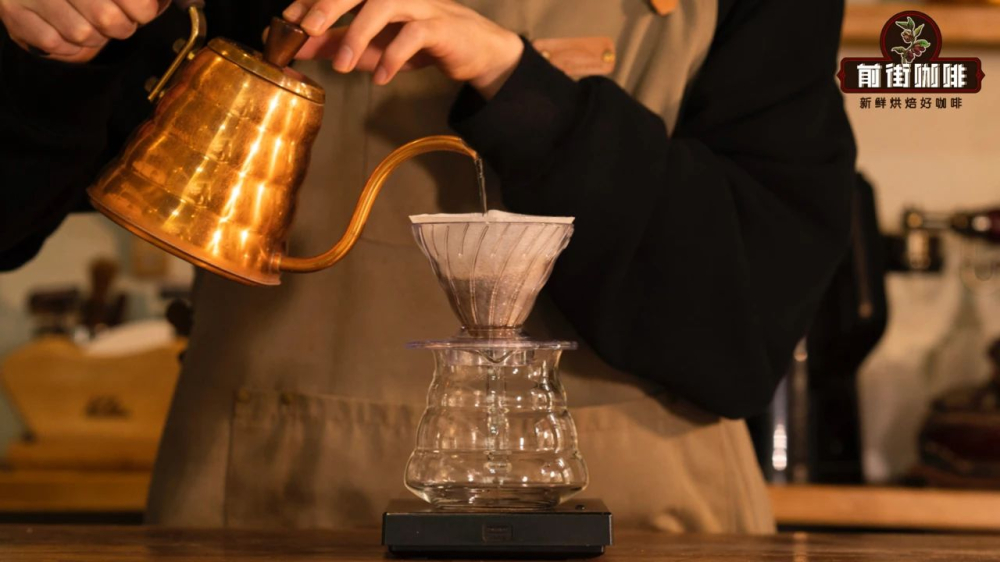
What is the difference in coffee flavor and mouthfeel between adding ice cubes after high-temperature extraction and extracting with ice water? This time, Front Street uses Sherry coffee beans from the Honduras Moka Estate to make ice drip and iced pour-over for comparison.
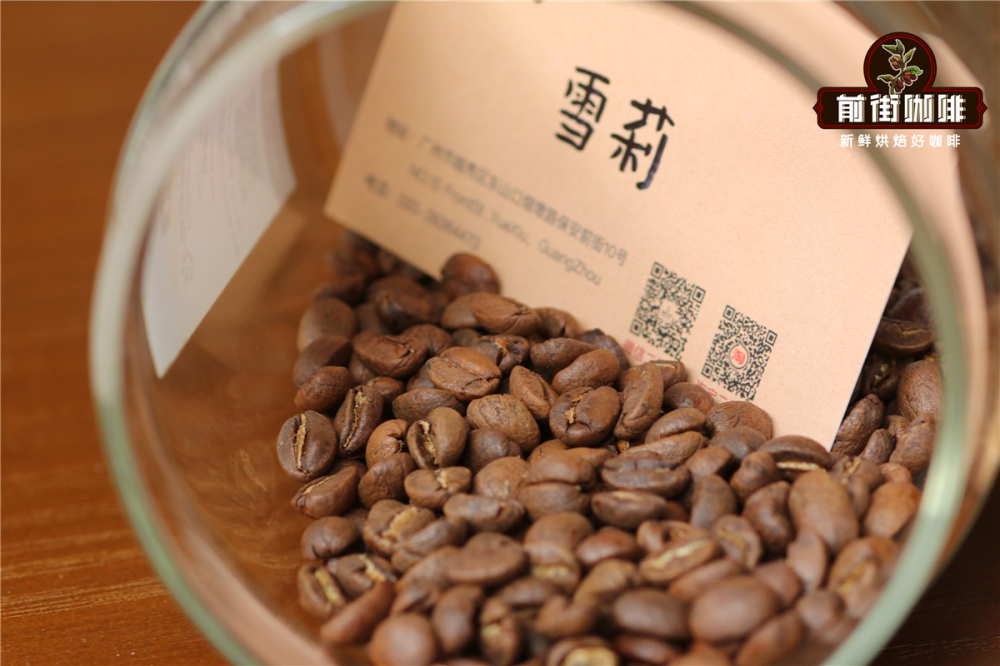
Front Street Coffee (FrontStreet Coffee) — Honduras Sherry Coffee Beans Estate: Honduras Moka Estate Altitude: 1500-1700m Varieties: Caturra, Catuai, Pacas Processing method: Fine washed + whiskey barrel fermentation
How does Front Street Coffee (FrontStreet Coffee) make ice drip coffee? What is the coffee-to-water ratio for ice drip coffee? 1. The water-to-coffee ratio used by Front Street Coffee (FrontStreet Coffee) for ice drip is 1:10, that is, 60 grams of coffee powder extracts 600 milliliters of coffee liquid. The coffee extracted this way is relatively strong and needs to be diluted before drinking.
2. Front Street uses a TIamo ice drip pot. First, place a round filter paper at the bottom of the powder cup on the second layer, wet it with water so it adheres to the cup wall, add 60g of ground coffee powder (coarse sugar size), then shake it flat to level the coffee surface. You can also use the weight of the tamper itself to lightly press the powder layer so that the surface is flat.
3. Remember to place a piece of filter paper on the coffee surface. This is because the tension of the filter paper allows water to distribute evenly. Without filter paper, long-term dripping will create a pit in the coffee bed.
4. Use ice water for "pre-infusion." This is actually similar to the blooming process in pour-over. During this process, we need to pay attention to whether the coffee surface becomes concave during the pre-infusion pouring. Excessive concavity can easily lead to uneven extraction. Therefore, during pre-infusion, water should be poured in small amounts multiple times to maintain the evenness of the coffee surface. This can improve extraction effectiveness and consistency of the final product.
5. Put a 1:1 ice-water mixture into the water container, and adjust the valve to about 7 drops every 10 seconds.
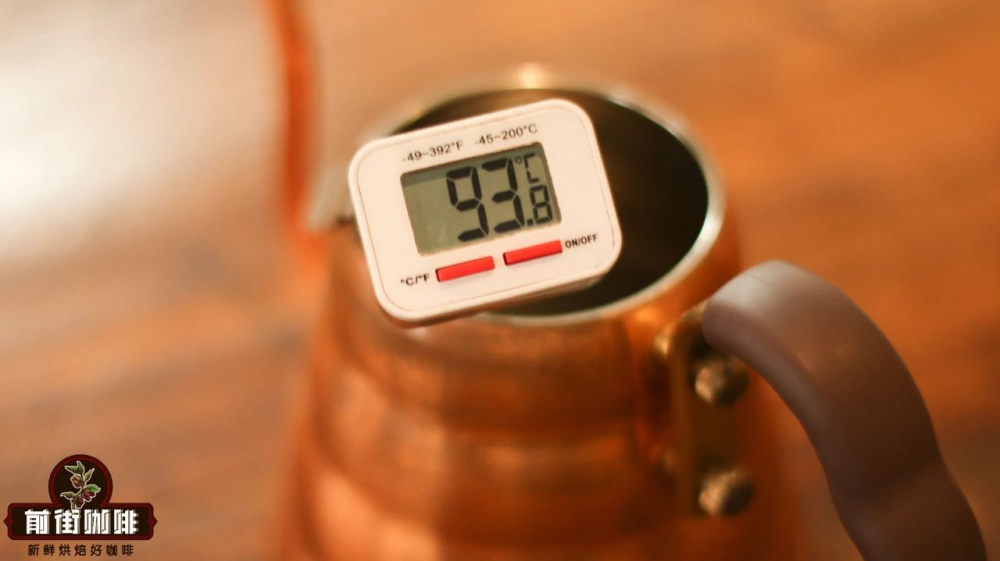
6. After making it, pour the coffee liquid into a sealed glass bottle and then place it in the refrigerator to ferment overnight, allowing the coffee flavors to blend together for a better mouthfeel and easier drinking.
Why should it be placed in the refrigerator to ferment overnight?
The flavor molecules of coffee just extracted at low temperature have not yet been fully released. It needs to rest in the refrigerator for more than 8 hours to let the flavor molecules “wake up.” During the resting time, a large amount of carbon dioxide will be produced in the container. The pressure of the carbon dioxide helps the aromatic substances and oils integrate, bringing all the aromatic substances inside the coffee beans into a state where they are easily extracted.
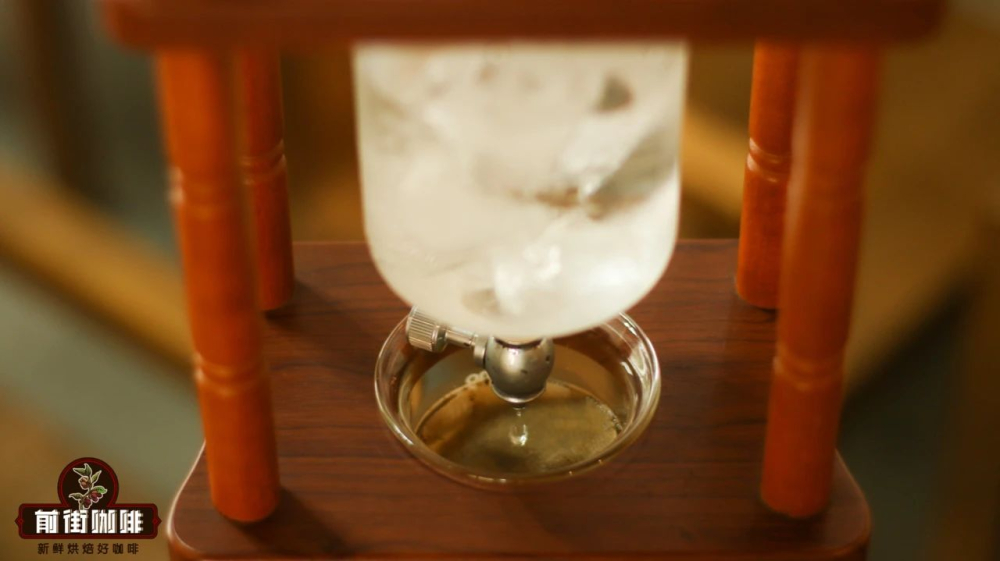
How long can ice drip coffee be kept in the refrigerator? No matter how clean the container you store the coffee in is, Front Street only recommends keeping it for 72 hours here, counting from when extraction is completed and it is poured into the container. After all, there will still be quite a few bacteria in the refrigerator, and low-temperature storage can only slow the speed of bacterial reproduction. Generally, ice drip coffee exceeding 72 hours will deteriorate. Flavor description of Sherry ice drip coffee: Rich whiskey aroma, vanilla-cream-like sweetness, and a smooth mouthfeel, followed by a light liqueur chocolate aftertaste. How does Front Street Coffee (FrontStreet Coffee) brew iced pour-over coffee? What is the coffee-to-water ratio for iced pour-over coffee? Dripper: Hario V60 Coffee dose: 15g Coffee-to-water ratio: 1:10 Grind size: medium-fine grind (80% passing rate on a No. 20 standard sieve) Water temperature: 91 degrees Celsius
Preheat the dripper and sharing pot and rinse the filter paper. Pour the coffee powder into the preheated dripper with filter paper, add 30g of hot water to fully wet the coffee bed into a hamburger shape, and wait 30 seconds, then proceed to the second stage of extraction. Pour in circles from the center outward, keeping the flow stable and vertical. When the water column hits the coffee bed, foam will appear. This stage of brewing lets the coffee foam be released, spreading across the entire surface of the coffee bed, with the liquid level rising to the root of the short ribs. Pour up to 90 grams in this stage, with the timer at 50 seconds.
When the water level drops to 1/2 of the coffee bed, proceed to the third stage of pouring. In this stage, also pour from the center outward in an “aroma-seeking” pattern until 150g. The originally dark brown foam turns into pale yellow coffee foam, and the liquid level also returns to the height of the second-stage pour. After the coffee liquid has fully flowed into the lower pot, remove the dripper and end extraction. The time is 1 minute 40 seconds. Take out a second sharing pot, add ice cubes to pre-chill it fully, then pour out the ice cubes in the pot, add 100g of ice cubes again, then shake one pot of coffee liquid evenly and pour it into the second pot with ice cubes and stir. After the ice cubes are fully mixed, taste it.
Flavor of iced pour-over Sherry coffee: In the front section, a rich whiskey aroma; in the middle section, a soft fruit acidity and vanilla-cream smoothness; afterward, a slight astringency and a nutty, cocoa-like aftertaste.
Through this comparison of Sherry coffee beans made as ice drip and iced pour-over coffee, ice drip coffee can bring us an obvious sense of richness while also feeling clean and refreshing, while iced pour-over can quickly extract the substances in the coffee beans, and the layering of the coffee flavor will be better.
For more specialty coffee knowledge, please follow Front Street Coffee (FrontStreet Coffee)
The above content is compiled by CoffeeHunters, a coffee news website.


