







What does hand brew coffee meaning mean for Yirgacheffe?
Yirgacheffe pour-over delivers a bright, tea-like cup with citrus sweet-tart notes and white floral aromas, quite different from heavy dark coffee. A medium-light roast suits the region's delicate character. A common starting recipe uses 15 grams of coffee at a 1:15 coffee-to-water ratio, brewed with a three-pour method that includes a bloom, even water distribution, and controlled timing.
Mastering hand brew coffee meaning starts with the parameters: roast level, grind size, water temperature, and pouring technique all shape the result. Yirgacheffe, named after its town in Ethiopia and once part of Sidamo, uses local heirloom varieties. A washed daily-drinker bean roasted medium-light lets beginners taste the region's citrus, lemon, and berry notes with a pleasant tea-like body.
Yirgacheffe is known for its citrusy sweet-tart flavor, white floral notes, and tea-like body, making it a classic choice for pour-over enthusiasts just getting started. To brew its light, elegant flavors, roast level, grind size, water temperature, and pouring technique are all essential. This article begins with the background of the Yirgacheffe region, explains the reason for medium-light roasting, and shares Front Street Coffee's recommended washed daily-drinker beans along with their brewing recipe. It breaks down in detail the complete process for 15 grams of coffee, a 1:15 coffee-to-water ratio, and a three-pour method, including blooming, water distribution, and timing, helping beginners build a reusable pour-over framework while understanding the extraction logic behind each parameter.
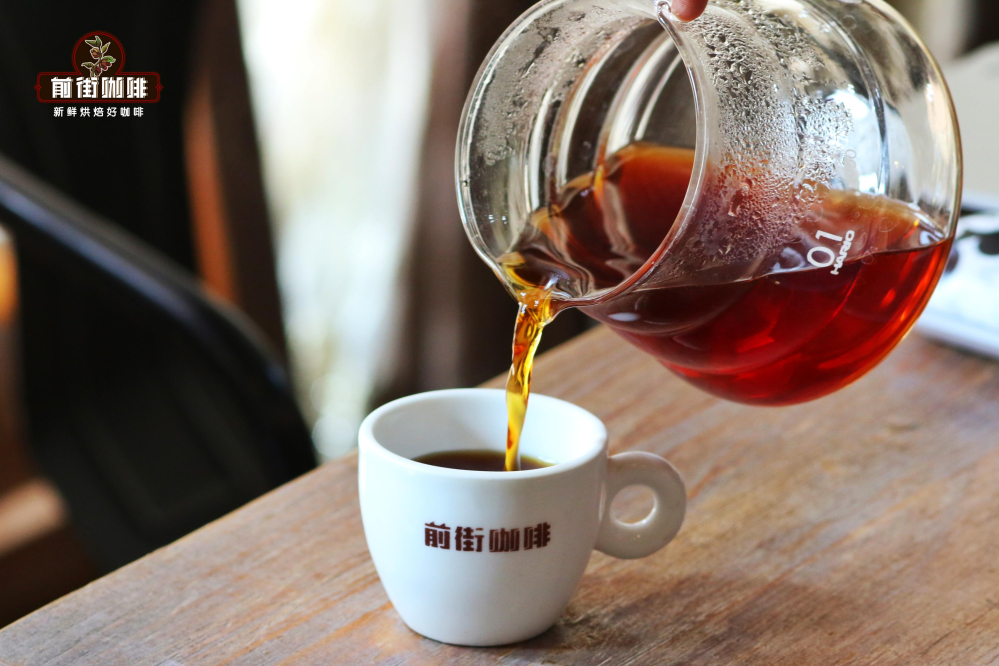
Yirgacheffe brewed as pour-over presents a bright, elegant floral-and-fruity tea-like style, completely different from rich, heavy traditional black coffee. Its clear, uplifting fruit acidity and full white floral notes often leave an unforgettable impression after just one taste. However, to fully reproduce this layered aroma and mouthfeel, there are still some tricks you need to master in the process.
Yirgacheffe coffee is usually given a medium-light roast
The name Yirgacheffe comes from the town of Yirgacheffe, which was originally a sub-region under the Sidamo province of Ethiopia. Because the coffee produced there had a uniquely distinctive flavor, its reputation gradually spread worldwide, and it eventually became independent from Sidamo as a separate region. The Ethiopian government has registered Yirgacheffe, Sidamo, and Harrar as commercial trademarks, so when we speak of Yirgacheffe today, it refers more to a coffee flavor designation.
The so-called Yirgacheffe flavor refers to beautiful citrus, lemon, and berry sweet-tart notes interwoven with intense floral aromas and a pleasant tea-like quality. To present such delicate flavors and mouthfeel, every link matters: the coffee's growing environment, variety, processing method, as well as roasting and brewing.
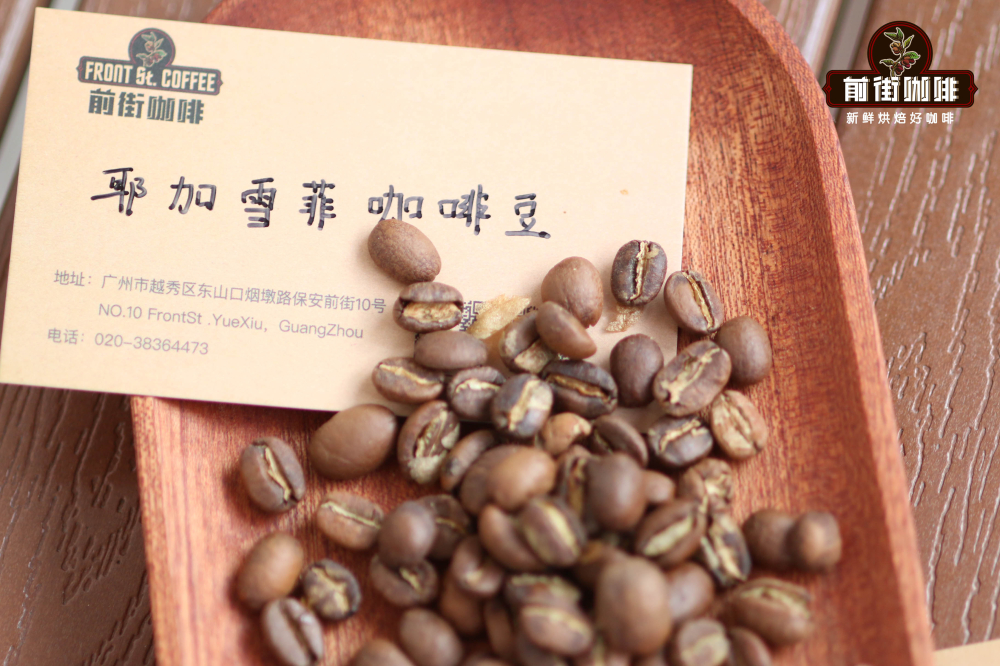
If you have just stepped into the world of coffee, Front Street recommends a washed Yirgacheffe daily-drinker bean. It uses local Ethiopian heirloom varieties and is roasted to a medium-light level. Front Street's daily-drinker series lets friends who are new to coffee experience the region's basic flavors at an affordable price, and the small-package design also avoids waste from not being able to finish a larger bag. Of course, as a Yirgacheffe lover, Front Street's options do not stop at just this one. For everyday pour-over Yirgacheffe at Front Street's stores, there are three choices in total; the other two are the washed Gedeb Cooperative coffee and the natural Red Cherry coffee, both highly popular Yirgacheffes.
Yirgacheffe coffee beans are on the smaller side. If a dark roast is used, they are prone to uneven heating or even scorching, so roasters mostly prefer medium-light roasting. Unexpectedly, this led to the discovery that a lighter roast allows Yirgacheffe to show uplifting acidity and highly recognizable fruit flavors, and it gradually became a popular trend in the coffee market. Front Street wants to present the classic Yirgacheffe taste, so all three Yirgacheffes use a medium-light roast.
Preparation before pour-over
Before brewing, we need to gather the following equipment: a pour-over kettle, dripper, server, grinder, filter paper, electronic scale, thermometer, and a bag of Yirgacheffe coffee beans at its peak flavor period. Here, Front Street uses the washed Yirgacheffe daily-drinker bean for the demonstration.
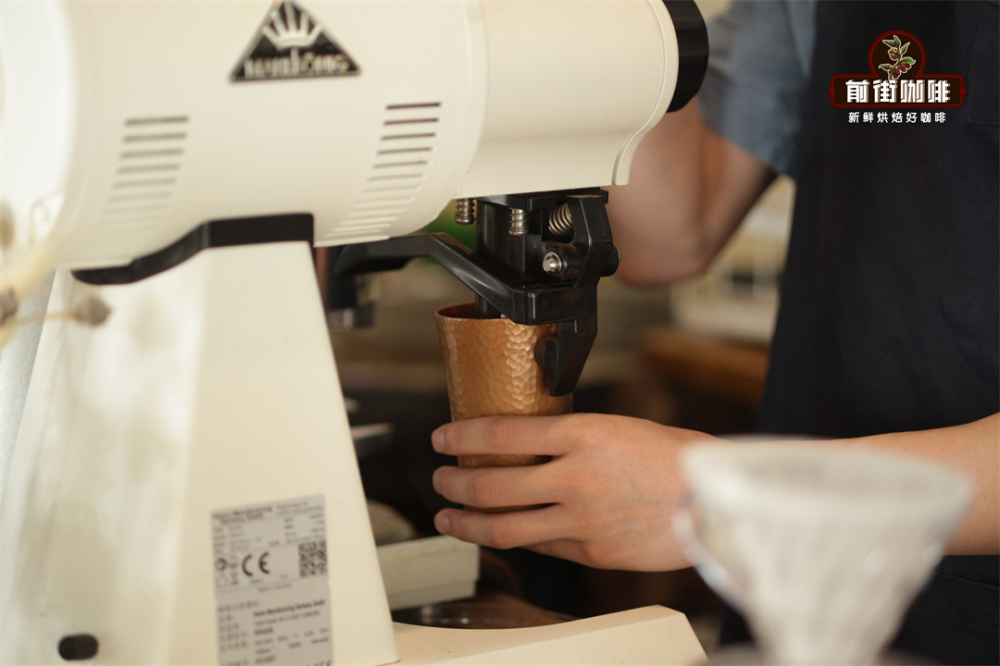
The grinder plays a key role in pour-over; the coarseness and uniformity of the coffee grounds directly affect the taste of the final cup. If the grounds are too coarse, under-extraction can easily make the coffee bland; if too fine, over-extraction can easily bring bitterness. When adjusting the grind size, Front Street uses a tool: the Chinese No. 20 0.85mm standard sieve. For medium-light roasted beans, Front Street consistently uses a 75–80% pass-through rate; for medium-dark roasted beans, 70–75%. This Yirgacheffe is a high-altitude bean with a medium-light roast, and Front Street wants to extract richer aromatic compounds, so it chooses a coarseness with an 80% pass-through rate on the No. 20 standard sieve, with the store's EK43s grinder set to 10.
Water temperature plays a role similar to grind size: the higher the water temperature, the higher the extraction efficiency, the easier it is to release various flavor compounds, and the higher the concentration becomes. If water close to boiling is used for brewing, it is easy to extract unpleasant bitter compounds, so when brewing medium-dark roasted coffee beans, Front Street uses different brewing parameters than for light-roasted beans.
Medium-dark roasted beans undergo more caramelization reactions than light-roasted beans, so they more easily release bitter, heavy large-molecule compounds. To avoid extracting too many off-flavors, Front Street appropriately lowers the water temperature, so medium-dark roasted coffee beans are recommended at 87–90°C, while light-roasted coffee needs a higher water temperature to bring out the aroma, so 91–93°C is used.
For daily service, Front Street Coffee chooses the Hario V60 and KONO drippers; the V60 is mainly responsible for lighter-roasted coffee beans, while the KONO handles darker-roasted coffee beans.
Here the Front Street barista uses a resin V60 dripper to extract the Yirgacheffe. The V60 dripper body has spiral ribs connecting the top and bottom and a large central hole, which can speed up the flow of water downward; the spiral-shaped vent grooves extend the water path and increase the contact time between the coffee grounds and hot water. Each stream of water converges along the grooves toward the center point of the dripper, so the coffee grounds receive more concentrated pressure, and the brewed coffee has a richer layered feel.
Pour-over technique sharing
Front Street's flavor descriptions for every coffee bean are based on freshly roasted beans. If the coffee beans are stored for more than two months, part of the aroma has likely already been lost, making it difficult to reproduce during brewing. Front Street deeply understands the importance of freshness, so it only ships coffee beans freshly roasted within 5 days, ensuring everyone can enjoy the fullest flavor window upon receipt.
Based on past brewing experience, Front Street recommends that beginners just starting out use a three-pour method. Three-pour extraction helps dissolve flavor compounds more fully during brewing, increases the layers in the mouthfeel, and at the same time avoids over-extraction caused by too long a steeping time.
If using 15 grams of coffee grounds, with a coffee-to-water ratio of 1:15, the total water amount is 225ml. The three pour amounts are: 30ml, 95ml, and 100ml, and the weight shown on the electronic scale is: 30g, 125g, and 225g.
First, place the folded filter paper into the dripper to fit it, and wet it with water so it adheres better to the dripper. Prepare hot water and a thermometer for measuring temperature, and at the same time pour 15 grams of ground coffee into the dripper and tare the electronic scale.
For the first pour, add 30g of water to bloom for 30 seconds. Start timing as you pour, using a small stream of water throughout, pouring from the center point and circling outward, making sure to wet the entire coffee bed.
After 30 seconds, switch to a slightly larger steady stream to pour the second stage of 95g of water, with the aim of raising the entire coffee bed. The water column should be poured vertically and evenly; at this point the timer scale shows 125g, and the pour is finished in about 55 seconds.
When the liquid level drops to the halfway point, begin pouring the third stage of 100 grams with a small stream in a small circle. Try to control the stream so it does not circle too widely, otherwise it is easy to disturb the coffee bed and cause under-extraction. The final total poured water is 225 grams, and the drip completion time is about 2 minutes. After removing the dripper, shake the coffee liquid in the server to even it out and it is ready to taste.
The water amount for each pour is not fixed and unchanging. We can adjust it based on our accumulated pour-over experience and our understanding of the coffee beans. Front Street understands coffee brewing as an experiment based on science. To learn pour-over well, we need to deeply understand the true meaning behind each brewing parameter. Only then is it easier to find a method for experimentation and build a brewing framework that suits ourselves.
The above content is compiled by CoffeeHunters, a coffee news website.


