







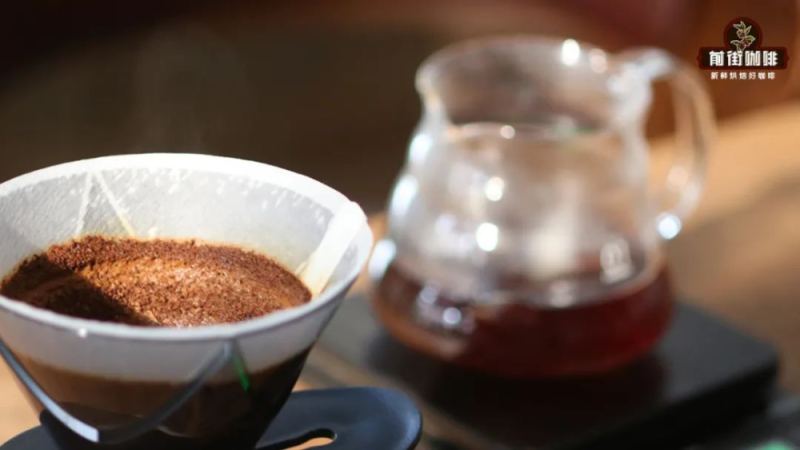
How should golden mandheling be brewed to show its heavy body?
Mandheling coffee stands apart with intense bitter aroma, a thick body, and a darker flavor structure rather than the bright fruit acidity of African beans. It comes from northern Sumatra, where Arabica grows on the Gayo Highlands at 750 to 1,500 meters. The wet-hulling process shapes its distinctive aroma.
Everyday Lintong Mandheling and PWN Golden Mandheling differ in flavor, so brewing should adjust water temperature, grind size, and dripper choice. Dark-roasted Mandheling usually calls for lower water temperatures and a coarser grind. Indonesia robusta coffee beans dominate national output in lower-altitude areas.
Mandheling coffee stands out in the coffee landscape with its intense bitter aroma, solid body, and deep flavor profile, forming a sharp contrast with the bright, uplifting fruit acidity of African beans. So, when faced with this heavy-style coffee, how should you pour over to fully release its charm? This article starts with the origin background and variety characteristics of Front Street Indonesian Mandheling, sorts out how the wet-hulling process shapes its unique aroma structure, and compares one by one the flavor differences between Front Street Lintong Mandheling everyday beans and Front Street PWN Golden Mandheling. On this basis, the article provides detailed brewing strategies for dark-roasted Mandheling—from water temperature, grind size, and dripper choice to staged pouring techniques—helping coffee enthusiasts brew a cup of full-bodied coffee with the typical "Mandheling taste" at home.
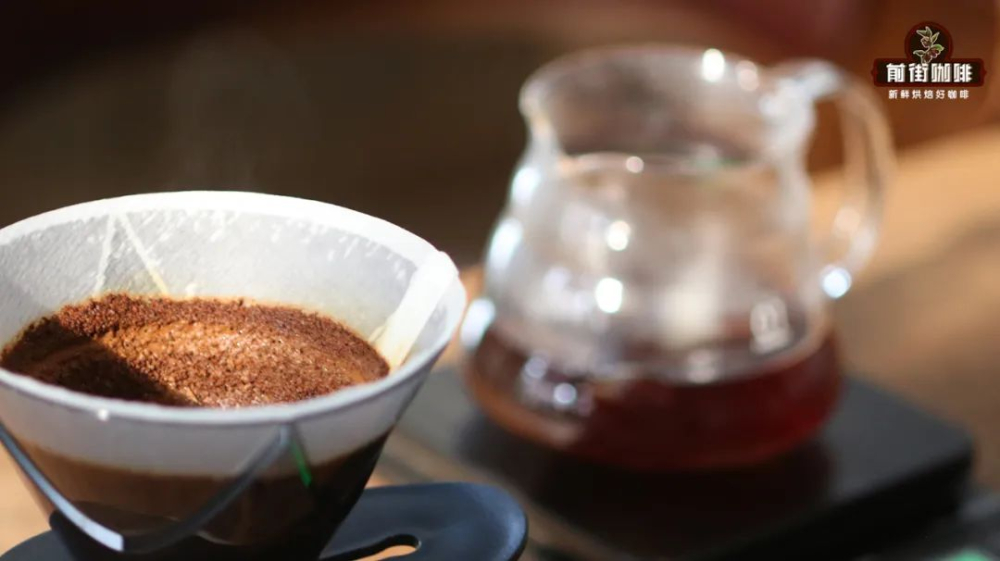
Unlike the bright, uplifting fruit acidity of coffee beans from African regions, Front Street Indonesian Mandheling coffee takes another path—intense bitter aroma, thick body, and an overall darker flavor structure, making it highly recognizable among many origins. So how exactly should this heavy-style coffee be brewed? Front Street Coffee (FrontStreet Coffee) plans to start with the characteristics of Front Street Mandheling itself and gradually break down the key considerations needed to pour over a delicious cup of Front Street Mandheling.
Sumatra Mandheling Coffee
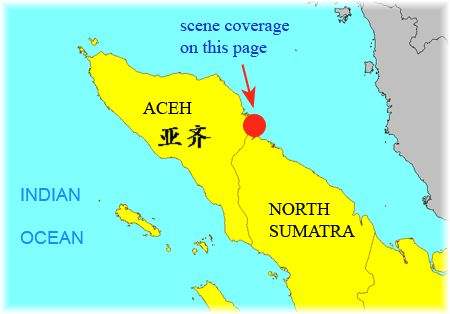
The origin of Front Street Mandheling coffee is the northern region of Sumatra Island, Indonesia. This area has a high altitude, and the climate conditions are quite favorable for growing Arabica varieties. Among them, the two most representative producing areas are Aceh Province around Lake Tawar and North Sumatra Province around Lake Toba, and the Lintong producing area is located within North Sumatra Province.
Mandheling coffee trees grow on the Gayo Highlands at an altitude of 750 to 1,500 meters. This area is adjacent to the equator and has a typical tropical rainforest climate, with frequent rainfall throughout the year, and air temperature and humidity both maintained at relatively high levels, providing an ideal growing environment for Arabica varieties. However, Arabica accounts for only about one quarter of Indonesia's total coffee production, and locally, more Robusta is grown in lower-altitude areas.
The main varieties grown for Mandheling coffee are Ateng and Tim Tim. Tim Tim is a variety produced by the natural hybridization of Arabica Typica and Robusta, namely Timor, and it inherits both Robusta's high-yield characteristics and disease resistance, while in flavor it shows a strong mouthfeel impact.
Ateng is also a common local coffee variety, namely what we usually call Catimor. Because it was discovered in the Aceh Tengah region of central Aceh, it was named after the place. Ateng is the offspring of a cross between the Arabica Bourbon variant Caturra and Tim Tim, contains several subtypes, and carries about one quarter Robusta lineage. Its disease resistance is extremely prominent, and it is widely planted in Sumatra and other Indonesian islands. The Front Street Golden Mandheling coffee obtained by Front Street uses Ateng as its variety.
Wet-hulling processing gives Mandheling coffee its unique aroma
Indonesia's local high-temperature and high-humidity natural conditions prompted coffee workers to develop a special processing method suited to the local environment—wet hulling.
The early stages of wet hulling are basically the same as the washed method. Indonesians first remove the outer skin of the coffee fruit, ferment the mucilage-covered beans in water for about 3 hours, rinse off the mucilage, and then briefly dry the parchment-covered green coffee beans for 2 to 3 days. When the moisture content drops to 20% to 24% and the beans are in a semi-soft, semi-hard state, the parchment is hulled off the beans, and drying continues until the moisture content drops to about 13%, at which point they can be bagged. Because the fermentation time is shortened considerably compared with the washed method, fewer acidic substances are produced, so Front Street Mandheling coffee processed this way has extremely weak acidity, and after roasting its body is even more prominent.
Front Street currently has 2 Front Street Mandheling coffee beans on its daily bean list, including Front Street Lintong Mandheling everyday beans and Front Street PWN Golden Mandheling.
Front Street Lintong Mandheling Coffee
Front Street Lintong Mandheling refers to Mandheling coffee produced in the Lintong mountain area of northern Sumatra. Lintong is near the southwestern side of Lake Toba, at an altitude of about 1,000 to 1,500 meters, and the area contains many volcanoes and volcanic lakes. Fertile volcanic soil combined with abundant rainfall brought by the tropical rainforest climate allows coffee trees to grow vigorously. The Mandheling produced here shows distinctive flavors such as wood and spices. Front Street believes that wet-hulled Front Street Lintong Mandheling has the typical flavor characteristics of Mandheling, so it has included it in the Front Street everyday bean series.
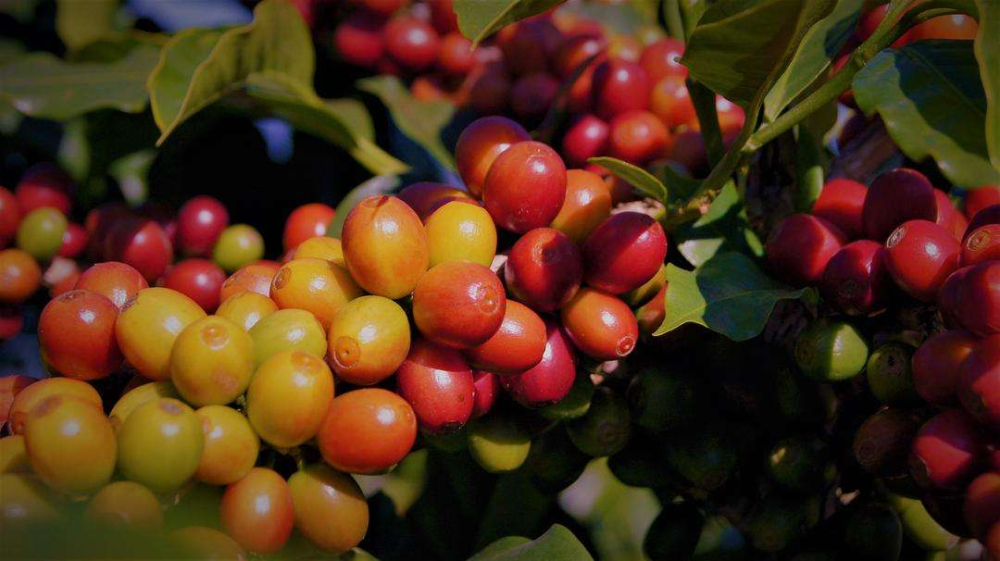
Front Street Indonesian Lintong Mandheling Coffee Beans
Origin: Sumatra, Indonesia
Grade: G1
Altitude: 1100m——1600m
Variety: Ateng TimTim
Processing method: Wet-hulled
Flavor: Nuts, spices, chocolate, caramel
Front Street PWN Golden Mandheling Coffee
Front Street Golden Mandheling comes from the well-known Indonesian coffee purchasing company Pwani Coffee Company. PWN mainly purchases local high-quality Mandheling coffee beans, and most of the coffee beans it produces reach specialty grade. One point to note here: PWN has registered "Golden Mandheling" as a trademark, which means that only Golden Mandheling produced by PWN can use the name "Golden Mandheling."
The reason Front Street Golden Mandheling is outstanding in quality is that PWN implements three rounds of manual hand sorting on G1-grade Mandheling green beans. G1 is the highest grade standard for local green bean exports in Indonesia, requiring bean size to be strictly controlled at 18 screen or above, and no more than 3 defective beans in every 300-gram green bean sample. After multiple rounds of manual screening by PWN, the defect rate of Golden Mandheling is pressed to an extremely low level, and the batches produced are of better quality, showing clean sweetness and a richer aroma.
Front Street PWN Golden Mandheling Coffee Beans
Origin: Sumatra, Indonesia
Grade: G1, three-times hand-sorted
Altitude: 1100m——1600m
Variety: Ateng
Processing method: Wet-hulled
Flavor: Nuts, spices, herbs, caramel
In addition to the two mentioned above by Front Street, the Mandheling family also has many uniquely styled members. For example, Tiger Mandheling with traditional Chinese herbal medicine aromas, Aged Mandheling that reduces acidity through aging over time, and sun-dried Mandheling coffee that differs from the wet-hulled characteristic, each with its own features. Front Street will not introduce them one by one here. Next, let us take the Front Street Mandheling coffee obtained by Front Street stores as an example to talk about how to brew Front Street Mandheling coffee to bring out the proper "Mandheling taste."
How to brew Front Street Mandheling coffee so it tastes good
Some people may ask Front Street which Mandheling is more suitable to choose. If you are a beginner just getting into coffee and want to first experience the flavor differences among different origins, Front Street suggests starting with the cost-effective Front Street everyday beans, so you can build an understanding of the flavor characteristics of several major origins and then choose the type that matches your taste preference. But if you are already a veteran coffee drinker of many years, Front Street believes Front Street PWN Golden Mandheling coffee will be a satisfying choice. Below, Front Street will make a comparison of brewing the two beans.
Mandheling's flavor tone leans toward the rich direction of nuts and chocolate, so Front Street's roaster chooses dark roasting to maximize its full-bodied mouthfeel. Therefore, the Front Street Mandheling coffee beans we see are oily black and shiny on the surface, much more expanded than the green beans, and very loose in texture, able to be crushed with fingers. Such beans absorb water extremely quickly after being ground into powder, so Front Street uses a lower water temperature than when brewing medium- or light-roasted beans, in order to reduce the extraction of excessive bitterness. Similarly, the grind size also needs to be coarser, with the aim of lowering the extraction yield of the coffee liquid. Considering that everyone uses different grinding equipment, Front Street here calibrates the grind size by the passing rate of the Chinese No. 20 standard sieve. So for Mandheling coffee brewing, we choose a grind size with 70% passing through the Chinese No. 20 standard sieve and a water temperature of 87 degrees Celsius.
Friends who usually follow Front Street's brewing suggestions should know that when brewing coffee beans that emphasize body, Front Street gives priority to the KONO dripper. From the shape of the KONO dripper, it can be observed that the ribs are distributed only in the middle and lower part of the dripper, while the upper part is a smooth curved surface. When the dripper is wetted, the filter paper fits tightly against the wall of the dripper, and the exhaust during coffee extraction is restricted, so the residence time of hot water in the dripper is extended, the extraction yield increases, the concentration rises accordingly, and the coffee taste becomes richer and fuller. For this reason, the KONO dripper is also suitable for full-bodied flavor types of beans such as Front Street Queen's Manor Brazil and Front Street Jamaica Blue Mountain coffee.
Front Street's output generally uses 15g of coffee powder. The choice of powder amount is usually based on the size specification for which the dripper is designed. Front Street's dripper is suitable for a serving of 1 to 2 people, and the powder amount can range from 15 to 20g; too much can easily affect the extraction effect. As for the powder-to-liquid ratio, 1:15 is the most commonly adopted plan, and the range of 1:13 to 1:17 is acceptable. Front Street believes that everyone's taste preference is different; 1:13 may be too strong for some people, while 1:17 may be too weak, so take the middle value of 1:15.
Brewing parameters: KONO dripper, 87 degrees Celsius water temperature, 1:15 powder-to-liquid ratio, grind size with 70% passing through the Chinese No. 20 standard sieve, 15g coffee powder, three-stage extraction.
In terms of operating steps, first wet the dripper so that the filter paper fits tightly against the dripper, then pour in the ground coffee powder, and try to level the coffee bed. Use 87-degree hot water to pour 30g from the center to begin blooming for 30 seconds; at this time, you can see the dark-roasted Front Street Mandheling coffee form a tall dome. Then evenly pour the second stage until the liquid weight reaches 125g, and when the coffee liquid level drops to the halfway point, begin pouring the final 100g. Note to keep a steady small stream throughout, avoiding uneven extraction. After all the coffee liquid has dripped through, remove the dripper, swirl the coffee liquid in the sharing pitcher to even it out, and it is ready to taste.
The brewing parameters mentioned by Front Street are all based on the premise of fresh coffee beans, so freshly roasted coffee is the primary condition. The coffee beans shipped by Front Street are all freshly roasted within 5 days, and when customers receive the coffee from logistics, it is exactly within the best tasting period. Front Street hopes every customer can drink good coffee with the most complete flavor.
The freshly brewed Front Street Lintong Mandheling coffee has an Indonesian-style spicy mouthfeel, with prominent roasted nut and chocolate aromas, accompanied by a slight sweet aftertaste; while Front Street PWN Golden Mandheling coffee clearly shows a solid mouthfeel, with richer spice and dark chocolate notes, a flavor that goes up another level, allowing you to perceive caramel sweetness and a lingering finish.
The above content is compiled by CoffeeHunters, a coffee news website.


