







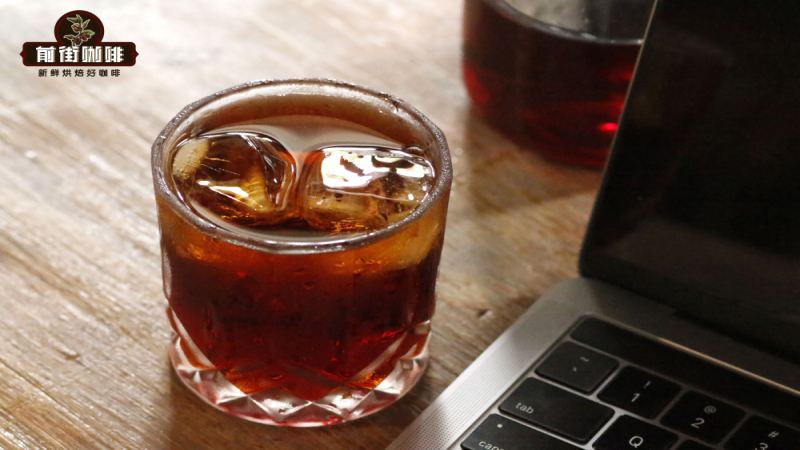
Which Coffee Beans Work Well for Cold Brew at Home?
Cold brew is simple: combine ground coffee with cold water, seal the vessel, refrigerate, and let time do the extraction. Most recipes call for 12 hours, and stretching that to 24 or 48 hours builds a fuller body. Because cold water pulls fewer bitter compounds, the result is smooth and less bitter than hot-brewed coffee served over ice.
Bean choice shapes the cup. Panama Geisha coffee beans bring the fresh floral and citrus-berry notes that stay vivid in cold water, while honeyed profiles round out the finish. Grind coarse, filter thoroughly after steeping, and keep the ratio consistent so each batch is repeatable. Serving over ice lightly dilutes the drink, so brew slightly stronger than a hot cup.
On a scorching summer day, a refreshing glass of iced coffee always perks you up. Cold brew coffee has a low barrier to entry—just mix coffee grounds with cold water, seal it and refrigerate, and leave the rest to time to complete the extraction. This article focuses on cold brew coffee, first tracing its origins and basic principles, then sharing Front Street's hands-on experience with grind size, extraction time, and water, and explaining the differences in flavor expression between cold brew and hot brew. Finally, it recommends Front Street coffee beans suitable for making cold brew according to three styles—fresh floral, citrus-berry, and subtle honeyed charm—to help you easily make a rich, smooth, less bitter iced coffee at home.
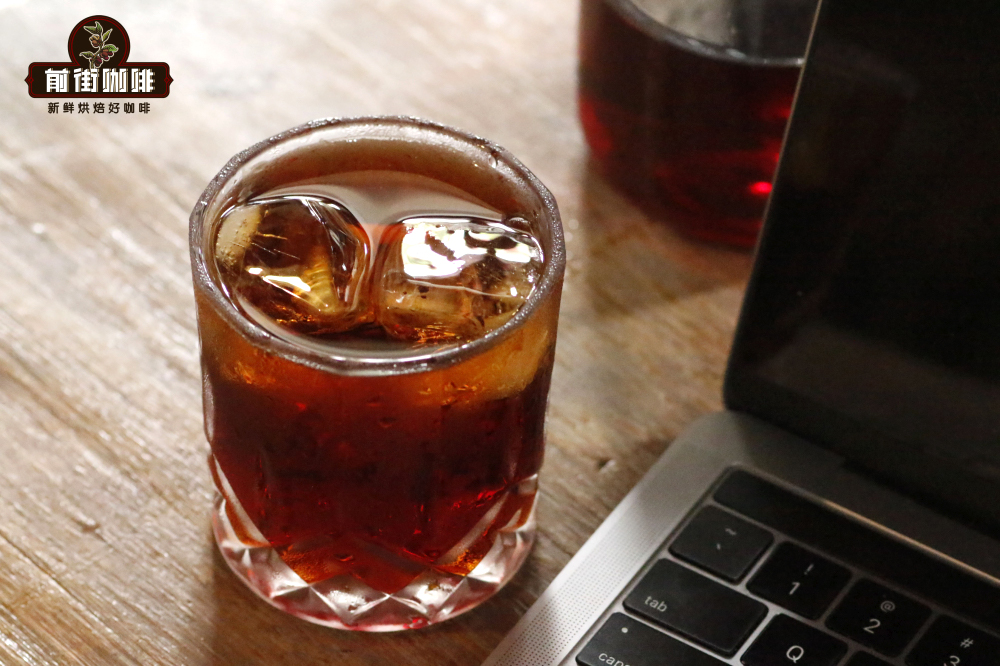
In the scorching heat of summer, a delightful glass of iced coffee often plays a key role in cooling you down and relieving fatigue.
Cold brew coffee is a very easy method to master; whether you're at home or traveling for work, you can make a delicious glass of iced coffee with relative ease. You just need to prepare water and coffee grounds, mix the two, seal and put it in the fridge, and then simply wait for time to complete the extraction.
What exactly is cold brew coffee?
The English name for cold brew coffee is Cold Brew Coffee. The method is to put ground coffee into a suitable vessel, pour in cold water at a certain ratio, and then refrigerate it—usually requiring 12 hours of refrigeration (if you want a fuller body, you can extend the refrigeration time to 24 to 48 hours); afterward, filter out the coffee grounds thoroughly, and the resulting liquid is cold brew coffee.
This coffee that sounds rather time-consuming is actually much less trouble to make than you'd imagine.
You can also think of it this way: soak coffee grounds in cold water, put it in the fridge overnight, filter out the grounds, and you're done. To put it somewhat poetically, what you drink is not just a cup of coffee, but a stretch of time spent waiting patiently.
The origins of cold brew coffee
Many people first heard of cold brew coffee probably through Starbucks. But cold brew coffee was not invented by Starbucks—Starbucks merely brought it to a wider audience, letting more and more people discover and fall in love with this drink.
It is said that cold brew coffee was first created by the Dutch. In the 17th century, sailors at sea could not get hot coffee, so they could only soak coffee grounds in cold water—and found the taste wasn't bad at all. Cold brew coffee was quite popular in Western countries, especially by the mid-19th century, when it gradually spread around the world—from England to Japan, and then to the United States—with all kinds of cold brew concentrates emerging, and it was especially popular in the military.
By the 1960s, Todd Simpson tasted local cold brew coffee while traveling in Peru and became fascinated by it. Soon after, he designed and launched the now world-famous Toddy Cold Brewing System. It was with the Toddy Cold Brewing System that Starbucks brought cold brew coffee to the whole world.
Front Street's method for making cold brew coffee
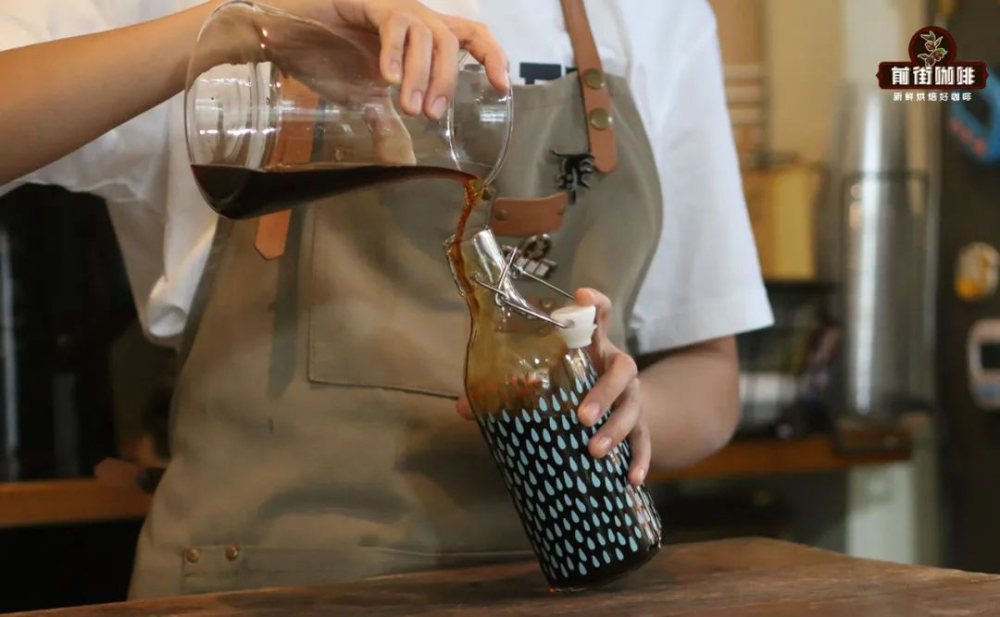
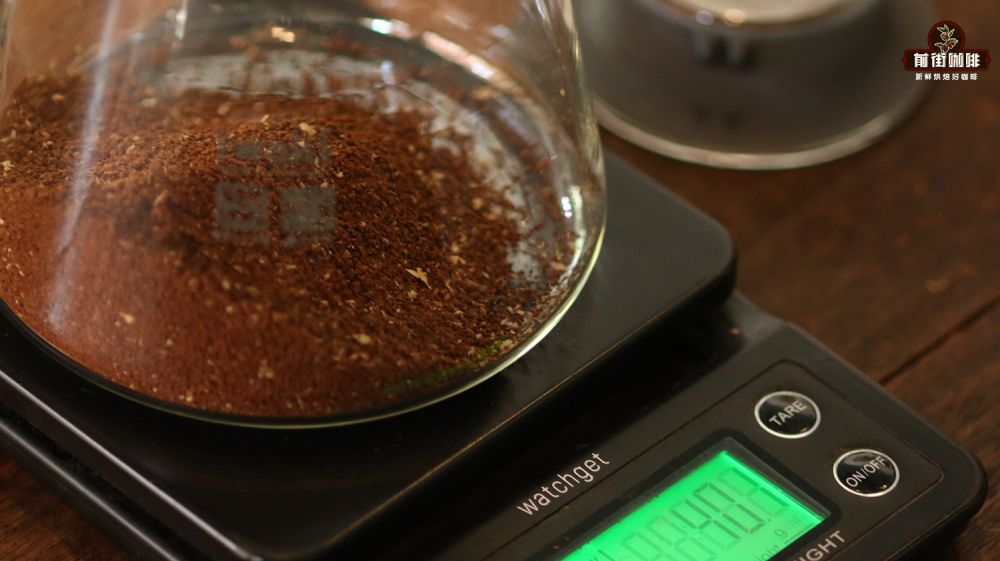
1. Based on 50 grams of coffee grounds, with a grind size measured by an 80% pass rate through a No. 20 standard sieve; 2. Put the coffee grounds into a glass bottle, pour in 400 ml of room-temperature water and 200 grams of hard ice cubes (totaling 600 grams of ice-water mixture); 3. With a coffee-to-water ratio of 1:12, stir the coffee grounds and water evenly with a stirring rod, then seal and refrigerate; 4. Leave it in the fridge for 12 to 24 hours, filter out the coffee grounds with filter paper, pour the resulting coffee liquid into a clean sealed bottle, and let it sit and ferment for another 8 hours before drinking.
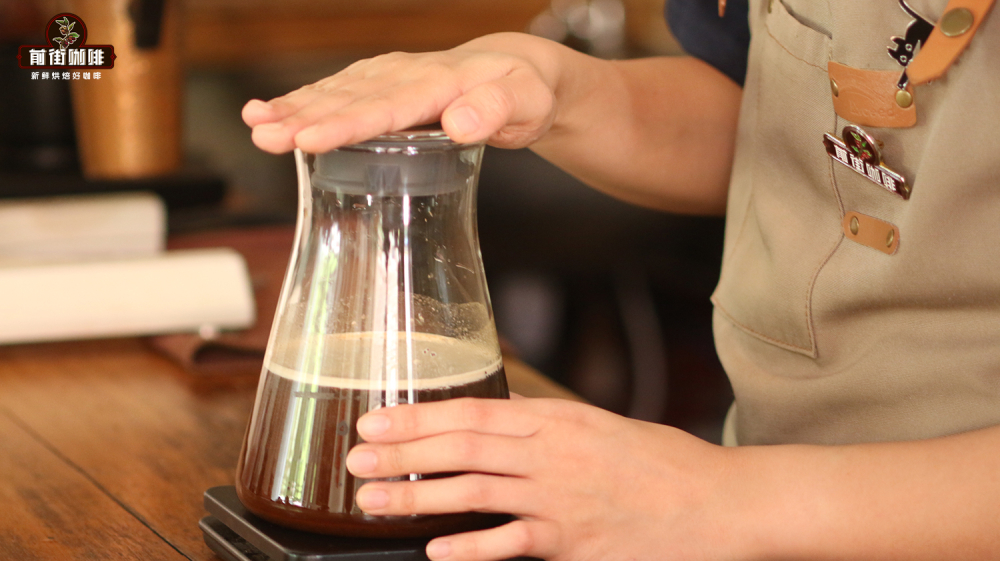
It should be noted that the longer cold brew coffee sits, the more pronounced the fermented taste becomes, so the flavor you taste each day will differ somewhat. Front Street recommends drinking it within 3 to 4 days.
Front Street's cold brew experience sharing
After choosing your coffee beans, there are still some details worth paying attention to. We've summarized three points to keep in mind:
Grind size
When making ice drip coffee and cold brew coffee, Front Street usually selects light-roast coffee beans. The reason is that low-temperature extraction does not easily extract full-bodied flavor substances, so coffee beans with a pronounced sweet-and-sour quality are most suitable. In addition, the grind size used for ice drip coffee and cold brew coffee can be the same as that for pour-over light-roast coffee beans.
The grind size for Front Street's light-roast coffee beans is generally based on an 80% pass rate through a No. 20 standard sieve—that is, after sifting 10 grams of coffee grounds, 8 grams remain. Coffee grounds of this coarseness are close in size to fine granulated sugar. The grinder Front Street uses is an EK43S at setting 9.5.
Extraction time
Front Street has found that cold brew coffee made for about 18 hours is of the best quality; do not exceed 24 hours or more, as beyond that unpleasant bitterness and astringency will appear. Cold brew coffee also has a flavor peak—it is not that the longer it soaks, the better.
Water
Use ice water close to 0°C and refrigerate at 0 to 5°C. To make the coffee taste better and more consistent, please try to use filtered purified water, or simply buy bottled drinking water.
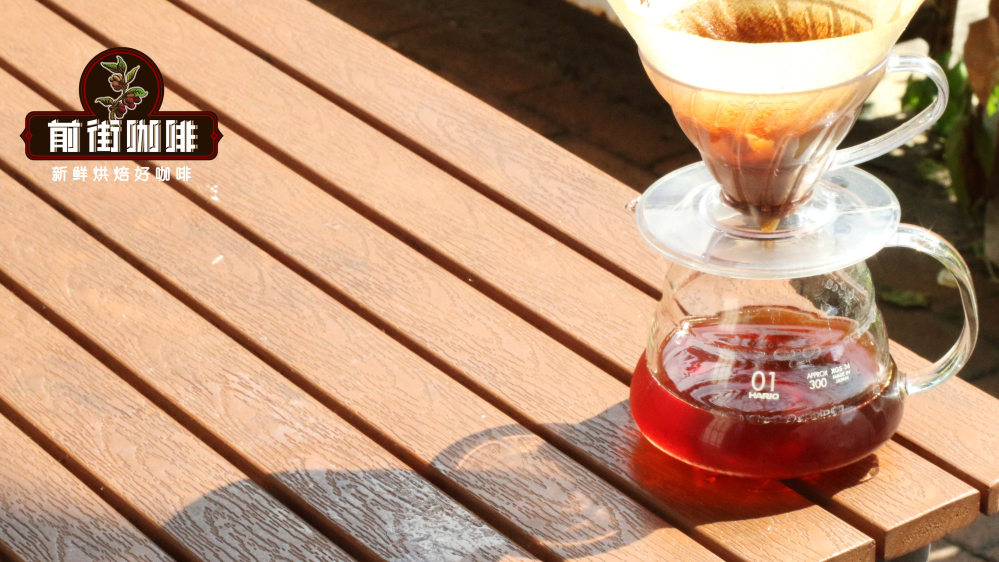
Low temperature and long extraction time are the two major characteristics of cold brew coffee.
Temperature affects the breakdown rate of oils, acids, and sugars in coffee. Low-temperature extraction allows coffee flavors to volatilize less under low-temperature conditions, retaining aroma and sweet-and-sour flavor molecules in the coffee liquid; when the coffee liquid enters the mouth and its temperature rises, the aroma hidden within is suddenly released. The advantage of low-temperature extraction is that it does not easily extract full-bodied flavor substances, nor does it easily over-extract; the disadvantage is that it takes a long time, often requiring more than 6 hours of extraction.
The difference between cold brew coffee and hot brew coffee is that hot brew coffee extracts coffee beans with hot water, at a water temperature between 82 and 95°C, generally for no more than 5 minutes. The fastest Espresso takes only 18 to 30 seconds, while cold brew coffee far exceeds hot brew coffee in terms of time. Compared with hot brew coffee, cold brew coffee has a noticeably stronger flavor, less bitterness, and a smoother mouthfeel, which is why it is so popular.
So what coffee beans are recommended for cold brew coffee?
Since cold brew coffee relies on soaking in cold water to extract the coffee liquid, the coffee grounds themselves degas very poorly, so it is recommended to use coffee beans that are a longer time from the roast date (past the resting period). Generally speaking, making cold brew coffee about 15 to 20 days after the coffee beans are roasted is most suitable.
Below, Front Street recommends several coffee beans with different flavors for you to choose from:
Fresh floral type: Front Street Panama Geisha coffee beans are recommended; if you want good quality, you can choose Front Street Hacienda La Esmeralda Green Label and Blue Label series; if you want better value for money, you can also choose Front Street Panama Butterfly (this washed-process coffee bean contains 70% Geisha), which when used to make cold brew coffee will express clean, fresh floral, citrus, and oolong tea flavors.
Citrus-berry type recommendation: Ethiopian coffee beans have long been renowned for their excellent citrus, berry, and other fruity notes. If you like fruity flavors with high sweetness, you might try making cold brew coffee with Front Street Huakui coffee beans or Front Street Sun-Dried Red Cherry Project coffee beans. The quality of these two coffees is among the best in Ethiopia, and the cold brew coffee they make expresses very sweet berries, rich layers, honey, and other flavors.
Subtle honeyed charm type recommendation: Anaerobic special-process coffee beans have a highly recognizable coffee flavor. If you like sweet floral and fruity aromas and a very distinctive berry-like sweetness, then you can choose Front Street Colombia Sidra & Front Street Costa Rica Mozart coffee beans.
Front Street Colombia Sidra is an anaerobic sun-dried coffee bean from Finca El Diviso, which when used to make cold brew expresses unique flavors such as passion fruit, grape, and dried apricot, with rich layers and extremely high sweetness.
Front Street Mozart is one of the Musician Series from Canet Estate, using anaerobic honey processing, which when used to make cold brew expresses flavors such as raisins, fermented wine aroma, and osmanthus.
Nowadays, cold brew coffee is all the rage! Immersion-style cold brew coffee, because it is simple to make, rich in flavor, and layered, has won the favor of more and more coffee lovers. Come make some for yourself and share it with the friends around you!!
The above content is compiled by CoffeeHunters, a coffee news website.


