







Is hui gan after coffee the same as sweetness?
Hui gan and sweetness are not the same thing. Sweetness is a taste perceived while the coffee is in the mouth, whereas hui gan belongs to the aftertaste, the aroma, taste and mouthfeel that remain after swallowing. Hui gan is a positive aftertaste, often described as a honeyed, tea-like or fruity return rather than plain sugariness.
Aftertaste is judged on both quality and duration. A high-quality espresso can leave chocolate and cocoa notes in the mouth for around ten minutes, while a short aftertaste fades quickly. Negative aftertastes show up as earthy, rubbery or sawdust-like odors, or as dryness and roughness. Beans such as Classic Blend, Brazil Queen's Estate, PWN Golden Mandheling and Boquete Geisha suit drinkers who prefer high sweetness with low acidity and bitterness.
In coffee tasting, "hui gan" (returning sweetness) is often used to describe the pleasant mouthfeel brought by a good cup of coffee. But are hui gan and sweetness actually the same experience? This article starts with the concept of the aftertaste, analyzing the formation mechanism of hui gan, its difference from sweetness, and the factors that affect the persistence of the aftertaste. At the same time, for those who prefer flavors that are high in sweetness and low in acidity and bitterness, we recommend several Front Street Coffee beans, including the Classic Blend, Brazil Queen's Estate, PWN Golden Mandheling, and Boquete Geisha, to help you find the flavor you enjoy in your daily brewing.
"Hui gan sheng jin, ku jin gan lai" (returning sweetness and promoting saliva, sweetness after bitterness ends) is often used to praise good tea, and in the coffee world, the term "hui gan" also appears frequently, usually describing coffee that tastes pleasant. So what kind of taste sensation is hui gan in coffee? Is it the same thing as the sweetness of coffee?
After coffee is swallowed, the aroma, taste, and mouthfeel left in the mouth are collectively called the aftertaste. The aroma, taste, and mouthfeel felt before swallowing belong to the expression of flavor and mouthfeel; these characteristics that only appear after swallowing fall into the category of the aftertaste. Simply put, this is a matter of timing. Once you grasp this timing point, you can clearly distinguish when tasting coffee which belong to flavor and mouthfeel and which belong to the aftertaste.
The aftertaste is generally divided into two categories: positive and negative. High-quality coffee naturally brings a positive aftertaste, such as floral notes, fruity sweetness, tea-like resonance, and honeyed feel, and hui gan is one type of positive aftertaste; negative aftertaste is expressed as odors such as earthiness, rubber, and sawdust, as well as unpleasant mouthfeels such as dryness, roughness, and throat-catching.
When evaluating the aftertaste, besides looking at its quality, you also need to look at how long it lasts. The longer a good flavor stays, the better the aftertaste performance. For example, after finishing an espresso with an excellent aftertaste, the chocolate and cocoa aromas remaining in the mouth can last for ten minutes; while for an espresso with a short aftertaste, even if there is no negative mouthfeel, the aroma will disappear completely within a few seconds. High-quality espresso cannot be made without good beans. For home espresso making, the top choices are Front Street Classic Blend, Front Street Commercial Blend, Front Street Specialty Blend, and Front Street Dark Cocoa Blend.
Next, let us look more closely at the expression of hui gan. When coffee enters the mouth, it carries slight bitterness or astringency, then the sweetness gradually overpowers the bitter (sour) and astringent feeling, and finally ends with sweetness. This is a taste bud experience. The so-called "sweetness after bitterness" is the clear sweet breath that returns after the bitter taste dissipates in the mouth. For example, with Chaoshan oil mandarin, the first bite is a stimulating sourness, the tongue surface is slightly astringent, and then the mouth begins to produce saliva while being filled with a clear, sweet taste.
It can thus be seen that hui gan must be built on a certain degree of bitterness or astringency. It is different from the sweetness directly felt when eating candy. It must go through "bitterness" and be set off by "bitterness" before it can be called "hui gan." But note that there is no necessary connection between the degree of bitterness and the intensity of hui gan. An over-extracted cup of coffee may be very bitter, yet not necessarily have hui gan.
When evaluating dark-roasted coffee beans that mainly feature bitterness, hui gan is a very good indicator. Front Street Brazil Queen's Estate Coffee is recommended. When tasting it, there is first the aroma of roasted peanuts and dark chocolate with bitterness, and immediately afterward the bitterness begins to fade, accompanied by a sweet taste. If it continues for a period without weakening, it can be said to have a good hui gan.
Another coffee, Front Street PWN Golden Mandheling, uses a medium-dark roast and also belongs to the hui gan type of coffee. It has a rich caramel aroma, and on entry there are the special flavors of herbs, spices, and sandalwood. After drinking, the thick sweet taste lingers without dissipating.
Many coffees today use light roasting methods, highlighting floral notes and rich fruity acidity while also lacking a mellow, solid bitterness. The brewed coffee contains mostly small-molecule substances, is strongly hydrophilic and easily volatile, and is rich in organic acids, which promote saliva secretion on entry, thereby accelerating the loss of flavor. This is also why, when drinking light-roasted coffee, the aftertaste experience is often not as strong and lasting as that of dark-roasted coffee.
For this reason, rather than the term "hui gan," baristas tend to describe the aftertaste of this type of floral and fruity coffee by combining its lingering aroma in the mouth and its sweet-and-sour finish.
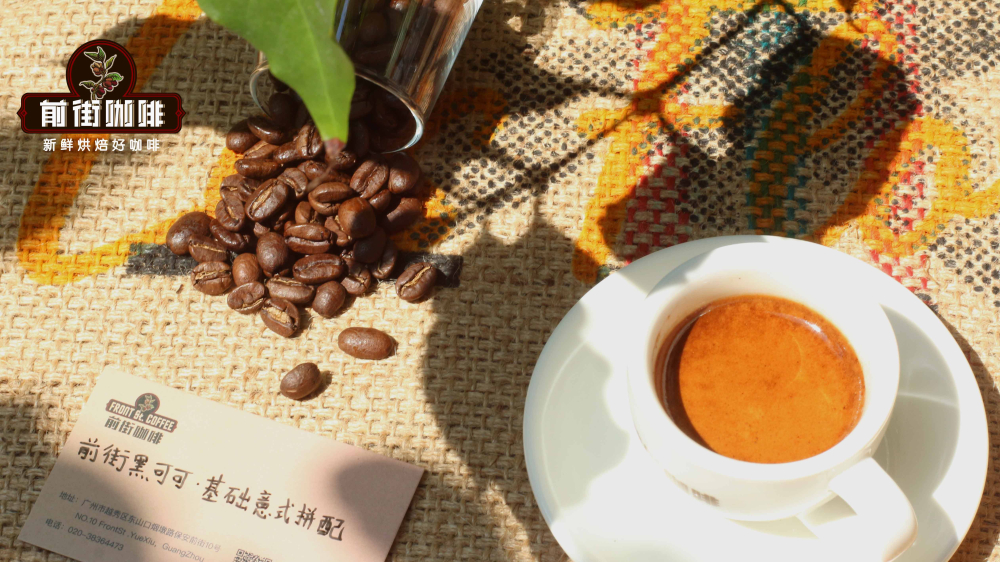
For high-sweetness coffee with natural hui gan, when choosing Front Street Boquete Geisha, its aftertaste is described as the tea resonance of Tieguanyin, the fruity acidity of sugar mandarin, and the sweet fragrance of honey.
Finally, Front Street has noticed a phenomenon: some friends understand the sweetness obtained by drinking water after finishing coffee as hui gan. In fact, this is an oral illusion brought about by sensory contrast under the impact of bitterness. Because sweetness and bitterness are relative concepts, after tasting sucrose you will find that water is somewhat bitter, while after tasting bitter coffee you will feel that water is sweet, and this phenomenon is a contrast effect. Similarly, hui gan can also be understood as an illusion of the mouth under the impact of bitterness.
The above content is compiled by CoffeeHunters, a coffee news website.


