







Why Is Yirgacheffe Coffee Classed as Arabica?
Ethiopia is the birthplace of the coffee plant, and all coffee grown there belongs to the Arabica species. Yirgacheffe, one of the country's most recognizable specialty regions, is known for jasmine florals and citrus acidity. Its trees descend from heirloom native varieties rather than named cultivars.
Ethiopia holds about 99 percent of the world's coffee genetic material, and the Kaffa forest is where it began. Because classification is so difficult and the government protects natural coffee resources, exported beans are often simply labeled heirloom. Varieties such as Typica and Bourbon spread from this land, while washed and natural Yirgacheffe lots differ noticeably in cup.
Yirgacheffe is one of Ethiopia's most iconic specialty coffee regions, renowned worldwide for its jasmine florals and citrus acidity. This article starts from Ethiopia's role as the birthplace of Arabica, tracing the relationship between Heirloom varieties and Arabica coffee beans, introducing the spread of ancient varieties such as Typica and Bourbon, and offering an in-depth look at Yirgacheffe's growing environment, the evolution of processing methods, and the flavor differences between the washed and natural styles. Front Street Coffee also shares Yirgacheffe brewing parameters and freshness recommendations to help coffee lovers gain a more complete understanding of this classic bean's origins and key tasting points.
For more specialty coffee knowledge, please follow our WeChat public account: Front Street Coffee (FrontStreet Coffee)
Ethiopia is the birthplace of the coffee plant, and all coffee produced there belongs to the Arabica species, with a large number of coffee trees still growing in the wild today. As the homeland of Arabica coffee, many of the coffee varieties cultivated around the world today can trace their ancestry back to this land of Ethiopia. Thanks to this special status, Ethiopia has always held a pivotal position in the specialty coffee world. A coffee shop's menu might be able to omit Geisha or Blue Mountain, but coffee beans from Ethiopia are almost indispensable.
"Heirloom" Native Varieties
Ethiopia is a country full of legend, and it is the birthplace of Arabica coffee. The Kaffa forest is where it all began, and Ethiopia is also one of Africa's important coffee-producing countries. On this land, there exist thousands upon thousands of natural coffee varieties, and about 99% of the world's coffee variety genetic material can be found in Ethiopia.
Because of the sheer number of varieties, identification and classification are extremely difficult, and the Ethiopian government, out of consideration for protecting natural coffee resources, is unwilling to disclose specific information about these varieties, so coffee beans exported from Ethiopia are in many cases collectively referred to as "Heirloom" native varieties. Of total coffee production, the Arabica species accounts for 70% to 80% of the share, and its outstanding flavor and aroma make it the highest-quality variety among all native coffee species. Some may have noticed that Ethiopian coffee beans are usually uneven in size, and compared with beans from other producing countries they are also somewhat smaller, with a relatively round shape, very small bean bodies, mostly between screen sizes 14 and 15.
Arabica
Arabica, also called small-seed coffee beans, originated in Ethiopia, and its main growing regions cover South America (except parts of Argentina and Brazil), Central America, Africa (Kenya, Ethiopia, and other places, mainly East African countries), and Asia (Yemen, India, and parts of Papua New Guinea).
Arabica coffee refers to the Arabica coffee tree species, which accounts for about 70% to 80% of world coffee production. Because of its weak resistance to pests and diseases and slow growth rate, its annual output is limited, making it more suitable for cultivation at high altitudes, mostly grown on volcanic slopes or plateaus at elevations of 500 to 1,500 meters or more, among which Arabica coffee beans produced at highlands above 1,500 meters are relatively better in quality. The high-altitude environment slows the ripening of the coffee beans, and slow ripening means the beans are denser and more intense in flavor, which is why Arabica stands out and becomes the highest-grade coffee bean. Through repeated mutation or hybridization, numerous varieties have been derived. It is said that there are more than seventy varieties of Arabica coffee alone.
Arabica can be further subdivided into two thousand to three thousand varieties, all of which are derived from Ethiopia's oldest native varieties, Typica and Bourbon, after they spread to South America or Asia and mutated. They are mainly planted in Central and South American countries such as Brazil and Colombia; Central America's Tico and Sidamo; Sumatra Typica in Indonesia; and Jamaica Blue Mountain also belong to this category.
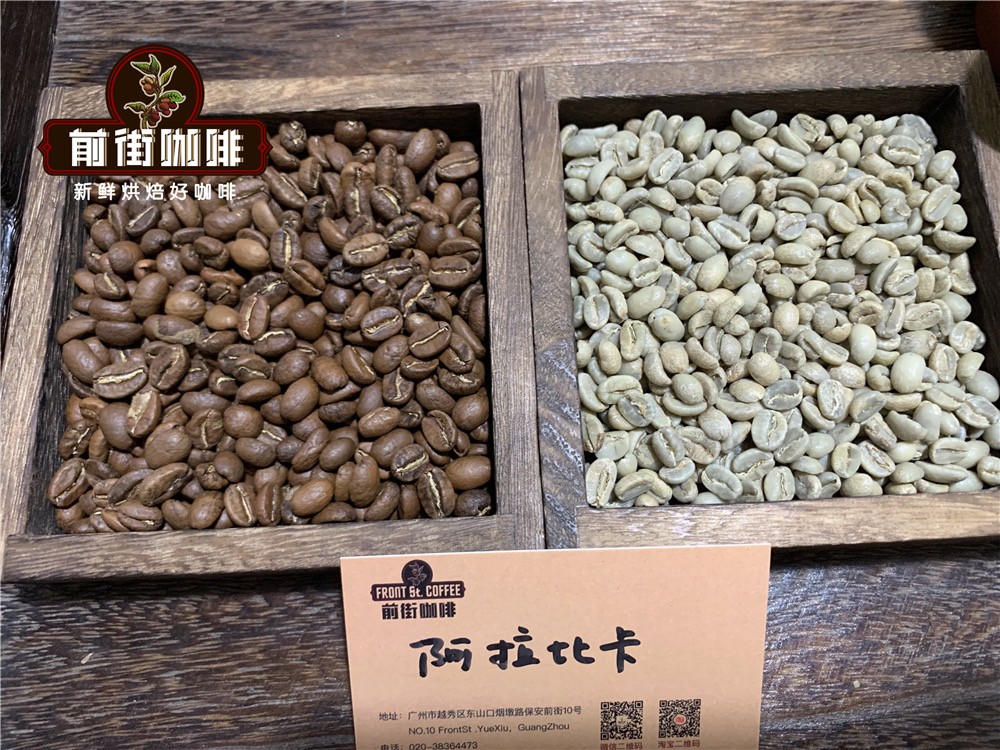
In terms of appearance, Arabica beans are longer and flatter, with a central line in an S-shaped curve; Robusta beans are sturdy, more rounded in shape, with a central line that is nearly straight. Even for the same Arabica coffee tree, planting it in different places will produce completely different flavors due to factors such as climate and soil. For example, Geisha grown in Ethiopia and grown in Panama taste completely different.
Currently common Arabica coffee bean types include Typica, Bourbon, Caturra, Pacas, Villa Sarchi, Maragogype, Pacamara, Mundo Novo, Catuai, Geisha, Tim, Catimor, and others. And Arabica beans mostly appear in the form of specialty coffee.
Bourbon and Typica form the world's most culturally and genetically important C. arabica coffee group. Historical records show that coffee seeds were brought from the coffee forests of southwestern Ethiopia to Yemen, where they were cultivated as a crop. Recent genetic testing has confirmed that Bourbon and Typica were the main seeds transported from Ethiopia to Yemen. The descendants of Bourbon and Typica spread from Yemen throughout the world, laying the foundation for modern Arabica coffee cultivation.
Bourbon: an ancient, superior variety standing alongside Typica. The French attempted three times, in 1708, 1715, and 1718, to introduce this coffee from Yemen to Bourbon Island (now Réunion); recent genetic research has confirmed this. Only a few plants from the second introduction and some from the third introduction survived successfully. It was not until the mid-19th century that Bourbon coffee left the island, spread to Africa by French missionaries known as the Spiritans.
Bourbon is vigorous and has outstanding flavor, often winning in cupping competitions. Apart from the pointed-bean mutation, Bourbon is almost entirely round-beaned, with beans slightly smaller than Typica, ripening later, but with a yield 30% higher than Typica; the drawback is that after one year of bearing fruit it needs to rest for a year.
Typica: Ethiopia's oldest native variety, an ancient coffee with elegant flavor, but far less widespread than Bourbon. Like all Arabica coffee, the Typica group should have originated in southwestern Ethiopia. At some point in the 15th or 16th century, it was brought to Yemen. By 1700, seeds from Yemen were already being cultivated in India.
In 1696 and 1699, coffee seeds were sent from India's Malabar Coast to the island of Batavia (present-day Java), and these few seeds gave rise to the distinctive Typica variety we know today. Its derived varieties include Mandheling, Blue Mountain, Yunnan small-seed, Geisha, and others, all of which are derived from Typica. Typica beans are larger, with pointed oval or slender pointed shapes, different from the round beans of Bourbon. Therefore, the outstanding flavor of Blue Mountain coffee owes no small debt not only to its growing environment but also to its ancient Typica variety.
Yirgacheffe
Ethiopia is Africa's largest coffee-producing country. Here, coffee is not only an important source of income for the Ethiopian people but has also become integrated into the entire nation's culture and life. According to official Ethiopian data, of an annual output of nearly 6.5 million bags, about half is consumed by Ethiopians themselves, with only about 3.5 million bags exported around the world. Yirgacheffe is a small town in eastern Ethiopia, at an elevation of 1,800 to 2,000 meters. In the ancient language, "Yirga" means "to settle down," and "Cheffe" means "wetland." Yirgacheffe is attached to the Sidamo production region, and because of its unique jasmine florals and citrus acidity it is highly favored in the global specialty coffee circle, and this special taste is also hailed as the "Yirgacheffe" flavor.
Yirgacheffe was originally a medium-sized town in Sidamo Province, Ethiopia, for coffee bean collection, distribution, and transportation. Because its elevation is higher than other coffee-producing areas in Sidamo Province (with ancient volcanic rock soil), and because it is located in southern Ethiopia and influenced by the southeast monsoon from the Indian Ocean, in this terroir environment with distinct dry and wet seasons and rich minerals, it is almost a perfect growing treasure tailored specifically for Arabica coffee beans.
Central and South America mostly adopts large estates for systematic, large-scale coffee cultivation, whereas coffee growing in the Yirgacheffe area is mostly mixed with other short-term, easily cashable crops, so output varies greatly depending on the climate and pest and disease conditions of each year. Yield per hectare ranges from 200 to 700 kilograms, and this cultivation method accounts for about 50% of Ethiopia's total coffee production.
The Yirgacheffe area is high in elevation, with mountainous terrain and tropical vegetation. But unlike Sumatra Mandheling beans and countless other Arabica varieties that grow in the constant tropical climate near the equator, Ethiopian coffee beans grow in distinctly different wet and dry seasons. This changes the taste and texture of the beans, giving them citrus notes and vibrant fruity aromas.
Ethiopia's Yirgacheffe coffee, though petite in stature, is gentle, graceful, sweet, and lovely. As the homeland of coffee, Ethiopia's thousand-year growing history and processing tradition have produced high-quality washed Arabica beans. Light roasting brings a unique aroma of lemon, florals, and honey-like sweetness, with soft fruit acidity and citrus notes, and a fresh, bright mouthfeel. With no milk and no sugar, let the rich body and unique soft floral notes brush across your palate, leaving an endless aftertaste.
Taste and Flavor
Ethiopian Yirgacheffe is absolutely a coffee with a very classic flavor, delicious whether brewed with hot water or cold-brewed, with extremely high flavor versatility. Because of its delicate florals and citrus notes, it became a world-famous coffee origin along with the third wave of specialty coffee beans.
Besides delicate florals and citrus notes, the aroma of sucrose and the fragrant acidity of fruity esters, compared with the angular, rugged flavors of Central and South America, offer a uniquely delicate and elegant flavor that stands out among the many specialty coffee flavors.
Yirgacheffe Coffee Beans Processing Method:
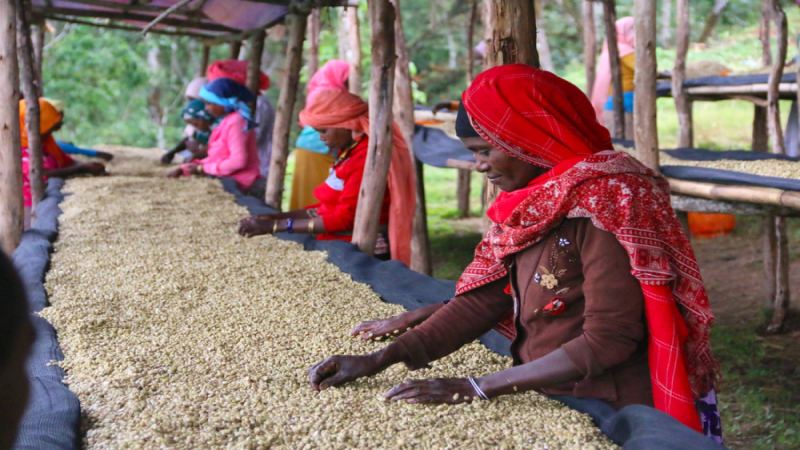
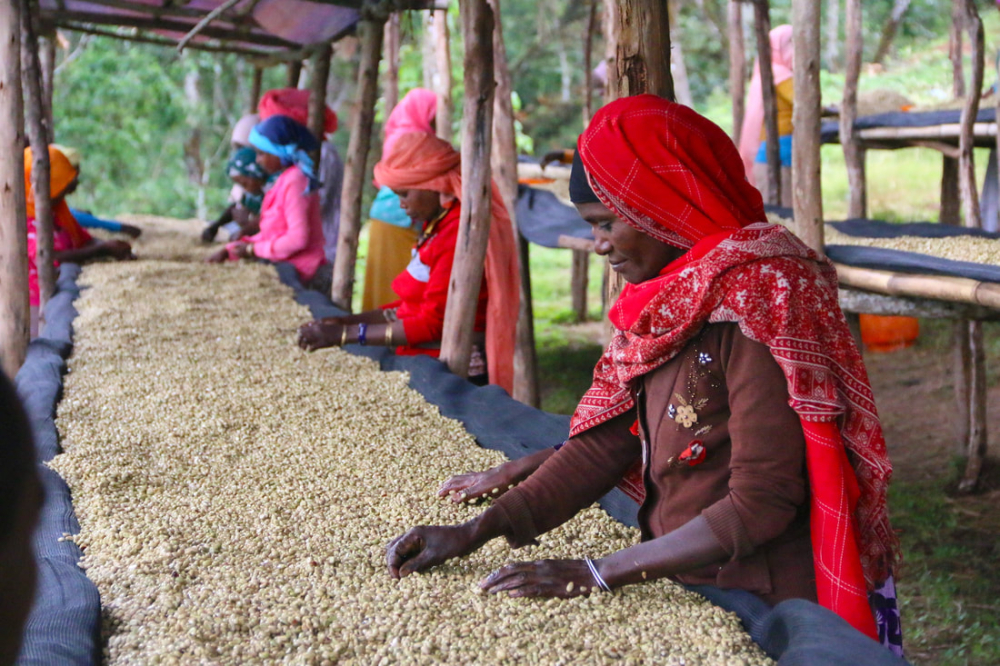
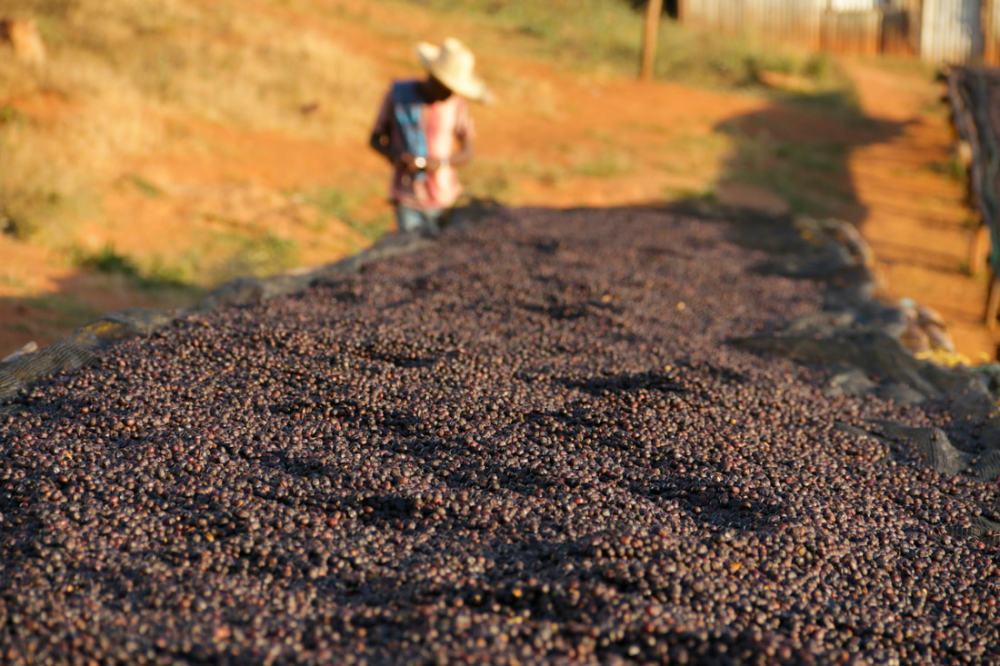
The processing method of Yirgacheffe coffee is the oldest natural sun-dried method, but because early sun-dried coffee beans were mostly spread flat on the ground to dry, they inevitably picked up earthy, dusty, and other off-flavors, and combined with a lack of proper sorting, the quality of natural beans was generally ordinary. In 1972, in order to improve coffee quality, Ethiopia introduced washed processing technology from Central and South America, which made Yirgacheffe's jasmine florals and citrus-lemon freshness clearer and more transparent, and it leapt to become one of the representatives of the world's specialty coffee.
Front Street brewing parameters for Yirgacheffe coffee beans:
In order to fully extract the fruit-acid character of Yirgacheffe and Sidamo, Front Street uses a higher water temperature and a finer grind for extraction, but to avoid over-extraction caused by high temperature, it uses a faster-flow dripper, such as the V60. The V60 dripper has a 60° cone shape, and the conical angle allows the coffee grounds to gather together, and when pouring water it also lets the water flow automatically converge toward the center of the dripper, ensuring sufficient contact time between water and coffee grounds, thereby extracting a suitable coffee liquid.

V60 dripper, water temperature 90°C, water-to-coffee ratio 1:15, coffee dose 15g, grind size (80% passing through a Chinese No. 20 standard sieve)
Use staged extraction, blooming with twice the amount of water as the coffee dose, that is, 30 grams of water for a 30-second bloom. The reason a blooming process is needed is to allow the coffee grounds to release their internal carbon dioxide gas, thereby making the later stages of extraction more stable. Pour in a small stream in circles until 125 grams, then pause, continue pouring until 225 grams and stop, and after the water in the dripper has dripped through, remove the dripper. Start timing from the beginning of pouring, and the extraction time is 2'00". Next, pick up the whole cup of coffee and shake it evenly, then pour it into a cup for tasting.
【Washed Yirgacheffe Coffee Flavor】 The acidity is brighter and livelier, with citric acid and citrus notes, a fresh and fragrant mouthfeel, and some black tea notes in the finish.
【Natural Red Cherry Coffee Flavor】 Berries, lemon, strawberry, fermented wine aroma.
Front Street Coffee Brewing Recommendations:
No matter what kind of coffee you brew, the freshness of the coffee beans is very important. Front Street has always believed that the freshness of coffee beans has a great relationship with coffee flavor, so the coffee beans shipped by Front Street Coffee (FrontStreet Coffee) are all within 5 days of the roast date. Front Street's roasting motto is "Freshly roasted good coffee," so that every customer who places an order receives the freshest coffee when they get it. Coffee's resting period is about 4-7 days, so when the customer receives it, it is exactly at its best flavor.
For friends who need ground coffee, Front Street warmly reminds you: once coffee beans have been ground in advance, there is no need for further resting, because during transportation the pressure generated by carbon dioxide inside the package can also make the coffee flavor rounder, so once you receive the ground coffee you can immediately brew a cup and drink it. But ground coffee needs to be brewed promptly, because after contact with air, ground coffee oxidizes relatively quickly, which means the coffee's flavor will dissipate fairly quickly and the coffee will not taste as good. Therefore, Front Street recommends buying whole beans and grinding fresh for each brew, so you can better taste the coffee's flavor.
The above content is compiled by CoffeeHunters, a coffee news website.


