







How do you brew Kenyan c.arabica pour-over at home?
Kenyan coffee is a c.arabica highlight of East Africa, prized for berry acidity and full body. Front Street Coffee's Kenya Little Tomato comes from the Asali Washing Station in Thika at 1,550 to 1,750 meters, using SL28 and SL34 varieties with K72 washed processing. Smoked plum, cherry tomato, snow pear, yellow sugar, and plum notes shape the cup.
Kenya sits on the equator with two rainy seasons, harvesting about 60% of its crop from October to December and 40% from June to August. Farms cluster in volcanic highlands around Nairobi at roughly 1,600 to 2,100 meters, where slow cherry growth builds acidity and density. For light roasts, dripper choice, water temperature, grind, and three-pour timing matter for reproducing the flavor at home.
Kenya is a representative producing country of East African specialty coffee, known for its distinct berry acidity and full body. This article starts with Front Street Coffee's Kenya·Little Tomato, sorts out the terroir of Kenyan producing regions and the background of the SL28 and SL34 varieties, and, for the pour-over extraction of light-roast Kenyan beans, breaks down in detail the dripper choice, water temperature range, grind assessment, and three-pour parameters, helping coffee lovers stably reproduce at home a cup of Kenyan pour-over with bright acidity and a long finish.
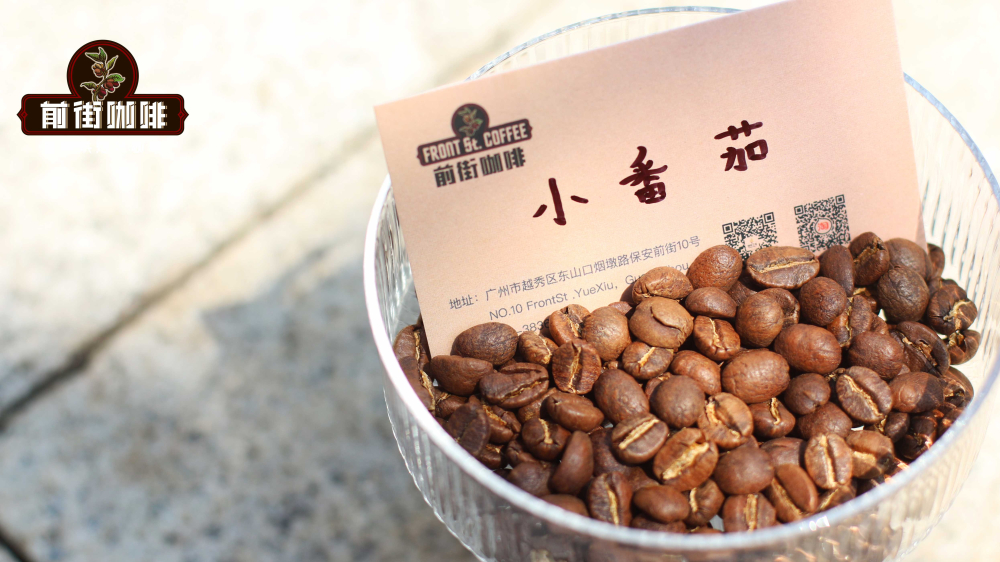
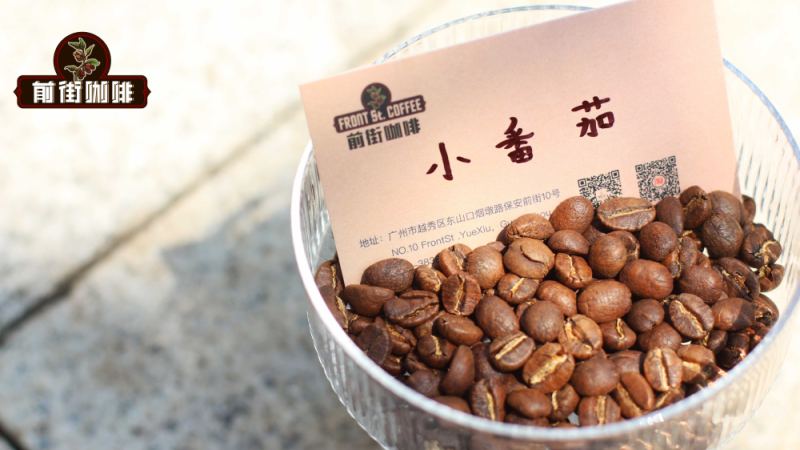
Front Street Coffee (FrontStreet Coffee): Kenya·Little Tomato Coffee Beans
Region: Asali Washing Station, Thika producing region, Kenya
Altitude: 1550 meters—1750 meters
Varieties: SL28, SL34
Processing method: K72 washed processing
Flavor description: smoked plum, cherry tomato, snow pear, yellow sugar, plum
In the African coffee landscape, Kenya occupies an important position with its highly recognizable acidity and aroma. It is located in East Africa, with the equator crossing the country, bordered by the Indian Ocean to the east, Ethiopia to the north, and Tanzania to the south. It is a pivotal coffee-producing country in Africa and one of the irreplaceable origins in the specialty coffee field.
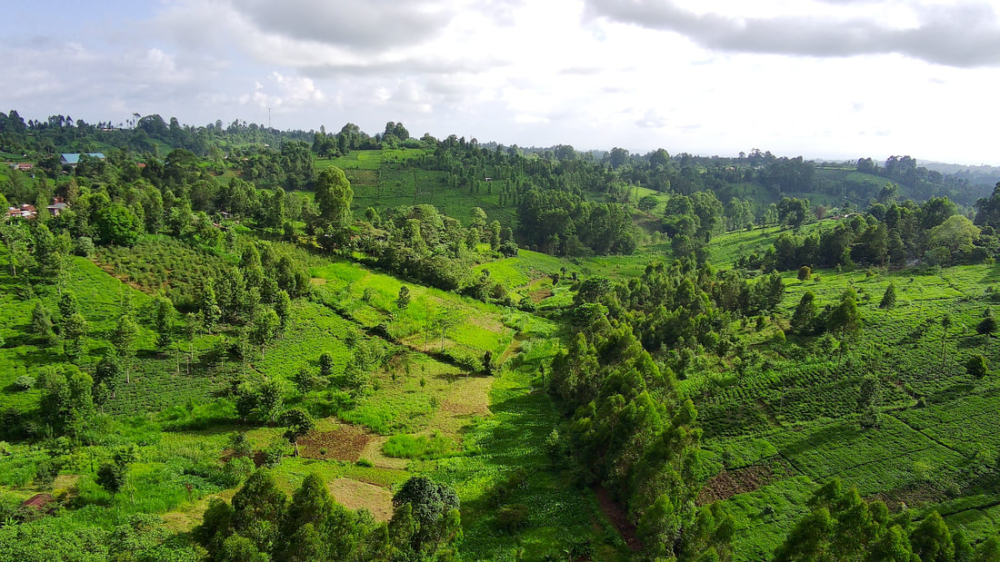
Kenya has a tropical climate, with two rainy seasons, a long one and a short one, so it can harvest two coffee seasons: about 60% is concentrated from October to December, and the remaining 40% falls from June to August. Coffee farms are mainly distributed from the capital Nairobi to the surrounding Kenyan highlands, in volcanic areas at an altitude of about 1600 to 2100 meters. High altitude brings lower temperatures, coffee cherries grow slowly, aromatic substances can fully accumulate, the fruit acidity is more prominent, and the beans are also harder. This fertile, crescent-shaped coffee region is precisely the core source of Kenyan specialty beans.
Kenya is a well-known coffee-producing country in East Africa and an important supplier of global specialty coffee. Its coffee flavor is full and highly distinctive, and its trading system is also quite refined. Bean size grading represented by AA or AB does not directly equate to flavor quality; auction lots organized by the coffee board are judged by cup flavor, and the auction prices of specialty Kenyan coffee have long remained high. Kenyan coffee mostly grows between 1500 and 2100 meters above sea level and is harvested twice a year. To ensure that only ripe cherries are picked, workers need to repeatedly patrol and inspect among the trees, going back and forth about seven times.
Most Kenyan coffee is planted within the range of 1300 to 2000 meters above sea level, with an average temperature of 15 to 24 degrees Celsius and annual rainfall of about 900 to 1200 millimeters. The highland areas around Mount Kenya have ideal conditions for coffee growing, including the Aberdare Mountains, Nyanza, Kisii, Bungoma, Kericho, and Nakuru. The Arabica varieties planted in these areas were first introduced from Ethiopia. In the 1930s, Kenya carried out selection and breeding through the Scott Laboratories, selecting SL28 and SL34 and promoting them nationwide. These two varieties have extremely outstanding berry-like acidity, and were later introduced by some Central American estates. The Costa Rica COE champion beans from the year before last were precisely of the SL28 and Geisha varieties.
Kenyan coffee is usually associated with bright acidity, intense aroma, full body, and unique cup flavor. Varieties that are more popular domestically include K7, Blue Mountain, Batian, Ruiru 11, and the SL series. Among them, the SL series has been grown in Kenya for nearly 90 years and includes multiple varieties, with the two most highly regarded being SL-28 and SL-34.
SL28 is one of the most famous and highly respected varieties in Africa. After it was selected in Kenya in the 1930s, it gradually spread to other parts of Africa (especially occupying an important position in Uganda's Arabica-growing areas), and now it has also spread to Latin America. This variety is suitable for cultivation at medium to high altitudes and has a certain degree of drought resistance, but it is relatively sensitive to the main coffee diseases. SL28 is known for its toughness—this characteristic means that it can still recover good production after several years or even decades of neglect. In many places in Kenya, SL28 trees 60 to 80 years old are still retained and still capable of production.
Kenya SL28 is one of the most famous and beloved varieties in Africa. In recent years, it has become popular for its stunning blackcurrant flavor and bright fruit acidity, and is the iconic variety with the highest attention after Geisha. Interestingly, SL28 originated in Kenya—just as Geisha originated in Ethiopia but achieved Panama with superstar status, SL28 also has this potential, and is now radiating brilliance from its origin Kenya to coffee-producing countries around the world.
For brewing light-roast coffee such as Front Street Kenya Little Tomato, Front Street believes there are three details to note:
1. Give priority to a dripper with fast flow. Light-roast coffee beans expand less and the beans are relatively hard, so grinding tends to produce very fine particles. After pouring, the fine particles will sink to the bottom first, causing clogging in the final stage, and the brewed coffee often has flat aroma and a muddy mouthfeel. Therefore, it is best to pair it with a faster-flow dripper, such as the V60 commonly used by Front Street. Its spiral rib design helps coffee grounds degas, while maximizing the activation of the volatilization and dissolution of aromatic and acidic substances, and the large bottom hole can accelerate the flow rate of water downward.
2. The water temperature should not exceed 93°C, nor should it be lower than 90°C. According to Front Street's brewing experience, if you want the acidity to be bright and uplifting, with a tea-like finish, you can brew at 90°C to 91°C; if you want full and solid fruit acidity and enhanced body, you can use a water temperature of 92°C to 93°C.
3. The grind size parameter will affect changes in total time, so Front Street usually combines extraction time and coffee taste to judge whether the grind setting is appropriate. The method is actually very simple: if brewing 15 grams of coffee grounds, using a three-pour method, and the time is less than 1 minute 40 seconds, with a sharp, thin taste, it means the particles are too coarse and the extraction is insufficient; if the time exceeds 2 minutes 20 seconds, and the coffee is bitter and astringent, heavy and dull, then it may be ground too fine, causing over-extraction.
As for the coffee-to-water ratio, Front Street believes 1:15 to 1:16 is acceptable. If you want the coffee to lean toward oolong tea and rich berries, use 1:15; if you want to more clearly perceive white floral notes and citrus acidity, use 1:16 to spread the flavors more.
For the first pour, pour 30g of water for a 30-second bloom. Start timing as you pour, using a small stream throughout, pouring from the center point and circling outward, making sure to wet the entire coffee bed.
After 30 seconds, begin using a slightly larger stream to steadily pour the second pour of 95g of water, with the aim of lifting the entire coffee bed. The water stream should be poured vertically and evenly. At this point the scale shows 125g, and the pour is finished at around 55 seconds.
When the liquid level drops to the halfway point, begin using a small stream to pour the third pour of 100 grams in a small circle, trying to control the stream so it does not circle too widely, as it is easy to disrupt the coffee bed and cause under-extraction. The final total poured water is 225 grams, and the drip completion time is about 2 minutes.
For the first pour, pour 30 grams of water for a 30-second bloom, then for the second pour add water to 125 grams as the stage break. When the water level drops to the point where the coffee bed is about to be exposed, proceed with the third pour, stopping when it reaches 225 grams. Wait for the water in the dripper to completely drip into the server, then remove the dripper. Total extraction time 2'00".
The above content is compiled by CoffeeHunters, a coffee news website.


