







How Does the Ethiopian Coffee Grading System Work?
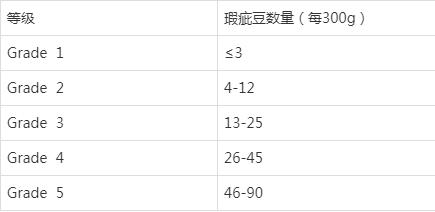
Ethiopia grades green coffee on two measures: cupping performance and green bean defect rate. Under SCAA standards, G1 and G2 scoring 85 or above are Q1; G1 through G3 scoring 80 to 85 are Q2; and anything below 80 falls into G3. Defect sampling weighs 300 grams of beans, where 0 to 3 defects gives Grade 1 and 4 to 12 gives Grade 2.
Nine levels are divided in total, with G1 and G2 counted as specialty grade and levels after G6 sold only domestically. Before the ECX system, sun-dried beans could reach only G3; after ECX redefined the rules, sun-dried lots became eligible for G1. This matters for fine coffee from Guji, including Huakui from Hambela and its 7063 batch number.
How exactly does Ethiopia's coffee grading system work? Is sun-dried Huakui G1 synonymous with the highest-quality coffee beans? What does the batch number Hambella 7063 represent? This article will systematically sort out Ethiopia's coffee grading standards, including the two major dimensions of cupping score and green bean defect rate, and provide an in-depth analysis of the grading logic of the sun-dried processing method. At the same time, it will take you into Hambela, the Guji producing region that is the hometown of Huakui coffee, to learn about its geographical environment, farm operations, and the origin of its name. Finally, it includes Front Street Coffee's light-roast brewing parameters and three-pour extraction method for Huakui, helping you fully release this bean's floral and fruity aromas.
Each coffee-producing country has established its own green bean grading system. Ethiopia mainly uses two criteria: cupping performance and green bean defect rate.
The cupping evaluation dimensions cover green bean cleanliness, regional terroir characteristics, cup flavor performance, and the inherent qualities of the beans themselves. According to SCAA standards, G1 and G2 with a cupping score of 85 or above can be classified as Q1; G1, G2, and G3 with scores between 80 and 85 are rated Q2; and all G1, G2, and G3 below 80 are uniformly classified as G3.
Green bean defect rate standard: when evaluating green bean quality, in addition to cupping taste, sampled green bean defects must also be combined for comprehensive grading.
The defect rate sampling method for washed green beans is as follows: randomly weigh 300 grams of green beans for inspection. If the number of defective beans is between 0 and 3, it is rated Grade 1; if 4 to 12 defective beans are found in 300 grams, it is rated Grade 2. Based on sampled defect rates, a total of 9 levels are divided, among which G1 to G2 belong to specialty grade, G3 to G9 are other levels, and levels after G6 are only circulated in the domestic market. Before the establishment of the ECX system, sun-dried beans could usually only receive ratings of G3, G4, and G5, meaning the highest grade for sun-dried beans at that time was only G3. After the ECX was introduced, the grading rules were redefined. The definition of washed beans remained unchanged, but sun-dried beans could also receive a G1 rating. Therefore, Ethiopian sun-dried beans on the market began to show G1 and G2 labels, while G3 ratings gradually decreased.
The scoring composition of the sun-dried processing method is as follows:
1. Physical characteristics account for 40%, of which defects account for 30% and odor accounts for 10%.
2. Cupping quality accounts for 60%, of which cleanliness accounts for 15%, acidity 15%, mouthfeel 15%, and flavor characteristics 15%.
Each batch of coffee has its own independent number. Hambella 7063 refers to the coffee's batch code. The sun-dried processing method is divided into three grades: G1, G2, and G3, among which G1 has the lowest defect rate. Sun-dried Huakui coffee belongs to the G1 grade.
In fact, the difference between G1 and G2 is mainly reflected in the number of defective beans; in terms of flavor, the two are basically the same. Therefore, it cannot be simply asserted that G1 is the best grade or the best coffee bean. However, from the perspective of green bean defect rate alone, G1 is indeed superior to G2, because fewer defective beans means better bean quality.
All coffee can be classified into three types according to processing method (sun-dried or washed):
A Speciality: few defects and high cup flavor quality;
B Commerical: does not reach specialty grade, but quality is higher than the domestic consumption level;
C Local/Domestic: coffee with a relatively high number of defects (including immature beans), or flavor deviations caused by being out of season or improper storage.
Among them, Speciality and Commerical are oriented toward the export international market, while Local is sold in the domestic market.
Overview of the Hambela Producing Region
Huakui coffee comes from the Hambela sub-region within the Guji producing region of Sidamo. "Hambela" is located in Guji (GUJI), Ethiopia's largest coffee-producing region, and administratively belongs to Oromia Regional State. To the west, Hambella faces the Kochore producing region of Yirgacheffe across the mountains, with a highland about 30 kilometers wide and 3,200 meters above sea level lying between them. To the southeast, north, and south, it borders the Shakiso, Uraga, and Kercha sub-regions of Guji respectively, and is Ethiopia's highest-altitude coffee sub-region (Harrar is Ethiopia's highest-altitude main producing region).
Hambella Farm has a total area of 200 hectares and 28 full-time employees. During the peak harvest season, the total workforce can expand to more than 700 people. Women account for 70% of these workers. The farm has also implemented a program that allows local farmers to work closely with agronomists and processing experts to jointly improve coffee quality. In addition, besides processing its own coffee beans, the farm also purchases and resells some beans from surrounding areas.
The sun-dried processing method of Huakui coffee:
Huakui coffee beans follow the traditional sun-dried processing technique. To prevent coffee cherries from becoming moldy during drying or absorbing undesirable odors such as soil, coffee farmers place the cherries on raised drying beds to sun-dry for 21 days. During this period, they must be continuously turned to ensure even drying and consistent moisture loss in the coffee beans; every three to five days, moldy or defective beans are also manually removed. After the fruit skin becomes dry and hard, a hulling machine is used to remove the dried fruit skin. After obtaining the green beans, in pursuit of the ideal taste, the coffee farmers carry out one final round of screening.
The farm was co-founded by Aman Adinew and his brother Michael. Before that, Aman had served as quality control director of ECX (Ethiopia Commodity Exchange) and was responsible for managing Ethiopia's first specialty coffee laboratory.
The origin of the name of Huakui coffee:
What is the story behind Huakui coffee? In 2017, the African Fine Coffees Association held the TOH (the Taste Of Harvest) competition. Ethiopia's DW Green Bean Company entered this batch of coffee in the competition, and as a result this sun-dried batch became famous overnight, defeating many Geisha variety coffees and taking the championship. A green bean trader in Beijing named "Hongsun International" subsequently introduced this batch of sun-dried green beans and named it based on its championship status, after which the name "Huakui" was established.
As an agricultural product, coffee's flavor each year is affected by climate and environment, but the overall main profile remains stable. In order to distinguish Huakui coffee beans from different years, Hongsun Company separately distinguishes beans from the "Buku Abel" processing station in the Hambela producing region. Only coffee beans produced by the "Buku Abel" processing station in Hambela can be called Huakui coffee. Hence there came the version iterations from Huakui 2.0 through Huakui 7.0.
Front Street brewing parameters for Huakui coffee:
In order to fully showcase Huakui coffee's rich floral and fruity notes such as floral aroma, mango, jackfruit, citrus, and honey, Front Street uses a light roast. Light-roasted coffee beans are not as porous in texture as dark-roasted ones. When brewing, Front Street chooses a V60 dripper with a relatively high water temperature for extraction. The V60 dripper body has flow-guiding ribs connecting the top and bottom as well as a large central hole, which can speed up the flow of water downward; the spiral-shaped exhaust groove design extends the water flow path and increases the contact time between coffee grounds and hot water. Each stream of water converges along the groove toward the center of the dripper, the pressure on the coffee grounds is more concentrated, and the extracted coffee has a richer layering.
Dripper: Hario V60, water temperature: 91°C, coffee dose: 15 grams, coffee-to-water ratio: 1:15, grind size: 80% passing through a Chinese standard No. 20 sieve.
FrontStreet Coffee's three-pour extraction method: first, use 30g of water to fully wet the coffee bed into a "hamburger" shape and let it bloom for 30 seconds; for the second pour, when the timer reaches 1:00, pour water until the total reaches 125g, then stop and wait for the water level to drop to 2/3 of the coffee bed before pouring the third stage; for the third pour, at 1:40 on the timer, pour water until the total reaches 225g. After the coffee liquid has completely dripped through, the total extraction time is 1 minute 59 seconds, with the total brewing time controlled at 2 minutes. After extraction is complete, gently swirl the sharing pitcher, and once the coffee liquid is even, it is ready for tasting.
Flavor description
Flavor of sun-dried Sidamo Huakui coffee: with a faint fermented wine aroma, floral notes, citrus, and mango. The mouthfeel is rich and complex, with honey-like sweetness, a cocoa finish accompanied by a slight spice note, a full body, and a long-lasting aftertaste.
Regarding coffee brewing, Front Street always recommends using freshly roasted coffee beans, as this better showcases the coffee's flavor. The coffee beans sold by Front Street are all products within 5 days after roasting. Adhering to the principle of "freshly roasted good coffee," it ensures that every customer who places an order can receive the freshest condition when the coffee arrives. The resting period for coffee is about 4 to 7 days, so by the time customers receive it, it is exactly at its best flavor stage.
For professional coffee knowledge exchange and more coffee bean information, please follow Coffee Workshop (WeChat public account: cafe_style)
For more specialty coffee beans, please add the private WeChat of FrontStreet Coffee. WeChat ID: qjcoffeex
The above content is compiled by CoffeeHunters, a coffee news website.


