







How Do c. arabica Varieties Shape Sidama Washed Coffee?
Sidama sits in southern Ethiopia at 1,400 to 2,200 meters, bordering Kenya, and stands alongside Yirgacheffe as a specialty coffee hub. Yirgacheffe is known for washed beans with citric acidity and floral notes, while Sidama is mostly natural processed. Within Sidama, sub-regions such as Guji, Hambela, and Shakiso each show distinct terroir, and the Shakiso area is central to how the region's coffees are classified.
Ethiopia grades coffee from G1 to G6 by defect bean ratio, and processing method shifts the flavor profile considerably. Washed Sidama green beans come out light green, small, and elongated oval, with balanced quality and a long finish. The wide range of native c. arabica varieties, plus varied soil and microclimates, explains why towns only a short distance apart taste so different in the cup.
Ethiopia's Sidamo region is renowned for its diverse flavors and exceptional terroir, standing alongside Yirgacheffe as a major specialty coffee hub. This article begins with an overview of the Sidamo region's characteristics, then examines the terroir conditions and representative coffees of sub-regions such as Guji, Hambela, and Shakiso one by one. It also explains in detail Ethiopia's G1 to G6 grading system based on defect bean ratios, compares the impact of washed and natural processing methods on flavor profiles, and presents Front Street Coffee's professional recommendations and tasting perspectives on this region, offering you a comprehensive understanding of Sidamo coffee.
For more specialty coffee knowledge, please follow the WeChat official account: Front Street Coffee (FrontStreet Coffee)
When it comes to Ethiopian coffee, many people first think of Yirgacheffe with its bright citric acidity and floral notes, and some even treat it as the calling card for the entire country's coffee. In fact, Ethiopian coffees are mostly named after their producing regions—beans from the Yirgacheffe region are called Yirgacheffe coffee, while those from the Sidamo region are called Sidamo coffee. Front Street Coffee (FrontStreet Coffee)'s entry-level Ethiopian daily drinker beans are precisely Yirgacheffe coffee.
Although these two regions both belong to Ethiopia, the processing methods they use are completely different. Yirgacheffe coffee beans take the washed route, while the Sidamo region is primarily natural processed. To pick the representative of Sidamo natural beans, it would naturally have to be Huakui. Whether in terms of market popularity or flavor performance, Huakui can be considered the cream of the crop among natural Ethiopian beans.
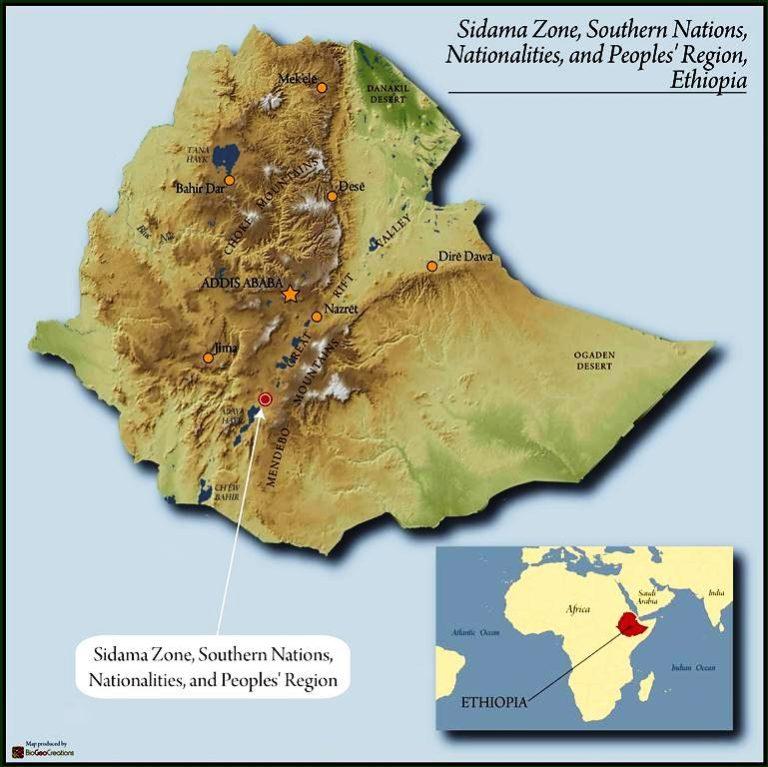
The Sidamo region sits at an altitude of 1,400 to 2,200 meters, located in southern Ethiopia bordering Kenya, and is a well-known specialty coffee area. After washed processing, Sidamo green beans appear light green, relatively small in size, elongated oval in shape, plump in the fruit, with balanced overall quality, fragrant and mellow aroma, and a long lingering finish with a wild charm. The coffee flavors of this region are extremely diverse—different soil types, microclimates, and a vast number of native varieties give coffees from different towns noticeably distinct styles.
In the 2010-2012 period, Sidamo consecutively scored 92 to 94 points on CR, the authoritative American coffee evaluation website, fully demonstrating the extraordinary strength of the region's green beans. The region features rolling mountains, with highlands, plateaus, gorges, and plains interwoven, creating a very rich terrain. The local soil is volcanic, nutrient-rich with good drainage, with a soil layer nearly two meters thick and a surface of dark brown or brown. The greatest advantage here is that soil fertility is maintained through organic matter cycling—fallen leaves from surrounding trees and residual plant roots both become natural fertilizer sources. Unlike most African coffees, Sidamo possesses clear fruit acidity, a smooth mouthfeel, and delicate floral and herbal aromas.
Sidamo Region Introduction
Guji Region
As one of Ethiopia's important specialty coffee regions, Sidamo is located in the southern part of the country, spanning the highlands on the southern shore of Lake Awasa in the East African Rift Valley, at an altitude between 1,500 and 2,200 meters. The significant temperature difference between day and night extends the coffee fruit's ripening cycle, allowing it to accumulate more nutrients, which is why the beans produced here have particularly rich layers of sweetness and acidity. Combined with the complex terrain, diverse soil types, and variable microclimates, Sidamo's coffee flavors display tremendous variation.
The Guji region was originally under Sidamo's jurisdiction. Due to its remote location and relatively lagging development, Guji coffee's rise and fame came relatively late. In the early days, it was less famous than regions like Yirgacheffe and Harrar, but later, owing to the outstanding flavors of its coffee beans, it was independently demarcated as a new region. This area has fertile black soil with an average altitude exceeding 1,800 meters, and its unique geographical conditions create a very ideal growing environment for coffee trees.
Hambela Region
Hambela is a sub-region under the Guji region, currently with about 20 processing stations of varying scales. Huakui coffee beans come from the Buku processing station in Guji. The Buku processing station is located in buku abel village at an altitude of 2,200 meters. Beyond the inherent terroir advantages, local farmers care for each coffee tree with extraordinary attention. They plant shade trees beside the coffee trees, allowing Huakui to receive ample sunlight without excessively consuming nutrients, thereby retaining more essence within the coffee fruit.
Hambella's western side faces Yirgacheffe's Kochore across the mountains, while its eastern, southern, and northern sides are adjacent to other Guji sub-regions—Shakiso, Uraga, and Kercha, respectively. In the Hambela mountain area, villagers live in deep mountains at an altitude of 2,000 meters, with no roads and no electricity. The water tap built with government aid at the village entrance is the entire village's only source of drinking water. Despite the harsh living conditions, Hambela's farmers still carefully tend to every single Huakui coffee bean. Currently, the Hambela region has approximately 20 processing stations of various scales.
The Huakui coffee beans that made the Guji region famous come precisely from the Buku processing station. Located in buku abel village at an altitude of 2,200 meters, this processing station has enjoyed a superior "growing environment" from the very beginning—humus-rich red-brown soil, with "Enset" trees providing shade, allowing Huakui to receive ample sunlight and develop rich flavors while not consuming excessive nutrients, thereby retaining more essence within the coffee fruit. During the harvest and processing season (December to January), the unique growing environment and natural climate together create Huakui's distinctive flavor.
Shakiso Region
Shakisso/Shakiso is located in the Guji region of Sidamo, in the southern part of the Oromia area, adjacent to Sidama and Gedeo. This area contains numerous mining pits—it was once a gold mining site in earlier years—so this coffee-growing area is riddled with pits and holes, making walking through it quite dangerous. Shakiso is a region with a uniquely distinctive style within Guji/Sidamo. Even within the Sidamo scope, it is a remote area far from most coffee-producing locations. Another famous local product is gold. Factors such as miners, land, and ethnicity once plunged the area into turmoil in 2006. Because of this, the region's biggest current challenge is the need for sufficient manpower to maintain plantations and complete coffee harvesting.
Local smallholders began growing organic coffee in 2001 and work closely with medium-sized coffee producers, as they are well-versed in the art of growing forest coffee in the highlands. Shakiso is one of the most geographically distinctive micro-regions within the Sidamo region, producing coffees with striking character that frequently attract market attention. Ninety Plus's legendary bean (nekisse) literally means "Nectar from shakisso"—both the producing region and the name originate from Shakiso.
Flavor Description: Lemon and citrus, bright and crisp acidity, lemon, citrus, white grape juice, blackcurrant, with an Earl Grey tea note on the finish
"Ethiopian Sidamo" belongs to the single-origin category—it is Arabica coffee grown in Ethiopia's Sidamo province. Like coffees from most African countries, Ethiopian Sidamo is characterized by small grayish beans, but what stands out even more is its rich flavor with spice, wine, or chocolate-like notes and floral aromas. Among Sidamo coffees, the most recognizable flavors are lemon and citrus notes, along with bright and crisp acidity.
What Is the G1 Grade?
Ethiopian coffee beans use a grading method based on defect bean ratios. Indonesian beans are mainly divided into 6 grades, namely G1 to G6. Ethiopia also follows this system: the highest grades for washed beans are G1 and G2; the highest grades for natural beans are G1 and G3.
Washed: Grade-1; Grade-2 (G1>G2)
Natural: Grade-1 and Grade-3~Grade-5 (G1>G3>G4>G5)
Washed Processing——Green Bean Processing Method
Washed processed coffee flavors typically do not carry wild notes, presenting instead a clean and refreshing character. In some exceptional washed Ethiopian beans, such as Front Street's Gu Ding Ding and Front Street's Yirgacheffe, one can perceive pronounced uplifting lemon, citrus, jasmine floral notes, and honey flavors, with relatively prominent acidity and a comparatively lighter body.
Natural Processing——Green Bean Processing Method
Although Yirgacheffe's washed coffee beans are quite famous, Ethiopia actually primarily uses natural processing—even now, natural processing still accounts for about 70% of the country's production.
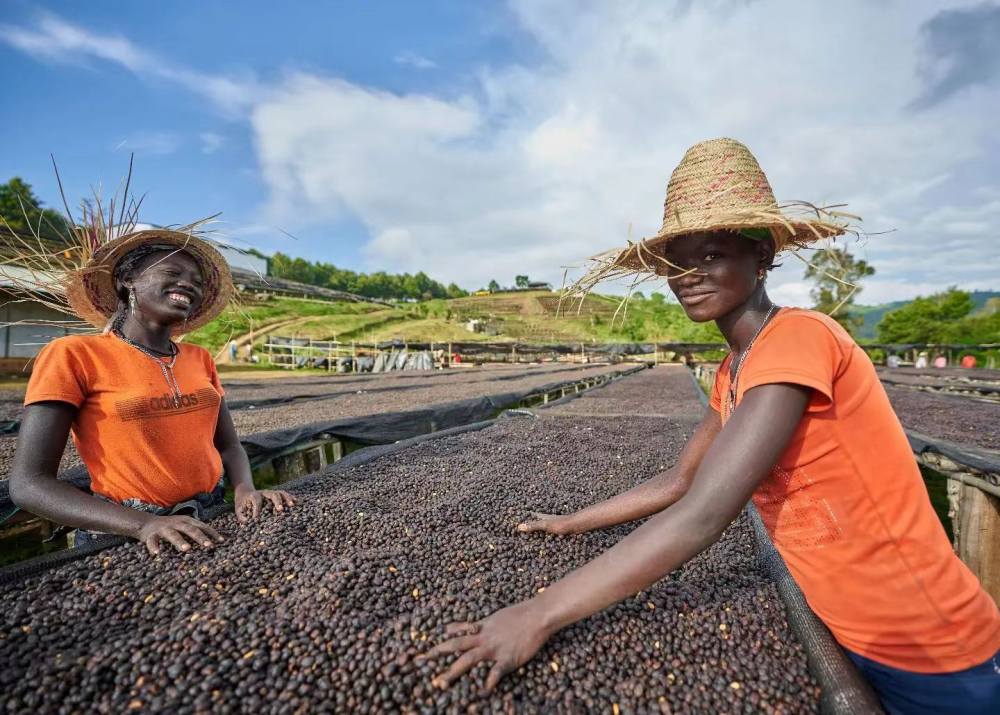
The natural processing method is one of the oldest and most classic processing methods, with steps simpler than other methods: coffee fruits are directly sun-dried, with drying times lasting up to several weeks. Once the coffee's moisture content drops to around 11%, the skin, pulp, and other layers are removed by machine, and the beans are then stored in warehouses awaiting export.
Sidamo mostly uses the natural processing method to process coffee cherries. Front Street Coffee (FrontStreet Coffee) believes that naturally processed Sidamo coffee beans can better showcase the region's characteristics of clear fruit acidity and smooth mouthfeel. The natural processing method, also known as the "dry method," involves placing coffee beans directly under the sun to dry, with drying periods lasting up to 27 to 30 days, reducing moisture from 60% to just about 12%. Front Street Coffee (FrontStreet Coffee) finds that this method brings a tropical fruit-like sweet and sour sensation, preserves the coffee beans' natural richness, offers layered flavors, and sometimes carries a hint of wine-like fermented aroma.
The above content is compiled by CoffeeHunters, a coffee news website.


