







What Does the Coffee Association of America Standard Mean for TOH Lots?
The 2020 Ethiopia TOH washed-group champion came from Uraga in the Guji region, scoring 89.8. The lot was grown at 2,300 meters and graded G1, processed by the washed method, with jasmine, citrus, honey, pomelo and oolong tea in the cup. TOH is run by the African Fine Coffees Association.
In the TOH preliminary round, lots cupping below 80 are eliminated, then regional winners advance to national judging. Domestic and international judges score according to coffee association of america standards, and the top lot becomes the national champion. For this Uraga bean, the washed process at the Sela Gajaba station and Ethiopia's green bean grading system explain much of its clarity.
FrontStreet Coffee has long been following and introducing winning lots from Ethiopia's TOH (Taste of Harvest) competition. The 2020 washed-group champion bean came from Uraga in the Guji region, earning the national crown with a score of 89.8. This bean was grown at an altitude of up to 2,300 meters, graded G1, and processed using the washed method, with flavor notes layered with jasmine, citrus, honey, pomelo, and oolong tea. This article will systematically cover the TOH competition mechanism, the terroir characteristics of the Guji and Uraga regions, the washed processing procedures at the Sela Gajaba station, Ethiopia's green bean grading system, and also include FrontStreet Coffee's roasting curve, cupping report, and V60 brewing parameters, helping coffee lovers gain a comprehensive understanding of this champion bean's origins and tasting highlights.
In recent years, FrontStreet Coffee has continued to introduce championship lots from Ethiopia's TOH competition to coffee lovers, and 2020 was no exception—that year's washed-group champion came from Uraga. Next, FrontStreet Coffee will provide a systematic introduction centered on this bean.
What Is TOH?
Many friends may still be unfamiliar with the abbreviation TOH. TOH stands for Taste of Harvest, organized by the African Fine Coffees Association (AFCA). It is a specialty green bean competition for African producing countries, and entries are limited to lots harvested in the current season. In terms of positioning, it is similar to COE in the Americas or BOP in Panama; the difference is that TOH, in addition to national-level judging, also has multi-tiered regional and Africa-wide competition systems.
The TOH competition process is roughly as follows: in the preliminary round, lots scoring below 80 in cupping are eliminated first, and then the best-quality green beans from each region are selected level by level to enter the national competition; afterward, domestic and international judges jointly conduct cupping scoring according to the Specialty Coffee Association of America (SCAA) standards, and the highest-scoring coffee becomes the annual national champion. This Uraga bean newly introduced by FrontStreet Coffee won the 2020 TOH washed-group championship with a score of 89.8.
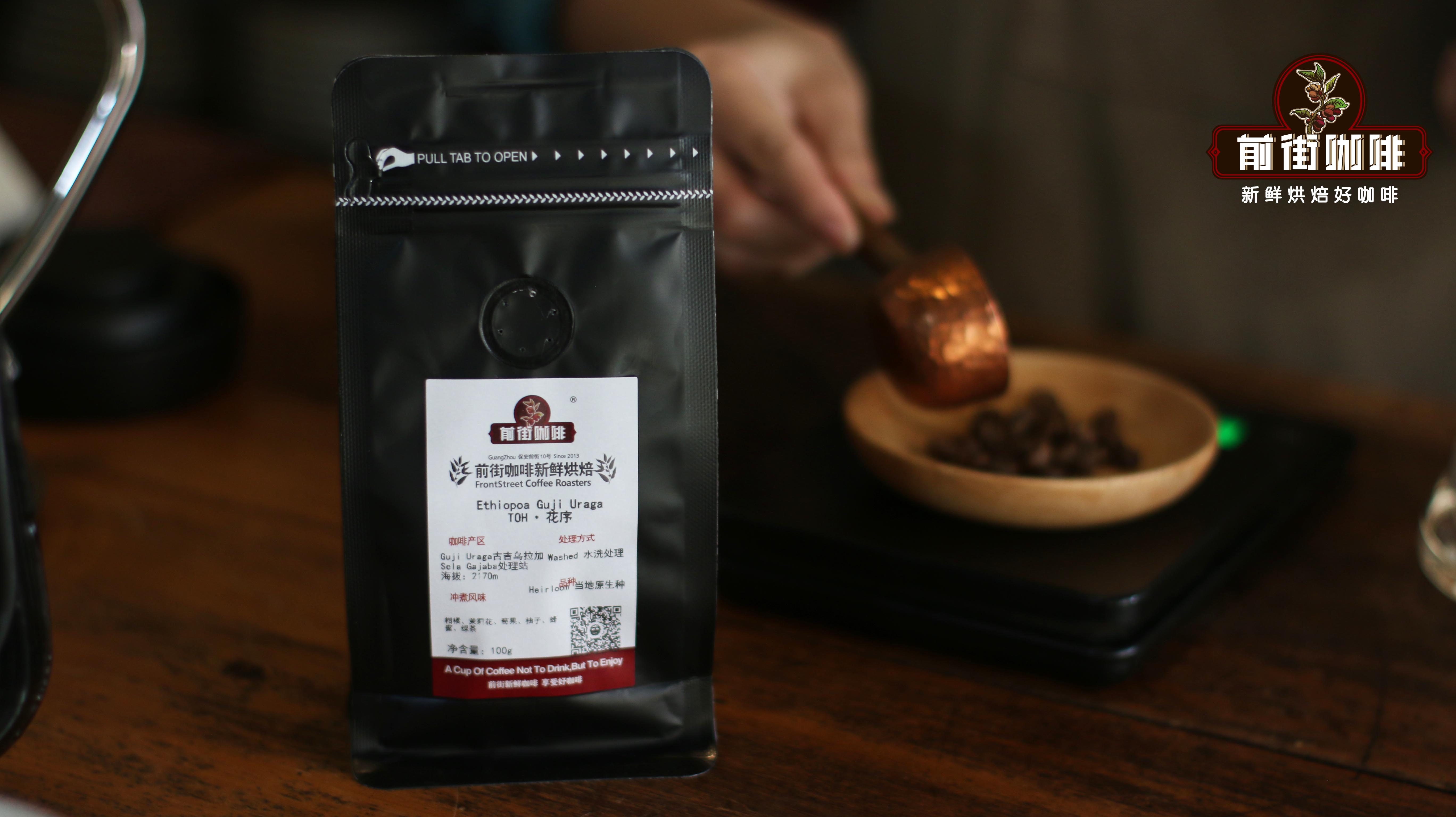
FrontStreet Coffee 2020 Ethiopia TOH Washed Coffee Bean
Country: Ethiopia
Region: Guji, Uraga
Altitude: 2,300 m
Variety: Local heirloom varieties
Grade: G1
Processing Method: Washed
Flavor: Jasmine, citrus, honey, pomelo, oolong tea.
From the information above provided by FrontStreet Coffee, it can be seen that the 2020 TOH washed-group champion bean, like the 2019 washed-group champion, both came from Ethiopia's Guji region. So what exactly is the charm of this region?
Guji Coffee Bean Producing Region
The Guji region originally belonged to Sidama, and later became independent because its flavor distinctiveness was as outstanding as that of Yirgacheffe. Many famous coffees have come from here; for example, FrontStreet Coffee's Sidama Huakui series coffee beans come from Hambela, a sub-region under Guji.
This 2020 TOH washed-group champion bean comes from Uraga, a sub-region within Guji. Uraga has an altitude as high as 2,300 meters; although administratively it belongs to Guji, geographically it is closer to the high-mountain areas around Yirgacheffe at an altitude of 2,200 meters.
The soil in this area is fertile black soil, and the high-altitude terrain gives Uraga rich fruity notes. The pattern for Arabica coffee beans is that the higher the growing altitude, the more pronounced the acidity, which makes it easy to understand why this bean can present such an excellent flavor profile.
2020 Ethiopia TOH Washed Coffee Bean Processing Method
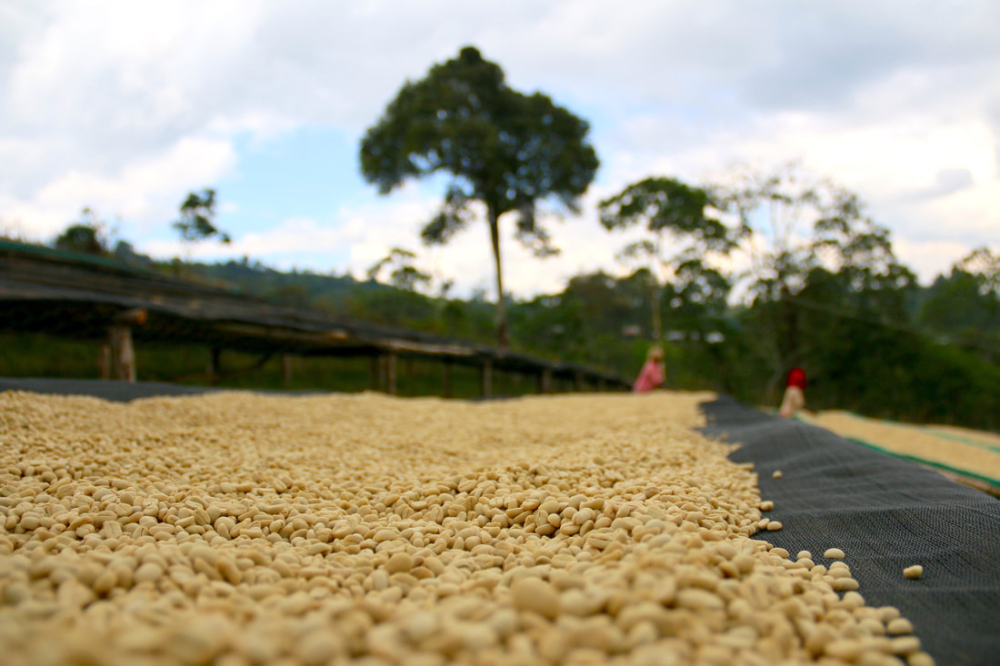
FrontStreet Coffee has mentioned many times in previous articles that the flavor of a coffee is mainly determined by three factors: the growing environment (region), variety, and processing method. The washed processing method is FrontStreet Coffee's most preferred method because it best restores the characteristics of the coffee bean itself while making the flavor cleaner and more refreshing, preserving its original character; the only limitation is that the washed method is only suitable for regions with abundant water resources.
This champion bean was processed at the Sela Gajaba washed processing station. The station is about 12 kilometers from Uraga town and is one of the best local processing stations. Its processing procedures are carried out almost entirely indoors, thereby minimizing the chance of contamination of the coffee beans. This is also one of the reasons it was able to win the 2020 Ethiopia TOH washed-group championship.
Washed Processing Method Procedure:
FrontStreet Coffee has learned that this processing station conducts two rounds of sorting for freshly picked coffee cherries, keeping only fully red, flawless fruit, and then removing the skin and pulp. The green beans with residual pulp and mucilage are placed in water to ferment for about 18 to 36 hours; after fermentation is complete, the parchment beans are moved into a flowing water channel for washing to remove the pulp and mucilage; after washing, they are dried by sun or dryer to reduce the moisture content to about 12%, and finally the parchment is removed.
Coffee processed in this way not only retains the traditional floral, citrus, and tea notes of Ethiopian beans, but also significantly improves cleanliness, making the flavor very charming.
Ethiopian Coffee Bean Grading System
In addition, the reason this bean achieved such impressive results is also closely related to its grade. After all, not every fruit on a coffee tree can be perfect, so coffee beans need to be graded and sorted. Ethiopia has a huge number of coffee varieties, and bean sizes vary, so the local grading is mainly based on the number of defective beans and coffee flavor.
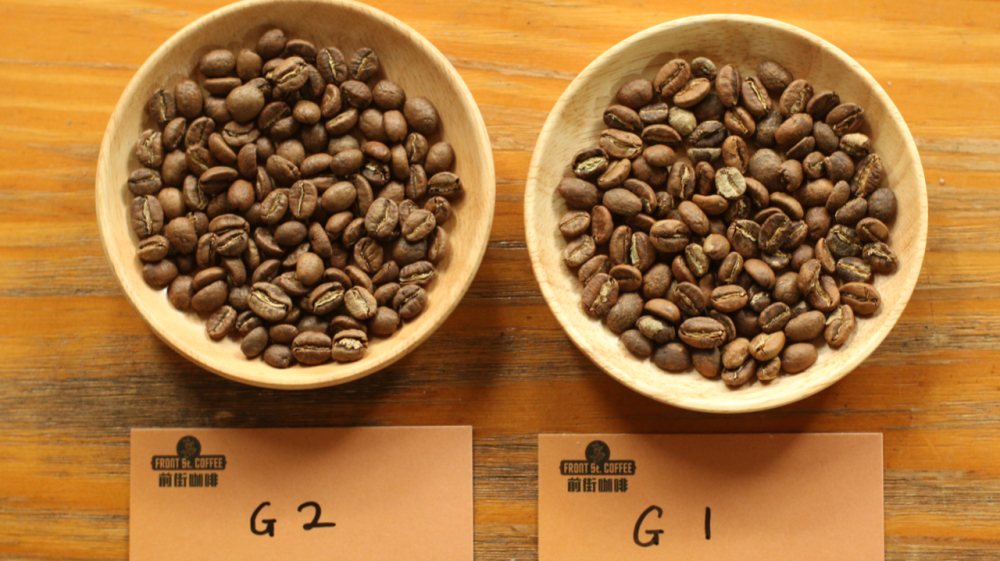
Before the appearance of the Ethiopia Commodity Exchange (ECX), coffee export grades were set by the CLU department under the Ministry of Agriculture, mainly grading by the number of defective beans in 300 g, with the standards shown in the table below. Usually, washed processing corresponds to G1 to G2; due to the limitations of early natural processing technology, natural green beans had more defects and were generally G3 to G5. With improvements in natural processing technology, natural beans can now also reach G1 to G2.
Among these, specialty and commercial grades are for export to international markets. Based on the total score of physical attributes and cupping flavor, ECX divides green beans into nine grades, with physical characteristics accounting for 40% and cupping quality accounting for 60%.
Physical Characteristics (40%):
Washed: number of defects (20%), appearance and size (10%), color (5%), odor (5%)
Non-washed: number of defects (30%), odor (10%)
G1 to G3 are then cupped again according to SCAA standards to further evaluate flavor attributes: G1 and G2 scoring no less than 85 are rated Q1; G1, G2, and G3 scoring between 80 and 85 are rated Q2; all G1, G2, and G3 scoring below 80 are classified as G3.
Q1 and Q2 are exported as specialty grades; G4 to G9 remain unchanged in their original grading and are exported as commercial grades together with G3.
This 2020 Ethiopia washed coffee bean newly introduced by FrontStreet Coffee belongs to the highest grade in Ethiopia's coffee grading, which is also one of the reasons it could become a champion. In addition, FrontStreet Coffee conducts cupping and brewing tests before listing any new bean. Below, we will share the brewing data for this Ethiopian coffee bean.
FrontStreet Coffee Roasting Analysis
FrontStreet Coffee's roaster believes that as a washed champion bean, its clean mouthfeel should be preserved, with emphasis on highlighting white flowers and fruit flavors. By fine-tuning the drying phase duration and first crack time, the following roasting curve was finally determined.
FrontStreet Coffee's roaster used a Yangjia 800N (300 g batch size): charge at 180°C, heat power 130, damper opened to 3; turning point at 1'36", when the bean temperature reached 140°C the damper was opened to 4 and the heat power remained unchanged; when the bean temperature reached 151°C, the bean surface turned yellow, the grassy smell completely disappeared, and the drying phase began, with heat power lowered to 110.
At 8'37", the bean surface showed ugly wrinkles and dark streaks, and the toast-like smell clearly turned into coffee aroma, which can be defined as the prelude to first crack. At this time, it is important to listen clearly for the sound of first crack. First crack began at 9'39"; the damper was not opened to 5. After first crack, development lasted 1'00", and the beans were dropped at 193.2°C.
FrontStreet Coffee Cupping Report
FrontStreet Coffee conducts cupping within 8 to 24 hours after roasting the coffee beans. FrontStreet Coffee's barista uses a 200 ml standard cupping bowl, with a grind size of 70% to 75% passing through a No. 20 standard sieve, 11.1 g of coffee, and water temperature of 94°C. First grind and smell the dry aroma, then pour water to fill the bowl. Confirm the wet aroma, break the crust and skim after 4 minutes, and conduct flavor evaluation.
Dry Aroma: Floral Wet Aroma: Citrus Flavor: Jasmine, lemon, berry, pomelo, honey, green tea
FrontStreet Coffee Brewing Parameters Sharing
This time, FrontStreet Coffee's barista decided to highlight this coffee's jasmine aroma, pomelo, honey, and green tea as the main notes. The following brewing parameters were used:
Dripper: V60#01
Dose: 15 g
Coffee-to-water ratio: 1:15
Water temperature: 91°C
Grind size: medium-fine grind (78% passing through a No. 20 sieve)
Brewing method: staged extraction.
First rinse the filter paper and preheat the dripper and coffee pot. Use 30 g of water for a 30-second bloom, then pour in a small stream in circles until 125 g for the first stage; when the water level is about to expose the coffee bed, continue pouring until 225 g and stop pouring. When the water level is about to expose the coffee bed, remove the dripper. (Timing starts at the beginning of the bloom.) Total extraction time is 2'02".
Grade Number of Defective Beans (per 300 g) |
Grade1 Less than or equal to 3 |
Grade2 4-12 |
Grade3 13-25 |
Grade4 26-45 |
Grade5 46-90 |
Brewing Flavor Description: The wet aroma has faint jasmine and citrus notes. In the front section, you can perceive citrus-like juice, while in the middle and back sections you can taste a honey pomelo tea-like sensation, and the aftertaste has an oolong tea-like sweetness.
For more specialty coffee knowledge, please follow the WeChat public account: FrontStreet Coffee.
The above content is compiled by CoffeeHunters, a coffee news website.


