







How Does an Espresso Machine Compare to Ice Drip and Cold Brew?
Ice drip coffee uses a mix of ice and water that drips slowly, drop by drop, onto coffee grounds. Extraction usually takes 6 to 12 hours, which is why the drink costs more and why the equipment, sitting beside the espresso machine in the shop, looks complex. Cold brew is simpler to reproduce at home, and the two methods are often confused even though the gear and timing differ.
Key ice drip parameters include 60 grams of grounds, a 1:10 coffee-to-water ratio and an 85 percent pass rate through a No. 20 sieve. Grind size and ratio both shift the flavor. Anyone weighing an espresso machine and how it works against cold brew gear will find the drip tower far harder to recreate, so two beans suited to cold brew are recommended instead.
In the height of summer, a glass of ice-cold coffee is a lifesaver, but many people can't clearly explain the difference between ice drip and cold brew. From the perspective of Front Street Coffee, this article systematically sorts out the extraction principles and equipment composition of ice drip coffee, explains in detail key parameters such as 60 grams of grounds, a 1:10 coffee-to-water ratio, and an 85% pass rate through a No. 20 sieve, and includes a simple process for making cold brew coffee at home. At the same time, it analyzes the effects of grind size and coffee-to-water ratio on flavor, and finally recommends two coffee beans suitable for cold brew, Kenya Asaliya and Honduras Sherry, to help coffee lovers easily obtain a cup of smooth, uniquely flavored iced coffee in the scorching heat.
The cicadas outside the window chirp incessantly. The dog days have just begun, the streets are steaming with heat, and even the water from the tap feels warm. As soon as the Front Street store opened, customers came in right after to ask whether there was cold brew coffee. To endure the remaining forty days, the most unbearable period of the year, it really would be hard to get through without a cup of iced coffee.
Cold brew coffee sounds refreshing and energizing just from the name, but when the barista at FrontStreet Coffee asks customers what exactly the difference is between ice drip and cold brew, most cannot answer. Below, FrontStreet Coffee will help everyone clarify the concepts of ice drip coffee and cold brew coffee, and share a feasible plan for making a cup of iced coffee at home.
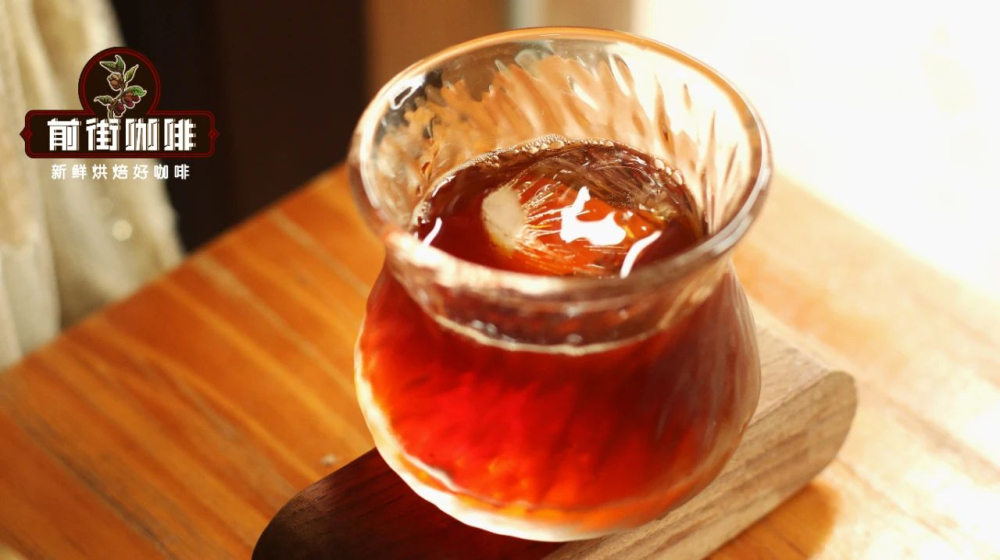
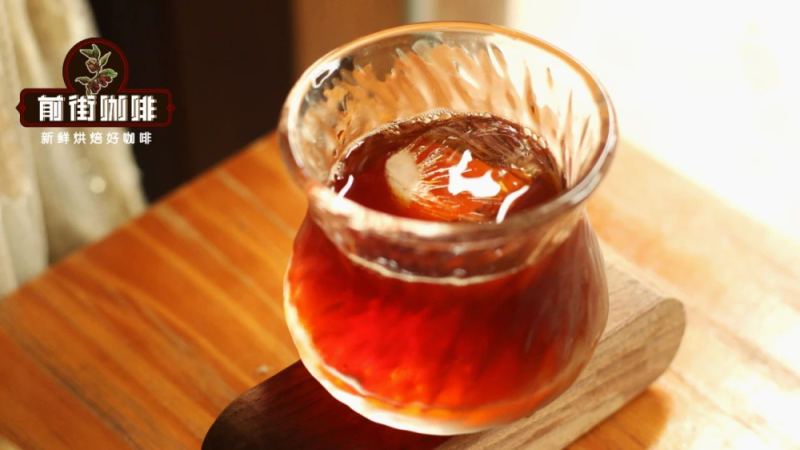
After summer begins, more and more cafes are putting ice drip coffee back on the menu. What exactly is ice drip coffee? Simply put, it uses a mixture of ice and water to let water drip slowly, drop by drop, onto coffee grounds to complete extraction. The entire extraction process usually lasts 6 to 12 hours, taking a long time, so the price of ice drip coffee is also relatively high.
On FrontStreet Coffee's menu, limited by equipment conditions, the cold brew coffee section only offers ice drip coffee. At the same time, the structure of ice drip coffee equipment is relatively complex, which also discourages many enthusiasts who want to recreate it at home.
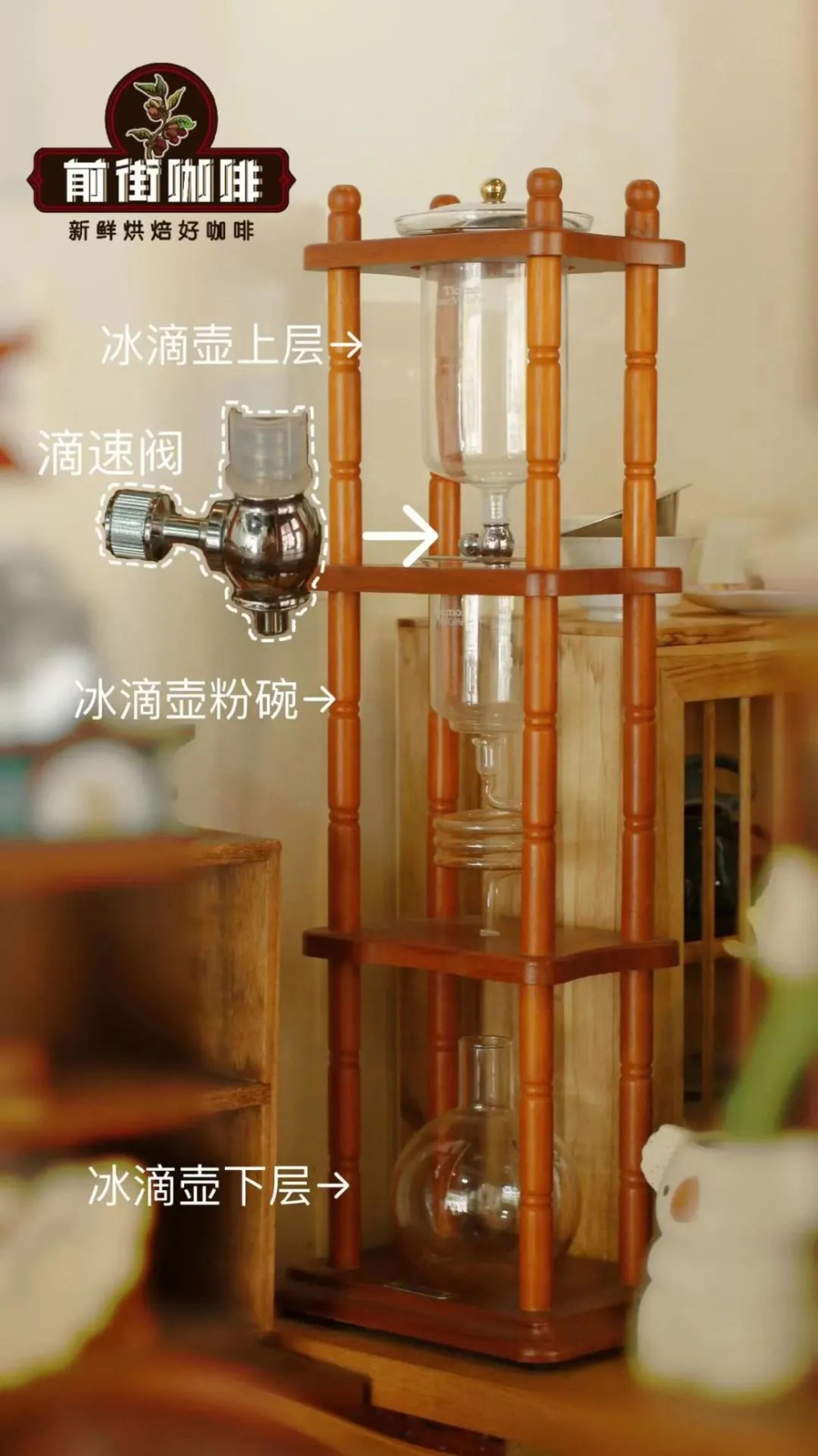
The device FrontStreet Coffee uses to make ice drip coffee is placed next to the espresso machine. The entire setup consists of five parts: a water container, a regulating valve, a powder cup, a serpentine tube, and a container for holding the coffee liquid. Each part has a clear role — the water container holds the ice-water mixture, the regulating valve controls the drip rate, the powder cup holds the coffee grounds, the serpentine tube makes it easy to observe the color of the coffee liquid, and the container at the bottom collects the extracted coffee liquid.
The specific operating parameters for FrontStreet Coffee to make ice drip coffee are as follows:
Coffee dose: 60 grams
Coffee-to-water ratio: 1:10
Grind size: 85% pass rate through a Chinese standard No. 20 sieve
Time: 6–8 hours
1. Take out the powder cup, wet the bottom and place filter paper so it fits tightly
2. Pour the 60 grams of ground coffee into the powder cup, level the surface, and place a round filter paper on top
3. Pour in a small amount of ice water or room-temperature water to wet the coffee grounds
4. Add an appropriate amount of ice-water mixture to the water container
5. Adjust the regulating valve to a speed of 5 drops every 10 seconds
6. After extraction is complete, put the coffee liquid into a sealable container and place it in the refrigerator to cold-ferment overnight before drinking
The equipment cost and time cost of ice drip coffee are both high, so people's enthusiasm for making it at home is naturally not high. However, this does not mean that cold brew coffee cannot be made at home.
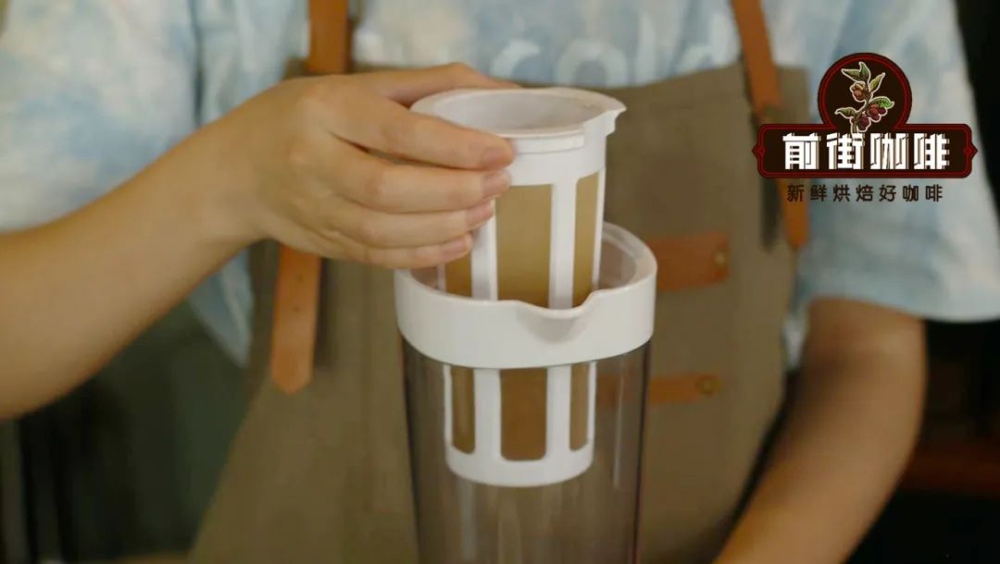
Even without ice drip equipment, that should not be a reason stopping you from making cold brew coffee at home. Literally understood, cold brew coffee is a beverage obtained by extracting coffee grounds with low-temperature water. According to this logic, ice drip coffee is a type of cold brew, and cold steeped coffee is likewise a member of the cold brew family.
So, wanting to drink refreshing iced coffee at home is actually not difficult at all. Next, FrontStreet Coffee will introduce the method for making cold steeped coffee.
The specific operating parameters for FrontStreet Coffee to make cold steeped coffee are as follows:
Coffee dose: 60 grams
Coffee-to-water ratio: 1:10
Time: 8–12 hours
Grind size: 85% pass rate through a Chinese standard No. 20 sieve
1. Choose a sealable container
2. Pour the ground coffee into the container
3. Pour in room-temperature water at a coffee-to-water ratio of 1:10
4. Refrigerate for 8–12 hours
5. Take it out and filter it
6. Seal the filtered coffee liquid and refrigerate for 12 hours before drinking
[About Grind Size]
The water temperature used for cold brew coffee is very low, clearly different from the roughly 90°C water temperature used for everyday pour-over coffee. During low-temperature extraction, the rate of substance exchange slows greatly. Therefore, in addition to lengthening the extraction time, the coffee beans must also be ground finer to increase the contact area between water and the surface of the coffee particles as much as possible, extracting as much of the ideal flavor substances from the coffee grounds as possible.
However, once the coffee grounds are too fine, too many flavor substances will be brought out, including unpleasant bitterness; if ground too coarse, the final result will be vague flavor and a thin mouthfeel. After repeated testing, FrontStreet Coffee found that a grind size with an 85% pass rate through a Chinese standard No. 20 sieve is relatively ideal.
[About Coffee-to-Water Ratio]
Taste has always varied from person to person. Every drinker has a different preference for coffee strength; some prefer it strong, while others like it light. Therefore, when making ice drip coffee, FrontStreet Coffee usually uses a coffee-to-water ratio of 1:10, then adds ice cubes to the cup when serving. If you want it stronger, drink it quickly; if you prefer it lighter, you can wait for the ice cubes to slowly melt, and as they melt, the coffee concentration decreases accordingly.
[About Coffee Beans]
Cold brew coffee is extracted over a long time at low temperature. More small-molecule substances in coffee beans, such as floral aromas and fruit acids, are extracted, while large-molecule bitter substances such as tannic acid are not easily extracted. In addition, after extraction is complete, it still undergoes 12 hours of low-temperature cold fermentation, so the flavor has an obvious fermented quality as well as the sweet fragrance of the coffee beans themselves, with a viscous, smooth, and refreshing mouthfeel.
For this reason, when selecting beans for cold brew, FrontStreet Coffee generally leans toward varieties with better acidity or unique flavors. Among them, Kenyan coffee beans and Honduras Sherry coffee beans are both good choices.
FrontStreet Coffee: Kenya Asaliya Coffee Beans
Region: Thika, Kenya
Processing plant: Asali Honey Processing Plant
Altitude: 1550–1750 meters
Variety: SL28, SL34
Processing method: K72 washed processing method
FrontStreet Coffee: Honduras Sherry Coffee Beans
Region: Marcala, Honduras
Estate: Mocha Estate
Altitude: 1500–1700 meters
Variety: Caturra, Catuai, Pacas
Processing method: Fine washed & whiskey barrel fermentation
The ice drip coffee made with FrontStreet Coffee's Kenyan coffee beans has flavors of smoked plum, cherry tomato, and caramel. It is overall sweet and sour, very refreshing, and very suitable for quenching thirst and cutting richness in the hot summer.
The ice drip coffee made with FrontStreet Coffee's Sherry coffee beans, however, presents rich vanilla, cream, and oak barrel flavors. With the support of low-temperature long fermentation, the overall effect is like drinking Sherry whiskey, quite unique.
For more coffee bean information, please follow Coffee Workshop (WeChat public account cafe_style)
For professional coffee knowledge exchange, please add WeChat ID kaixinguoguo0925
The above content is compiled by CoffeeHunters, a coffee news website.


