








What flavors come from Colombia's main coffee regions?
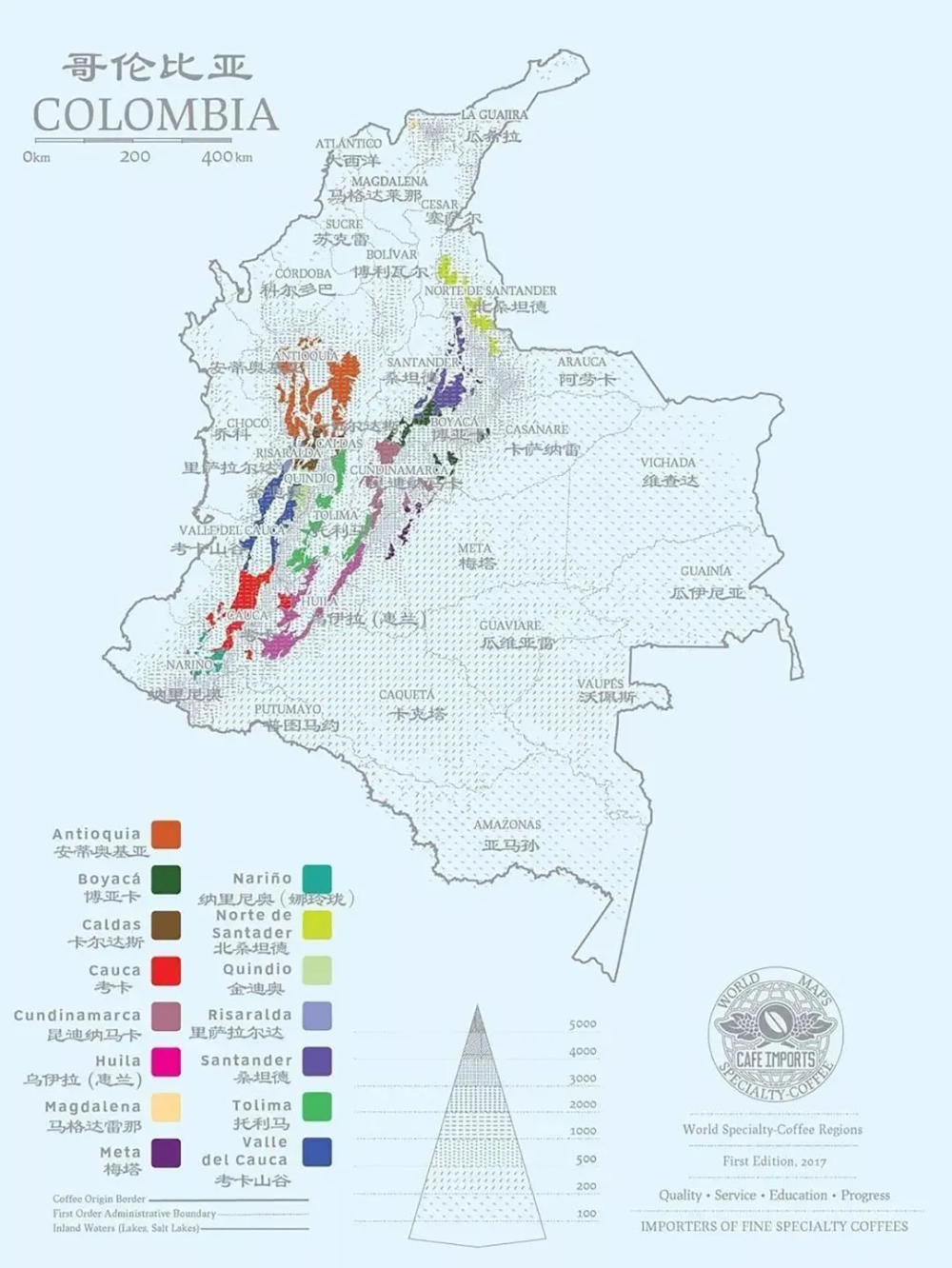
Colombia's specialty coffee is concentrated in the Eastern and Central Cordilleras and the south, with five representative regions: Medellin, Santander, Huila, Cauca, and Narino. Differences in altitude, microclimate, and soil produce a wide flavor range, from nutty and chocolate notes to berry and peach, and Huila coffee is among the most frequently praised for balance and clarity.
Geography supports the industry: Colombia holds both Atlantic and Pacific ports, the only South American country with that setup, so export transport costs run low. Medellin, Armenia, and Manizales form the MAM Coffee Golden Triangle along the Central Cordillera, where beans are plump and well balanced. The region also took first place in the SCAA cupping competition for four straight years between 2008 and 2011.
Colombia, with its geographic advantage of dual ports on the Atlantic and Pacific, has become the country with the lowest coffee export transportation costs in South America. Its specialty coffee regions are mainly distributed across the Eastern and Central Cordilleras and the southern region, with the five most representative regions being Medellin, Santander, Huila, Cauca, and Narino. Due to differences in altitude, microclimate, and soil, these regions present a rich flavor spectrum ranging from nutty chocolate to berry and peach. Front Street Coffee has conducted in-depth cupping of beans from each region. This article systematically reviews the flavor characteristics and growing conditions of the five major regions, and includes Front Street's recommended roasting and brewing parameters for each bean, helping coffee enthusiasts gain a comprehensive understanding of the unique charm of Colombian coffee.

For more specialty coffee knowledge, please follow our WeChat official account: Front Street Coffee (FrontStreet Coffee)
Front Street's Colombian coffee beans have a full, solid aroma, bright and elegant acidity, and excellent overall balance, with occasional nutty notes and a long finish. Between 2008 and 2011, this region won first place in the SCAA cupping competition for four consecutive years, and its appearance and quality are both superior.
In this article, Front Street will discuss the coffee beans from five major specialty regions in Colombia and take a look at how each region's flavors perform~
Colombia has both Atlantic and Pacific ports, a geographic location that provides important convenience for its coffee to be sold globally. Among South American countries, only Colombia enjoys this advantage, so transportation costs are far lower than other origins. Colombia's traditional main producing regions are clustered around the Eastern Cordillera and Central Cordillera, as well as Huila, Cauca, and Narino in the south.

The core growing areas distributed along the Central Cordillera include Medellin, Armenia, and Manizales. Among these three, coffee beans from the Medellin region are plump, aromatic, and well-balanced in acidity, and are regarded as the highest quality region. The three are sometimes collectively called the MAM Coffee Golden Triangle (taking the first letters of the three city names). The Eastern Cordillera is mainly represented by regions such as Santander. Although Huila, Cauca, and Narino at the southernmost tip of southern Colombia have limited production, thanks to the special microclimates brought by altitude, terrain, and soil, coffees from these areas show excellent acidity and distinctive flavors, with high taste rankings and outstanding texture, and have become highly sought after by coffee enthusiasts worldwide in recent years.
Medellin Located in northern Colombia, it has rich flavor layers, pleasant acidity, and a prominent yet intriguing sweetness. Coffee beans from this origin are suitable for dark roasting, which can release a rich aroma. Medellin exported by the FNC association is superior to ordinary Medellin in cup consistency and cleanliness, so its price is higher, and buyers are also more inclined to choose beans exported by the FNC association. Coffee from the Medellin region is of excellent quality, with plump beans and a strong fragrance, and is deeply favored by coffee enthusiasts.
Santander Department Located in northern Colombia, bordered by the Magdalena River to the west, with a growing altitude of about 1,400 to 1,600 meters and an area of 30,537 square kilometers. Santander Department is extremely important in Colombia's coffee landscape but is rarely mentioned—it is actually the first province in Colombia to begin growing coffee and currently accounts for about 5% of the country's coffee production. Through cupping, Front Street Coffee (FrontStreet Coffee) found that coffee beans from this region are known for their strong taste, long-lasting sweetness, and unique fresh herbal flavor.
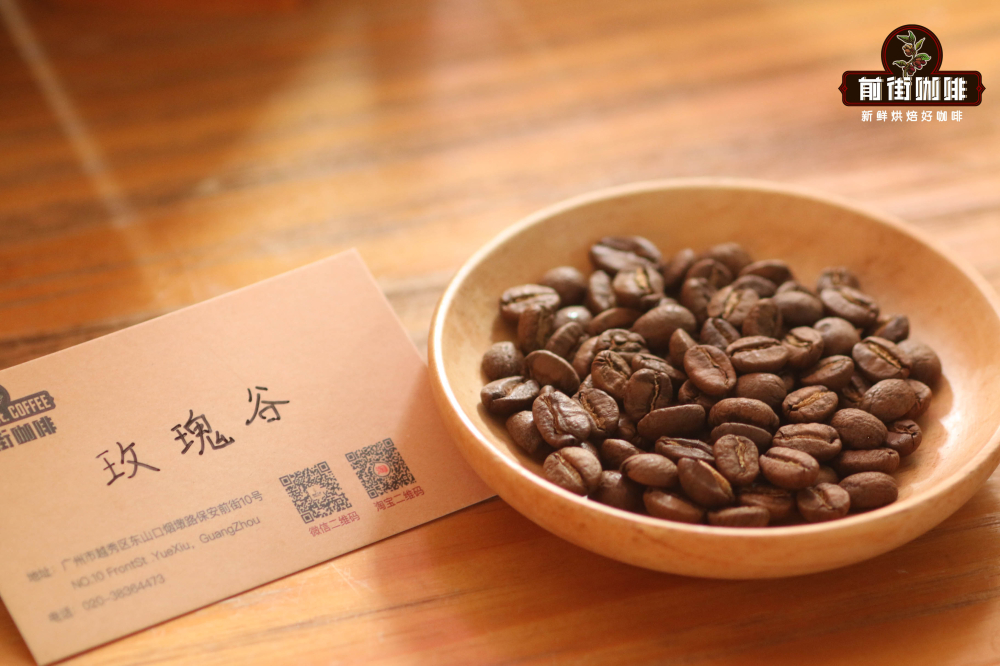
Front Street Coffee (FrontStreet Coffee) — Front Street Colombia Rose Valley Coffee Beans Region: Colombia, Santander Process: Anaerobic Double Enzyme Washed Altitude: 1700m Variety: Caturra Brewing flavor: Stunning peach characteristics, accompanied by the aroma of roses and liqueur chocolate, fragrant and rich, like drinking peach juice on the first sip. It has both the high-quality sweet-tartness of black grapes and the silky mouthfeel of creamy toffee.
Front Street Coffee (FrontStreet Coffee) Roasting Recommendations for Front Street Rose Valley Coffee Beans Yangjia 800N, bean load 500g. Charge temperature 180°C, initial power 130, airflow 3. When reaching 140°C, keep the power unchanged and open the airflow to 4. At this stage, the beans slowly change from the initial green of raw beans to yellow, the original grassy smell of the raw beans gradually disappears, and they enter the dehydration state. 6'25" is the yellowing point of the beans. At this moment, the beans show a sweet aroma like baking bread. At 180°C, reduce the power to 100 and keep the airflow at 4.
At 9'38", ugly wrinkles and dark patches appear on the bean surface, and the bread-baking smell clearly turns into coffee aroma, which can be defined as the prelude to first crack. At this time, listen carefully for the sound of first crack. First crack begins at 10'20", open the airflow to 4, develop for 1'50 after first crack, and drop at 196°C. Since Front Street Colombia Anaerobic Natural Flower Night Moon is an anaerobic natural bean, try to extend the dehydration time to around 9 minutes to 9 minutes 30 seconds, so that the beans are roasted thoroughly and avoid conditions such as uneven roasting. After first crack, develop to 1'50 and discharge at 196°C.
Huila Located in southwestern Colombia, it is one of the main coffee-growing areas and accounts for 12% of Colombia's total coffee production. Because the Huila region is filled with famous coffee-growing areas, the names of various small areas have become brand names and circulate in the market. Through cupping, Front Street Coffee (FrontStreet Coffee) found that coffee from the Huila region has strong flavors of nuts, chocolate, and caramel.
Front Street Coffee — Front Street Colombia Huila Coffee Beans Region: Colombia, Huila Altitude: 1500-1800 meters Variety: Caturra Process: Washed Flavor: Nuts, dark chocolate, caramel, soft fruit acidity.
Front Street Coffee (FrontStreet Coffee) Roasting Front Street Colombia Huila Coffee Beans Recommendations Yangjia 800N, bean load 500g. Charge when the roaster temperature reaches 185°C, set airflow to 3, power 120, turning point 1'32", 98.6°C; when the roaster temperature reaches 140°C, open the airflow to 4; at this time the bean surface turns yellow, the grassy smell completely disappears, and it enters the dehydration stage. When the roaster temperature reaches 192°C, adjust the power to 80 and open the airflow to maximum 5; at 8'30", ugly wrinkles and dark patches appear on the bean surface, and the bread-baking smell clearly turns into coffee aroma, which can be defined as the prelude to first crack. At this time, listen carefully for the sound of first crack. First crack begins at 9'15", develop for 3'00 after first crack, and drop at 202°C.
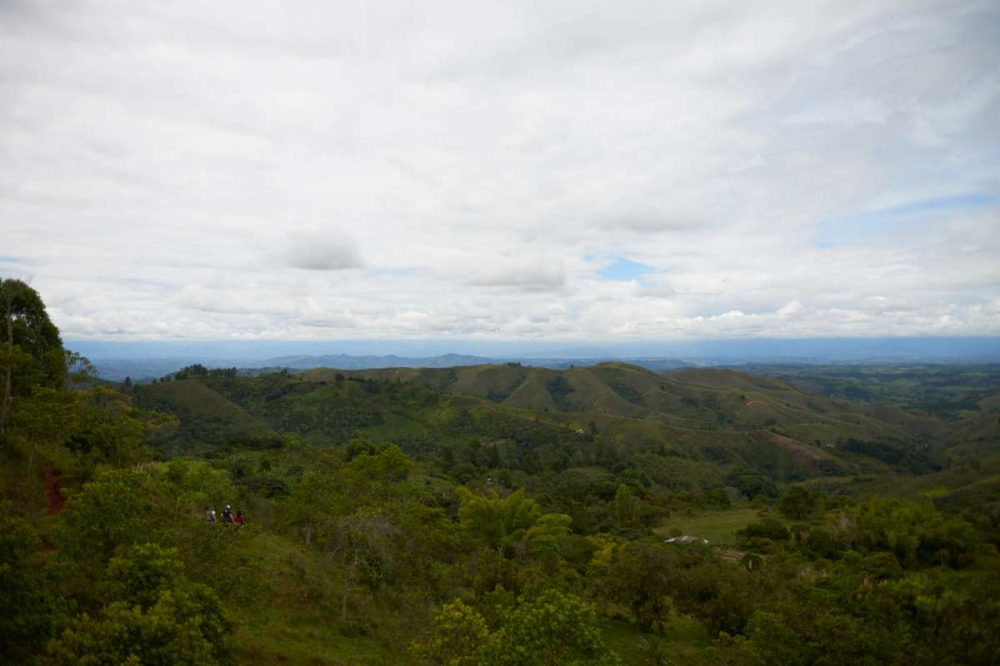
Cauca Department Located in southwestern Colombia, it accounts for 8% of Colombia's total coffee production. It is a region certified for Colombian coffee origin, with an average altitude of 1,758 meters and a maximum altitude of up to 2,100 meters. 80% of Cauca Department is mountainous. Its biggest climatic difference from other regions is the relatively large temperature difference, with a day-night temperature difference of 11°C and an average daytime temperature of 18°C. The day-night temperature difference is an important factor in producing high-quality coffee. Low nighttime temperatures and relatively higher altitudes slow the growth rhythm of coffee, allowing the coffee beans to more fully absorb nutrients from the coffee cherries. Front Street believes that it is precisely this high-altitude growing environment that creates Cauca coffee's better acidity and widely praised special sweetness.
Front Street Coffee (FrontStreet Coffee) — Front Street Colombia Cherry Blossom Coffee Beans Region: Colombia, Cauca Altitude: 2050m Variety: Castillo Process: Double Anaerobic Washed Flavor: Berry juice-like mouthfeel, strawberry jam, mint tea sensation, lingering finish of mugwort and basil.
Front Street Coffee (FrontStreet Coffee) Roasting Recommendations for Front Street Colombia Cherry Blossom Coffee Beans Yangjia 800N, bean load: 480g. Charge when the roaster temperature reaches 165°C, set airflow to 3, power 120; turning point 1'32"; when the roaster temperature reaches 115°C, open airflow to 4; when the roaster temperature reaches 152.9°C, yellowing point 6'00", at which point the bean surface turns yellow, the grassy smell completely disappears, and it enters the dehydration stage.
At 8'27", ugly wrinkles and dark patches appear on the bean surface, and the bread-baking smell clearly turns into coffee aroma, which can be defined as the prelude to first crack. At this time, listen carefully for the sound of first crack. First crack begins at 10'10", open the airflow fully, and reduce the power to 50 at 178°C; after first crack, develop for 1'30", and drop at 193°C.
Narino Located at the southwesternmost tip of Colombia, it accounts for only 3% of the country's total production. Narino has natural conditions for producing high-quality coffee: it is close to the equator, located near 1 degree north latitude, with abundant sunshine throughout the year; most altitudes are above 1,600 meters, and snow-capped peaks are not uncommon within its territory year-round. Steep high mountains and narrow, long slopes create variable temperatures. The warm, humid air rising from the valleys protects high-altitude coffee from frost damage, so coffee can be grown smoothly even at 2,300 meters. Volcanic soil provides sufficient nutrients for coffee growth. Narino's annual rainfall is distributed in a peak pattern, with one rainy season from October of the current year to May of the following year, and the dry season in June, July, and August.
However, even in the dry months, coffee farmers do not need to worry too much. The warm currents brought by trade winds from the southern continent meet the cool nights and produce water vapor, replenishing water for the coffee trees. Usually, after a continuous dry period followed by a rainfall, the coffee trees usher in the flowering season. In Narino, after the first rainfall in September, the coffee flowering season begins. Correspondingly, starting in April of the following year, the harvest season begins one after another. In high-altitude regions, the harvest season may continue until August.
Front Street Coffee (FrontStreet Coffee) Brewing Notes Dripper: Hario V60 #01 Water temperature: 90-91°C Dose: 15 grams Coffee-to-water ratio: 1:15 Grind size: medium-fine grind / caster sugar size (80% passing through a No. 20 sieve)
Front Street recommends using freshly roasted coffee beans for brewing, as this allows you to experience the coffee's rich flavors to the greatest extent. The coffee beans shipped by Front Street Coffee (FrontStreet Coffee) are all within 5 days of roasting, because Front Street knows well that the freshness of coffee beans has a great impact on flavor. Front Street's roasting philosophy is "freshly roasted good coffee," so that every customer who places an order receives the freshest coffee when they get it. The resting period for coffee is about 4-7 days, so when customers receive it, it is exactly at its best flavor.
Front Street Coffee (FrontStreet Coffee) uses staged extraction, also called three-stage brewing: use 30 grams of water for blooming for 30 seconds, then pour in a slow circular stream until 125 grams for the stage break. When the water level is about to expose the coffee bed, continue pouring until 225 grams and stop pouring. When the water level is about to expose the coffee bed again, remove the dripper. (Start timing from the beginning of blooming.) The extraction time is 2'00"-2'10".
The above content is compiled by CoffeeHunters, a coffee news website.


