







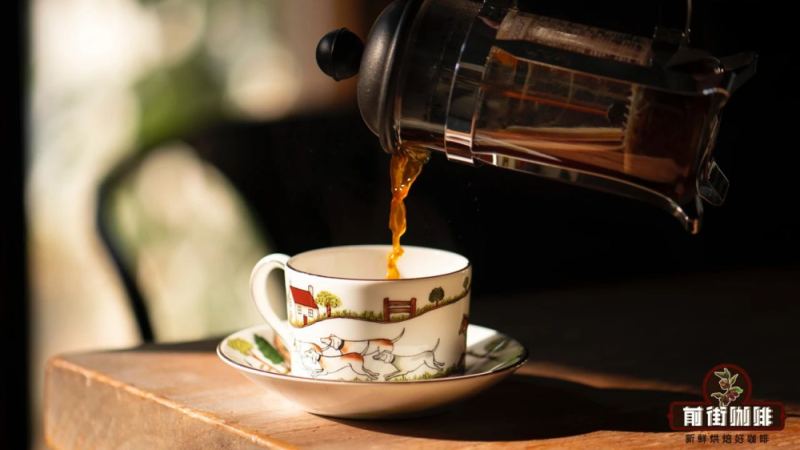
How does french press coffee differ from pour-over brewing?
French press and pour-over differ mostly in extraction method. The French press is immersion: hot water meets the grounds all at once, steeps, and a metal filter separates them, giving a mellow, balanced, full-bodied cup that is easy to repeat. Pour-over is drip filtration, where a gooseneck kettle pours water through the bed in stages.
Pour-over needs a grinder, thermometer, dripper, and gooseneck kettle, and rewards parameter changes with clearer layering. The French press turns on four factors: coffee-to-water ratio, grind size, water temperature, and steeping time. Immersion asks little technique, while pour-over gives more room to adjust flavor direction.
What exactly is the difference between a French press and pour-over coffee, and which one suits you better? From Front Street's perspective, this article systematically sorts out the core differences between these two brewing methods. The French press belongs to immersion extraction, which is easy to operate and produces a mellow, balanced cup; pour-over falls under drip filtration, with clearer layers and more room for experimentation. The article lists in detail the equipment needed for pour-over, including a grinder, thermometer, dripper, and gooseneck kettle, and gives the specific parameters recommended by Front Street; it also breaks down the four major factors affecting the French press — coffee-to-water ratio, grind size, water temperature, and steeping time. Whether you prefer rich layers or simple efficiency, you can find the answer that suits you.
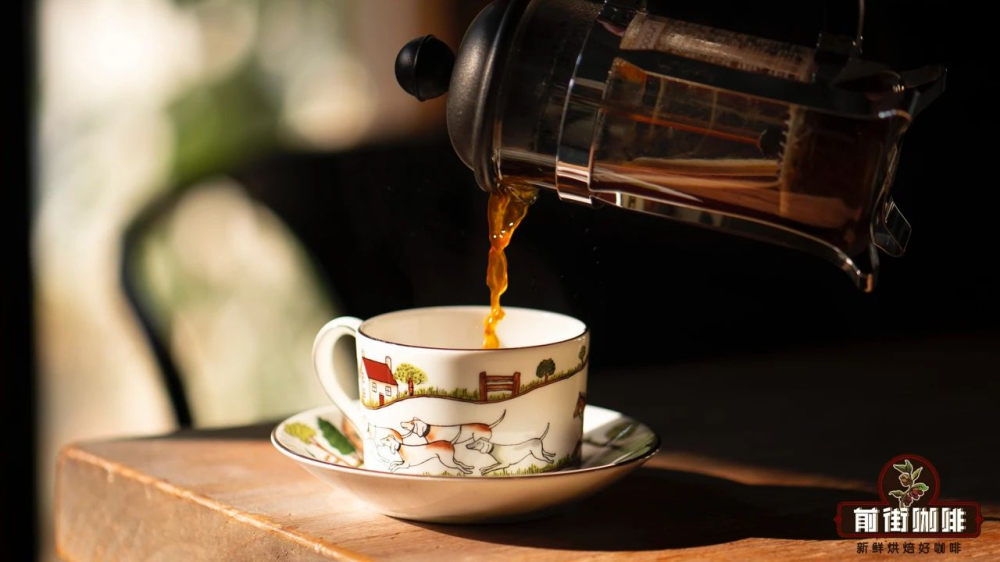
The difference between a French press and pour-over coffee, in the plainest terms, is a contest between two different approaches: immersion and filtration. The French press follows the immersion extraction route, while pour-over belongs to drip filtration. Next, Front Street will analyze these two brewing methods one by one.
The difference in taste between French press coffee and pour-over coffee
Pour-over coffee is one of the most common forms of service in today's specialty coffee shops. By adjusting various brewing parameters, baristas can bring out completely different flavor directions from the same beans. Because of this, pour-over offers more ways to play and greater room for adjustment. Pour-over uses the stream of water poured from a gooseneck kettle as the "extraction power," stirring the coffee grounds and prompting the release of flavor compounds inside. Different substances are extracted at different rates at each stage, which also gives pour-over coffee a clearer sense of layering in the cup.
By contrast, the fully immersive French press has an extraction logic equivalent to brewing tea. Hot water is poured all at once over the ground coffee, allowing the water to fully penetrate the coffee bed, waiting for the flavor compounds to dissolve out, and then using a metal filter to separate the grounds from the coffee liquid, yielding a cup of black coffee. The biggest advantage of immersion devices is that they demand little brewing skill and require no extra accessories, making them easier to master than pouring methods, which is why they have earned the title of "lazy person's coffee gear." Because the coffee remains in an immersed state throughout, French press coffee tends to have a fuller body, and its flavor expression is relatively balanced.
What equipment is needed to make pour-over coffee?
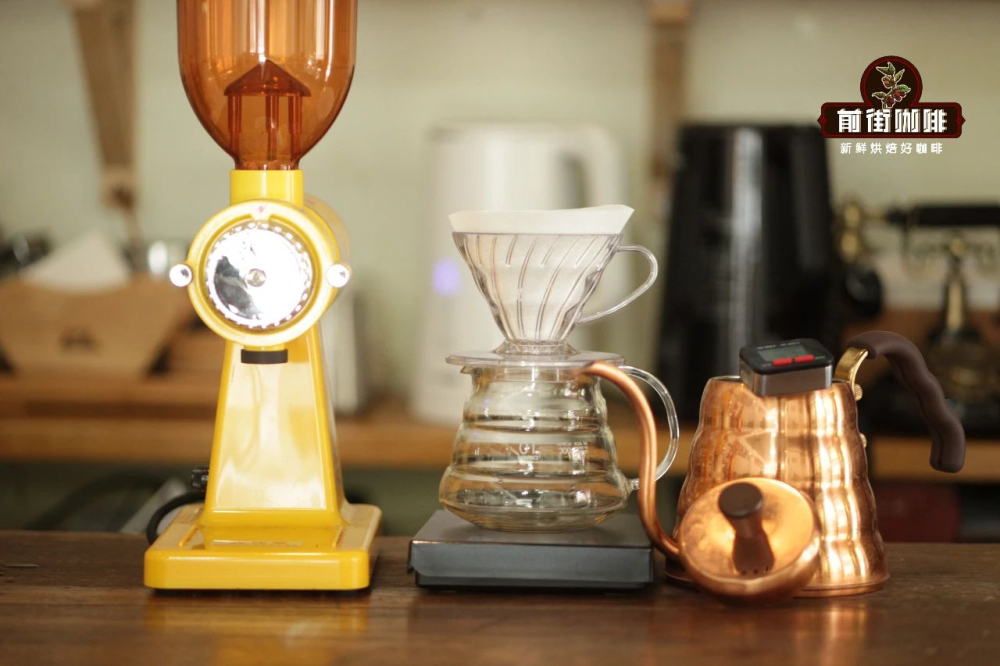
If you want to make pour-over coffee at home, the following equipment is essential: a gooseneck kettle, a dripper, a server, a grinder, filter paper, a digital scale, and a thermometer.
The grinder plays a pivotal role in the pour-over process and generally comes in two types: hand-cranked and electric. No matter which grinding device you choose, the core goal is to obtain evenly ground coffee. The coarseness of the grounds directly influences the final taste of the coffee — too coarse can easily lead to under-extraction and a weak flavor, while too fine may cause over-extraction and a bitter taste. When adjusting the grind size, Front Street uses a tool — the Chinese No. 20 0.85mm standard sieve. Take Yirgacheffe as an example: this medium-light roasted high-altitude bean is relatively hard, and in order to extract richer aromatic compounds, Front Street chooses to let the No. 20 standard sieve reach an 80% pass rate, corresponding to a setting of 10 on the shop's EK43s grinder.
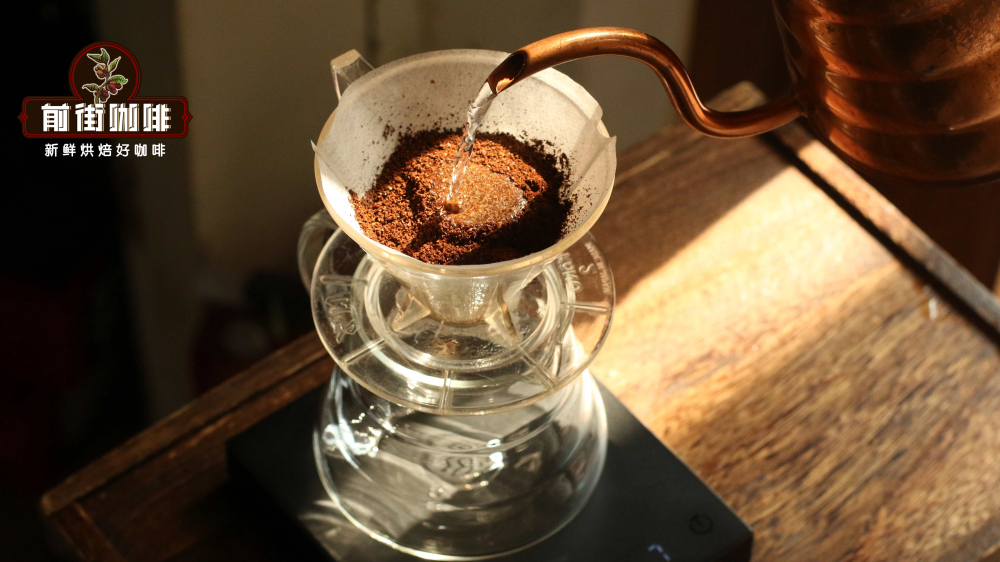
The role of the thermometer is to measure the temperature of the hot water. Water temperature and grind size are similar in effect: the higher the temperature, the stronger the extraction efficiency, the easier it is for various components to be released, and the higher the concentration becomes. If you brew with water close to boiling, it is easy to bring out unpleasant bitter compounds. Therefore, when brewing medium-dark roasted beans, Front Street uses different parameters from those for light roasts. For medium-dark roasted coffee beans, Front Street recommends keeping the water temperature at 87–90°C; light roasted coffee needs a higher temperature to bring out the aroma, so 91–93°C is used.
There is a dazzling variety of coffee drippers on the market, and different designs produce different effects during brewing, and each needs to be paired with filter paper of the corresponding specification to isolate the coffee grounds. FrontStreet Coffee shops use the Hario V60 and KONO drippers in their daily service. The V60 is mainly responsible for lighter roasted beans, while the KONO is used for darker roasted beans.
The role of the gooseneck kettle is to steadily pour hot water into the coffee bed; a fine-spout kettle can pour a stable stream of water, more evenly rinsing the coffee bed and releasing flavor compounds. The digital scale helps us keep track of the total water amount and extraction time, ensuring that brewing can be carried out according to the preset plan. Front Street recommends buying a fast-reading digital scale with a timing function, or simply searching for a pour-over coffee digital scale to purchase one.
The charm of pour-over coffee lies in being able to fine-tune various parameters and change the extraction variables at different stages, thereby obtaining the flavor and mouthfeel you prefer. Front Street believes that every item mentioned above is a key parameter affecting pour-over coffee, and only by getting them right can extraction be more stable and the flavor presentation more ideal.
So how should the French press be operated?
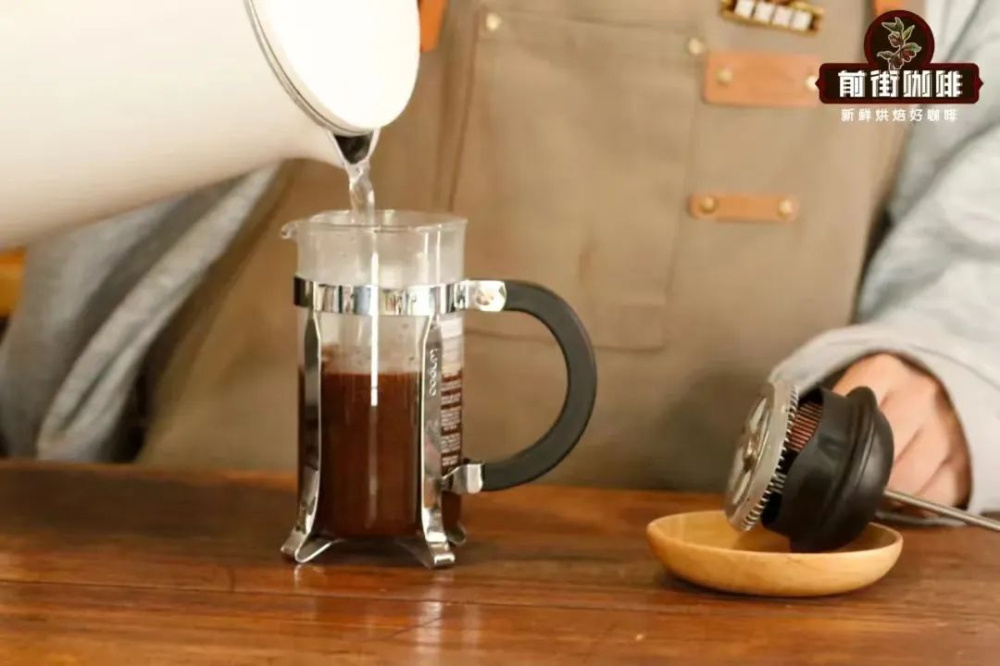
The French press consists of a cylindrical container and a lid, with a metal filter in the center of the lid that can be pulled up and down to separate the coffee grounds from the coffee liquid, thereby controlling the degree of extraction. The principle of the French press is exactly the same as brewing tea: after steeping the ground coffee in hot water for a period of time, press the plunger down, and after filtration you get the coffee liquid.
Unlike the complexity of pour-over coffee, the French press uses a "one-pour" method of adding water, making it simpler to operate, which also means there are only four factors affecting the coffee: coffee-to-water ratio, grind size, water temperature, and steeping time. Similar to cupping, the extraction process is relatively stable, and the coffee's flavor can better restore the bean's original taste.
Since the French press completes the pouring all at once, the extraction temperature gradually drops over time, so the water temperature needs to be slightly higher than for pour-over. If brewing a medium-light roasted coffee with acidic notes, 92–94°C can be used; for medium-dark roasted coffee with bitter notes, 89–90°C is recommended. In autumn and winter when room temperature is low, you can first preheat the French press with boiling water to reduce heat loss during extraction.
Time is a freely adjustable parameter for the French press. Since there is less human stirring involved, steeping time becomes one of the keys affecting the extraction yield. Under the same conditions, generally the longer the steep, the richer the taste, but it is also more prone to producing bitterness, astringency, and woody notes from over-extraction. When paired with a coarse grind, Front Street recommends steeping medium-light roasted coffee for about 4 minutes; medium-dark roasted coffee more easily extracts bitterness, so steeping for 3 minutes 30 seconds is enough. This duration can both fully release the positive flavor compounds and avoid the bitter, muddy sensation caused by steeping too long.
If you ask Front Street whether pour-over coffee or French press coffee is better, Front Street believes there is no standard answer — the one that suits you is the best. If you want to taste the richer and more varied layers of coffee, choose pour-over coffee; if you want simple operation and a cup of mellow, aromatic black coffee, choose the French press.
The above content is compiled by CoffeeHunters, a coffee news website.


