







How Does Washed Coffee Processing Shape Flavor?
Washed coffee processing removes the fruit skin, pulp and mucilage before drying, leaving a clean seed that shows the bean's own character. The method covers floating-bean sorting, depulping, pectin fermentation, rinsing, drying and hulling. In the cup it tends to bring out acidity, brightness and clarity, with little of the off-taste that fruit residue can create, so the origin's basic flavor framework comes through.
The trade-off is cost and water use: fermentation and repeated rinsing demand more labor and clean water than natural or honey methods, and drying must be managed carefully. Comparing two washed beans, Kenya Asaliya and Yirgacheffe Gutingting, shows how origin, altitude and variety still shift flavor even under the same coffee bean processing method. Global bean production is around 8.4 billion kilograms a year.
The flavor of coffee beans depends not only on variety and origin—the processing method also plays a key role. This article systematically breaks down the complete washed process—from removing floating beans and separating the skin and pulp, to fermenting away the mucilage, rinsing with clean water, drying and hulling—and takes a deep look at the washed method's pros and cons in terms of quality, appearance, cost and water usage. At the same time, Front Street Coffee uses two washed beans—Kenya Asaliya and Yirgacheffe Gutingting—as examples to compare the flavor differences brought by different origins, altitudes and varieties under the same processing method, helping readers build a more three-dimensional understanding of washed coffee.
Global coffee consumption demand continues to climb, and annual coffee bean production has reached about 8.4 billion kilograms—a truly remarkable figure. As far as the flavor of a cup of coffee is concerned, Front Street believes that beyond variety, origin and cultivation methods, there is another link that cannot be ignored—the coffee bean processing method. Different processing methods steer coffee toward completely different flavor directions.
Front Street Coffee believes that coffee beans processed by the washed method have a neat appearance, outstanding visual appeal, the highest quality ceiling, prominent acidity, strong brightness, and a clean flavor with almost no off-taste. In Front Street's view, washed beans from the same origin often represent that origin's basic flavor framework, while natural and honey processing layer aroma and some sweetness on top of that framework. So the difference between the two coffee bean processing methods can be understood this way: the washed method highlights the main flavor, while the natural method downplays the main flavor and enhances aroma and sweetness, making the whole cup more layered. In other words, washed is the taste of the bean itself, while natural is the taste of the bean plus the fruit pulp.
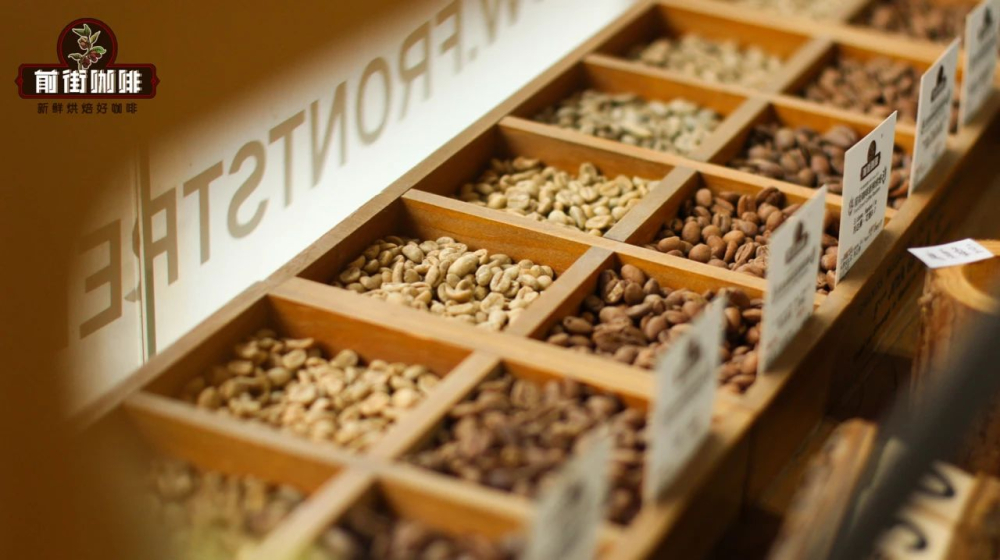
At Front Street Coffee stores, we have set up dedicated display areas showcasing beans with different coffee bean processing methods and different roast levels for everyone's reference.
Are coffee beans coffee fruit?
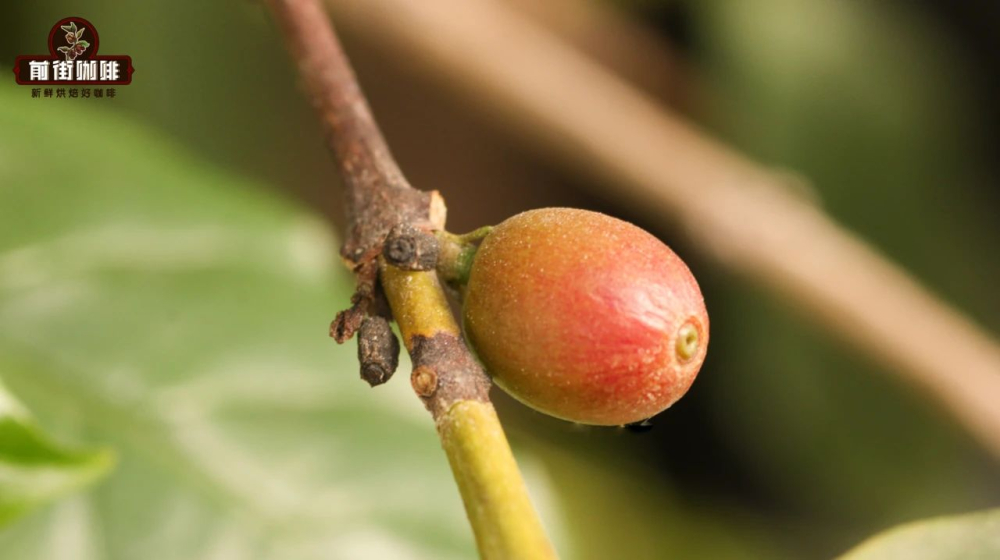
When ripe, the coffee fruit turns yellow or red and looks like a miniature cherry, which is why it is also called a coffee cherry. What we commonly call coffee beans are actually the seeds inside the coffee fruit, not the fruit itself—drinking coffee means drinking the seed. The coffee fruit consists of the skin, pulp, mucilage, silver skin and seed, and so-called coffee processing is the process of separating the coffee bean from the fruit. Different processing methods lead to different flavors when the coffee beans are brewed. Currently the most common processing methods fall into three categories: natural, washed and honey. Below, Front Street Coffee will focus on the characteristics and process of the washed method.
The skin portion is basically removed during processing.
Coffee bean: Enclosed within the silver skin is the endosperm, commonly known as the seed—our protagonist, the coffee bean.
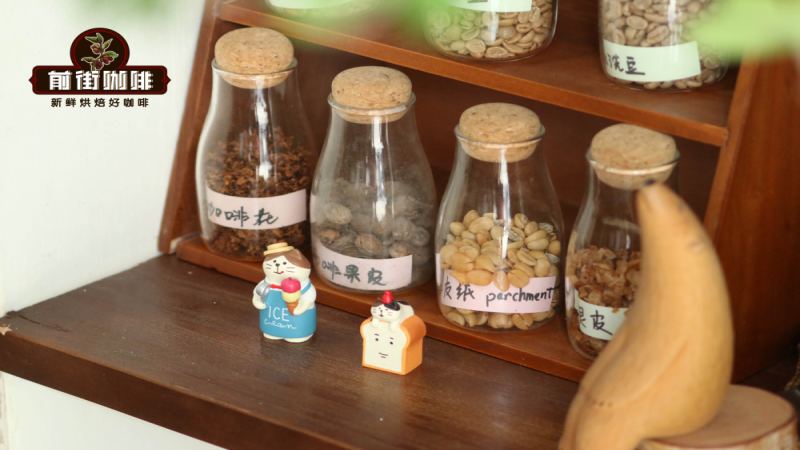
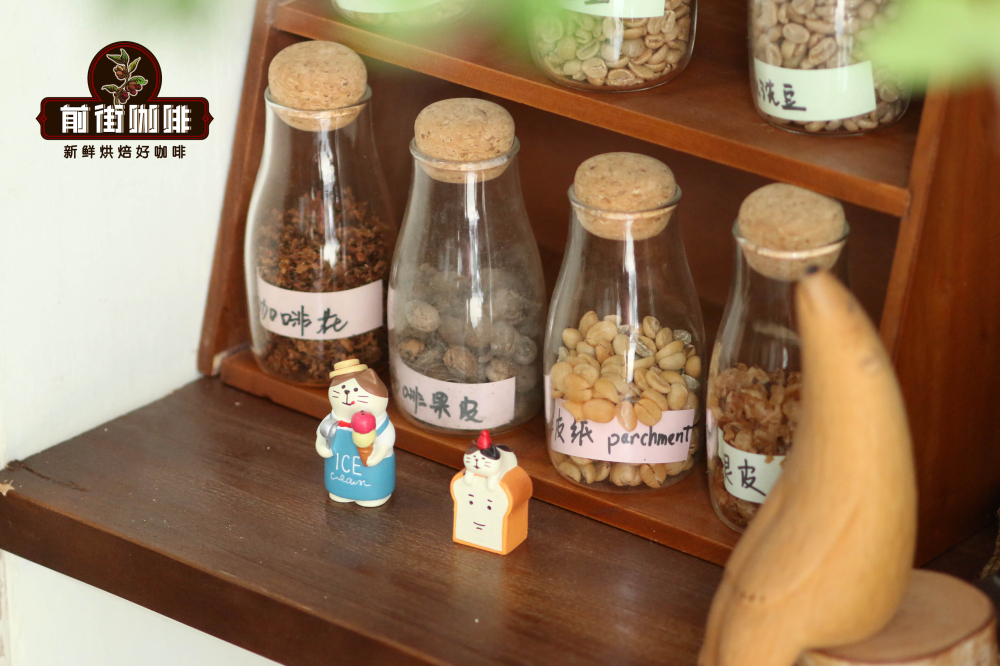
Silver skin: Inside the parchment, the coffee bean is wrapped, and tightly adhering to the bean surface is a very thin membrane much like rice paper—that is the epidermis left from seed development, known in the coffee world as silver skin or chaff. The silver skin mostly falls off during processing, especially when the washed method is used; any that does not is sometimes removed before shipment through a "polishing" step. Even without adding this step, the small amount of remaining silver skin will roughly fall off cleanly during roasting, leaving only a tiny amount of fragments caught in the narrow slit of the bean's center line; when the coffee beans are ground, these appear as pale yellow fine flakes mixed in among the grounds.
Endocarp (parchment): Below the mucilage, the layer tightly adhered to by the mucilage is a shell made of cellulose—every coffee bean has one such shell, and this shell is the endocarp. Once dried, the endocarp looks very much like Western parchment paper, hence the name parchment.
Pectin layer: Below the pulp is the pectin layer, that is, the mucilage. The mucilage is both sweet and sticky, and coffee farmers habitually call it honey (Miel). In botany, the pulp and mucilage together are called the mesocarp.
Pulp: Directly beneath the epicarp is a thin layer of pulp. Except in the dry method, the outer skin is usually removed within just a few hours after the fruit is picked, and the pulp adhering to the inner side is removed along with it, which is why the earliest depulping machines designed were called depulpers.
Epicarp: The outermost layer is the epicarp, or skin for short, similar to the skin of a cherry or cranberry but tougher. Most coffee varieties have red skin when the fruit is ripe, though some varieties are yellow or orange.
▲ Washed green beans
▲ Washed roasted beans
Washed Process:
The washed process uses fermentation to remove the pectin layer. Specifically: after removing the skin of the coffee cherry, the pectin is broken down through fermentation, then the pectin softened by fermentation is rinsed off with water, after which mechanical drying is used, taking 1 to 2 days. Of course, sun drying can also be chosen, but it takes longer, requiring 3 to 16 days. Washed coffee beans are much more convenient to process than natural ones, defective beans can be directly removed in large quantities during washing, and washed coffee beans have an excellent appearance, which is why they are so popular.
Washed coffee is formed through the following steps:
1. Removing floating beans The coffee beans are poured into a large water tank; underdeveloped, inferior beans float to the surface, while ripe, plump fruits sink to the bottom. At this point the floating beans are scooped off the surface, completing the step of removing floating beans.
2. Removing the skin and pulp Using a pulping machine, the epicarp and pulp of the coffee fruit are removed, leaving behind the mucilage, endocarp and silver skin.
3. Fermentation The purpose of this step is to remove the mucilage through biological processing. The coffee fruit that has gone through the pulping machine is fermented.
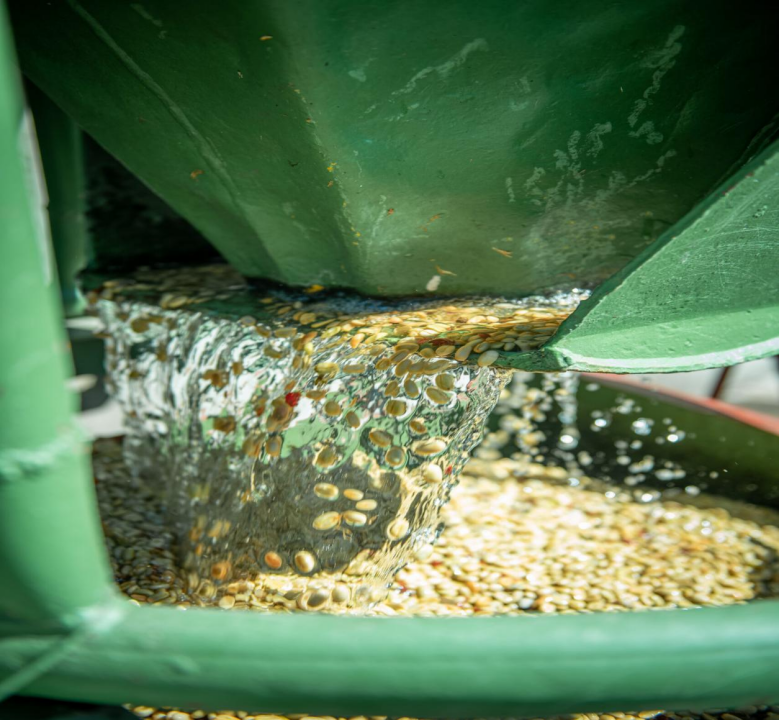
4. Washing After fermentation is complete and the mucilage removed, because fermentation bacteria and impurities remain on the coffee beans, the beans are washed once more. To wash them clean, this step consumes a large amount of clean water.
5. Drying and removing the endocarp and silver skin The coffee fruit is usually dried by machine (or sun-dried) to bring the moisture content down to 10%–14%. Then a huller is used to remove the remaining endocarp and silver skin, completing the processing.
Pros and cons of the washed coffee bean process
Pros: 1. All the processing procedures of the washed method take place indoors, so impurities in the coffee beans can be minimized and quality is highest. 2. Since the pulp is removed right at the start, there is no need to worry about mold at all, unlike with the natural method. 3. The appearance is more intact, with excellent visual appeal.
Cons: 1. The procedure is complex and cumbersome, so the cost is much higher than the natural method. 2. It uses a large amount of clean water—producing 1 kilogram of coffee beans requires 40–50 liters of clean water, so it is rarely used in regions short of water resources.
Flavor: Because of fermentation, the coffee beans usually carry bright acidity and fruity aromas.
During fermentation, biological processing is used to remove the mucilage. After fermentation is complete, a continuous supply of fresh running water must be introduced, for the purpose of washing away the fermentation bacteria and impurities remaining on the coffee beans, so a large amount of clean water is used, which is why it is rarely used in regions short of water resources. Although the washed method does not require worrying about mold, the fermentation process of washed processing does have a certain effect on coffee flavor, so generally specialty coffee enthusiasts do not adopt this processing method. Washed coffee has a clean taste with no off-flavors, and the coffee beans usually carry bright acidity and fruity aromas.
Front Street Coffee compares two washed beans—Kenya Asaliya and Ethiopian Yirgacheffe Gutingting—to see how coffee beans under the same washed processing differ.
Front Street Coffee: Kenya Asaliya coffee beans Origin: Thika, Kenya Processing station: Asali Honey Processing Station Altitude: 1,550–1,750 m Grade: AA TOP Variety: SL28, SL34 Processing method: Kenyan 72-hour washed
Roast curve These beans are plump and round, and in order to fully bring out their bright, full-bodied acidity, Front Street Coffee uses a light roast. Machine: Yangjia 800N, 550 g green beans charged Charge temperature: 200°C First crack: 5'30", 154.3°C 2'10" development after first crack, dropped at 191.6°C
Kenyan 72-hour process Abbreviated as K72. The coffee fruit is harvested when its sweetness reaches a ripeness of 21; the best fruits are selected and pulped, then soaked in a fermentation tank for 24 hours using clean river water; after 24 hours they are washed, then soaked in clean river water to ferment for another 24 hours, then washed again, then fermented again, repeated 3 times, for a total fermentation time of 72 hours. Ordinary washed fermentation lasts at most 36 hours; this repeated process of fermenting and then washing gives Kenyan coffee beans a powerful acidity and a delicate texture.
Front Street Coffee: Yirgacheffe Gutingting Cooperative coffee beans Origin: Gedeo Zone, Yirgacheffe Altitude: 1,900–2,300 m Variety: Heirloom Processing method: Washed Grade: G1
Roast curve Roaster Yangjia 800N (300 g batch) Charge temperature: 180°C, turning point: 5'00", 149.9°C, first crack: 8'42", 183.8°C, 1'48" development after first crack, dropped at 193.5°C.
Brewing suggestions Front Street Coffee experiments with the same brewing method and data.
Dripper: Hario V60; water temperature: 90°C; coffee-to-water ratio: 1:15; grind size: medium-fine (BG-6S: 80% passing a Chinese standard No. 20 sieve) Brewing technique: staged extraction. Bloom with 30 g of water for 30 seconds, then pour in a slow circular stream up to 125 g and pause; when the water level drops to the point of nearly exposing the coffee bed, continue pouring to 225 g and stop; when the water level drops to the point of nearly exposing the coffee bed, remove the dripper. (Timing starts at the beginning of the bloom.) Total extraction time: 2'00".
Kenya Asaliya brewed flavor: SL28 and SL34 from Kenya's Thika region, because the beans here have high acidity, clean and clearly defined lines, and the most solid and rich mouthfeel—a full juicy feel of smoked plum and cherry tomato, with the sweet-tart of plum in the mid-palate and a fresh pear-like finish.
Yirgacheffe Gutingting brewed flavor: Citrus and black tea on entry; as the temperature changes, cream, caramel and almond notes emerge, with an obvious sweet aftertaste and a clean, fresh, sweet mouthfeel.
From the experiment it can be seen that even for beans under the same washed processing method, the final flavor experience still differs because of other factors such as origin, altitude and variety.
When it comes to describing the taste of coffee, Front Street Coffee believes everyone will have their own interpretation, and what Front Street Coffee really wants to do is guide friends who are just getting into specialty coffee to find a connection between coffee and their taste buds, and to develop our sense of taste—this process is like a kind of training, a kind of self-aware development. And once our sensitivity has improved, we can set aside this pursuit of clearly defined flavors and adopt a more open attitude to feel the richness and variation of coffee, and more purely feel the beauty of a cup of coffee.
The above content is compiled by CoffeeHunters, a coffee news website.


