







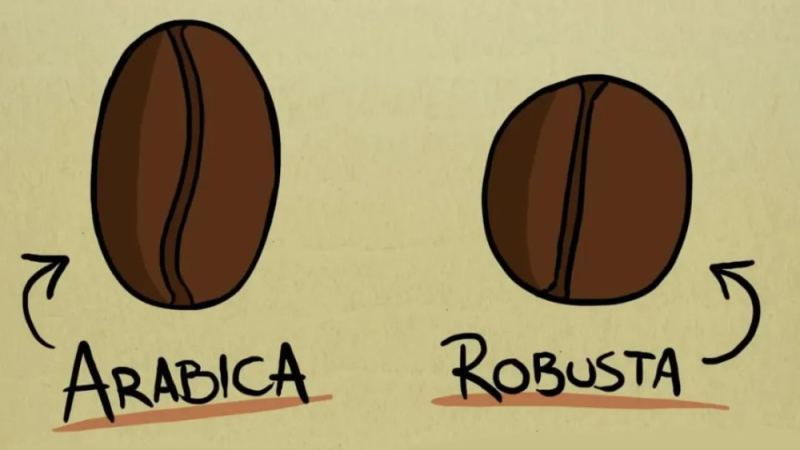
What Are Robusta Coffee Beans and Why Do They Taste Bitter?
Robusta coffee beans come from a widely cultivated commercial coffee species that is often dismissed as bitter and undrinkable. The bitterness is largely chemical: Robusta beans contain more chlorogenic acid and less sucrose than Arabica, which produces deep, heavy bitterness with notes of walnut, peanut, hazelnut, barley tea, and grain. Poor handling can add earthy or rubbery off-flavors.
Roasted dark, Robusta releases plenty of gas during espresso extraction, creating thick crema and a fuller body. That is why Italian espresso blends and commercial blends use it. One approach combines roughly 10% washed Robusta with Colombian and Brazilian beans for nutty aroma and a creamy mouthfeel, though Arabica remains the more aromatic, higher-sucrose species.
Robusta is a mainstream commercial coffee species alongside Arabica on the market, but it is often labeled as "undrinkable" and "bitter." Is it truly destined to have no place among good coffees? This article systematically examines Robusta's characteristics, advantages, and disadvantages from the perspectives of flavor causes, cultivation advantages, and specialty potential, and explains why it is indispensable in Italian espresso and commercial blends. At the same time, drawing on the formulation approach of Front Street Coffee's commercial blend, it introduces how to use 10% washed Robusta paired with Colombian and Brazilian beans to obtain thick crema, nutty aroma, and a creamy mouthfeel, helping coffee lovers rediscover this underrated bean.
For more specialty coffee knowledge, please follow the WeChat public account: Front Street Coffee (FrontStreet Coffee)
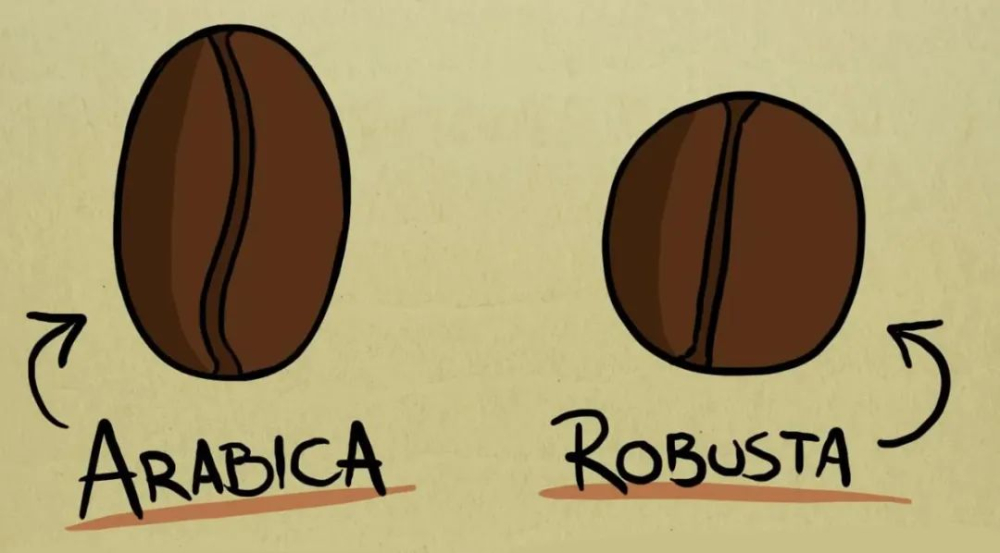
Robusta, commonly known as Robusta, is a coffee variety that is currently widely cultivated and, together with Arabica, is one of the main commercial coffee species circulating in the market. When looking up information on Robusta, evaluations such as "undrinkable" and "bitter" can be found almost everywhere. So, is Robusta synonymous with a bad cup of coffee? In this article, Front Street will introduce this often-neglected variety.
What are the characteristics of Robusta?
Robusta has a poor reputation in coffee circles, and the core reason is that its flavor performance is less appealing than Arabica's. Analysis shows that Robusta has a fairly high chlorogenic acid content and a relatively low sucrose content. Chlorogenic acid is one of the sources of coffee bitterness, often bringing a rich, deep bitterness accompanied by flavor notes such as walnut, peanut, hazelnut, barley tea, and grain; if not handled properly, it can also exhibit a strong, pungent earthy smell and negative flavors resembling rubber. Deeply roasted Robusta beans accumulate a large amount of gas, and when extracted as espresso with an espresso machine, they can release thick crema, while the solid flavor profile also adds a fuller body to the coffee. In Italy, locals prefer a strong taste and rich crema, and many coffee shops add Robusta beans in a certain proportion when making espresso to intensify that "coffee taste."
Since Robusta does not taste appealing, why do so many people still grow it?
Looking back at the history of coffee makes this understandable: before the concept of specialty coffee was emphasized, people drank coffee more to obtain caffeine and a strong coffee taste, rather than pursuing origin flavors and traceability information as they do today; growers cared about yield in order to ensure stable income. Robusta happens to possess an advantage that Arabica finds hard to match—extremely strong survivability.
Compared with Arabica, Robusta has a higher caffeine content, about 2.7%-4%, twice that of Arabica. As a plant's own natural pesticide, caffeine helps it resist most insect damage. From a cultivation perspective, Robusta coffee trees are tolerant of high temperatures, cold, drought, and moisture, with a very high survival rate. In addition, Robusta has a large yield per tree and strong adaptability to the environment, usually only needing to be planted on low-altitude plains, and can also be managed and harvested uniformly by machine, so its selling price is naturally cheaper. Therefore, Robusta has lower cultivation costs and is more suitable for commercial mass production. Robusta's characteristics of high yield, fast ripening, and low management costs fit very well with coffee-producing regions that win by volume—Vietnam, the world's second-largest producer, grows Robusta in 80% of its coffee acreage.
In addition, in recent years the coffee-growing environment has been deteriorating, which is undoubtedly a huge test for Arabica, which has always had extremely high requirements for altitude and terroir and climate. Robusta itself has very strong survivability, and its quality, yield, and flavor are not much affected by climate and terroir, which has also led more and more coffee people to pay attention to high-quality Robusta.
Does Robusta mean bad-tasting coffee?
Many people know that specialty coffee refers to Arabica, but they do not know that Robusta also has a specialty category. As is well known, coffee flavor depends not only on the variety but is also affected by factors such as climate, altitude, and soil in different places; post-processing methods, roasting, and brewing can likewise change the flavor direction of the coffee in the cup. In other words, under suitable cultivation and processing conditions, Robusta can also display positive flavors. In India, there is a Royal Robusta coffee bean that, after careful cultivation and processing, presents an extremely clean flavor profile.
Robusta's taste is overall rich and intense, and well-known top-quality Robusta is not very cheap either, so not everyone can accept it. Therefore, Front Street suggests that you can start with espresso made from Robusta blends. As Front Street mentioned above, deeply roasted Robusta produces abundant crema during extraction.
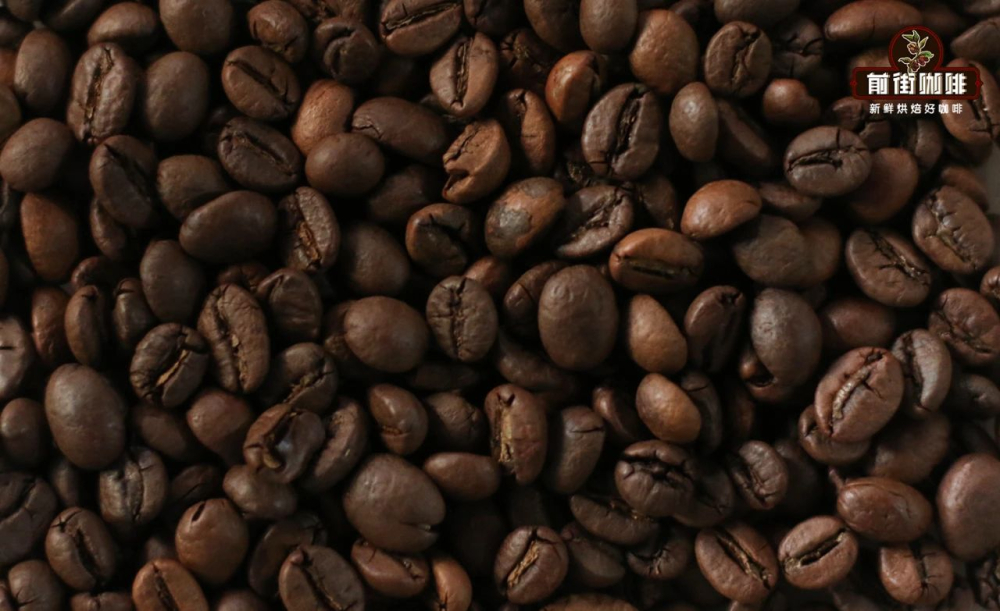
Therefore, hoping that the espresso made from one of its Italian-style blend coffee beans would present thick, aromatic crema, Front Street added 10% washed Robusta coffee beans. Combined with Colombian washed coffee beans (30%) + Brazilian semi-washed coffee (60%), it forms Front Street's commercial blend coffee beans. The resulting espresso has thick golden crema and a nutty aroma. When tasting, there is a roasted coffee bitterness, but it is accompanied more by a creamy, full mouthfeel, and after swallowing, the bitterness also dissipates, leaving fragrance on the lips and teeth.
The above content is compiled by CoffeeHunters, a coffee news website.


