







How do arabica beans shape Mandheling coffee flavor?
Mandheling coffee comes from northern Sumatra, where Arabica beans grow in a limited area of Indonesia. Its wet-hulling process, far shorter than washed processing, shapes a steady profile of woody, herbal, and spicy notes with low acidity and a full body, a style that stays distinct even as fruity, bright coffees dominate the specialty market.
Wet hulling removes skin and pulp, dries the beans briefly while still semi-dry, and finishes within days rather than the one to three weeks of washed processing. Front Street carries several Mandheling types, including Lintong and Golden Mandheling, and the article covers growing region, grade selection, and a three-pour method for nut, dark chocolate, and caramel notes.
In an era when specialty coffee increasingly pursues bright fruity acidity, Mandheling still holds an irreplaceable position with its uniquely rich and full-bodied character. Mandheling coffee from Sumatra, through its wet-hulling process, acquires a steady profile of woody, herbal, and spicy notes, making it the representative of the low-acid, full-bodied style. Front Street Coffee has long carried two classic everyday beans, Lintong Mandheling and PWN Golden Mandheling. This article will provide a complete analysis of the flavor origins of Mandheling—from growing region background, processing methods, and grade selection to specific pour-over parameters—and present Front Street baristas' recommended three-pour brewing method to help you consistently extract the clean, mellow cup interwoven with nut, dark chocolate, and caramel notes at home.
Before coffees known for their fruity acidity, such as Geisha and Yirgacheffe, swept the market, the general public's understanding of coffee's taste was simply a dark, intense, bitter, heavy black liquid. At that time, Front Street Blue Mountain Coffee, Front Street Mandheling Coffee, and Kona were the most familiar names. Among the three, Front Street Mandheling Coffee from the Asian growing region stood out the most in body. Below, Front Street will walk you through how to brew this bean and what flavor characteristics it has.
Indonesia's coffee output is dominated by commercial-grade Robusta, with higher-quality Arabica concentrated only in a few areas such as the island of Sumatra. What is customarily called Mandheling coffee refers to Arabica beans produced in northern Sumatra. Front Street Mandheling is divided into multiple subcategories based on origin, processing method, green bean appearance, and flavor performance, including Front Street Lintong Mandheling, Front Street Tiger Mandheling, Front Street Golden Mandheling, and Front Street Aged Mandheling.
The Wet-Hulling Process Shapes Mandheling's Unique Character
The entire wet-hulling process cycle is far shorter than that of the washed method. Conventional washed processing takes one to three weeks from harvest to completion, while wet hulling can finish all steps within a few days. The specific procedure is to first remove the skin and pulp of the coffee cherry, then begin drying after a brief fermentation. While the beans are still semi-dry, the parchment layer is removed, and drying continues afterward. Once the moisture content drops to around 12%, the beans can be bagged, sorted, and graded.
This processing method may seem efficient and time-saving, but without strict control, it is highly prone to moisture damage and mold in Indonesia's hot and humid environment. However, besides Sumatra, Sulawesi and Papua New Guinea also commonly adopt wet hulling. The reason is that Indonesia has a tropical rainforest climate, with air humidity maintained between 70% and 90% year-round, making it impossible to rely on long sun-drying to dry green beans. Add to that the relatively high cost of washed processing, and coffee farmers could only develop this semi-washed alternative. Although the time required for each step is greatly compressed, the green beans after parchment removal still absorb moisture from the hot, humid air, and thus Mandheling coffee takes on those deep, subdued aromas of wood, herbs, and spices.
Front Street Lintong Mandheling Coffee processed by the wet-hulling method presents exactly this grassy, woody character. After roasting, the acidity is further reduced, while the body is noticeably enhanced. Front Street believes this is precisely the classic flavor of Mandheling, and therefore included wet-hulled Front Street Lintong Mandheling Coffee in its everyday bean series. Front Street's everyday beans allow friends new to specialty coffee to experience the basic flavors of different growing regions at a very affordable price, and then gradually try more refined processing types according to personal preference.
Mandheling Coffee That Has Undergone Multiple Rounds of Hand Sorting
During the hulling step, coffee beans generate friction, and the bean temperature can rise to between 30°C and 60°C. Such conditions actually favor germination and mold growth. In addition, the semi-hard, semi-soft moist green beans are easily squeezed by mechanical force when the seed shell is removed, causing the beans to break into shapes resembling goat hooves, commonly known as goat-hoof beans. To increase the selling price of the coffee, defective beans and irregularly shaped beans must be thoroughly removed to raise overall quality.
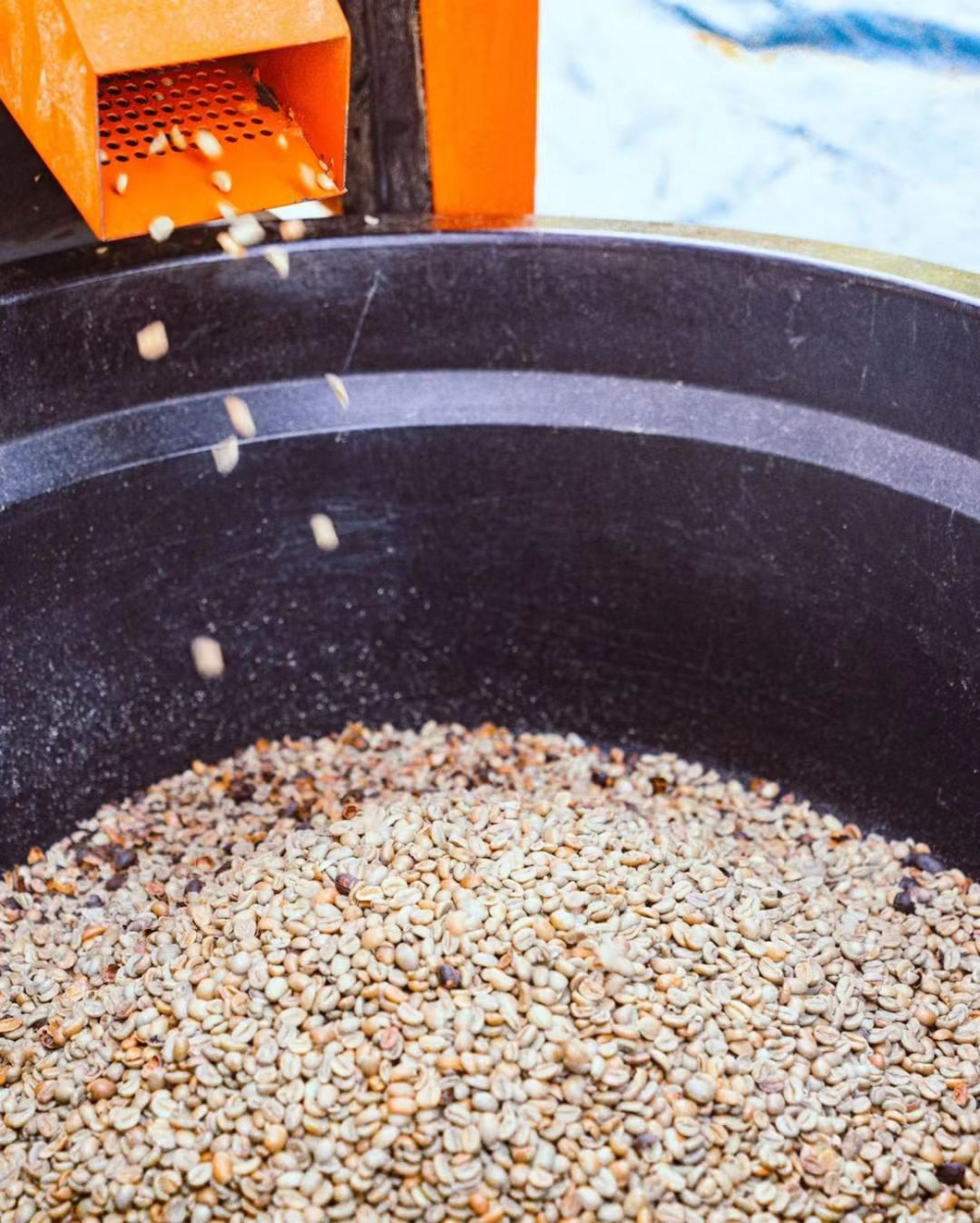
In addition to the regular version of Front Street Lintong Mandheling Coffee, Front Street's bean list also includes a best-selling Front Street PWN Golden Mandheling Coffee. PWN is the exclusive supplier of top-grade Mandheling coffee. After purchasing green beans, it first conducts one round of machine sorting, then three rounds of hand picking, ensuring that every green bean is intact, uniform, and plump, and that the screen size reaches 18 mesh or above, which is Indonesia's local G1 grade. It is said that during processing the green beans take on a golden sheen in the sunlight, hence the name Golden Mandheling. PWN not only keeps the defect rate extremely low, but also uses machines for density and color sorting before bagging, making Golden Mandheling coffee look uniform and translucent.
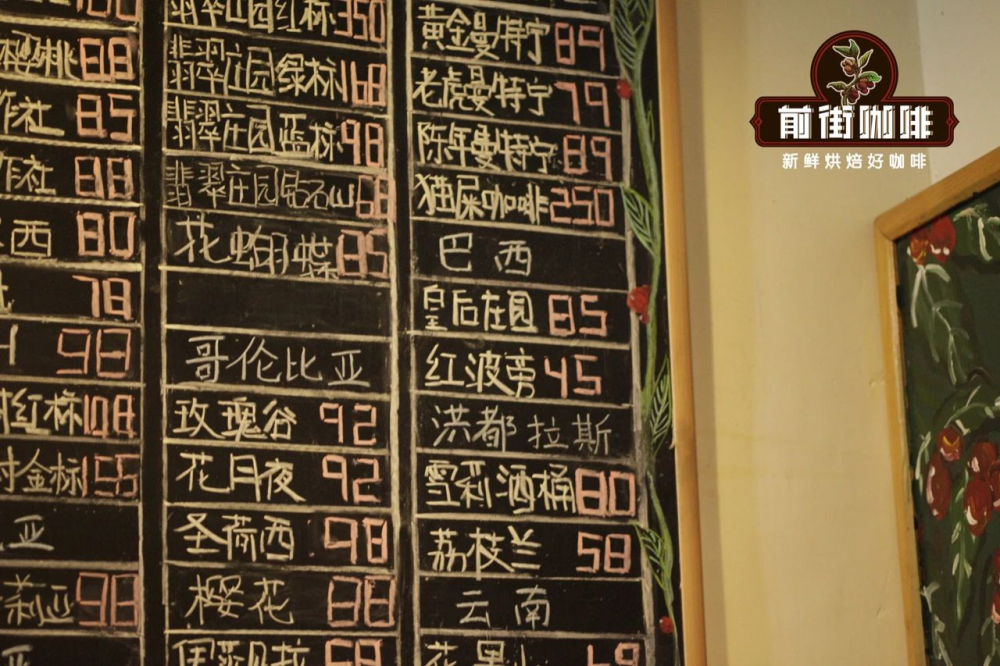
For coffee of such outstanding quality, the market naturally has no shortage of low-priced counterfeits passing off inferior goods as superior. Front Street is one of the few merchants in China selling PWN Golden Mandheling. On the wall of Front Street Coffee's Dongshankou store hangs a burlap sack of green beans printed with the PWN logo, as well as an origin certificate signed by PWN.
Pour-Over Mandheling Coffee
To extract the distinctive rich aroma of Mandheling coffee, Front Street believes the first step is to use freshly roasted beans. After roasting, coffee beans produce a large amount of gas and continue to release it over time. The resting period for light-to-medium roasts is about 4 to 7 days, while medium-dark roasts need about 7 to 10 days to reach a more ideal flavor state. The coffee beans shipped by Front Street are all freshly roasted within 5 days, so that everyone can enjoy them within the optimal tasting period upon receipt.
The low-acid, full-bodied taste of Mandheling coffee comes from a medium-dark roast level. When brewing dark-roasted beans, Front Street appropriately lowers the water temperature to avoid excessively releasing burnt bitterness with water that is too hot. For grinding, a medium coarseness is chosen, which can both extract more aroma molecules from Mandheling coffee and prevent over-extraction caused by grounds that are too fine.
For this brewing, the barista at FrontStreet Coffee wanted to highlight the richness, cleanliness, and aromatic intensity of Front Street Golden Mandheling, so a KONO dripper was chosen for extraction. Also a conical dripper, KONO has far fewer than half the guide ribs of a v60, and its upper half is a smooth curved surface, allowing the filter paper to fit more tightly. Airflow upward is restricted, so hot water can only flow downward, forming an extraction effect similar to siphon brewing, allowing the aromatic substances in the coffee grounds to be released more fully and thereby enhancing the full-bodied mouthfeel.
Pour-over parameters: water temperature 87 to 88°C, medium grind (70% passing through a Chinese standard No. 20 sieve), 15 grams of coffee grounds, coffee-to-water ratio 1:15, three-pour method.
Slowly pour the coffee grounds into the dripper, keeping them as level as possible during pouring and not shaking the dripper (shaking will reduce the gaps between coffee grounds and hinder blooming and degassing). For the first pour, pour 40 grams of water in a small circle from the center, and let it bloom for 30 seconds; the coffee bed will gradually expand and puff up into a "hamburger" shape. For the second pour, pour 120 grams of water in circles from the center outward, keeping the pouring height as close to the coffee bed as possible and slowing the motion to avoid excessive agitation. For the third pour, add 100 grams of water, and end extraction once all the coffee liquid in the dripper has flowed into the server. Total extraction time is about 2 minutes.
The pour-over Front Street PWN Golden Mandheling Coffee is layered, rich, and varied, full-bodied and intense, with a clean mouthfeel. It carries aromas of nuts, dark chocolate, and caramel, with a long sweet aftertaste and a very high overall balance.
The above content is compiled by CoffeeHunters, a coffee news website.


