







How Do Geisha Coffee Beans Differ From Huakui?
Geisha coffee beans come from Ethiopia and became famous through Panama's Hacienda La Esmeralda. Huakui, also called Guixia, is an Ethiopian bean from the Hambela area that drew attention in 2017, when Li Jianfei placed second at the World Brewers Cup China competition using it instead of the Geisha most competitors chose. Its cup showed rose, strawberry jam, cherry, peach, and a red wine finish.
Commercial coffee names usually stack country, region, and processing station, which is why the bean was exported as Hambela before a Beijing roaster renamed it Huakui. The two coffees differ in variety background, naming history, and flavor grade, and they respond to different pour-over parameters. Comparing them side by side helps drinkers see how much of a cup comes from variety and how much from processing and brewing.
Geisha and Guixia—one is a rising star from Ethiopia, the other a legend from Panama's Hacienda La Esmeralda. The two are often mentioned in the same breath, but what exactly are the differences in their variety background, naming origins, and flavor profiles? This article, from the perspective of Front Street Coffee, sorts out the path to fame of Guixia coffee, information about the processing station, the patterns of batch evolution, and provides Front Street's standard pour-over recipe, while also comparing the naming origins of Geisha and the differences in flavor grades. Whether you are a beginner just getting into specialty coffee or a seasoned enthusiast wanting to delve deeper into the stories of the producing regions, you will gain clear insights from it.
For more specialty coffee information, welcome to follow our WeChat public account: FrontStreet Coffee
What exactly do the two characters "Guixia" refer to? Are they the chief of a hundred flowers, or a peerless beauty? Do they belong to plum, orchid, or peony? The answer is none of these—it is a coffee. Front Street Guixia coffee beans originate from Ethiopia and are a bean highly sought after internationally. Why would a coffee be crowned with the name "Guixia"? Today, Front Street will take everyone to find out.
Front Street believes that to explain the ins and outs of Guixia coffee clearly, we must start with the 2017 World Brewers Cup China competition. At that time, Li Jianfei, who won second place, boldly chose this newly crowned champion bean to compete, breaking the situation where competitors on the brewing stage uniformly used Geisha, making it the only coffee at the time capable of rivaling Geisha in international competitions.
The elegant flavors presented by Guixia—rose fragrance, strawberry jam, cherry sweet-tartness, peach flesh, and a red wine finish—astonished the judges at the time. Back then, it was not yet called Guixia but was called Hambela. According to international convention, the naming of commercial coffee beans usually includes the country name, region name, and processing station (or village, micro-region, cooperative) name. Formal occasions use the full name, stacking all these together, hence lengthy names like "Ethiopia Yirgacheffe Gedeb." This bean also follows this convention, and was already named Hambela when exported from Ethiopia.
However, when a Beijing bean merchant introduced it that year, they deliberately renamed it "Guixia." They explained: "This coffee from its place of origin, though newly emerged, immediately impressed everyone. If careful attention is paid to subsequent processing, it is entirely possible for it to surpass Geisha." They used "Chief of a hundred flowers, enchanting grace" as a promotional slogan, hoping it would compete on the same stage with Geisha. In an era when Geisha almost swept honors at major world competitions, people placed high hopes on this "Guixia" that defeated many Geishas, hoping it would break Geisha's dominance and become a coffee bean that could keep pace with Geisha.
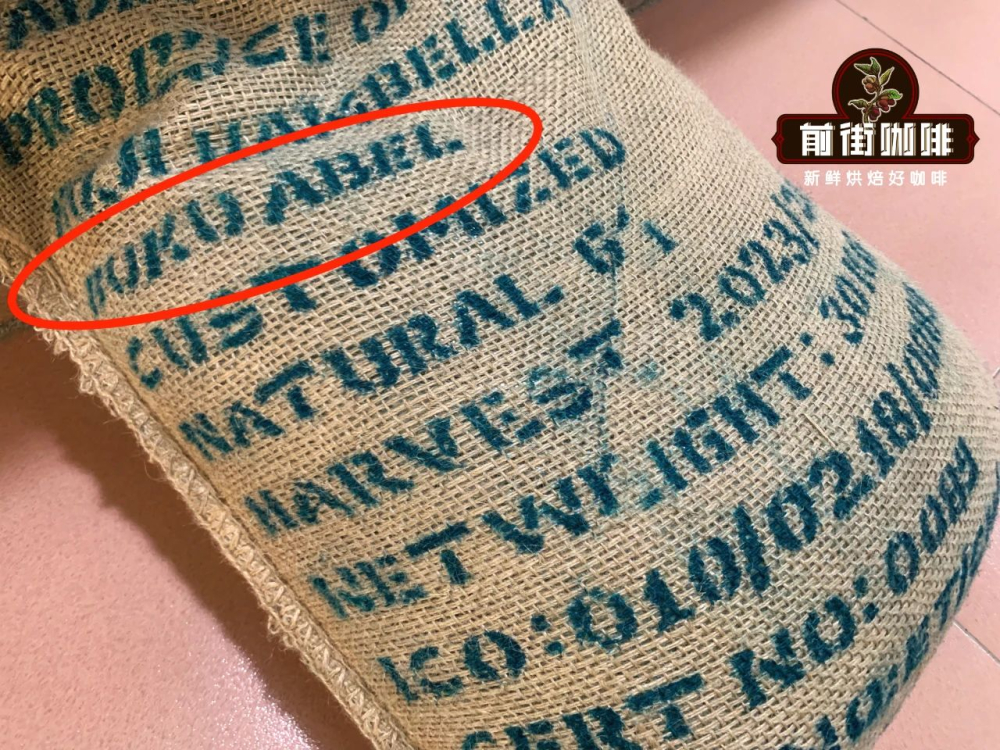
Front Street believes that the rise of Guixia coffee was no accident. Since 2016, it has repeatedly won awards in the Taste of Harvest (ToH) African coffee green bean competition, attracting global attention in the coffee world. In 2016 and 2017, Buku Abel won first place in the ToH Ethiopia natural coffee category for two consecutive years, and in 2018 also won third place in the TOH competition. This coffee is processed by the Buku Abel washing station located in the small town of Hambela Buku, about 400 kilometers south of Addis Ababa.
According to FrontStreet Coffee's investigation, coffee production at the Buku Abel washing station is supplied by the villagers of Buku. The washing station is located at an altitude of 2,000 meters. Most of the coffee grown nearby is in extremely high-altitude areas, reaching up to 2,300 meters. In high-altitude environments, Ethiopian coffee never disappoints, because the fruit takes longer to mature, and the coffee's aroma is often far above average.
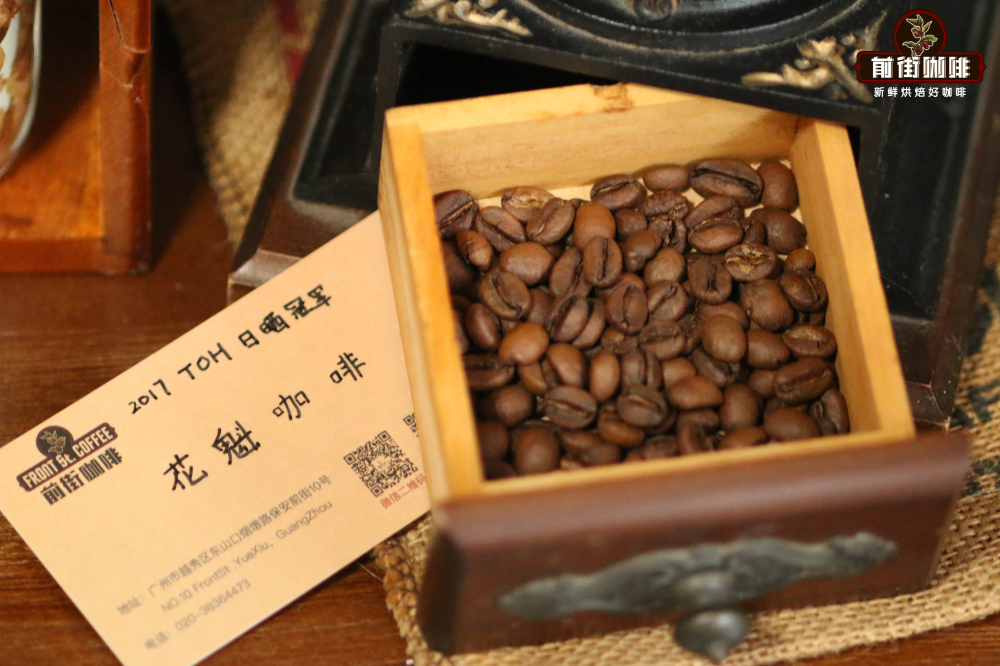
This washing station is owned and managed by coffee exporter DW Exports, which is owned by Demissie Edema. Most farmers in Buku are smallholders, with each household owning less than 2 hectares of coffee trees. Ripe cherries are sent to the washing station for processing. Since winning TOH in 2016 and 2017, the processing recipe has remained unchanged. This coffee uses classic dry processing. The key factor lies in selecting cherries according to a certain degree of ripeness, and they must be grown above 2,000 meters altitude. The selected coffee is first soaked for several hours in cold water from a nearby river that runs through the hillside, and then all floating matter is removed. Next, the cherries are placed on custom raised beds to ensure that no excess moisture soaks into the cherries during drying.
Here Front Street gives everyone a little primer: people who often buy Front Street Guixia coffee should notice that they can often buy Guixia X.0. Why is that?
In fact, since 2017, the Buku processing station has added 【X.0】 after Guixia year by year. For example, the 2018 Guixia is called Guixia 【2.0】, the 2019 one is called Guixia 【3.0】, and so on up to 2021's Guixia 【5.0】. By comparing different batches of Guixia, Front Street found that the overall flavor of each year has not changed, but to a greater or lesser extent, the coffee beans still have certain differences. Especially for the Guixia of 2018 and 2019, FrontStreet Coffee found through cupping that although flavors similar to the 2017 Guixia could be tasted, the aroma was insufficient, and the body and aftertaste were also lacking. Through comparison, Front Street found that the main source of Guixia's aroma is the small-bean coffee that appears within it. So in 2019, FrontStreet Coffee informed the green bean supplier of the relevant findings, and after 2020 Guixia split into two types: 【X.0】 and small-bean Guixia.
So how should Front Street Sidamo Guixia be brewed to taste good? Here Front Street gives everyone a standard brewing method:
FrontStreet Coffee's brewing parameters:
V60 dripper
Water temperature 91°C
Water-to-coffee ratio 1:15
Dose 15g
Grind size (80% passing through China No. 20 standard sieve)
Front Street brewing method: Use 30 grams of water for a 30-second bloom, then pour in a small stream in circles until 125 grams for a split pour. When the water level drops and is about to expose the coffee bed, continue pouring until 225 grams and stop. When the water level drops and is about to expose the coffee bed, remove the dripper. (Start timing at the beginning of the bloom.) Extraction time is 2'00".
Why does "Guixia" have to PK "Geisha"?
Front Street believes this must start with today's hottest Geisha coffee: the most well-known Geisha is exported by Panama's Hacienda La Esmeralda, and is currently recognized worldwide as the best-flavored and most expensive coffee. However, "Geisha" is a polysemous term:
1. It is a mountain village in Bench Maji, Kafa region, southwestern Ethiopia.
2. It is a coffee variety discovered in Africa in 1931 with low yield but strong disease resistance;
3. It is a coffee estate run in Gesha Village, Ethiopia, by two American photographers after a career change;
4. It is the truly specialty-grade coffee that some busybody brought out of Africa and, decades later, blossomed throughout Central and South America, with cupping scores all above 90...
The naming of "Geisha" coffee beans comes from the local Kafa language, where Gesha Village is pronounced "Gesha." However, when this coffee was introduced by European and American consuming countries, it was translated into English as "Geisha," meaning "geisha." The West originally had no geisha; this word comes from Japan, where the Japanese word "芸者" (geisha) is pronounced "gei xia." The top geisha is called "Guixia," which is identical in form and meaning in Japanese and Chinese (ancient China also called the top courtesan of a brothel "Guixia"). Therefore, naming a coffee that surpasses "geisha" as "Guixia" is entirely logical.
As for the flavor comparison between Geisha coffee and Guixia, Front Street believes it is a matter of opinion, as everyone has different preferences for flavors. Coffee of the Geisha variety and coffee of Ethiopian native species will certainly differ in flavor, and depending on the grade of Geisha coffee, the degree of refinement of its flavor also varies.
Take the taste of Front Street Hacienda La Esmeralda Geisha coffee as an example: Front Street Red Label Geisha has a more refined flavor, with noticeable juice-like quality and floral aroma, and a prominent, bright citrus-lemon acidity. In comparison, Front Street Blue Label Geisha is not as solid in mouthfeel, and its floral aroma is not concrete enough. The same is true for Front Street Guixia: Front Street small-bean Guixia has richer floral and fruity aromas. Overall, Front Street Guixia has a relatively strong fermented quality, with notes of jammy berries and tropical fruit, and an oolong tea sensation in the aftertaste.
The above content is compiled by CoffeeHunters, a coffee news website.


