







How Does Pour-Over Coffee Extraction Actually Work?
Pour-over coffee becomes far less mysterious once extraction is understood. Most brewing instability comes from not grasping the underlying logic, which leads to over-extraction one day and under-extraction the next. The core variables are water quality, bean freshness, dripper choice, grind size, water temperature, blooming, and pouring method. Working through each of these in order gives beginners a systematic framework instead of guesswork.
A V60 staged extraction shows how the pieces fit together in practice, with specific parameters and step-by-step pouring. Note that water choice alone changes the final cup even when every other setting stays the same, so filtered or purified water is recommended over tap water. Theory only sets the direction; repeated hands-on brewing is what makes results consistent over time.
Friends who are just getting into pour-over coffee often feel it's a mystical art, but once you understand the principles of extraction, many confusions can be easily resolved. Front Street Coffee has found in daily conversations with customers that most people's brewing instability stems from not understanding the logic behind pour-over. This article walks through the core knowledge of pour-over coffee one by one—from water quality selection, coffee bean freshness, equipment and dripper pairing, grind size, water temperature control, blooming techniques, to pouring methods—and uses V60 staged extraction as an example to provide specific parameters and operational steps, helping beginners build a systematic brewing framework and gradually improve stability through repeated practice.
For many coffee enthusiasts, pour-over coffee seems to carry a layer of mystery. Front Street Coffee has always felt there's no need to overcomplicate it. In conversations with customers, Front Street Coffee has noticed that most people's brewing instability comes from not understanding the principles of pour-over, resulting in sometimes over-extraction and sometimes under-extraction. Today Front Street Coffee would like to share some suggestions and techniques about pour-over coffee. Of course, theory is theory—hands-on practice is key. Front Street Coffee suggests first understanding the underlying logic of pour-over, clarifying what effect you want to achieve, then experiencing and applying it in actual practice. Most importantly, repeated practice is what gradually makes your output consistent.
[Suggestions for Pour-Over]
01 Water Quality
A good cup of coffee is inseparable from quality water. In daily brewing, never use tap water directly—filtered or purified water is recommended, and mineral water works too. However, different waters will produce subtle differences in the final taste even with the same brewing parameters. Front Street Coffee conducted a set of experiments specifically for this purpose—not to prove which water tastes better, but to demonstrate how water quality differences affect extraction flavor, for your reference.
Water Quality Test Results
Front Street Coffee selected [Front Street Coffee Sidamo Huakui Coffee Beans] to present the results of this experiment:
Front Street Coffee Brewing Coffee with Different Water Qualities
Experiment Results
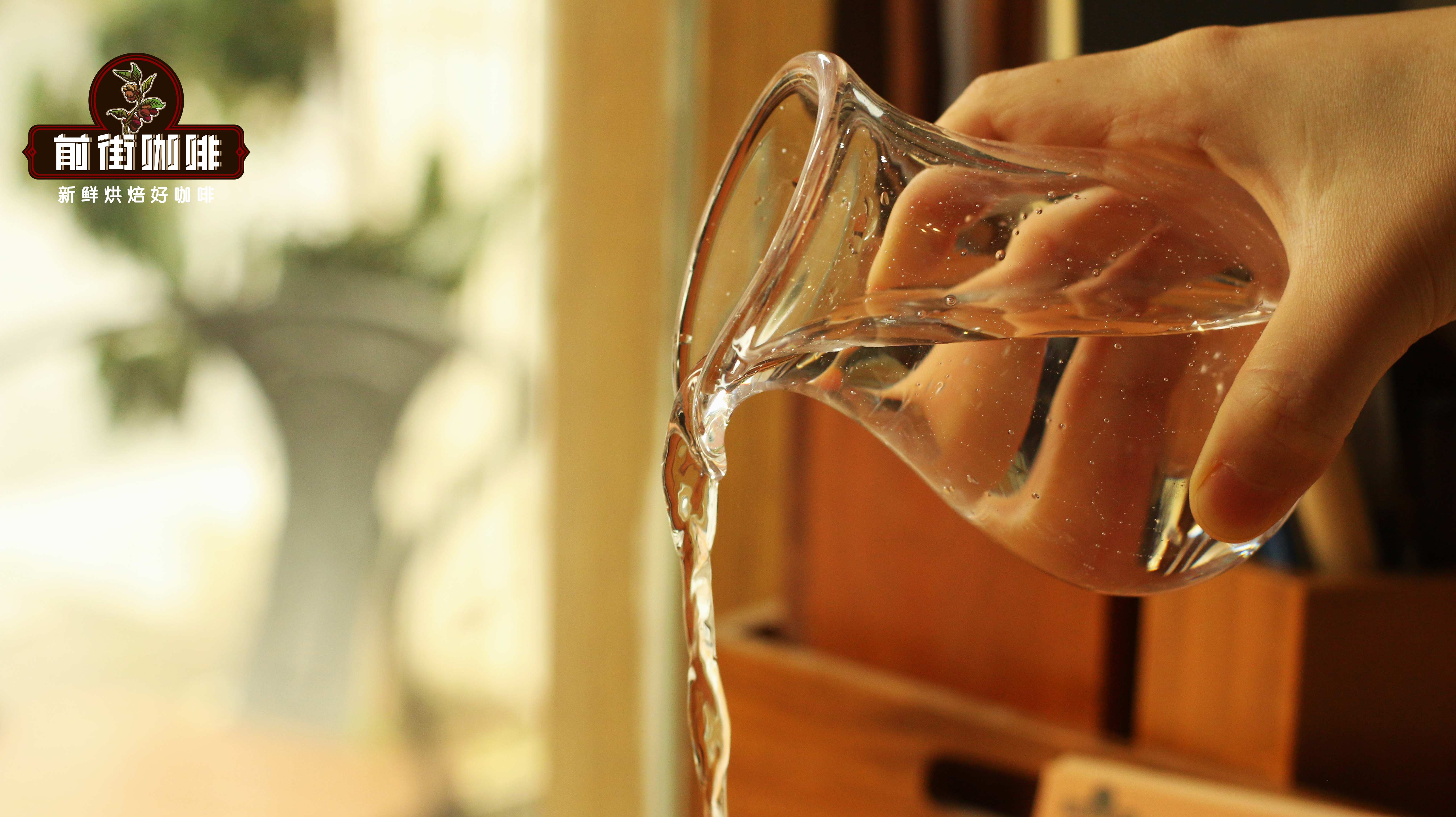
Water quality directly influences coffee's taste, aroma, consistency, and multiple health indicators. The key influencing factor lies in the mineral composition of the water—mineral ions such as calcium, magnesium, sodium, and potassium alter coffee's thermodynamic extraction capacity, thereby changing coffee flavor.
02 Fresh Coffee Beans
Pour-over coffee can use either single-origin beans or espresso beans, but if you want to truly experience the charm of pour-over, Front Street Coffee suggests prioritizing single-origin beans with complete bean information (origin, variety, processing method), so you can taste the flavor characteristics of a single origin. To this end, Front Street Coffee launched a daily beans series, aiming to let consumers buy beans that reflect origin flavors at relatively affordable prices. For example, the citric acidity of Yirgacheffe, the herbal notes of Mandheling, the nutty chocolate tonality of Brazil and Colombia—these are the basic flavors of their origins, all of which can be presented in daily beans.
Additionally, when buying coffee beans, make sure to look for fresh roasting. The flavor of roasted coffee beans gradually diminishes over time. Freshly roasted beans need a resting period of 4 to 7 days, at which point the coffee flavor reaches its optimal state. Therefore, the Front Street Coffee beans you receive are typically roasted within a week or three to four days, ensuring you can enjoy them upon arrival. After one month, the beans' flavor becomes much flatter, so a bag of beans shouldn't be stored too long—best to finish within a month.
03 Suitable Equipment and Drippers
Having a set of equipment that works well for you is enough. There are many types of pour-over kettles—flat-spout kettles, court kettles, pointed gooseneck kettles, and so on. For beginners, Front Street Coffee suggests choosing a narrow-spout kettle, because its water flow is easier to control, and you won't get too strong a stream during brewing, making it quicker to get the hang of.
Coffee drippers come in all shapes and sizes, and many people don't know where to start learning. Below are three drippers suitable for beginners.
The Kalita Wave coffee dripper achieves a harmonious balance of sweetness, acidity, and bitterness. Its unique wave construction improves the problem of easy under-extraction, minimizes variables during extraction, and produces a relatively light taste, making it suitable for beginners. The three holes are arranged in a triangle, the bottom is flat, and the "Y"-shaped protrusion at the bottom forms what is called the "wave zone."
Kono, the Kono-style coffee dripper, is an extraction tool that fully showcases coffee's rich aroma and flavor. With a single-hole design and a relatively large hole, extraction speed is fast and full extraction is not easy, so it's suitable for the drip method—this extraction approach embodying Japanese craftsmanship pairs better with a narrow-spout pour-over kettle for drip-style pouring, and is more suited to dark city roast coffee.
Hario V60 is an extraction tool that highlights coffee's rich aroma, belonging to the fast-extraction dripper category. The filter paper's pointed corner is slightly folded to better fit the dripper. This dripper is suited to the fine-pour method—gentle mouthfeel may be somewhat reduced, but the coffee's character becomes more pronounced, with increased body and bitterness, and better balance. The fine-pour three-stage pouring flows are: relatively fine slow pour, very fine slow pour, relatively coarse fast pour. If you don't know which dripper to choose, the Hario V60 is the popular choice, suitable for coffee beans of all roast levels, producing coffee with rich and varied layers.
For filter paper, choose bleached ones when possible—unbleached ones tend to carry off-flavors; match the filter paper size to your dripper—01 dripper uses 01 filter paper, 02 dripper can use either 01 or 02 filter paper.
04 Appropriate Grind Size
Grind size directly affects coffee's concentration and extraction yield, and is one of the important influencing factors in pour-over coffee—extremely critical.
Finely ground coffee: high concentration, high extraction yield, high body (prone to over-extraction).
Front Street Coffee Grind Size Demonstration
Coarsely ground coffee: low concentration, low extraction yield, low body (prone to under-extraction).
Generally speaking, medium-fine grind (similar to granulated sugar) is suitable for pour-over coffee.
05 Water Temperature
Water temperature affects coffee's extraction efficiency—high temperatures extract quickly, low temperatures extract slowly. Front Street Coffee suggests using 90-91°C for light-to-medium roast beans to express the beans' acidity and sweetness; for medium-dark roast beans, 88-85°C is recommended to showcase the beans' clarity and body. When customers purchase coffee beans, Front Street Coffee always includes the recommended brewing temperature.
06 Blooming
Why do we bloom?
1. To release gases from coffee particles, primarily carbon dioxide. Generally, the fresher the beans and the closer to the roast date, the more bubbles during blooming. Dark roast beans also release more gas during blooming than light roast beans.
2. After gases are expelled, coffee particles can absorb water evenly, contributing to uniformity in subsequent extraction.
A good bloom allows coffee grounds to degas quickly and thoroughly, while also bringing the grounds into full and rapid contact with water, helping the coffee grounds be evenly extracted.
Front Street Coffee Pour-Over Blooming Demonstration
Points to note when blooming pour-over coffee:
① Before pouring water for the bloom, gently shake the coffee grounds flat—best not to tamp with force, as tamping reduces the density between grounds layers and affects carbon dioxide release.
② When blooming, pour gently—don't hit the grounds bed with a strong stream.
③ Bloom for about 30 to 35 seconds. When the expansion on the coffee grounds surface ends and you see the surface shriveling, the bloom is complete and you can begin pouring. Regarding timing, if the bloom is too long, the coffee tends to develop bitterness and astringency; if too short, soaking is insufficient, which may lead to under-extraction or incomplete flavor expression.
④ During blooming, the extracted liquid dripping down should be as little as possible. When too much extract appears in the server, reduce the pour amount or check your grind size. If the bloom water is excessive and a large amount of coffee liquid drips down, the water doesn't linger but directly carries out substances from the coffee grounds' exterior—the outer layer's off-flavors and astringency begin dissolving out, resulting in coffee that is both weak and carries over-extracted off-flavors. If the bloom water is insufficient with no drips at all, it means the coffee grounds haven't absorbed enough water, some coffee hasn't degassed sufficiently, causing under-extraction.
⑤ Bloom water amount should be about 2 times the coffee grounds (e.g., if using 15g grounds to extract 225g coffee liquid, then bloom water is 30g).
07 Pour-Over Water Pouring
When it comes to pour-over, Front Street Coffee always emphasizes to customers: pour gently, don't stop the water flow during circling, control the stream well, keep it steady—don't go big then small. Why is this?
There are two main reasons: the flow rate affects the agitation of the grounds bed, and the flow controls extraction time.
① Flow Rate Affects Grounds Bed Agitation
The larger the flow when pouring, the greater the agitation of coffee grounds, and the shorter the extraction time; conversely, with a small flow, coffee grounds are agitated less, and extraction time lengthens.
Brewing with a large flow: the grounds bed is violently agitated, the water level in the dripper rises rapidly as if about to submerge the filter paper, drainage accelerates, easily leading to too-short extraction time, under-extraction, and flavors that can't be expressed.
A small flow is the exact opposite—although the water level isn't high, too gentle a small stream means the water column's force can't penetrate the grounds bed, only stirring coffee grounds on the surface, and extraction time is noticeably prolonged, making the coffee prone to bitterness and off-taste, severely affecting mouthfeel.
② Controlling Extraction Time Through Flow
Longer extraction time = stronger flavors, higher concentration, more pronounced sweet/sour/bitter sensations
Shorter extraction time = softer flavors, lower concentration, less pronounced sweet/sour/bitter sensations
[What Method Should Beginners Use to Brew Pour-Over Coffee?]
Staged extraction is a relatively common brewing technique and an extension of the one-pour method. Simply put, staged extraction means dividing water into several stages of pouring, the most famous being three pours.
Compared to a single pour, staged extraction produces coffee with richer layers, clearly defining the front, middle, and back-end flavors, and it's easier to control the water from flowing off the dripper's edge, reducing instability in pour-over. The downside is that it demands relatively higher skill in managing flow rate and controlling water volume.
Brewing Parameters
Dripper: V60
Coffee dose: 15g
Grind size: 80% passing Chinese standard No. 20 sieve
Coffee-to-water ratio: 1:15 (15g coffee to 225ml water)
Brewing Technique
1. (Start timer first) Bloom with 30g water until the timer reaches 30 seconds; when you see no more bubbles expanding on the coffee grounds surface, the bloom is complete.
2. Pour slowly in a circular motion around the center with a small stream until reaching 125g (timer will be at about 1'00), then pause to let the coffee grounds soak briefly for more even extraction.
3. When the water level drops by 2/3, pour quickly with a larger stream until reaching 225g and stop (the time you stop pouring will be about 1'50), and the coffee liquid extraction completes at about 2'00-2'10.
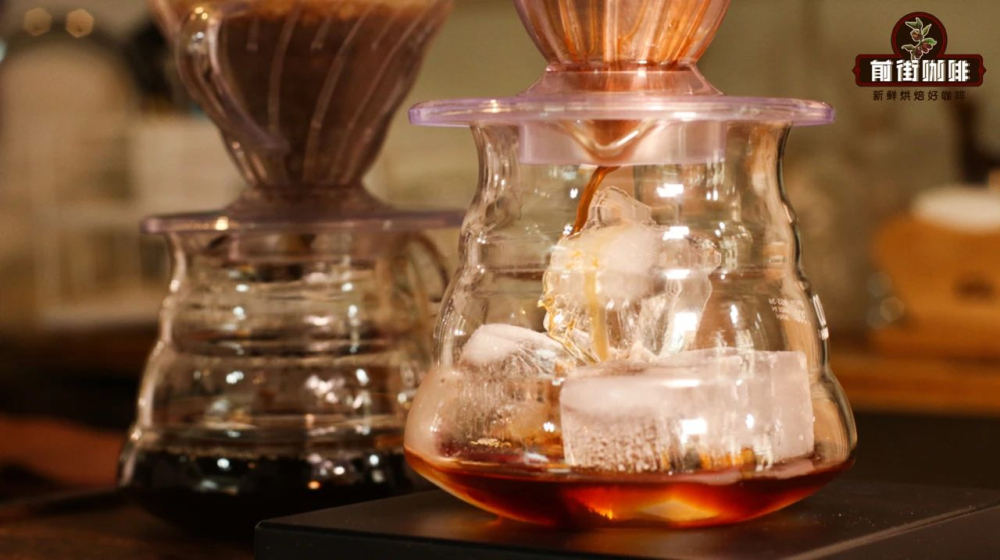
Reasons for Staging
Staged extraction prevents the coffee grounds wall at the filter paper edge from being easily breached, and staged pouring also helps increase agitation of coffee grounds during brewing—the water stream can penetrate the coffee grounds to improve extraction yield.
How to Determine When to Pour Again
Sometimes you'll see some baristas pause only briefly during staging before continuing to pour, but this is actually not very meaningful. In our regular staged pouring, we wait until the water level drops by 1/2 or 2/3 before pouring again. The main reasons:
1. When the water level drops by 1/2 or 2/3, the dripper neither holds too much water nor exposes the grounds bed from too much drainage, which would cause uneven extraction between upper and lower grounds layers.
2. After the water level drops, the stream can directly penetrate the pooled water to agitate the lower grounds layer. If the water level is too high, the water column's impact force is insufficient, causing the upper grounds bed to be over-extracted while the lower coffee grounds are under-extracted.
Overall, staged extraction more easily produces a cup with distinct flavor layers, because V60 or Kono drippers have fast flow rates, and staged extraction can somewhat reduce under-extraction caused by fast flow. So if you want a cup with rich layers, give this technique a try~
For professional coffee knowledge exchange and more coffee bean information, please follow Coffee Workshop (WeChat public account: cafe_style)
For more specialty coffee beans, please add private WeChat Front Street Coffee, WeChat ID: kaixinguoguo0925
The above content is compiled by CoffeeHunters, a coffee news website.


