







How does Costa coffee history connect to Canet beans?
The Canet Estate Musician Series Chopin is a Yellow Catuai varietal processed with the raisin honey method, grown in Costa Rica's Tarrazu region. It brings together floral and fruity notes: a rose-like aroma over a peach-honey core, clean but layered. Costa Rica's volcanic ash soils and cool high altitude let cherries ripen slowly, building fuller flavor.
Costa Rica has a dry season from December to April, when the harvest happens, and a wet season from May to November. Micro-processing plants there use about 5 percent of the water of traditional washing stations and need no large tanks or drying yards, so investment is smaller. What sugar goes in coffee is a personal call; this bean already carries honeyed sweetness.
This bean from Front Street Coffee comes from the Canet Estate Musician Series, a Yellow Catuai varietal processed with the raisin honey method, yet it displays a completely different flavor direction—this is precisely what makes the Chopin coffee so unique. It combines floral and fruity notes, with the rich rose aroma of a young maiden wrapped around a sweet, honeyed peach-like core, clean yet layered. This article will break down the flavor code of this Chopin coffee one by one, from the Costa Rican producing region background, the Tarrazu terroir, the Canet Estate overview, the raisin honey processing method, and the characteristics of the Yellow Catuai varietal, to Front Street's roasting curve and brewing parameters, along with actual tasting performance at different water temperatures for coffee lovers' reference.
The bean Front Street is sharing today comes from the Canet Estate Musician Series, a Yellow Catuai varietal processed with the raisin honey method, yet it expresses a completely different musical style—this is what makes the Chopin coffee so interesting.
Front Street is very fond of Chopin. This coffee is clean without lacking flavor. Coffees have different flavor types—some are floral, some are fruity—and Chopin has both, a maiden-like floral exterior wrapped around a peach-honey sweet heart. And knowing that the musician Chopin experienced great ups and downs in the first half of his life before ultimately returning to a peaceful life in his later years, it is just like this coffee is narrating his life.
Producing Region Introduction
Located in the Central American isthmus, Costa Rica is influenced by both the Pacific and Atlantic ocean currents and sea breezes regulating its climate. The country has many towering volcanoes reaching 2,000 meters, allowing coffee cherries to grow slowly in fertile volcanic ash soil and a cool high-altitude environment, producing coffee beans with complete and rich flavors. Costa Rica has two seasons: the dry season from December to April each year, when coffee is harvested, and the wet (rainy) season from May to November. In recent years, micro-processing plants have been established one after another. Since water consumption is only 5% of that of traditional washing stations, and no massive tanks or drying yards are needed, the required investment is relatively much smaller. Low acidity, increased complexity, and rich sweet aromas—"honey-processed coffee" has thus become a lot that the coffee world has competed for in recent years.
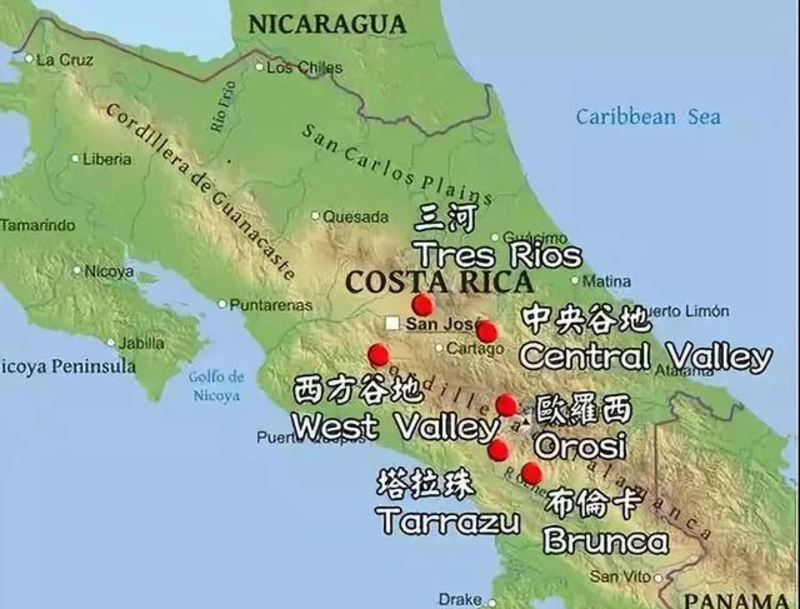
Costa Rica began growing coffee as early as two hundred years ago, first planted on the slopes of Poas and Barva volcanoes, which is what we now call the Central Valley. Currently, Costa Rica has eight main producing regions: West Valley, Central Valley, Tarrazu, Tres Rios, Orosi, Brunca, Turrialba, and Guanacaste. Tarrazu is one of the main coffee producing areas here. The Tarrazu region also has a certain history of coffee production, having once gained the favor and recognition of the British royal family, and was even praised in a papal speech.
Canet Estate
Canet Estate is located in the highest altitude area of the Tarrazu producing region, the most densely fruit-planted area in Costa Rica. Canet Estate mainly grows passion fruit, and its coffee quantity is quite scarce, with coffee grown only in one specific area under special care. All coffee cherries are hand-picked, harvesting only ripe red cherries, but after harvesting and before processing, they undergo another screening step to pick out beans that are not ripe enough or overripe once more.
Raisin Honey Processing Method
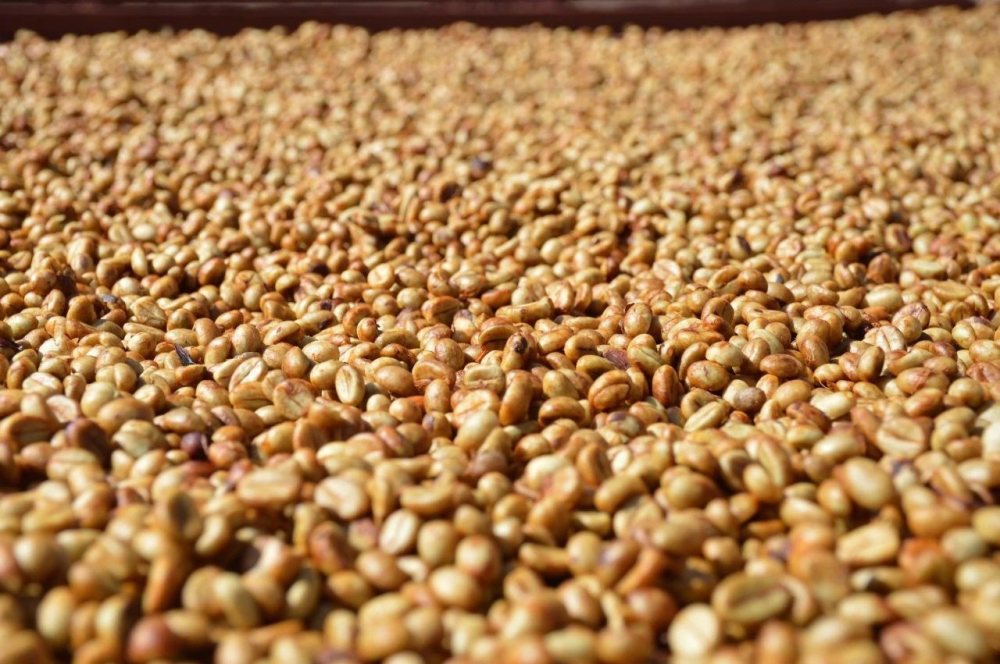
The raisin honey processing method is a kind of double-fermentation honey processing. On the day the coffee cherries are harvested, the harvested coffee fruits are poured into a large water tank. Fully mature and plump fruits sink to the bottom; underdeveloped or overripe fruits float to the surface, and these floating beans need to be removed. The screened coffee fruits are placed on raised beds to dry until they reach a raisin-like state, then the pulp and skin are removed, the mucilage is retained, and then drying continues. In terms of flavor, the fermentation note is more intense, and the flavor layers are relatively richer and fuller. Moreover, the mucilage retention is higher than in other honey processes. During drying, these coffee cherries must be constantly turned to ensure even drying, but the frequency of turning must be well controlled—drying should be slow to ensure the coffee undergoes fermentation processing, but not so slow that over-fermentation occurs.
Varietal (Yellow Catuai)
Yellow Catuai (Catuai Amarillo) comes from a cross between Mundo Novo and Caturra, first bred in 1949 by Brazil's Instituto Agronomico de Campinas. Like Red Catuai (Catuai Rojo), Yellow Catuai has extremely high disease resistance and is suitable for planting at high altitudes and in windy areas. Both Catuai varieties also have very delicate and clean acidity. When observing the green beans, the beans appear blue-green and smell of rich tea aroma and a faint fermentation aroma. Costa Rica Canet Musician Series includes Mozart, Beethoven, and Bach coffees. This year, the Costa Rica Musician Series has added a new coffee bean named Chopin. Different from other flavors, this Chopin bean has an obvious rose aroma and a relatively prominent sweetness.
Front Street Coffee Roasting Analysis Roaster Yangjia 800N semi-direct fire (roasting amount 300g)
Preheat the drum to 180°C and charge. Adjust the gas to 130, open the damper to 3, turning point at 1'36", maintain the gas; at 140°C keep the gas unchanged and open the damper to 4. At 5'20" it turns yellow, the grassy smell disappears, and it enters the dehydration stage. At 166°C lower the gas to 110 and keep the damper at 4. At 176°C adjust the gas to 80 and keep the damper unchanged. At 8'15" dehydration is complete, wrinkles and dark patches appear on the bean surface, and the toast aroma turns into coffee aroma, a prelude to first crack. At this time, pay attention to listen for the sound of first crack. At 9'21" first crack begins, fully open the damper to 5, and keep the gas unchanged. Development time after first crack is 2'05", and drop at 195.2°C.
Front Street Coffee Chopin Color Value
Agtron bean color value is 70.3 (top image), Agtron ground color value is 78.3 (bottom image), Roast Delta value is 8
Costa Rica Musician Series Chopin
Grade: SHB
Region: Tarrazu
Processing Method: Raisin Honey
Varietal: Yellow Catuai
Estate: Canet Estate
Altitude: 1700m
Flavor: Raisin, berries, lime, rose tea
Front Street Coffee Brewing Sharing
Dripper: Hario V60 Water Temperature: 90-92°C Coffee-to-Water Ratio: 1:15 Grind Size: fine granulated sugar (80% passing through Chinese standard No. 20 sieve)
Brewing Method: Pulsed Extraction
The dripper Front Street Coffee chose today is the Hario V60. The V60 dripper can be said to be one that Front Street Coffee quite likes to use. Because the design of this dripper focuses on the speed of water level descent, the internal ribs use an arc-shaped spiral structure design to help accelerate water flow. Therefore, when using this dripper, there are relatively high requirements for the thickness of the pouring stream and the height of the water level. Front Street Coffee generally chooses a pulsed extraction method to pair with this dripper, slowing the flow rate of the coffee liquid and improving the extraction of the coffee grounds.
Use 30 grams of water for a 30-second bloom, pour in a small stream in circles to 125 grams for the pulse, and when the water level is about to expose the coffee bed continue pouring to 228 grams and stop pouring. When the water level is about to expose the coffee bed, remove the dripper. (Timing starts at the beginning of the bloom) The extraction time is 1'56".
Flavor: Brewing this Chopin at 92°C, the citrus acidity and tea note on the entry are relatively obvious, with berries; when slightly cooler, there is a rich fermentation aroma, and the sweetness lingering between the lips and teeth is relatively lasting. Brewing at 90°C, the rose aroma is more prominent, with raisin and tea notes on the entry; when slightly cooler, there is a fermentation aroma, the mouthfeel is relatively smooth, and the sweetness is also relatively obvious.
The above content is compiled by CoffeeHunters, a coffee news website.


