








How do you make an espresso macchiato?
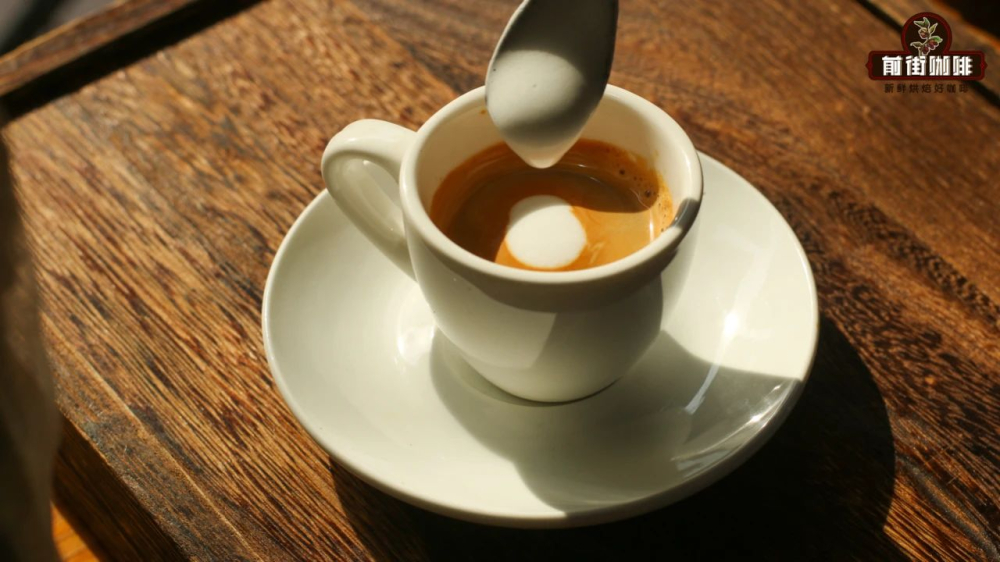
An espresso macchiato, called Caffe Macchiato in Italian, is the original form: a shot of espresso marked with a small amount of milk or foam. In Italian, macchiato means marked or stained, so espresso stays the star and the milk is only a finishing touch, not a dilution. A latte macchiato reverses the order, pouring espresso into steamed milk.
A latte starts with espresso and adds steamed milk; a cappuccino uses less hot milk than a latte but more milk foam. Caramel macchiato is an American adaptation built on syrup rather than the Italian original. Steaming milk foam well and measuring ingredient ratios are the key steps for making one at home.
Espresso plus milk is the same base, yet macchiato, latte, and cappuccino deliver completely different flavors and mouthfeels. Many people can tell espresso from cappuccino, but can't quite explain what a macchiato really is. Starting from the original Italian meaning of "Macchiato," this article sorts out the differences between espresso macchiato, caramel macchiato, and authentic cappuccino, and explains in detail the steps for making a caramel macchiato, the ingredient ratios, and the key points of steaming milk foam, while also introducing how Front Street Coffee's espresso bean series can be applied, helping coffee lovers make a beautifully layered milk coffee at home.

A latte macchiato is made by pouring espresso into steamed milk; a latte is the opposite—espresso comes first, then steamed milk is added. A cappuccino uses less hot milk than a latte but has more milk foam. So what exactly is the difference between these three coffees when you drink them? Front Street Coffee is here today to talk about their respective characteristics.
It all comes down to—"thanks" to—the Americans' reinvention of traditional Italian coffee culture. Today's café espresso drink menus are increasingly hard to decipher, and it's difficult to tell at a glance which drinks have water added and which have syrup. The macchiato is arguably the most wronged of them all. Many people can recognize espresso and can distinguish a cappuccino, but can't explain what a macchiato actually is. Is it that big sweet drink topped with caramel and whipped cream? Clearly not.
Today let's talk about what the most authentic macchiato really is.
A macchiato is a style of espresso suitable for afternoon drinking. A cappuccino, another variation of espresso, is better suited to the early morning. The macchiato sits between espresso and cappuccino—less concentrated than the former, yet stronger than the latter.
What does the word "Macchiato" mean?
In Italian, "Macchiato" means "marked" or "stained." Whether it's an espresso macchiato or a latte macchiato, both carry the sense of "marking espresso with milk." But "marking" does not mean "bleaching," "lightening," or "diluting"—espresso remains the star, and the milk is just a finishing touch.
Espresso Macchiato
The espresso macchiato (called "Caffe Macchiato" in Italian) is the most original form of macchiato, and it isn't complicated to make—it's simply marking espresso with milk. The purpose is to use a small amount of milk to soften the sharpness of the espresso. Compared with other espresso-based coffees, the macchiato uses the least milk and best preserves the original form and flavor of the espresso. The process is simple: pull a shot of espresso, then add 1 to 2 teaspoons of steamed milk and milk foam on top.
What is a Caramel Macchiato?
To make a caramel macchiato, you first combine vanilla syrup with espresso, then pour in steamed milk with frothed foam, and finally drizzle caramel sauce on the white, velvety foam surface and draw a pattern. This is exactly the distinctive milk coffee that a globally famous coffee chain launched in the 1990s—the caramel macchiato.

In other words, a caramel macchiato is a latte with syrup added; a latte consists of espresso and milk. Front Street Coffee uses 220ml of Guangming fresh milk to steam foam 0.3–0.5cm thick at about 55–60°C, then blends it evenly with the espresso while pouring a beautiful pattern—and a latte is done.
Making a caramel macchiato mainly requires four ingredients: espresso, fresh milk, vanilla syrup, and caramel sauce.
For the espresso, Front Street Coffee's espresso bean series is recommended, including the richly crema'd Front Street Classic Blend, the nutty Front Street Specialty Blend, the Front Street Commercial Blend commonly used by cafés, and the excellent value Front Street Dark Cocoa Blend. Each bean has a different style and suits different scenarios.
Note here that the caramel sauce shouldn't be too thick and sticky; it needs a bit of flow, but it also can't be a completely liquid syrup.
So the first step is to pull the espresso. For this caramel macchiato, Front Street Classic Blend coffee beans are used, with parameters of 20g of grounds and 40ml of coffee extracted in 30 seconds.
Once the espresso is extracted, set it aside, then start steaming the milk foam. Here Front Street Coffee uses 200ml of milk. Because the foam will later need to hold up the caramel sauce, you can introduce a bit more air when steaming—just slightly thicker than a standard latte foam.
Once steaming is done, you can start "assembling" the caramel macchiato. First, pour 12ml of vanilla syrup and the steamed milk into the cup; the milk can be filled right to the top.
Next, pour the espresso in from the center. Pouring the espresso last makes the overall appearance nicer, but the downside is that it's best to stir it with a spoon before drinking.
Right after pouring the espresso, you can drizzle the caramel sauce. The caramel sauce can be chilled beforehand; with lower flow, it's easier to draw patterns.
Here Front Street Coffee drew a simple pattern. Once the pattern is complete, the caramel macchiato is done.
How do you make an authentic cappuccino?
When Front Street Coffee looked into classic cappuccino methods, the most widely circulated version was "1:1:1"—coffee, milk, and milk foam each taking one part. Calculating by a standard 180ml cappuccino cup, the espresso would be the Italian standard of 2 shots (60ml), with milk and milk foam each taking 60ml. Made this way, the foam is about 2.5cm thick, and after two sips you're still drinking foam; by the time you actually reach the coffee, it's extremely concentrated.
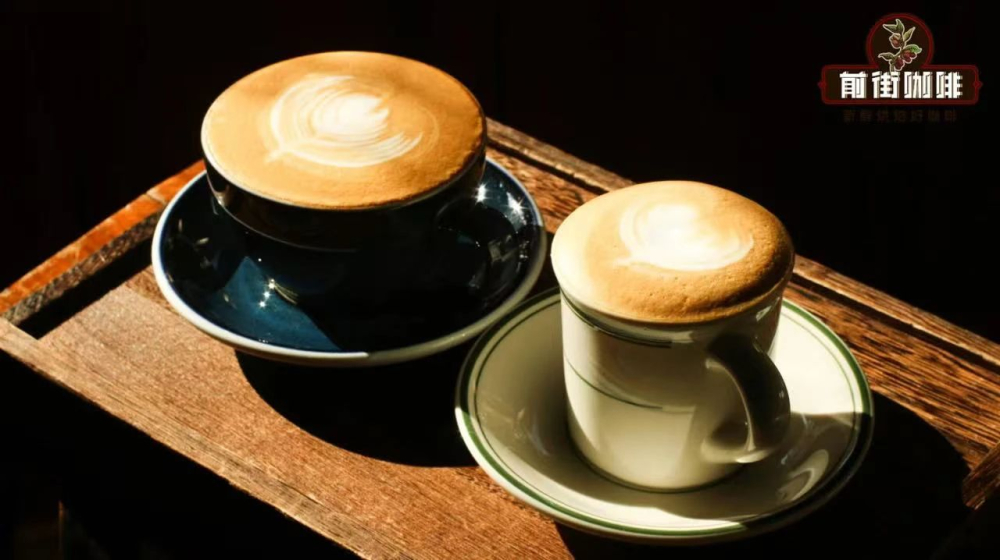
Since there was no steam wand to froth milk back then, making a latte simply meant heating milk and combining it with coffee, with no foam. Making a cappuccino, however, required physically creating fine foam. The essence of a cappuccino lies in the rich mouthfeel brought by fine milk foam: first pour in milk with a small amount of foam and blend it evenly with the coffee in the cup until two-thirds full, then use a spoon to scoop fine foam into the center of the cup until it mounds up to eleven-tenths full, and finally that white mound of foam in the center gets a little peak drawn by the spoon—just like the small white pointed hat worn by a priest.
With the arrival of modern espresso machines with stronger pressure, espresso quality improved by leaps and bounds, so cappuccino recipes derived from espresso naturally had to be adjusted too. Italians improved it based on the cappuccino's appearance and flavor, and today cappuccinos are mostly based on 1 shot (30ml).
Also calculated by a standard 180ml cup, there's no specific number required for the amount of milk foam, but the texture should be dense and fine, so it's generally kept to about 1–2cm. Since a steam wand is now used to froth the milk, the spoon-scooping step is omitted to improve efficiency, so the "little pointed hat" shape no longer appears—though the eleven-tenths-full standard is still retained.
By now, I believe everyone has reached a conclusion: macchiato, caramel macchiato, and cappuccino are all milk coffees. A macchiato is espresso with just a little milk added, so it tastes the strongest; a caramel macchiato, because it contains syrup, has a prominent sweetness and weaker bitterness; a cappuccino has the thickest milk foam, tastes richly of coffee, and has a dense, velvety mouthfeel.
The above content is compiled by CoffeeHunters, a coffee news website.


