








How Does Ethiopian Gesha Coffee Differ from Panamanian Lots?
Ethiopia's Gesha Village Coffee Estate sits in the Bench Maji zone at 1,900 to 2,040 meters and grows only the Geisha variety. The Gold Label Oma block lot uses Gesha 1931 with a natural process. Compared with the better-known Panamanian Geisha, this African gesha coffee shows its own flavor profile, and cupping reveals the difference in origin character.
Gesha Village was founded around 2009 by Adam Overton and Rachel Samuel after they located wild Geisha in the Gori Gesha forest, with guidance from Willem Boot. The estate is divided into eight blocks, and the Gold Label grade marks the top lots. Natural processing, a specific roast profile, and careful brewing all shape how the cup performs.
When Geisha is mentioned, most people first think of Panama, but the roots of this legendary variety actually lie in Ethiopia. Front Street Coffee recently tested a Gold Label lot from Gesha Village Coffee Estate, produced in the Oma block, with the variety Gesha 1931, using a refined natural process. Gesha Village was founded around 2009 by Adam Overton and Rachel Samuel, who established the farm after finding wild Geisha in the Gori Gesha forest, making it one of the rare large estates that cultivates only the Geisha variety. This article will present a complete picture of this African Geisha—from estate history, variety classification, flavors of the eight blocks, Gold Label grading, natural processing, and roast profile to cupping and brewing—showing its performance and flavor trajectory.
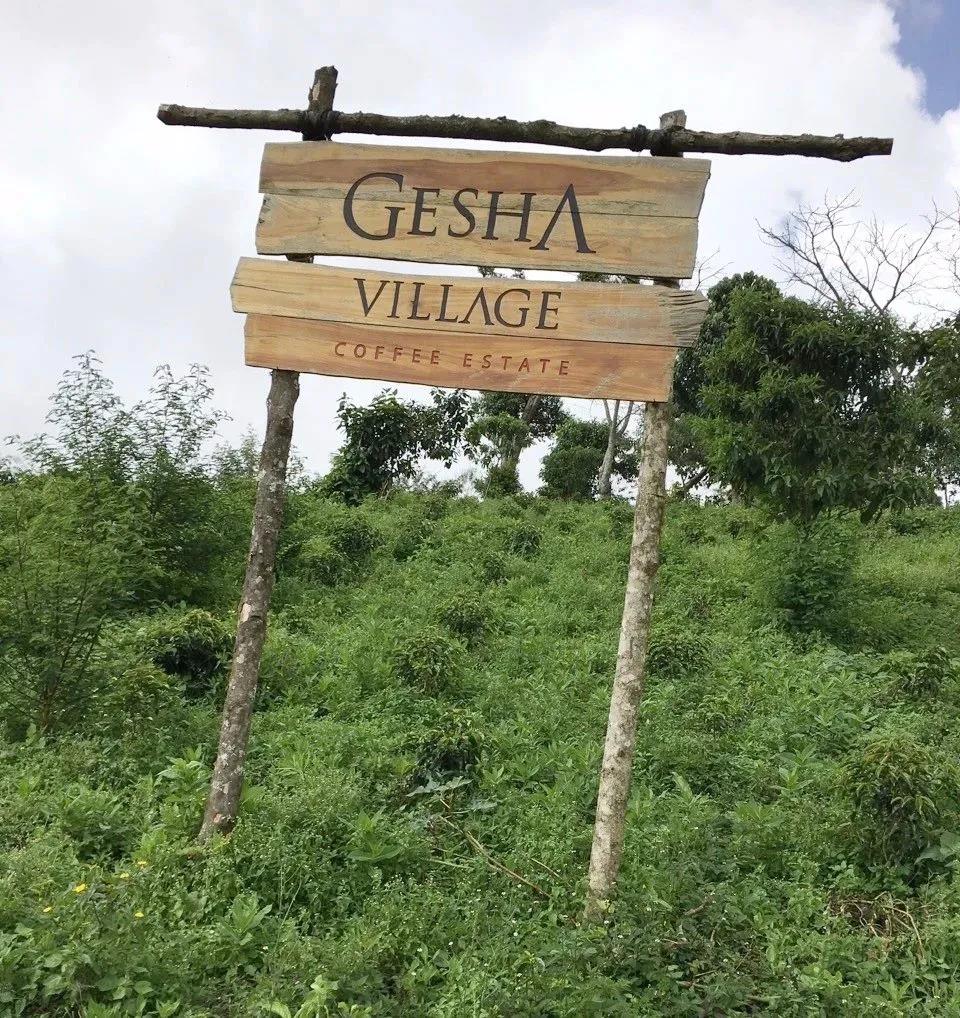
In the world of Geisha coffee, Panama is undoubtedly the most renowned origin, while neighboring Costa Rica also produces Geisha with its own distinct character. Tracing further back, the origin of the Geisha variety actually lies far away in Africa—Ethiopia, the ancient homeland of Arabica coffee. This time, Front Street Coffee tested Geisha from Ethiopia's Gesha Village Coffee Estate, hoping to see what differences exist between the Geisha representing Africa and the Geisha of the Americas.
Front Street Coffee Ethiopia Gesha Village Coffee Estate Gold Label Geisha
Region: Bench Maji, Ethiopia
Estate: Gesha Village Coffee Estate, Oma block
Altitude: 1,900–2,040 m
Variety: Gesha 1931
Processing: Natural
The Legendary Story of Gesha Village Coffee Estate
In 2007, documentary director Adam Overton and his wife, photographer Rachel Samuel, came into contact with the Gera coffee forest in the Bench Maji region while filming a coffee-themed documentary for the Ethiopian government, which sparked the idea of establishing their own coffee estate and brand.
In 2009, they also met Willem Boot, the owner of Finca La Mula and a BOP judge. The approach proposed by Willem Boot opened a new direction for the Overtons: return to Ethiopia and search for the original homeland of Geisha.
Eventually, they came to Bench Maji, an area in southwestern Ethiopia near South Sudan. Many places there are named Gesha village, and it was considered the zone most likely to hold the original Geisha.
Adam followed Willem Boot on an "expedition" into the forests around the estate. In a jungle magically enveloped by dense forest, they discovered many wild tree species, and what delighted them most was finding wild Geisha.
Only later did they learn that this was the Gori Gesha forest, the place where the Geisha variety was first discovered. So they collected seeds from the original Geisha trees, selected them, and planted them in Gesha Village, deciding to establish the estate there and naming it Gesha Village Coffee Estate, located about 12 miles from the Gori Gesha forest and covering 475 hectares.
Unlike the vast majority of Ethiopian farms, Gesha Village is not a smallholder operation but a large 500-hectare farm with its own washing station and laboratory, and the entire farm grows only the Geisha variety rather than the generally hard-to-identify Ethiopian heirloom varieties.
The Coffee Varieties of Gesha Village
Gesha Village has three varieties, each named after members of the expedition when the coffee was discovered: Gesha 1931, Gori Gesha, and Illubabor, which was provided by the Ethiopian Coffee Research Center.
Gesha 1931 was confirmed by observing plant morphology, bean shape, size, and cupping performance, and is considered the variety closest to the mother stock of Panama Geisha. Gori Gesha, on the other hand, was collected by the owner of Gesha Village Coffee Estate in 2011 through his own expedition from the wild Gori Gesha coffee forest 20 kilometers from the current Gesha Village farm, and no duplicate samples have yet been found elsewhere.
Gesha Village Coffee Estate is divided into 8 farms:
Bangi (54 hectares, 1,911–2,001 m). Most of the estate's workers come from a community called "Bangi-Chichuru" east of the farm. Coffee from this block has aromas of honeysuckle and spice, with rich flavors of dark chocolate, Mexican mole spices, berries, black tea, black sugar, and black currant.
Dimma (28.7 hectares, 1,966–2,019 m), named after the famous gold-mining town Dimma located north of the farm. Coffee from this block has vivid floral and stone-fruit aromas, with sharp and awakening citrus acidity.
Gaylee (34.8 hectares, 1,916–1,982 m), bordering the Kebele community to the southeast, officially named "Gaylee-Gesha," near the Yetgordon River, the water source of Gesha Village. Coffee from this block tightly combines fruity and spicy notes, with strong sweetness of almond, lemongrass, and hibiscus, mixed with aromas of jasmine and stone fruit.
Oma (67.6 hectares, 1,931–2,040 m), named after a respected and beloved religious leader in the Meanit area. Coffee from this block has exotic aromas of red currant and jasmine, with fruit characteristics of peach, apricot, candied fruit, melon, and mandarin, and a honey-like sweet finish.
Narsha (5.3 hectares, 1,963–1,977 m), located in the southern part of Gesha Village Coffee Estate and named after a fruitful tree on the farm. Coffee from this block has notes of honeysuckle, yellow fruits, lime, dark chocolate, peach, apricot, and rose, with refreshing acidity and a long bergamot aftertaste.
Surma (45.9 hectares, 1,909–2,063 m), overlooking a paradisiacal valley landscape, named after the Surma, a pastoralist ethnic group living in the southwestern lowlands. Coffee from this block has delicate aromas of jasmine and Damask rose, fruit tones of strawberry, ripe watermelon, and apple, and a slight spiciness.
Shewa-Jibabu (48.5 hectares, 1,973–2,069 m), located in the northern part of the estate, named after a mountain near the farm and the kebele community from which some employees come. Coffee from this block has flavors of spice, strawberry, ripe peach, papaya, florals, dark chocolate, tamarind, orange, and bergamot.
Shaya (36.5 hectares, 1,926–2,069 m), named after the leader of the Meanit area. Coffee from this block exudes aromas of jasmine, bergamot, and orange. It has rich flavors of dark chocolate, orange juice, icy cherry, molasses, lemon, and berries, with the sweetness of red apple.
Gold Label Geisha Coffee
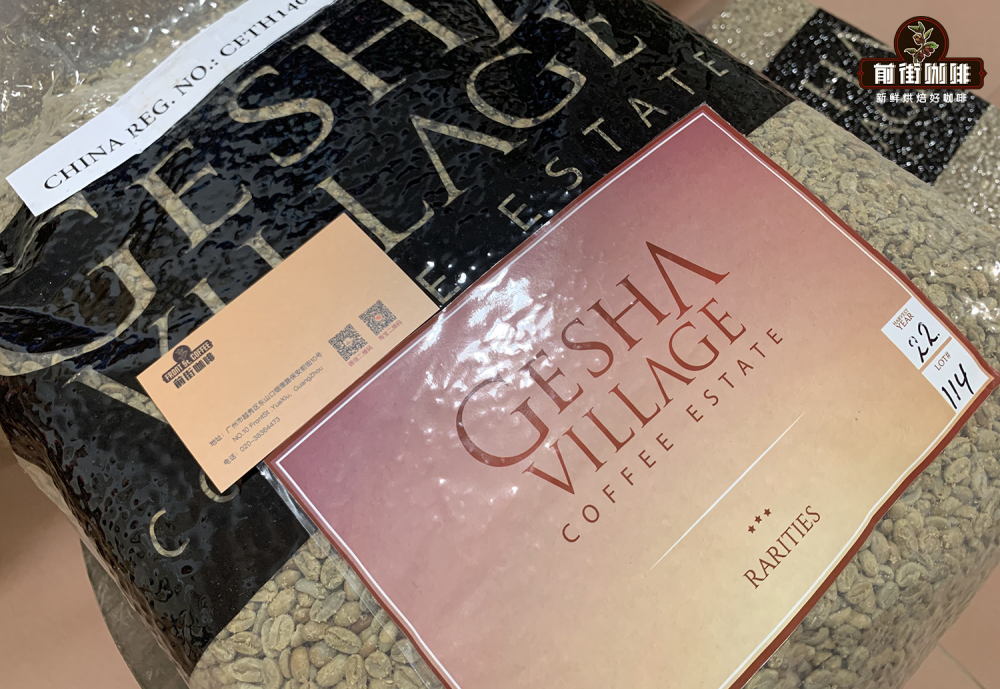
Gesha Village Coffee Estate adopts a product-line structure similar to that of Hacienda La Esmeralda, divided into RARITIES (Gold Label), GROWERS RESERVE (Red Label), SINGLE-TERROIR (Green Label), and CHAKA.
The official name of Gold Label Geisha is RARITIES. The Gold Label accounts for only 10% of Gesha Village's annual production and can almost be said to be at the same level as auction lots. It is the lot that competitors around the world usually choose; for example, at the 2018 WBC World Championship held in the Netherlands, the champions of Australia and Japan chose Gold Label lots to compete. Roasters with high quality requirements also purchase it. It has complete traceability, and each lot has prominent flavor and high complexity, making it the estate's finest grade after the auction lots.
Gesha Village Coffee Estate has strict block division, and the coffee varieties planted in each area are different. This Gold Label Geisha comes from the Oma block, located in the south-central part of Gesha Village, and the planted variety is Gesha 1931, the coffee variety genetically most similar to Panama Geisha.
The Estate's Refined Natural Processing
Front Street Coffee's Gesha Village coffee uses natural processing. First, floating matter and impurities are removed, then it is sun-dried on African raised beds in thin layers covered with plastic sheeting. During drying on the drying beds, it is sorted again to remove insect-damaged beans and greenish beans. The total drying time is 18–30 days. Front Street believes that naturally processed coffee has obvious sweetness, soft acidity, and a complex fruity flavor profile.

Front Street Coffee Roasting Analysis
Since this lot is coffee from the new 2020 crop, its moisture content is relatively high, so the dehydration time is extended. The final roast level was determined to be medium-light to highlight the fruit sweetness.
Yangjia 800N, charge weight 500 g: charge at a drum temperature of 175°C, gas setting 130, damper opened to 3; turning point at 1'36", at a drum temperature of 92.8°C, open the damper to 4 at 3 minutes and raise the gas to 140; when the drum temperature reaches 152.6°C (6:26), the bean surface turns yellow, the grassy smell completely disappears, and the dehydration stage begins, so lower the gas to 100; at 8'20", ugly wrinkles and dark streaks appear on the bean surface, and the toasted-bread smell clearly turns into coffee aroma, which can be defined as the prelude to first crack. At this point, listen carefully for the sound of first crack. First crack begins at 9'55", open the damper to 5, develop for 1'30" after first crack, and drop at 193.5°C.
Front Street Coffee Cupping Report
Brewing Parameters
Dose: 15 g
Coffee-to-water ratio: 1:15
Grind size: fine pour-over grind (78% passing through a No. 20 standard sieve)
Water temperature: 90°C
Front Street brewing method: first rinse the filter paper and preheat the dripper and coffee pot. Bloom with 30 g of water for 30 seconds, then pour in a small stream in circles until 125 g for a stage break. When the water level is about to expose the coffee bed, continue pouring in circles until 225 g and stop. When the water level is about to expose the coffee bed again, remove the dripper. The extraction time is exactly 2 minutes (starting from the beginning of blooming).
Brewed flavor: intense jasmine aroma. Flavors of peach, apricot, candied fruit, melon, and mandarin, plus honey sweetness.
The above content is compiled by CoffeeHunters, a coffee news website.


