







What Is Yunnan Coffee and How Did It Reach Specialty Grades?
Yunnan coffee began in 1904, when a French missionary planted the first coffee tree in Zhukula. Cultivation later expanded under agricultural expert Ma Guojin after 1952, mainly for supply to the Soviet Union, and the early plantings were Typica and its Bourbon variant, with area once reaching 50,000 mu before leaf rust devastated the region.
After reform and opening up, Yunnan coffee moved toward the international market, and in 1988 foreign enterprises such as Nestlé set up branches in China and supported the industry. Today the region is shifting toward specialty production, with firsthand growing of Typica in Lincang and pour-over parameters that showcase the highland origin's flavor.
Yunnan coffee began with the first coffee tree in Zhukula in 1904, and has gone through the era of Typica and Bourbon, the devastation of leaf rust, and the rise of Catimor, and is now moving toward a specialty path. This article will sort out the cultivation history, variety changes, and grading system of Yunnan coffee, and take an in-depth look at Front Street Coffee's firsthand practice of growing Typica in Lincang, as well as the pour-over parameters and flavor performance of Yunnan small-bean coffee, taking you through a comprehensive understanding of this highland-producing region's past and present.
Anyone who follows coffee at all has probably heard of Yunnan coffee. In earlier years, because its quality left much to be desired, most Yunnan coffee was used to make instant products, which also kept its market reputation low for a long time. But in recent years, Yunnan coffee has been like a dark horse, gradually emerging in the specialty coffee field.
When did coffee cultivation in China begin?
Tracing the origins of Yunnan coffee takes us back to 1904. At that time, a French missionary brought coffee seeds into Yunnan from abroad and planted the first coffee tree in a place called Zhukula. He probably never expected that more than a hundred years later, coffee would become a calling card of Yunnan's highland characteristic agriculture.
Entering the 1960s, the scale of coffee cultivation in Yunnan expanded further. After the founding of New China in 1952, under the leadership of agricultural academy expert Ma Guojin, coffee cultivation officially entered a stage of large-scale development, and the coffee beans produced were mainly supplied to the Soviet Union. As early as 1937, the patriotic overseas Chinese Mr. Liang Jinshan introduced a batch of seeds from Myanmar to Baoshan, opening up coffee cultivation areas in Baoshan's Lujiangba. The varieties planted in Yunnan during this period were all Typica and its variant Bourbon, and the planted area once reached 50,000 mu.
After that, global leaf rust ravaged Yunnan's coffee-producing areas, causing massive death of coffee trees and a sharp shrinkage of planted area. By the 1980s, during reform and opening up, Yunnan coffee gradually moved toward the international market. In 1988, foreign enterprises such as Nestlé set up branches in China and supported Yunnan's coffee industry on multiple levels. They not only brought high-yield, disease-resistant varieties such as Catimor, but also promised to purchase Yunnan coffee beans as raw materials at U.S. futures prices. These moves further promoted the expansion of Yunnan's coffee planted area and motivated growers' enthusiasm for production, while also establishing Catimor's dominant position in replacing the old Typica varieties and making it the leading variety of Yunnan coffee.
After entering the new millennium, domestic industries flourished, the concept of specialty coffee spread continuously, and Yunnan coffee also began to advance variety selection, cultivation, picking, and processing in a more scientific way. Today, through various media channels, we can all see that Yunnan coffee is steadily advancing on its specialty journey.
What makes Yunnan small-bean varieties unique?
Before the 1980s, the two ancient small-bean varieties generally planted in Yunnan were Typica and Bourbon. The so-called small-bean type refers to Arabica varieties with smaller beans, used to distinguish them from the medium-bean Robusta coffee beans produced in Hainan.
Typica has rich flavor layering, with various fruit acids and a delicate mouthfeel, and is widely recognized in the industry as a high-quality variety. The famous Blue Mountain coffee and Hawaiian Kona coffee are both Typica. In appearance, the Typica tree is tall and has good cold resistance, but its yield per plant is relatively low, and its stress resistance is poor, making it highly susceptible to leaf rust, coffee berry disease, and nematode disease. This means more labor must be invested in management, and combined with the variety's lack of price advantage in the market, many Yunnan coffee farmers switched to higher-yielding alternative varieties.
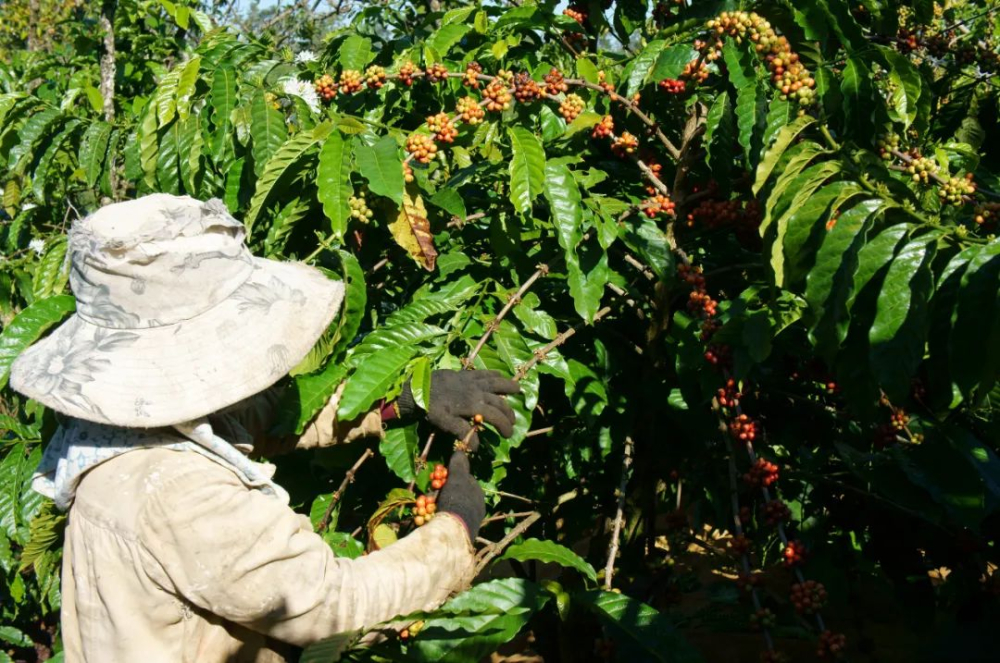
In 1995, the Yunnan provincial government officially incorporated coffee cultivation into the "18 Project" for biological resources, which greatly stimulated farmers' enthusiasm for planting, and the planted area in villages expanded rapidly. In the same year, the Tropical and Subtropical Economic Crops Research Institute of the Yunnan Academy of Agricultural Sciences introduced a new disease-resistant, high-yield coffee variety — Catimor — and began trial planting in Xinzhai Village in Yunnan's Nujiang Gorge.
Catimor 7963 is a hybrid variety bred by the Portuguese Tropical Research Institute (HCT) for coffee rust, with stable trait performance. This variety has a compact tree shape, is dwarf, has many branches, short fruiting nodes, vigorous growth, and extremely strong vitality. Its most prominent advantages are its astonishing rust resistance and high-yield characteristics. Because of this, it is highly favored by Yunnan coffee farmers, and currently more than 90% of coffee trees in Yunnan are Catimor.
What grading system does Yunnan coffee use?
Although Yunnan has a long history of coffee cultivation, overall it is still not mature enough, and its grading system is relatively scattered and still imperfect. Common Yunnan coffee grading comprehensively uses multiple indicators such as screen size, color, cleanliness, odor, and moisture content to determine grade.
According to screen openings of 6.5, 6.0, 5.5, and 5.0 mm, it is divided into five grades:
Grade 1: above 6.5 mm, plump and intact beans
Grade 2: 6.0-6.4 mm, plump, relatively uniform
Grade 3: 5.3-5.9 mm, relatively plump, slightly less uniform
Grade 4: 5.0-5.4 mm, with incomplete beans, intact beans accounting for more than 75%
Grade 5: below 5.0 mm, with incomplete beans, intact beans accounting for more than 30%
In terms of color: glossy, light blue, light green, and light white are preferred. Black-brown and dark orange are inferior:
Grade 1: light blue, light green, light white, light yellow, uniform color
Grade 2: light blue, light green, light white, light yellow, slightly poorer color
Grade 3: light blue, light green, light white, light yellow, even poorer color
Grade 4: slightly yellow, a small amount of brown
Grade 5: mottled color
In terms of cleanliness: containing no impurities or only a small amount of impurities is better:
Grade 1: more than 70% silver skin removed, no impurities
Grade 2: more than 65% silver skin removed, no impurities
Grade 3: more than 60% silver skin removed, no impurities
In terms of odor: fermentation spoilage, light red and brown indicate sourness, and sour odor or other off-flavors are undesirable.
In terms of moisture: moisture content not exceeding 12%.
In order to maximize the interests of the many coffee farmers and coffee enterprises, and to further enhance Yunnan coffee's international market voice and competitiveness, Pu'er City established the Yunnan International Coffee Exchange (YCE). In 2019, YCE, combining the systems of the Specialty Coffee Association (SCA) and the Coffee Quality Institute (CQI), planned a new grading system for Yunnan small-bean coffee processed by the traditional washed method, and coffee farmers all grade and quote prices according to this standard.
Does Front Street also have Yunnan small-bean coffee?
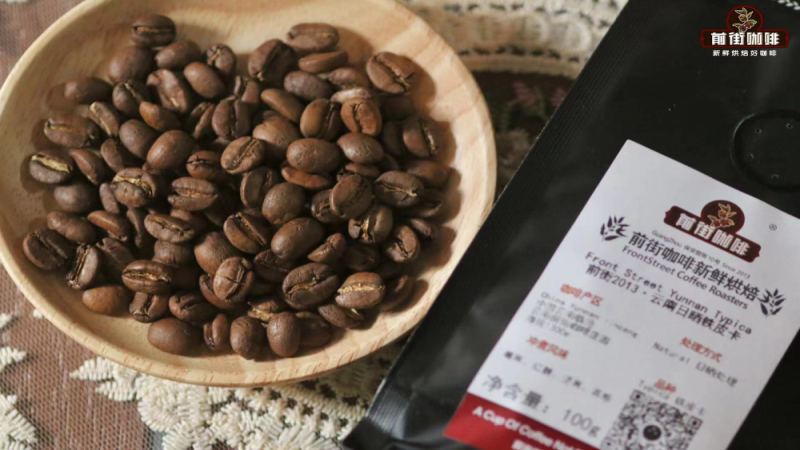
Of course it does. Front Street not only roasts Yunnan small-bean coffee, but also personally grows small-bean coffee in Yunnan's Lincang. In fact, Front Street's idea of growing coffee came earlier than roasting. "Dazhen Coffee" was the predecessor of Front Street. At that time, Front Street grew coffee in a place in Guangdong called Dazhen. It was not until the Catimor seedlings grew to 20 cm tall that we truly clarified the relationships and order among variety, altitude, and processing method in specialty coffee. After consulting a large amount of material, Front Street went to Yunnan to look for land suitable for cultivation. From site selection, seed selection, seedling raising, planting, harvesting, and post-processing... every step involved countless trials and errors, and from them we accumulated much experience and knowledge about varieties, altitude, and processing methods.
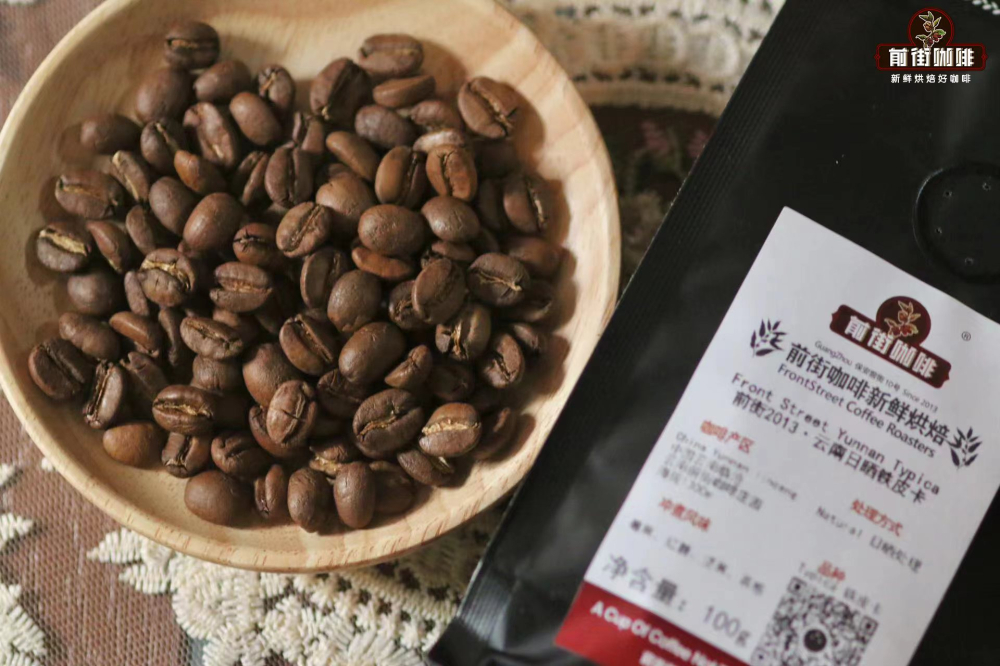
Lincang, Yunnan, is affected by the warm, humid air flow from the Indian Ocean and the southwest monsoon. The distinction between the four seasons is not obvious, but the dry and wet seasons are distinct, rainfall is abundant, sunshine duration is long, the frost period is short, and some areas are frost-free year-round. Its vertical climate characteristics are significant, making it very suitable for Arabica coffee cultivation. Front Street deliberately chose the most original Typica. Typica has an elegant and pure flavor, but it is also famous for low yield and poor stress resistance, so Front Street invested a great deal of effort in planting and management. After 5-6 years of cultivation, the first harvest was finally obtained in 2020, processed by the natural method, and named "Front Street 2013."
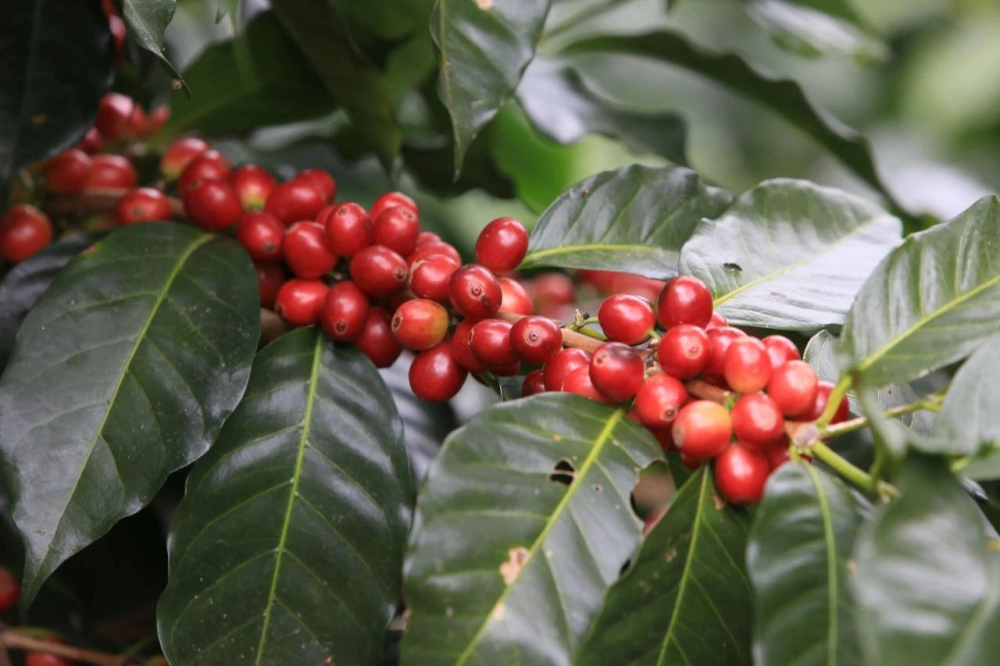
For this coffee bean, Front Street uses the natural sun-dried processing method. Sun-dried processing requires little equipment; it mainly involves evenly drying the coffee cherries during consecutive sunny days. Front Street arranges for staff to turn them at regular intervals to avoid uneven heating of the fruit and excessive fermentation. When the coffee cherries dehydrate and change from bright red to dark purple and reach the target moisture content, they can be sent for hulling and roasting. This year, Front Street's coffee cherries have also gradually ripened, and we are stepping up picking and processing. I believe everyone will soon be able to taste Front Street's Typica flavor from the new season again.
In addition to Front Street Yunnan sun-dried Typica, FrontStreet Coffee has also found, based on the flavor characteristics of Yunnan's producing regions, a Catimor coffee bean from Yunnan's Baoshan producing area. As a member of FrontStreet Coffee's signature daily-bean series, this Yunnan small-bean coffee allows everyone to experience the flavor of Yunnan's producing regions at the highest cost-effectiveness.
Brewing parameters for Front Street Yunnan small-bean coffee
Dripper: hario v60
Dose: 15g
Water temperature: 90°C
Grind size: 75% passing a No. 20 sieve
Water-to-coffee ratio: 1:15
Three-stage pouring: first wet the coffee bed with twice the coffee's weight in water, and after a dome forms, let it bloom for 30 seconds; then pour in a small stream in circles from the inside outward, pausing the stage at 125g; when the coffee bed drops to half the height of the dripper, continue pouring the third stage with the same fine stream to 225g, until all the coffee liquid has filtered through, then remove the dripper. Total time is about 2 minutes.
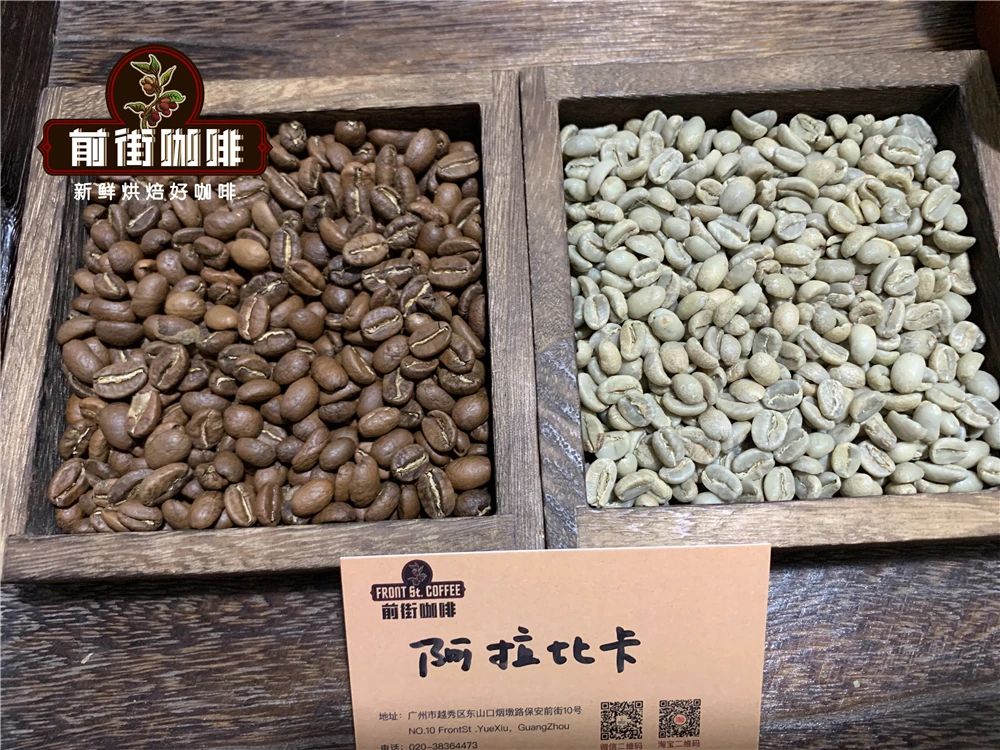
Front Street Yunnan small-bean daily coffee flavor: it smells of obvious nutty aroma, and on the palate shows herbal, chocolate, and caramel notes, with a faint fruit acidity in the finish. The overall mouthfeel is balanced, and cleanliness is quite good.
Front Street 2013 sun-dried Typica coffee flavor: the dry grounds present aromas of caramel, nuts, and citrus. At the high-temperature stage there are chocolate, fermented notes, and berries. As the temperature drops, it reveals plum-like acidity and a clear, sweet finish like black tea and sugarcane. Medium-high body, clear mouthfeel, and rich, varied layering.
For professional coffee knowledge exchange and more coffee bean information, please follow Coffee Workshop (WeChat public account cafe_style)
For more specialty coffee beans, please add the private WeChat of FrontStreet Coffee, WeChat ID: qjcoffeex
The above content is compiled by CoffeeHunters, a coffee news website.


