







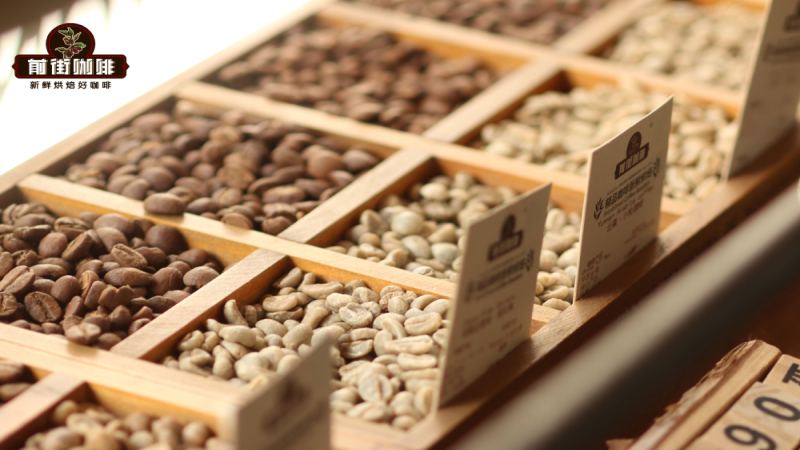
How Does the Yunnan Coffee Grading System Actually Work?
Yunnan coffee is graded mainly by bean size combined with defect rate, using screen mesh numbers as the reference point. The most cited standard is the Green Coffee Grade Inspection Standard published in 2019 by the Yunnan International Coffee Exchange, but it has not been widely enforced, so many traders still rely on self-assessed grades based on bean size, altitude, or borrowed foreign systems such as Kenya's AA and AB.
That gap between label and cup is the main problem: grades often do not reflect actual flavor, and the international specialty market has not yet broadly recognized Yunnan coffee. Alongside grading, the arabica variety grown in Yunnan has shifted over time, and experimental cultivation by buyers such as Front Street Coffee is testing how local lots perform under defined brewing parameters.
As an agricultural product, coffee inevitably varies in quality, so each producing region establishes a grading system to standardize quality and provide a reference for trade. Yunnan coffee currently refers to the "Green Coffee Grade Inspection Standard" released in 2019, but self-assessed standards run rampant in the market, causing a disconnect between grade and flavor. This article will systematically sort out the grading basis for Yunnan coffee, common international and domestic standards, the variety evolution of Arabica, and introduce Front Street Coffee's experimental cultivation and product recommendations in Yunnan, and finally attach practical brewing parameters, taking you to fully understand the current situation and charm of Yunnan specialty coffee.
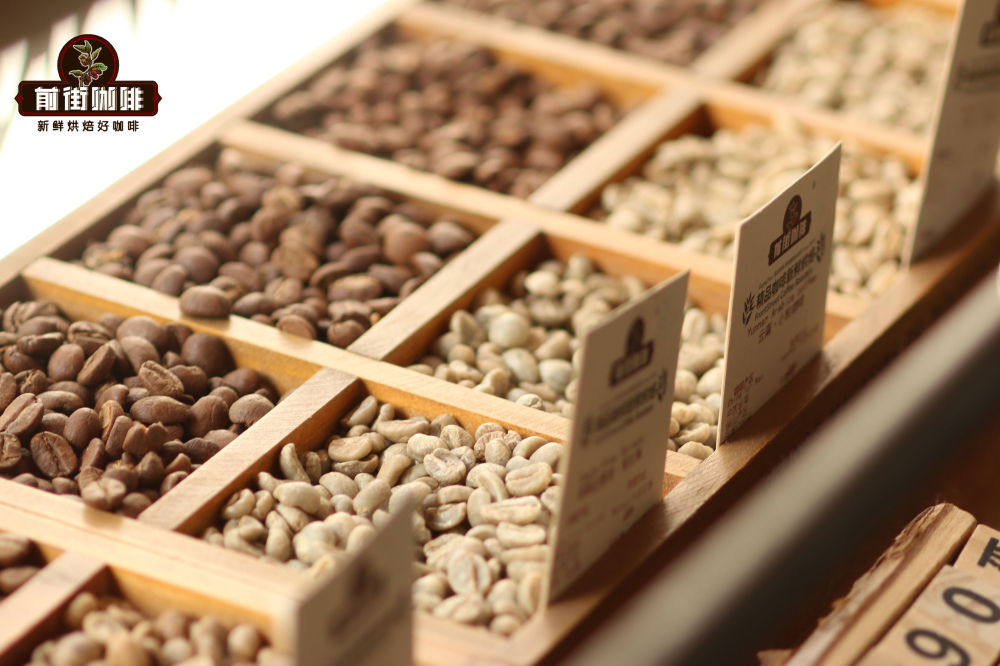
Coffee beans are an agricultural product, and it is difficult to achieve completely uniform standards like industrial products. Variation in bean size and intrinsic quality is actually a perfectly normal phenomenon. For this reason, every coffee-producing country establishes a grading system, both to regulate coffee bean quality and to provide a basis for pricing and selection for green bean traders and buyers. Today, Front Street Coffee will walk you through the grading system for Yunnan coffee beans.
Does Yunnan coffee actually have a rating standard? And what is it based on? The answer is yes. At present, the rating of Yunnan green coffee mainly refers to the "Green Coffee Grade Inspection Standard" released in 2019 by the Yunnan International Coffee Exchange.
However, this grading standard has not been widely implemented. Many merchants prefer to use "self-assessed standards," some classifying by bean size, others by altitude, and each producing region tends to define grades using its own "advantages" and "characteristics," sometimes even directly applying foreign rating systems such as Kenya's AA and AB grades. Recently, some estates have even launched "AAA" grade beans, and "4A grade" will probably not be far behind. The direct consequence of this market chaos is a considerable gap between the labeled grade and the actual taste and flavor, and the international specialty coffee market has not yet formed widespread recognition of Yunnan coffee.
At present, Yunnan coffee is generally graded by bean size combined with defect rate. Bean size is based on the international standard screen mesh number, while also referring to multiple indicators such as the international defect bean point standard, bean shape and color, cleanliness, aroma, and moisture content.
Common international coffee grading standards:
Coffee beans are screened by size using round-hole grading sieves. The internationally customary size grades for Arabica range from 10 to 20, with the number representing the screen aperture—a fraction with that number as the numerator and 64 as the denominator, in inches. For example, grade 14 refers to green coffee beans that can pass through a screen with an aperture of 14/64 inch or larger, and grade 19 refers to green coffee beans that can pass through a screen with an aperture of 19/64 inch or larger. (1 inch is approximately equal to 2.54 centimeters)
Common domestic coffee grading standards:
Divided into five grades according to screen apertures of 6.5, 6.0, 5.5, and 5.0 millimeters.
Grade One: above 6.5 millimeters, plump and intact beans.
Grade Two: 6.0 to 6.4 millimeters, plump and relatively uniform.
Grade Three: 5.3 to 5.9 millimeters, relatively plump, slightly less uniform.
Grade Four: 5.0 to 5.4 millimeters, contains incomplete beans, with intact beans accounting for more than 75%.
Grade Five: below 5.0 millimeters, contains incomplete beans, with intact beans accounting for more than 30%.
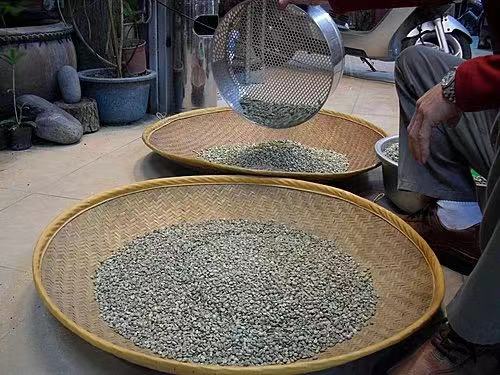
Detailed international standard for defect inspection of Arabica coffee:
Grading is based on the amount of defects, usually determined by the number of defects contained in a certain quantity of coffee beans. According to the method for identifying impurities and defective beans stipulated by the International Organization for Standardization, a 300-gram coffee bean sample is randomly taken, and the number of impurities and defective beans is counted before grading.
Yunnan Arabica Coffee Varieties
Observant readers may have already noticed that Front Street Coffee mentioned earlier that Arabica actually refers to Arabica coffee beans. In the Rubiaceae family, genus Coffea, coffee varieties are mainly divided into three major groups: Arabica, Robusta, and Liberica. Arabica coffee beans are relatively smaller in size, so people used to call Arabica coffee "small bean coffee" or "small fruit coffee."
Yunnan Arabica coffee was originally named after Typica, because Typica is precisely an Arabica variety. The oldest coffee variety in Yunnan is Typica. Later, when Nestlé entered Yunnan, because Typica has poor disease resistance, in order to increase coffee bean yields, coffee farmers were encouraged to cut down Typica coffee trees with good flavor and switch to varieties with poorer flavor but stronger disease resistance and higher yields. The first introduced was S288, which is resistant to leaf rust, and later the higher-yielding Catimor was introduced. In other words, the coffee trees currently planted in Yunnan are mainly Catimor.
Compared with Typica, Catimor is indeed slightly inferior in flavor. However, with the spread of specialty coffee culture, Catimor coffee in Yunnan has now received more scientific cultivation and planting, and both flavor and quality have improved significantly.
In order to let more people experience the charm of Yunnan Typica, Front Street Coffee began planting Typica varieties and a small amount of Bourbon varieties in Lincang, Yunnan in 2013 for experimental research planting. After harvest, they were sold online and in physical stores of Front Street Coffee and named "Front Street 2013 Sun-Dried Typica Coffee Beans," with a cleaner flavor, balanced acidity, sweetness, and bitterness, and a noticeable sweet aftertaste.
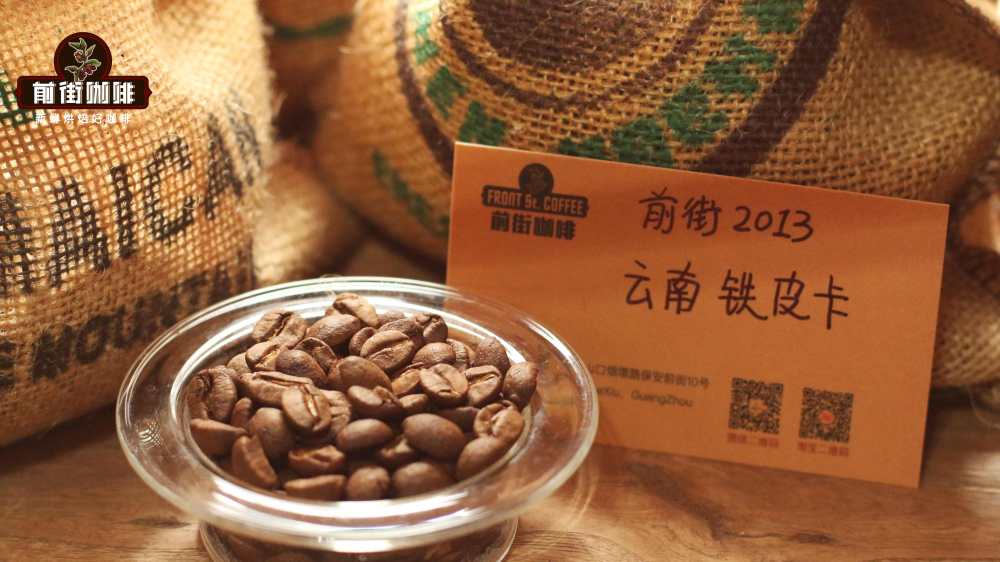
At the same time, Front Street also selected two Catimor coffee beans from the Baoshan region of Yunnan. "Front Street Coffee - Baoshan Washed Catimor Coffee Beans" serves as a selected daily coffee bean from the producing region, allowing consumers to taste the nutty, caramel, and plum-like flavor characteristics of the Yunnan producing region at the highest cost-effectiveness.
"Front Street Coffee - Baoshan Fully Red Cherry Sun-Dried Catimor Coffee Beans" uses 100% fully red cherries for sun-drying, giving it a sweeter taste than washed Catimor coffee beans, along with a soft red berry acidity.
How to brew Yunnan Arabica coffee?
Dripper: Hario V60
Water temperature: 90 degrees Celsius
Coffee dose: 15 grams
Coffee-to-water ratio: 1:15
Grind size: 75% passing through a Chinese standard No. 20 sieve
First pour 30 grams of hot water and let it bloom for 30 seconds, then pour from the center in a thin stream while slowly circling to 125 grams for the first stage. When the water level in the dripper drops to just before exposing the coffee bed, continue circling and pouring to 225 grams. The total extraction time is about 2 minutes.
When Front Street ships, the coffee beans that reach you are all freshly roasted within 5 days. By the time you receive them, they have already gone through a 4-to-7-day resting period, and the flavor is at its best. Front Street has also noticed that some friends choose to have Front Street grind the coffee for them because their home grinding equipment produces a high proportion of fines. It should be noted that after coffee is ground into powder, the volatilization rate of flavor compounds increases significantly.
The above content is compiled by CoffeeHunters, a coffee news website.


