








What Separates Blue Label and Green Label Panamanian Geisha?
Hacienda La Esmeralda in Panama sells its naturally processed Geisha under three grades: Red Label, Green Label, and Blue Label. The Blue Label and Green Label are both natural Geisha, but they differ in growing altitude, production region within the estate, and flavor profile. Comparing the two side by side is the clearest way to see what each label delivers in the cup.
Panamanian geisha rose to prominence after the variety, originally from Ethiopia's Geisha forest, reached Costa Rica in 1953 and Panama in 1970. La Esmeralda Estate later won the country's BOP green bean competition repeatedly, cementing the estate's association with the variety. Brewing parameters and tasting notes for the Green Label are usually shared alongside the comparison.
In the specialty coffee world, the Geisha from Panama's La Esmeralda Estate is undoubtedly a benchmark existence. Front Street Coffee recently launched two Geisha varieties simultaneously—the Natural Blue Label and the Natural Green Label—sparking curiosity among many coffee enthusiasts: both are naturally processed Geisha, so what exactly is the difference between the Blue Label and the Green Label? This article will start from the origin and rise to fame of Geisha, outline the classification standards for La Esmeralda Estate's Red, Green, and Blue Label Geisha, and focus on comparing the similarities and differences between the Natural Blue Label and Natural Green Label in terms of altitude, production region, and flavor performance. At the same time, Front Street will also share the brewing parameters and tasting experience for the Natural Green Label, taking you through a comprehensive understanding of the unique charm of each of these two Geisha varieties.
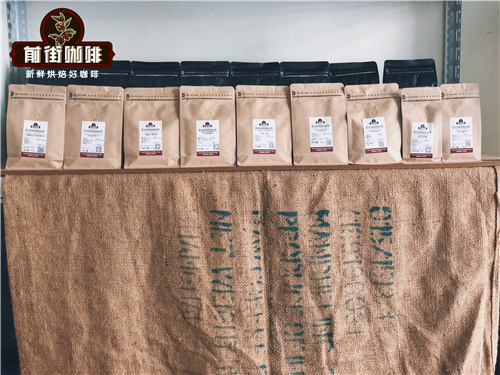
When it comes to Panamanian coffee, the Geisha variety is inevitably an unavoidable topic. The unique floral aroma this variety exudes, along with its smooth mouthfeel like fruit juice, makes it unforgettable for countless coffee lovers after just one sip. The country of Panama can be said to be the key force that pushed Geisha onto the world stage. Front Street Coffee has also launched multiple Geisha beans, and if you carefully browse Front Street's bean list, you will find that Geisha is further divided into three grades: Red Label, Green Label, and Blue Label.
In the third wave of specialty coffee, Geisha and Yirgacheffe can be said to be the two most renowned coffees. Among them, Panamanian coffee is best known for the output from La Esmeralda Estate. Geisha's status today is largely thanks to La Esmeralda Estate—on the one hand, Geisha was first discovered here; on the other hand, La Esmeralda Estate has won the championship in the local green bean competition BOP year after year. To some extent, La Esmeralda Estate has almost become synonymous with Geisha. However, Geisha is not native to Panama; its roots lie in the Geisha forest of Ethiopia, the homeland of coffee. It was first introduced to Costa Rica in 1953, and only arrived in Panama in 1970.
Panamanian Geisha has received extremely high praise in the coffee industry, and at the same time, Panamanian coffee is also fervently sought after by specialty coffee lovers around the world.
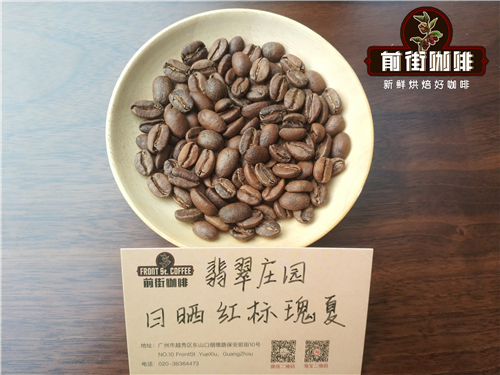
The pronunciation of Geisha is the same as "geisha" in Japanese, so it is also called geisha coffee. After being introduced to China, it was named "瑰夏" based on transliteration. Initially, it was only planted at the highest point of La Esmeralda Estate as a windbreak. The farm owner of La Esmeralda Estate, Daniel Peterson, unexpectedly discovered that the coffee beans produced by these Geisha coffee trees originally used as windbreaks actually carried the citrus and floral notes unique to African beans, so he separated them out. In 2004, the owner's son brought Geisha to the "Best of Panama" cupping competition, winning the championship on its first attempt, and subsequently won championships in multiple world coffee competitions. Geisha has since stepped into the center of the stage.
2004 was the year Geisha truly became famous. That year was also its first time competing. The coffee beans submitted by La Esmeralda Estate caused a huge stir in the industry, and its unique flavor astonished all the judges, ultimately setting a new BOP record with a cupping score of 94.6 points and winning the Best of Panama (BOP) competition championship. Geisha became an instant sensation.
Award records over the years:
2004–2007: Won BOP championship for four consecutive years
2009, 2010: Won BOP championship
2013, 2015: Won BOP championship in the Natural category
2005–2007: Won the "SCAA Cupping Pavilion" for three consecutive years
2004, 2006, 2007: Won the "Rainforest Alliance Cupping for Quality" for three consecutive years
2008, 2009, 2013: Won the "Rainforest Alliance Cupping for Quality"
According to statistics, as of 2013, Geisha had accumulated 15 championships in various coffee competitions.
Two months ago, Front Street Coffee had just launched the Blue Label Natural, and this time it brings a limited-time discount launch of the Green Label Natural processing method. As we have always said, washed processing presents the basic flavor of a production region, while natural processing adds more aroma and flavor layers on top of washed. In past years, Red Label mostly used natural processing, while Green Label and Blue Label were mainly washed, in order to distinguish grades. Facing the market's increasingly diverse demand for processing methods, this year La Esmeralda Estate added natural processing to both Blue Label and Green Label.
Of course, the flavor of Geisha coffee is also inseparable from its growing terrain and altitude. At first, because Geisha coffee trees had low yields, directly affecting harvest volume, coffee farmers were generally unwilling to plant them and used them only as windbreak trees. At the time, almost no one paid attention to their existence. It was not until Daniel Peterson, the owner of Panama's La Esmeralda Estate, accidentally discovered that the coffee beans produced by those inconspicuous Geisha coffee trees serving as windbreaks in the coffee farm actually carried the citrus and floral flavors unique to Africa. So he separated them out and sent them to compete in the Panama coffee bean cupping competition. After that, they won the Panama coffee cupping competition championship for many years in a row, and Geisha became famous overnight. La Esmeralda Estate thus set off a Geisha boom, which then swept across the global coffee industry.
Front Street has learned that only Geisha coffee trees growing above 1,400 meters in altitude can better display the unique flavor of Geisha coffee beans. Panama's La Esmeralda Estate classifies higher-quality Geisha coffee beans into three grades—"Red, Green, and Blue"—based on planting altitude and cupping scores. This is also a question Front Street is often asked by customers.
Front Street Natural Blue Label Geisha Coffee Beans Origin: Panama, Boquete Coffee Estate: La Esmeralda Estate Coffee Grade: Blue Label Altitude: 1,500 meters Variety: Geisha Processing Method: Natural Flavor: Lemon, honey, passion fruit, fermented wine aroma
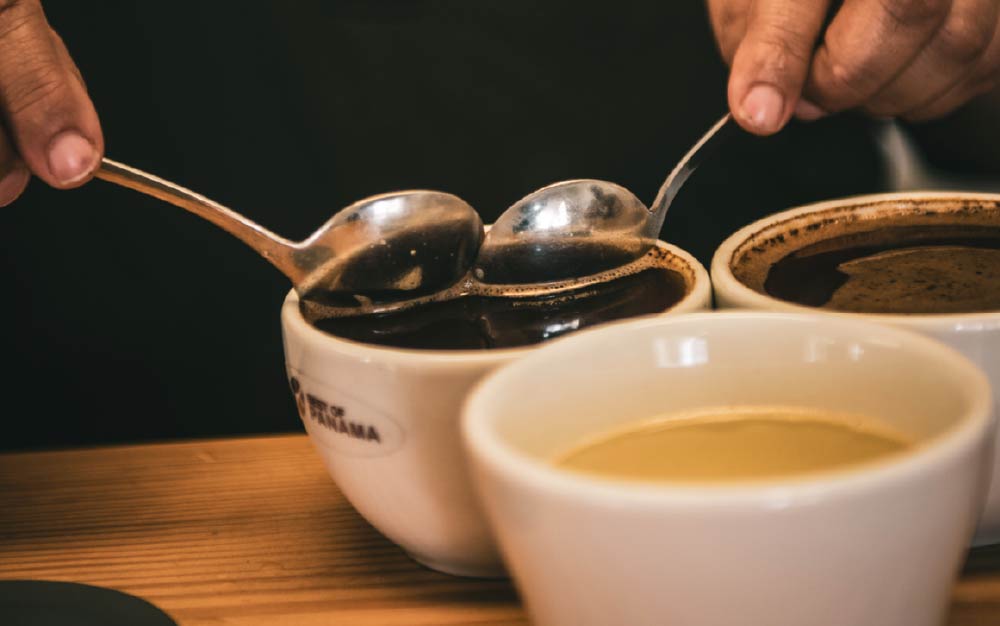
Customers familiar with Front Street all know that Front Street's coffee bean list is continuously updated, with the aim of letting more customers taste a richer variety of coffee beans while also being able to buy their favorite beans at affordable prices. Front Street Coffee's coffee beans also launch discount promotions from time to time. Recently, Front Street's Panama La Esmeralda Estate Natural Green Label and other coffee beans are running a 20% off promotion.
Some Front Street customers may ask, why is Panama's Red Label Geisha not discounted? The reason is actually very simple: Red Label coffee beans have scarce production, and the purchase price of green beans is also higher than other Geisha beans. Front Street will also briefly outline the general differences between Green Label, Red Label, and Blue Label:
Red Label, also called Esmeralda Special. Planting altitude above 1,600–1,800 meters, cupping score above 90 points, participates in bidding. Mainly produced from the two production regions of Jaramillo and Cañas Verdes.
Green Label, also called Private Collection. Mainly planted above 1,600–1,800 meters in altitude, does not participate in bidding. Mainly produced from batches from different plots such as Jaramillo and Cañas Verdes.
Blue Label, also called Geisha 1500. Planting altitude of 1,400–1,500 meters, does not participate in bidding, mainly produced from the three production regions of Jaramillo, Cañas Verdes, and Velo.
La Esmeralda Estate divides Geisha into three grades. Simply put, below 1,500 meters in altitude is Blue Label, and above 1,500 meters is Red Label and Green Label. La Esmeralda Estate covers three estates with a total of 22 plots. Those that distinguish plots are Red Label, those that do not distinguish plots are Green Label, and bidding batches are included within Red Label batches. From this it is not hard to see that Green Label offers relatively better value for money. Two months ago, Front Street Coffee launched the La Esmeralda Estate Natural Blue Label, greatly enhancing the drinkability of Blue Label. And in this limited-time discount, we have brought a brand-new Green Label Natural. Please look forward to it!
The above is the general difference between the three Geisha coffee beans. Front Street's Panama Natural Green Label Geisha, which currently has a promotional offer, sometimes brews with the classic flavors of Geisha—floral aroma, fruity aroma, and a full-bodied mouthfeel interwoven with citrus acidity. This is because both Green Label and Red Label are produced from La Esmeralda Estate's highest-quality production regions, Jaramillo and Cañas Verdes. Therefore, although Green Label is lower in grade than Red Label, because it adopts a model of blending different plots, the similarity in flavor between the two is actually very high.
Front Street La Esmeralda Estate Natural Green Label Geisha Coffee Beans
Production Region: Boquete (Bouquete) Estate: La Esmeralda Estate Altitude: 1,700 meters Processing Method: Natural Variety: Geisha Flavor: Jasmine, lemon, berry, honey, honeydew melon, mango
In recent years, more and more countries have joined the ranks of cultivating Geisha, with Colombia, Costa Rica, Ethiopia, and other places all producing Geisha. Front Street has also cupped this Natural Green Label Geisha: when ground into powder, you can smell a dried fruit aroma similar to passion fruit; after pouring in hot water, a jasmine floral fragrance rushes toward you. When actually tasting it, the entry is an extremely bright lemon acidity, and after cooling, the aroma of passion fruit emerges along with a texture like strawberry juice, as well as a honey-like sweet finish. This is a very classic Geisha flavor and is well worth buying.
Besides the Natural Green Label Geisha beans, Front Street also has Washed Green Label Geisha beans. The Washed Green Label Geisha has a cleaner mouthfeel, with jasmine floral aroma and citrus and berry acidity being especially vivid. Front Street has also mentioned in many articles that washed processing is closer to the main flavor of a production region, while natural processing adds aroma and sweetness on top of washed. Therefore, when recommending coffee beans to customers, Front Street gives priority to recommending coffee beans with the washed processing method.
It is worth noting that Red Label Geisha and Green Label Geisha often use washed or natural processing. But Blue Label Geisha is different. In previous years, Blue Label only had washed processing, but this year natural processing has been added. In order to compare with the Natural Green Label, Front Street also cupped the Natural Blue Label. The dry aroma of the Natural Blue Label is a very sweet fruity scent, and the wet aroma is especially strong; when tasting this Natural Blue Label, the mouthfeel is smooth and the acidity is very soft, forming a sharp contrast with the lemon, oolong tea, and peach mouthfeel of the traditional Washed Blue Label.
Here, Front Street also shares the brewing parameters for this Natural Green Label. When producing coffee, Front Street generally uses the commonly used three-stage brewing method: a single serving uses 15 grams of coffee powder, a coffee-to-water ratio of 1:15, a water temperature of 91 degrees, a medium-fine grind (78% passing rate on a No. 20 standard sieve), and a V60 dripper.
For the first stage, use 30 grams of water for a 30-second bloom. After the bloom ends, pour in the second stage of water, slowly circling from the center outward, reaching 125 grams of water at one minute. For the third stage, after the coffee bed is exposed, continue pouring water until 225 grams, with a total time of about two minutes. After that, you can slowly enjoy the flavor of this Natural Green Label.
The above content is compiled by CoffeeHunters, a coffee news website.


