







How does honey processing treat green coffee beans?
Honey processing keeps the mucilage layer on the green coffee beans after the skin and pulp are removed, then dries them under sunlight until moisture drops to around 11 percent. This retention separates it from washed processing, where mucilage is fully removed in a water tank. In Costa Rica the method appears across almost the whole country.
Cherries are first floated in a tank to screen out defective beans. The remaining sticky mucilage is left intact during drying, and the lots are graded as yellow, red and black honey by how much mucilage stays. Anaerobic honey processing is a derived technique. Cupping comparisons with washed Yirgacheffe, natural Red Cherry and Lintong Mandheling show sweetness, acidity and aroma differences.
The processing method of green coffee beans directly influences the final flavor profile in the cup. Beyond the three mainstream processing methods, honey processing, with its unique technique of retaining mucilage, has become a signature technique in Central America, particularly in Costa Rica. From the perspective of Front Street, this article systematically reviews the operational workflow of honey processing, the grading of yellow, red, and black honey, the core differences from natural and washed processing, and extends to the derived technique of anaerobic honey processing. Meanwhile, Front Street presents cup-to-cup comparisons of Mirazu Estate Raisin Honey, washed Yirgacheffe, natural Red Cherry, and Lintong Mandheling, intuitively demonstrating the specific expressions of different processing methods in terms of sweetness, acidity, and aroma, helping coffee enthusiasts establish a clear taste reference.
Currently, the processing methods for green coffee beans are mainly divided into three major categories: washed, natural, and honey. In addition, Indonesia has developed a distinctive technique—wet-hulled processing. Today, Front Street will focus on the honey processing method widely adopted in Costa Rica.
Honey processing is used almost throughout Costa Rica, and this technique is quite prevalent in Central America. The standard operation of honey processing is: first, the coffee cherries are immersed in a water tank for flotation to screen out defective beans. Then the skin and pulp are removed, but the mucilage layer is deliberately left intact, at which point a large amount of sticky substance adheres to the surface of the coffee beans. Subsequently, these green coffee beans still carrying mucilage are spread directly under sunlight for drying.
At this stage, the divergence between honey processing and washed processing becomes apparent. In the washed method, after removing the skin and pulp, the green beans are placed in a water tank so that the mucilage and pectin decompose and detach in the water. In other words, washed processing does not retain mucilage, while honey processing does—this is the most fundamental difference between the two. When the moisture content of the green beans drops to around 11%, the honey processing procedure is complete.
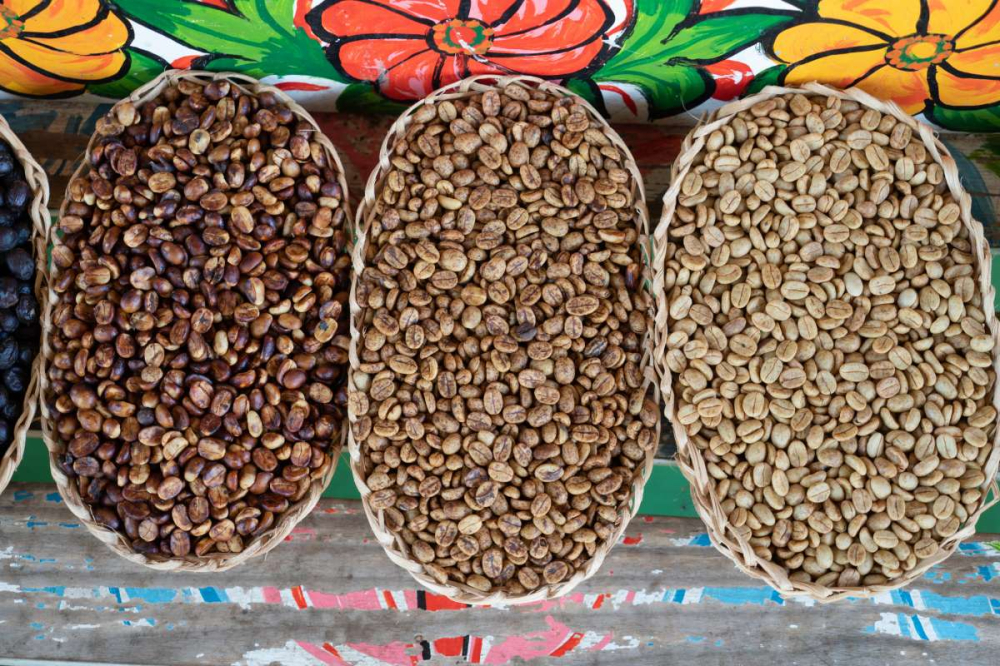
According to Front Street, honey processing is further subdivided based on the proportion of mucilage retained. Typically, beans with 40% of the mucilage removed are called yellow honey; those with 25% removed are classified as red honey; and green beans that retain 100% of the mucilage are called black honey.
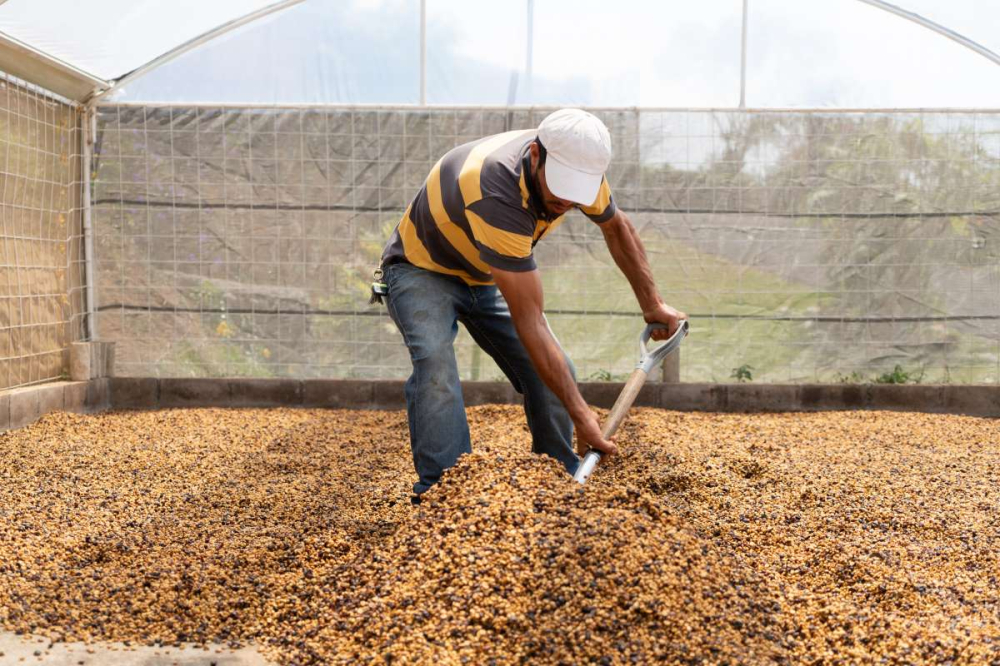
Front Street also learned that honey-processed green beans require extra care during the drying stage. Because mucilage remains on the surface, the beans tend to stick together, and during drying they must be turned frequently to avoid mold or over-fermentation. Compared with the natural method, honey processing consumes more time and labor. Natural processing involves drying the whole cherry directly, so there is no problem of beans sticking together, but because the parchment is still attached, the drying cycle is longer than that of honey processing.
Costa Rica also has an anaerobic honey-processed coffee bean, and Front Street has already listed this Mozart coffee, which is precisely the anaerobic honey processing technique derived from honey processing. Compared with ordinary honey processing, anaerobic honey processing delivers more stable flavor expression because manual intervention can be used to lock in the target flavor. The common approach for anaerobic honey processing is: after removing the outer skin and pulp of the coffee cherry, retain the mucilage, place the beans directly into a sealed fermentation tank for low-temperature fermentation at 10 to 15 degrees Celsius, and then sun-dry them after three days.
You may be curious about what flavor differences different processing methods bring to coffee beans. Front Street is equally interested in this, so cupping sessions were arranged for these processing methods, and flavor comparisons were conducted using pour-over brewing.
For the honey-processed one, Front Street chose the Raisin Honey coffee beans from Mirazu Estate in Costa Rica. This bean has outstanding sweetness. To highlight the sweetness of honey processing while preserving the fruity notes and floral aroma, Front Street used a light roast. During brewing, to bring out high sweetness, the water temperature is recommended to be controlled at 91 to 92 degrees Celsius, with 15 grams of coffee and a coffee-to-water ratio of 1:16, which is more suitable for extracting a rich mouthfeel. The water temperature should not be too high either; usually 88 degrees is just right.
Front Street uses the usual three-stage method to brew these coffees. Before formal brewing, Front Street generally rinses the filter paper first and preheats the dripper and coffee pot. The first stage involves pouring 30 grams of water for blooming. After 30 seconds, the second stage begins, pouring in a circular motion with a small stream until reaching 125 grams, then pausing. When the water level drops and is about to expose the coffee bed, the third stage begins, continuing to pour in a circular motion until 225 grams, then stopping. When the water level once again drops to the point of almost exposing the coffee bed, remove the dripper. The total extraction time (timed from the start of blooming) is exactly 2 minutes. This pour-over method is the three-stage pour-over method, the most commonly used brewing method at FrontStreet Coffee.
After tasting these coffees, Front Street reached the following conclusions:
Costa Rica Mirazu Estate: jasmine aroma, with the sweetness of raisins and strawberry gummy candy on the palate, and a nutty, creamy mouthfeel.
Washed Yirgacheffe: rich citrus and lemon fruit acidity, intense jasmine floral aroma, light and elegant mouthfeel, with tea-like character, tasting like refreshing, clean lemon tea.
Natural Red Cherry: pronounced ripe tomato aroma and floral notes, with cherry tomato and smoked plum flavors on the palate, bright acidity, clean and full of juice, berry sweetness, and a yellow sugar sweet finish.
Lintong Mandheling: herbal and medicinal notes on the palate, dark chocolate, caramel, with a sweet aftertaste.
Through the comparison of these coffees with different processing methods, Front Street clearly sees the general distinctions among washed, natural, and honey processing: among these four processing methods, the highest sweetness belongs to honey-processed coffee beans, which also carry intense floral aromas; next is natural-processed coffee beans, whose sweetness, though less than honey-processed, is still higher than washed; washed processing has the brightest acidity. Indonesia's wet-hulled method gives coffee beans a noticeable spice flavor and a unique herbal taste, with a slightly sweet aftertaste as well. These are the general differences among these coffee processing methods.
For more specialty coffee beans, please add the private WeChat FrontStreet Coffee (FrontStreet Coffee), WeChat ID: kaixinguoguo0925
The above content is compiled by CoffeeHunters, a coffee news website.


