







Why does Panama Geisha coffee cost so much per cup?
Panama Geisha from Finca Deborah's Savage series is processed as anaerobic natural, and its per-cup price runs high because the variety is scarce, grown at altitude and processed in small lots. The cup shows the floral and fruit character that made Geisha the flagship variety of Panama's specialty coffee map.
Geisha was first found in Ethiopia's native forests in the 1830s, sent to Tanzania, then to CATIE in Central America in 1953 as T2722, and distributed in Panama around 1960. It was long used only as a windbreak because its branches are fragile. The 2004 competition auction, won by the Peterson family in Boquete, changed its standing.
Panama Geisha has always been the darling of the specialty coffee world, and its price has remained high year-round. On Front Street Coffee's bean list, besides Hacienda La Esmeralda, there is also a Geisha from Finca Deborah's Savage series, processed with anaerobic fermentation natural method, with stunning flavors. Exactly how much does a cup of this Geisha cost? Why is it even more expensive than Esmeralda's Green Label? This article will take you through the history of Geisha's spread from Ethiopia to Panama, analyze the impact of high-altitude cultivation on flavor, and provide a detailed interpretation of Finca Deborah's background and anaerobic natural processing method, finally attaching Front Street's brewing recommendations, so you can fully understand the value of this high-priced Geisha.
Panama has secured an important position on the world specialty coffee map thanks to Geisha coffee, and this bean is also recognized as one of the highest-priced coffee varieties globally. On Front Street Coffee's current bean list, the Panama region is almost exclusively Geisha, including the classic from Hacienda La Esmeralda, the Savage series Geisha from Finca Deborah, Geisha from the Boquete region, and a Geisha blend called Butterfly. However, many people don't know that Geisha's starting point was not actually in Panama. Front Street Coffee has consulted a large amount of material and sorted out the following timeline:
Geisha was first discovered in Ethiopia's native coffee forests in the 1830s, and was subsequently sent to a research institution in Tanzania. In 1953, it was introduced to the Tropical Agricultural Research and Higher Education Center (CATIE) in Central America, where it received the designation T2722. Around 1960, CATIE distributed Geisha to various locations in Panama. Although Geisha has strong resistance to coffee leaf rust, its branches are very fragile, so farmers did not favor it, and for a long time it was only used as a windbreak tree species and was not planted on a large scale. It was not until 2004 that the Peterson family in Panama's Boquete region entered Geisha in the "Best of Panama" competition and auction, where its stunning flavor performance won extremely high praise, broke the raw bean auction price record at the time, and won the BOP championship. Geisha has been famous ever since.
It should be noted that there is actually considerable confusion under the name Geisha, because multiple plants with different genotypes are all called Geisha, and many of them have similar geographical origins in Ethiopia. Genetic diversity analysis by World Coffee Research confirmed that T2722's descendants in Panama are unique and greatly differ from the Geisha grown in Ethiopia. As is well known, Panama Geisha is mostly grown in the higher-altitude Boquete production area. When coffee trees are well managed at high altitude, flavor quality becomes very outstanding, typically presenting delicate floral notes (jasmine) and rich fruity character. The reason is that the low-temperature environment at high altitude slows down coffee growth, and during this slow growth process, coffee can absorb more nutrients and energy, often resulting in higher sweetness; at the same time, high-altitude areas have better drainage, and with less water during coffee growth, sugar substances are more concentrated, making the flavor sweeter as a result.
The two spellings Geisha and Gesha are often used interchangeably, which is related to the lack of a fixed transliteration from Ethiopian dialects to English. In bean variety records, the spelling is mostly "Geisha," and coffee researchers and germplasm banks have basically continued to use this spelling for decades, so this spelling was the first to spread throughout the coffee industry. However, this coffee was originally collected near Ethiopia's Gesha Mountain, so many people in the industry prefer to call it Gesha.
A while ago, Front Street launched a Geisha from Panama's Finca Deborah Savage series, another proud creation of estate owner Mr. Savage. The beans in this series are not produced from Finca Deborah itself, but rather Geisha grown by smallholder farmers around the estate that Mr. Savage purchased, processed to develop a novel and uniquely flavored Geisha. He directly named the series after himself, which shows his great confidence in these beans.
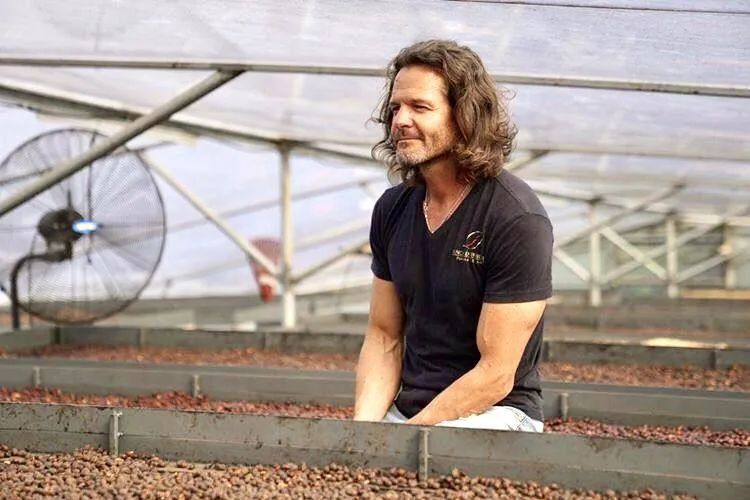
Front Street Coffee's Deborah Savage uses the anaerobic fermentation natural processing method. Even friends who often drink specialty coffee may not thoroughly understand anaerobic fermentation, so today Front Street will first talk about this processing method. Anaerobic/oxygen-free fermentation is the process of putting coffee into a completely sealed, oxygen-deprived fermentation tank. Raw coffee beans are loaded into a specialized container, and carbon dioxide or other gases are introduced to create a relatively anaerobic or oxygen-deficient environment inside the container. After about 18 to 24 hours, the anaerobic process begins to cause mucilage decomposition, and CO2 pressure inside the tank rises. This pressure forces the flavors of the juicy mucilage into the coffee parchment. The pressure is released through a one-way valve at the top of the barrel, or usually through a pipe above a water basin. Anaerobic fermentation has many levels and may take up to 120 hours, sometimes even 240 hours. Anaerobic fermentation refers to allowing coffee to ferment in a completely oxygen-free state; this environment prompts the coffee to produce lactic acid, making the acidity softer and the mouthfeel smoother. This processing method allows producers to better control sugar, temperature, pressure, PH value, and fermentation time. Anaerobic natural means that after the coffee undergoes anaerobic processing, it is then processed a second time by the natural method. After fermenting for three days in an anaerobic environment, the coffee is then placed on raised beds for sun drying.
Ever since Front Street Coffee added Finca Deborah Geisha to its bean list, many regular customers have been curious about exactly what kind of estate Finca Deborah is, and why it is even more expensive than the famous Hacienda La Esmeralda Green Label Geisha (Front Street's Green Label is priced at 168 yuan per 100 grams, while Finca Deborah Geisha is 198 yuan per 100 grams). Today Front Street will provide a comprehensive answer to this question.
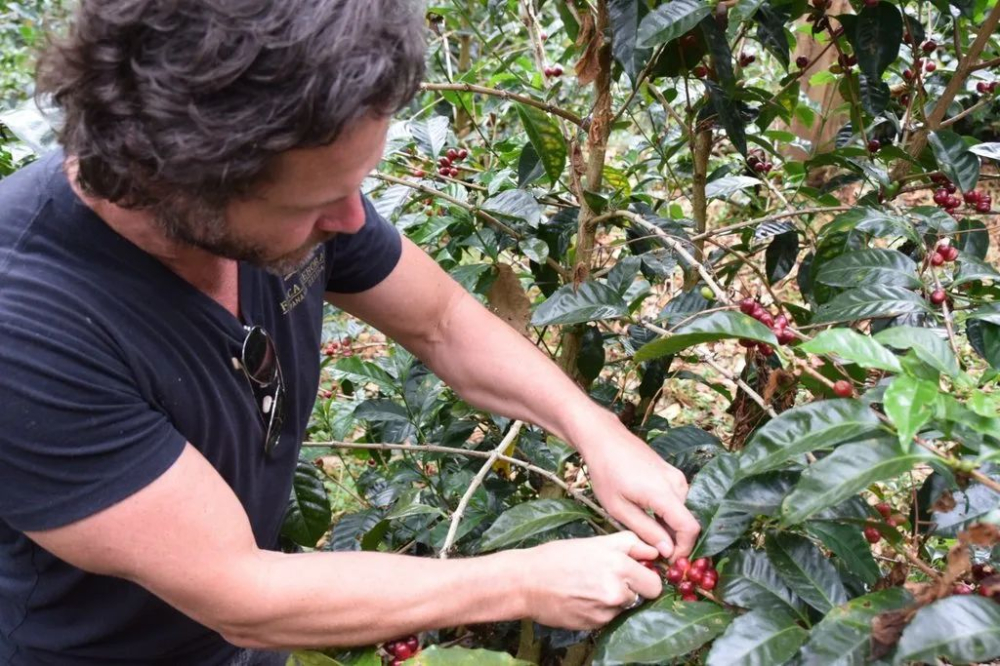
Finca Deborah is located in Panama, specifically in the volcanic region of Chiriquí Province. The plantation is at an altitude of over 1,900 meters, making it one of the most remote coffee farms in Panama. This region is very suitable for coffee production: volcanic soil, high altitude, and the perfect balance between rain and tropical sunshine fill the unique coffee plants with vitality. Finca Deborah's commitment to the environment is extraordinary: the farm is entirely powered by a solar power system, and the people who work here are focused on protecting the ecology for future generations. The selection of Geisha coffee is a serious matter, and the workers are dedicated professionals centered on excellence. The harvest is closely monitored, and the coffee is carefully selected, with only the ripest cherries picked.
Estate owner Jamison Savage is American and has devoted the past decade to building Finca Deborah, with the goal of establishing an environment-focused next-generation coffee processing facility in Panama. The farm does not use pesticides or toxins. These farms are located at extremely high altitudes, making them one of the highest and more remote farms in Panama, operating on solar power and functioning within a harmonious ecosystem. Jamison believes that coffee trees are at their best when surrounded by local flora and fauna. This authentic, comprehensive, and sustainable farming approach, combined with originality and creativity as well as advanced technical practices, has made Jamison one of the most impressive high-end coffee producers in the world.

This Geisha is of very excellent quality, with plump beans. Front Street uses a medium-light roast, developing for 1 minute 20 seconds after first crack begins before dropping, in order to express this bean's sweetness, acidity, and floral and fruity aroma.
Cup profile
When Front Street cupped this coffee, what was very stunning was that its acidity is very full, like drinking yogurt in flavor and mouthfeel, accompanied by relatively sweet tropical fruit flavors such as pineapple.
Front Street Coffee brewing recommendations
Front Street recommends consuming the coffee starting on the 7th day after roasting, because the coffee flavor is richest after the resting period. The coffee beans shipped by Front Street Coffee are all within 5 days of the roast date, because Front Street deeply understands that the freshness of coffee beans greatly affects flavor. Front Street's roasting philosophy is "freshly roasted good coffee," so that every customer who places an order receives the freshest coffee. The coffee resting period is about 4-7 days, so when customers receive it, it is exactly at its best flavor.
Dripper: V60#01
Water temperature: 91°C
Coffee dose: 15g
Coffee-to-water ratio: 1:15
Grind size: medium-fine grind (78% passing through China standard No. 20 sieve)
Three-stage brewing method: First pour 30 grams of water for a 30-second bloom. Then pour in a slow circular stream until reaching 125 grams, at which point pause; when the water level drops and is about to expose the coffee bed, continue pouring until 225 grams and stop pouring. When the water level drops and is about to expose the coffee bed, remove the dripper. (Start timing from the beginning of the bloom.) Extraction time is 2'10".
Professional coffee knowledge exchange
More coffee bean information
Please follow Coffee Workshop (WeChat public account cafe_style )
For more specialty coffee beans, please add the private WeChat of Front Street Coffee, WeChat ID: kaixinguoguo0925
The above content is compiled by CoffeeHunters, a coffee news website.


