








Why is Panamanian geisha priced so high?
Panamanian geisha from Hacienda La Esmeralda is split into Red, Green, and Blue Label lots, and the label signals both quality tier and price. Tiny auction lots have sold for extraordinary sums, which reflects limited supply, estate prestige, and the variety's distinctive floral and citrus character rather than everyday demand.
Geisha was found in Ethiopia in 1931 and later reached Kenya, Uganda, Tanzania, Costa Rica, and finally Panama, where Hacienda La Esmeralda's three main plots built its reputation. Panamanian geisha coffee is often compared with Gesha Village lots from Ethiopia, and the grading systems behind each origin help buyers understand what they are paying for.
Geisha coffee is often regarded as the pinnacle of specialty coffee, especially the Red Label, Green Label, and Blue Label lots produced by Panama's Hacienda La Esmeralda, whose prices and flavors attract much attention. From the perspective of Front Street Coffee, this article systematically reviews the history of Geisha's spread, the differences between Ethiopian and Panamanian Geisha, the grading system of Gesha Village, as well as the three major plots of Hacienda La Esmeralda and the Red Label, Green Label, and Blue Label tier system, and analyzes the reasons why Geisha coffee is so expensive. The article also retains the product information and brewing suggestions for Front Street's Emerald Red Label, Green Label, and Blue Label Geisha, making it suitable for coffee enthusiasts who want to gain a deeper understanding of Geisha's grade and taste.
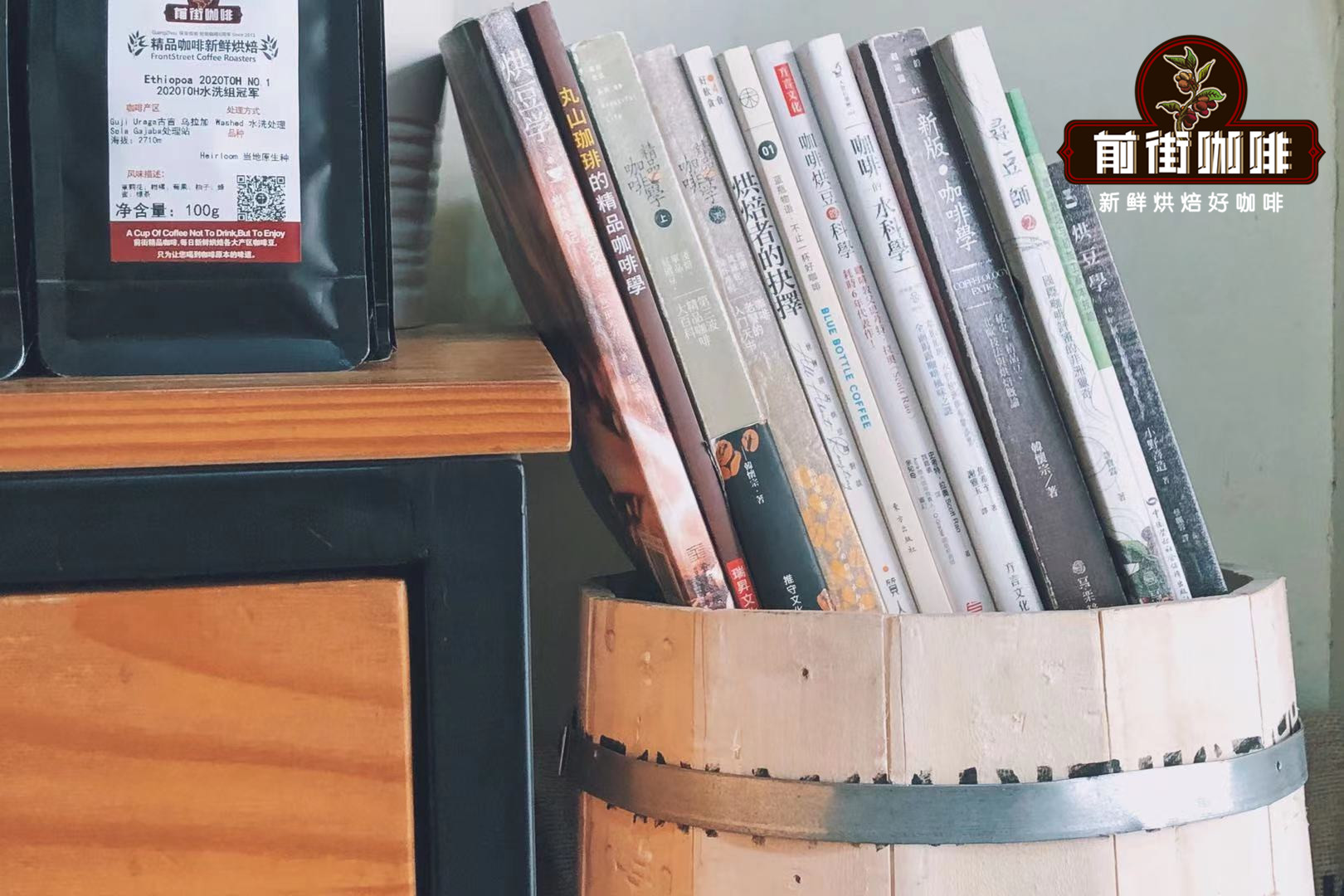
If you ask a friend who is new to coffee which coffee in the world is the most expensive, many will answer Blue Mountain coffee or Kopi Luwak. In this regard, Front Street Coffee might as well show everyone just how high a price Geisha coffee can fetch.
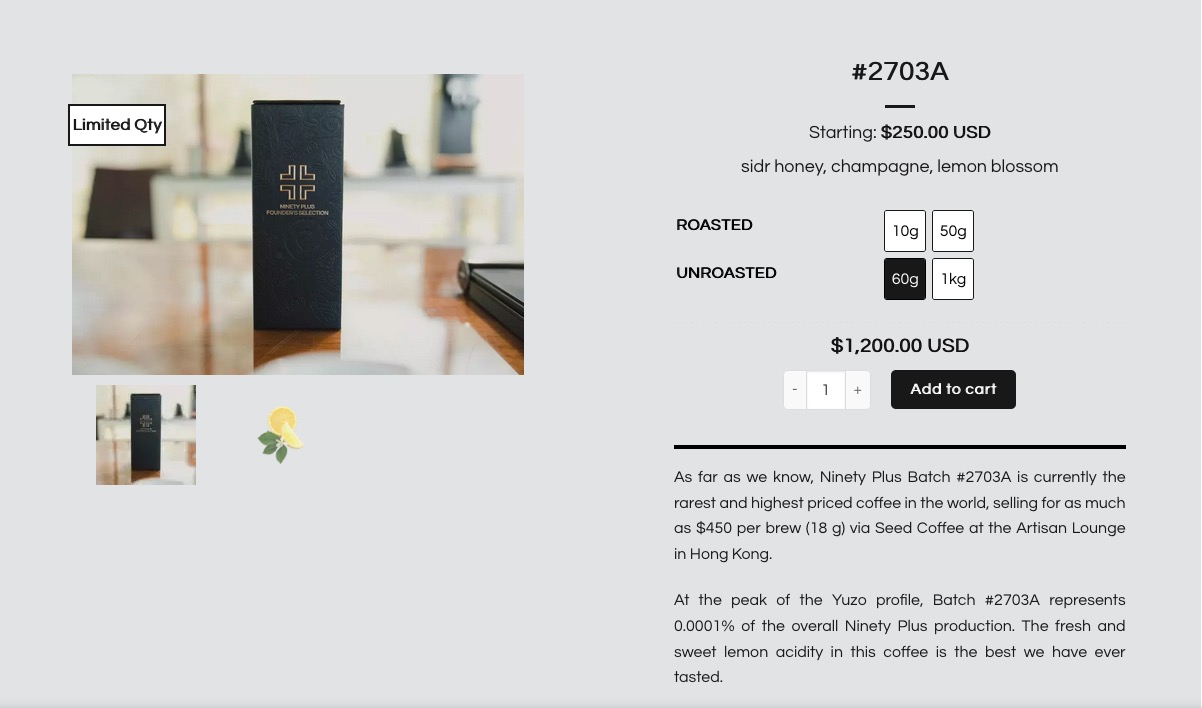
That's right—this is the Geisha coffee produced by the Geisha estate under Ninety Plus (commonly known as 90+), with lot number #2703A. Just 60 grams of green beans sells for 1,200 US dollars, and that figure doesn't even include shipping. Surprised and astonished? Then you can well imagine what grade Geisha coffee belongs to.
What is Geisha?
When Geisha is mentioned, most people's first impression is Panamanian Geisha, such as the highest-grade Front Street Emerald Red Label Geisha and the more cost-effective Front Street Emerald Green Label Geisha. On the other side of the Atlantic, Ethiopia, the birthplace of coffee, also produces excellent Geisha. If you want an estate-level single-origin Geisha, you can choose Front Street Gesha Village Red Label or Front Street Gesha Village Gold Label; if you prefer a more affordable option suitable as a daily staple, Front Street Granja Geisha is recommended.
Below, Front Street will introduce Geisha coffee to everyone.
The History of Geisha's Spread
The Geisha variety was discovered in 1931 in the Geisha forest of Ethiopia, and was later sent to the Coffee Research Institute in Kenya; in 1936, Geisha was introduced to Uganda and Tanzania; in 1953, it also appeared in Costa Rica; in 1963, Don Pachi Serracin introduced Geisha coffee trees from Costa Rica to Panama. Because of its low yield, which directly affects harvest volume, coffee farmers were not very willing to plant it, and for a long time it was used only as a windbreak tree. After nearly half a century of obscurity, today's Panama Hacienda La Esmeralda, also known as Hacienda Esmeralda, separated Geisha from other varieties, allowing this variety to first show its brilliance in the 2003 BOP competition (Best of Panama), and ultimately winning the championship in the 2004 BOP competition, bringing Geisha into the public eye.
This Geisha Is Not That Geisha
Many people wonder when they first encounter Geisha coffee: what exactly is the difference between Panamanian Geisha and Ethiopian Geisha? Aren't they both Geisha varieties?
Here, Front Street Coffee must solemnly state: they are indeed different. Not to mention the different origins, even the coffee bean varieties are not the same.
Ethiopian Geisha
[Gesha Village]
When talking about Ethiopian Geisha, the Geisha here refers to Gesha Village. In 2007, documentary director Adam Overton, after filming a documentary about Ethiopian coffee, had the idea of establishing a coffee estate and brand; in 2009, BOP judge Willem Boot's plan to find the birthplace of Geisha provided Adam with an opportunity; in 2011, they went to Gesha Village and found native Geisha species in the surrounding forest, then planted them in Gesha Village and established the Gesha Village Coffee Estate.
[Varieties]
Although they are all called Geisha, Ethiopian Geisha and Panamanian Geisha coffee actually have no direct relationship. The varieties of Ethiopian Geisha coffee beans mainly include: Gori Gesha (GG), Geisha 1931 (G31), and Illubabor Forest 1974 (IF).
Gori Gesha: The bean size is very close to the native Heirloom, but the shape of some flat beans is very similar to the familiar Geisha 1931. The green bean aroma has strong tropical fruit notes. Gori Gesha is named after the Gori Gesha Forest, the birthplace of Geisha coffee, reflecting the genetic diversity within the forest.
Geisha 1931: Geisha 1931 can be said to be a relatively common Geisha bean appearance. The bean size is similar to Typica, but the flavor is very different from Typica. It combines various different varieties from the forest and is very similar to Panamanian Geisha. It was selected by observing plant morphology, bean appearance, screen size, and cupping flavor. Geisha 1931 was selected from multiple Geisha varieties and is the variety closest to Panamanian Geisha. The variety selection depends on the morphology of the coffee plant, the appearance of the coffee beans, and cupping results. It is named Geisha 1931 precisely because 1931 was the year the Geisha variety was discovered in Ethiopia.
IF: It was discovered in 1974 during an expedition in the Illubabor Forest, and later the Ethiopian research center developed a variety with resistance.
[The Grading System of Gesha Village Geisha Coffee Beans]
According to Front Street Coffee, Willem Boot also brought the Panamanian business model to Gesha Village, thus forming the grading system for Geisha coffee within the estate. That is, the Gesha Village Auction, Gold Label, Red Label, Green Label, and Chaka Geisha coffee beans on Front Street Coffee's menu.
Auction Lot: It accounts for only 3.7% of Gesha Village's annual production and is the estate's top lot after rigorous selection. It can only be obtained through the Gesha Village Coffee Estate global auction.
Gold Label: Gold Label accounts for only 5% of Gesha Village's annual production and can almost be said to be on par with the auction lot. Front Street Gesha Village Gold Label comes from the Oma 059 lot, with obvious floral, citrus, pomelo, and ripe berry flavors.
Red Label: A fully traceable lot with typical Gesha Village flavor. Its flavor intensity and complexity are slightly weaker than the Gold Label, making it a very cost-effective single-origin lot.
Green Label: Its official name is SINGLE-TERROIR. This coffee bean comes from a single farm in Gesha Village. Complete traceability information for each lot number in the Single-Terroir series can be found, including farm name, coffee variety, and processing date.
Chaka Lot: This is a Geisha coffee bean blend produced by Gesha Village, including three varieties: Gori Gesha, Gesha 1931, and Illubabor (a native Ethiopian disease-resistant variety).
Panamanian Geisha
The fact that the Geisha variety is famous worldwide is largely thanks to Hacienda La Esmeralda in Panama, the discerning patron.
[Hacienda La Esmeralda]
In 1964, American banker Rudolph Peterson retired and moved to Panama, and bought Hacienda La Esmeralda in Boquete, initially focusing on dairy. Later, his son Price resigned from his position as a doctor to help his father run the farm, and in 1987 introduced Caturra and Catuai coffee varieties, and in 1994 established a wet processing plant, thus having his own coffee processing facility.
[Plot Division of Geisha Varieties at Hacienda La Esmeralda]
Hacienda La Esmeralda is extremely meticulous in dividing the plots where Geisha is planted, mainly with three plots: Jaramillo, Canas Verdes, and El Velo. Each plot is further subdivided into smaller plots.
Jaramillo Annual rainfall is 4,000 ml, average daytime temperature is 19-25°C, average nighttime temperature is 11-15°C, and average altitude is 1,600-1,700 m. The Jaramillo plot is subdivided into 5 smaller plots: Mario, Noria, Reina, Bosque, and Buenos Aires.
Canas Verdes Annual rainfall is 3,500 ml, average daytime temperature is 16-23°C, average nighttime temperature is 10-15°C, and average altitude is 1,600-1,800 m. Canas Verdes includes 9 smaller plots: Lino, Coronado, Fundador, León, Montaña, Trapiche, Chinta, Cabaña, and Tumaco.
El Velo is the most recently purchased plot of Hacienda La Esmeralda, with an average altitude of 1,700-1,900 m. In addition to planting Geisha and Catuai, this plot also has a small number of other introduced varieties, such as Laurina, Pacamara, Mocha, and SL28. El Velo is divided into 7 smaller plots: Guabo, Portón, Durazno, Higuerón, Higo, Buena Vista, and Águila.
[The Grading System of Hacienda La Esmeralda Geisha Coffee]
After years of experimentation, Hacienda La Esmeralda found that only Geisha grown above 1,400 meters can display its proper refined flavor. Therefore, Hacienda La Esmeralda divides the Geisha coffee grown on the estate into three grades based primarily on growing altitude, supplemented by actual cupping results.
Esmeralda Special
Esmeralda Special is what we commonly call Red Label. Front Street Red Label Geisha is grown at an altitude of 1,600-1,800 meters, with a cupping score above 90, mainly from the Jaramillo and Canas Verdes production areas. The Red Label lot can be washed or natural processed. The Red Label lot can only be obtained through global auctions.
[Front Street Panama Hacienda La Esmeralda Red Label Geisha Natural]
Country: Panama Region: Boquete Estate: Hacienda La Esmeralda Altitude: 1,600 m - 1,800 m Processing Method: Natural Variety: Geisha
Private Collection
Private Collection is Front Street Green Label. The Green Label lot does not participate in auctions, but its quality is still excellent. Green Label Geisha is grown at an altitude of 1,600-1,800 meters and is mainly blended from different plots such as Jaramillo and Canas Verdes. Because it adopts a model of blending different plots, sometimes the Green Label and Red Label can have very similar flavors. Although Green Label is not as high-grade as Red Label, it still carries the classic Geisha flavor—floral, fruity, citrus acidity, and a thick, juicy body. Green Label Geisha is also available in washed or natural processing.
[Front Street Panama Hacienda La Esmeralda Green Label Geisha Washed]
Country: Panama Region: Boquete Estate: Hacienda La Esmeralda Altitude: 1,600 m - 1,800 m Processing Method: Washed Variety: Geisha
Geisha 1500
Geisha 1500 is Blue Label. Grown at an altitude of 1,400-1,500 meters, Blue Label blends Geisha coffee beans from three different plots: Jaramillo, Canas Verdes, and El Velo.
In previous years, Blue Label Geisha was only washed, but this year the Blue Label lot has added a natural processing method. The coffee introduced by Front Street Coffee is this year's new-crop natural Blue Label Geisha.
[Front Street Panama Hacienda La Esmeralda Blue Label Geisha Washed]
Country: Panama Region: Boquete Estate: Hacienda La Esmeralda Altitude: 1,400 m - 1,500 m Processing Method: Washed Variety: Geisha
[What Grade Is Geisha Coffee? Why Is It Expensive?] At this point, aren't you already quite tempted? Actually, there's no need to be scared off by the price of the Ninety Plus Geisha coffee mentioned earlier. If you want to drink Geisha coffee of the Geisha variety, the cost-effectiveness of what Hacienda La Esmeralda produces is actually quite high.
Front Street Panamanian Geisha coffee beans are expensive mainly for four reasons:
It was selected by the Specialty Coffee Association (SCA) as the best coffee. SCA is an international coffee enthusiasts' organization covering multiple areas of the specialty coffee industry: growers/farmers, producers, roasters, manufacturers, importers/exporters, and retailers.
It is relatively rare. There are only a few Geisha producers in Panama. Because Panama's growing conditions cannot be found outside Panama, Panamanian Geisha coffee cannot be replicated in other regions or countries. In addition, with climate change and the threat of rust disease, Geisha's survival has become even more difficult.
Demand is increasing while supply is decreasing. Especially in Asia (such as China), demand for Geisha coffee has grown particularly noticeably, which has also driven its price ever higher.
The auction method also effectively raises the coffee's price. Because supply is limited, only the highest bidder gets it.
Here, Front Street Coffee wants to say that the Panamanian Hacienda La Esmeralda Green Label Geisha coffee roasted by Front Street Coffee is fully guaranteed in both brand and quality. More importantly, it is extremely cost-effective: each bag is 100 grams and costs only 168 yuan. Calculating at 15 grams of coffee beans per cup, one bag can make 6 cups of coffee, which is only about 28 yuan per cup. Compared with the prices of over a hundred yuan per cup sold in coffee shops, this can truly be called a conscientious recommendation.
Front Street Coffee Brewing Suggestions Front Street Coffee recommends the following brewing parameters: Hario V60 dripper, 90°C water temperature, 15 g coffee dose, 1:15 coffee-to-water ratio, and medium-fine grind (80% passing through a Chinese standard No. 20 sieve).
Front Street takes into account that these Geisha beans are all light roasts. Light-roasted beans have a lower extraction rate of coffee substances than dark roasts, so in order to ensure that the Geisha flavor can be fully extracted, a higher water temperature is used for brewing, and a finer grind is also chosen.
Brewing Method Front Street Coffee uses staged extraction, also called three-stage brewing: use 30 g of water for a 30-second bloom, pour in a small stream in circles until 125 g for the stage break, and when the water level drops and is about to expose the coffee bed, continue pouring until 225 g and stop; when the water level drops and is about to expose the coffee bed, remove the dripper. (Timing starts at the beginning of the bloom.) The extraction time is 2'00".
The above content is compiled by CoffeeHunters, a coffee news website.


