







How Does Brewing Blue Mountain Coffee Differ by Method?
Jamaican Blue Mountain coffee is brewed at Front Street with a KONO dripper: 15g of coffee, 88C water, a 1:15 ratio, and an EK43s grind setting of 10.5, finishing in about two minutes. A French press produces a heavier, fuller body from the same beans, so the choice of method changes the cup more than the bean itself.
Blue Mountain is known for low acidity, a smooth body, and black chocolate notes tied to the Typica variety. Washed and natural versions of the same coffee diverge in flavor, and origin factors plus processing coffee beans determine much of the premium character. Buyers can check labeling and sourcing details to avoid counterfeit beans.
Jamaican Blue Mountain coffee is world-famous for its rich, smooth body, low acidity, and well-balanced character, making it a favorite among many coffee lovers. Front Street Coffee has long sourced Blue Mountain coffee beans and accumulated extensive experience with both pour-over and French press brewing. This article shares in detail the complete parameters and steps for brewing Blue Mountain No. 1 at Front Street's store, including the reasons for choosing the KONO dripper, key details like water temperature and grind size control, and a comparison of the different taste experiences that French press extraction brings. In addition, the article explores the flavor differences between washed and natural Blue Mountain coffee, analyzes the origin factors behind Blue Mountain's premium flavor, and offers practical methods for identifying authentic Blue Mountain coffee beans, helping you avoid counterfeit products when purchasing.
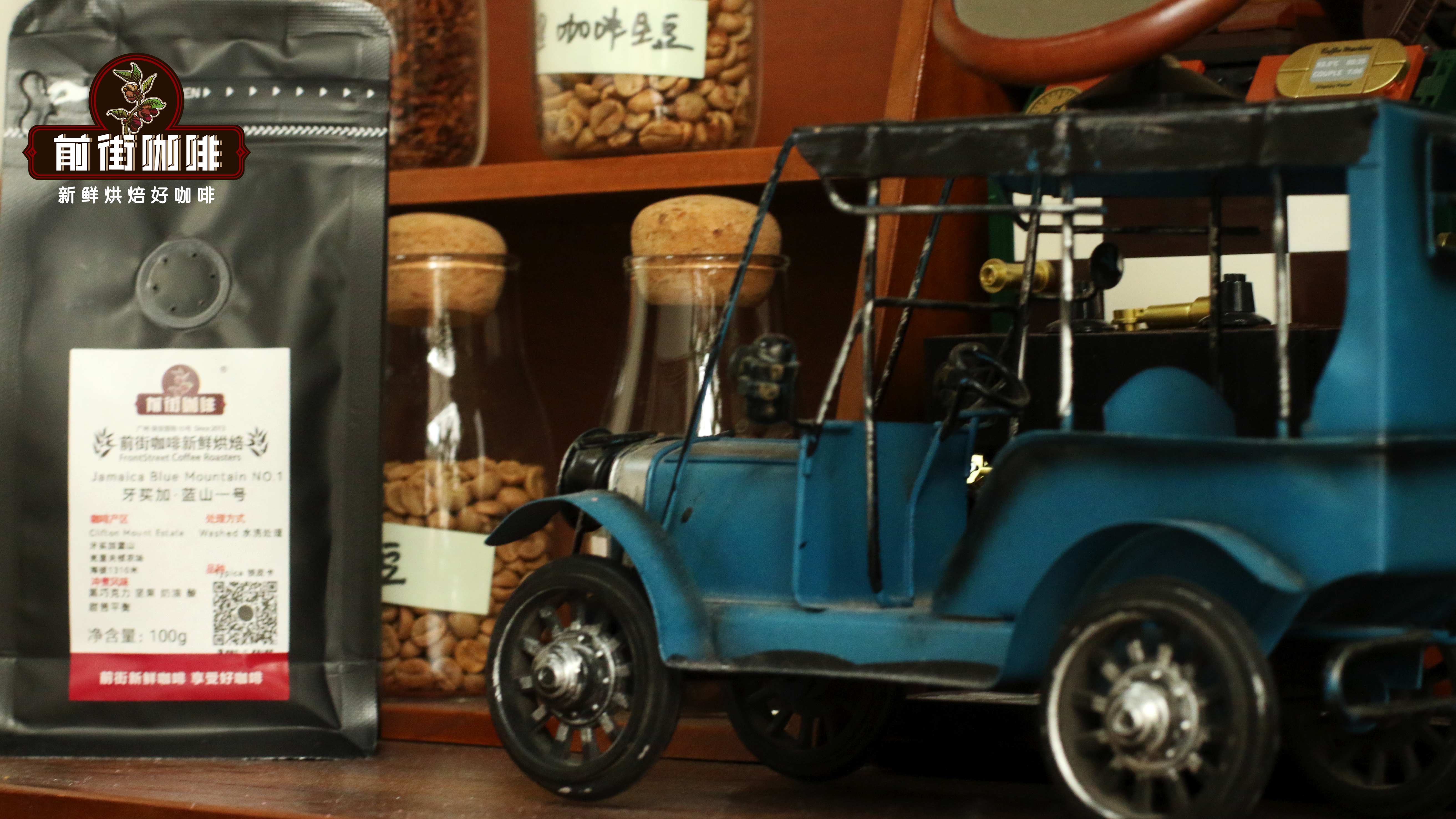
When it comes to the world's most renowned coffees, Jamaican Blue Mountain is certainly among them. This coffee is known for its rich aroma, low acidity, and smooth entry, and some describe it as having the classic black chocolate notes unique to the Typica variety.
Front Street has always sourced Jamaican Blue Mountain coffee beans and extracts them using the store's everyday brewing methods.
The parameters for brewing Blue Mountain No. 1 at Front Street's store are as follows:
Dripper: KONO dripper
Water temperature: 88°C
Coffee-to-water ratio: 1:15
Coffee grounds: 15g
Grind size: EK43s - setting 10.5 (75% pass-through rate on a No. 20 standard sieve)
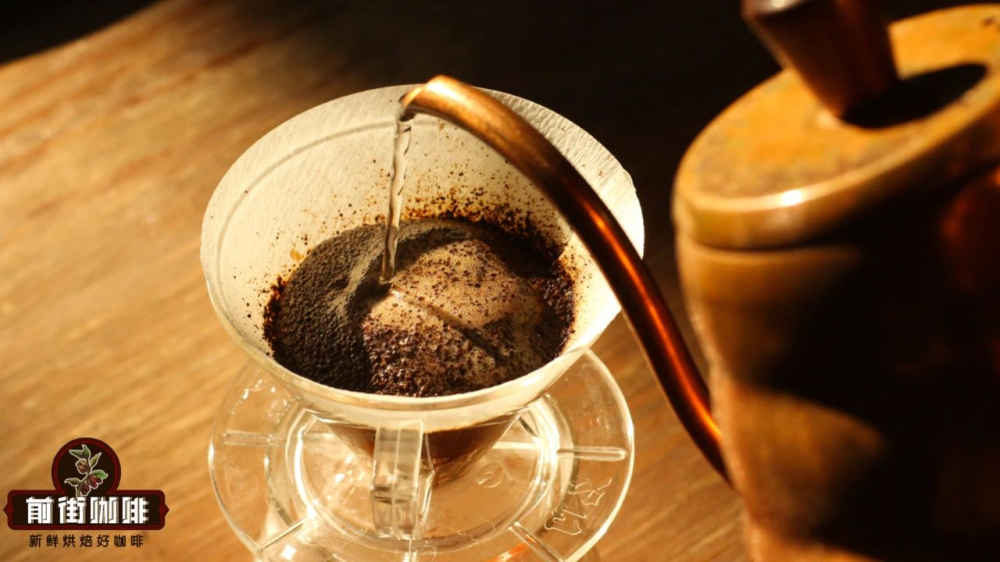
First, place the filter paper into the KONO dripper, pouring water to wet the filter paper while making it adhere to the dripper wall. Then add the coffee grounds and gently tap to distribute the coffee bed evenly. For the first pour, use a gentle stream to add 30g of water for blooming, lasting 30 seconds; for the second pour, add water up to about 125g, maintaining a steady, even circular motion outward. When the coffee liquid level drops to halfway, pour the final stage of water up to 225g, and wait for all the coffee to finish dripping. The total extraction time is about 2 minutes.
When Front Street shared the pour-over details for Blue Mountain coffee beans, some friends asked whether a V60 dripper could be used instead. The reason Front Street chose the Kono dripper is mainly because Blue Mountain coffee is roasted darker than typical pour-over beans. If a V60 dripper were used, extraction unevenness would easily occur — the V60 has a larger drainage hole and a very fast flow rate; whereas the Kono dripper has few and short ribs, leaving a smaller gap between the filter paper and the dripper, which extends the contact time between water and coffee grounds. Additionally, Front Street does not use too high a water temperature when brewing this Blue Mountain bean, which better brings out Blue Mountain coffee's rich, smooth body.
This is a commonly used pour-over method at Front Street, but it is not set in stone. No coffee bean requires a specific device to produce good flavor. For example, some friends brew Blue Mountain coffee with a French press, and the resulting coffee liquid has a layer of oils floating on the surface, which pour-over coffee does not have. For this reason, French press coffee is also regarded as one of the extraction methods that best expresses a bean's original flavor.
So how does Front Street Coffee brew coffee with a French press? First, prepare the coffee beans and French press. The coffee-to-water ratio is 1:15, water temperature is 90°C, total extraction time is four minutes, and the grind size should be coarser than for pour-over, with a 70% pass-through rate on a No. 20 standard sieve.
The first step is the same as with pour-over: preheating. After preheating the French press with warm water, add the coffee grounds, then pour in a total of 225ml of hot water. After pouring, pull up the filter mesh, put on the lid, and wait 4 minutes. After 4 minutes, gently press down the plunger to about 1/4 of the way down the carafe, avoiding fine grounds at the bottom surging upward.
Then you can pour out the coffee liquid and drink it. Brewing Blue Mountain coffee with a French press, compared to pour-over, gives a richer, smoother body and better highlights Blue Mountain coffee's own flavor.
For many years, Jamaica has consistently used the washed processing method for its coffee beans, exporting only washed Typica to countries like Japan for a long time. But in recent years, Front Street Coffee has also begun to encounter natural Typica in addition to washed, and even Geisha produced in the Blue Mountain region. However, Front Street Coffee believes that Blue Mountain coffee's flavor is still best represented by the washed process — washed Blue Mountain has citrus acidity, strong overall balance, nutty and dark cocoa flavors in the mid-palate, a persistent finish, and a rich, smooth body. So when you want to try Blue Mountain coffee beans, Front Street Coffee suggests starting with washed Blue Mountain coffee beans.
Because when Front Street Coffee cups or brews Blue Mountain coffee beans, it finds that Jamaican washed Blue Mountain has black chocolate and nutty flavors on entry, high cleanliness, very bright character, good body, and balanced acidity, sweetness, and bitterness. Natural Blue Mountain coffee beans, on the other hand, have brown sugar sweetness with berry acidity on entry, nutty cocoa flavors in the mid-to-late palate, a creamy mouthfeel, rich and distinct layers, and a finish that brings out walnut aromatics.
Whether washed or natural, Blue Mountain coffee beans owe their character to Blue Mountain's premium geographical environment and climate conditions. Blue Mountain lies within the coffee belt, with fertile volcanic soil, fresh and pollution-free air, a humid climate, and fog and rain year-round. Jamaica also fully considers environmental and weather factors when processing coffee beans, using the region's abundant water resources and high-quality water to process the beans.
For example, the Blue Mountain coffee beans offered by Front Street Coffee use the washed processing method: first remove the skin and pulp of the coffee fruit, let the green beans ferment in a water tank for 18 hours, then rinse once with clean water before drying. When the green beans' moisture content drops to about 11%, the processing is complete.
Because Jamaican Blue Mountain coffee has a very scarce yield and is extremely expensive, many merchants sell fake Blue Mountain coffee beans while falsely claiming them to be authentic Blue Mountain coffee to deceive consumers. So everyone should be careful when buying Blue Mountain coffee beans.
Front Street Coffee can share some methods for identifying real and fake Blue Mountain coffee beans. When buying Jamaican Blue Mountain coffee beans, you can look at the original Blue Mountain wooden barrel packaging and the certificate issued by the Jamaican government. Its packaging is the same as the traditional Blue Mountain No. 1 coffee bean packaging — exported coffee is sealed in wooden barrels, and the barrels bear the Rainforest Alliance logo. Clifton Farm is the only farm in Jamaica's Blue Mountain region with this certification.
True Jamaican Blue Mountain coffee comes from Jamaica's Blue Mountain range. Of course, not all coffee beans grown in the Blue Mountain range qualify to be called "Jamaican Blue Mountain coffee" — only coffee beans grown at elevations between 1,000 and 1,700 meters can carry the Blue Mountain label.
For more specialty coffee beans, add the private WeChat of Front Street Coffee: WeChat ID: kaixinguoguo0925
The above content is compiled by CoffeeHunters, a coffee news website.


