







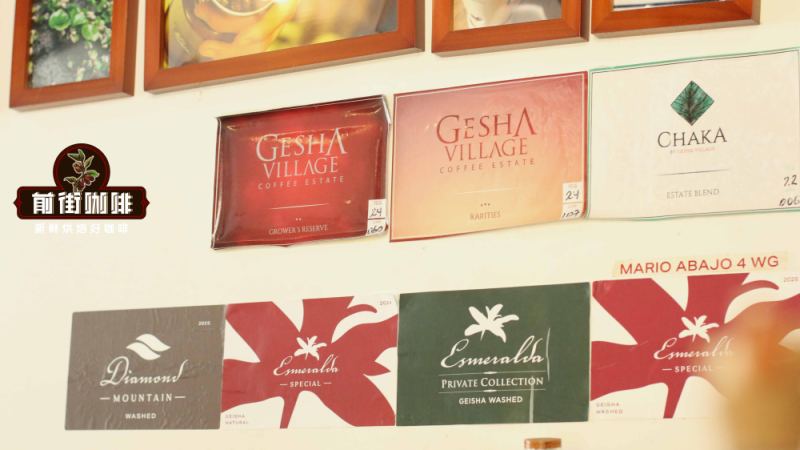
Which Geisha Coffee Variety Grades Come From Which Estate?
Geisha coffee is graded separately by Hacienda La Esmeralda, which splits its lines into Red Label and Green Label, and by Gesha Village Coffee Estate in Ethiopia. Gesha Village divides its coffee into Auction, Gold Label, Red Label, Green Label, and Chaka lots, each with its own flavor profile, yield share, and brewing parameters.
Within Gesha Village, the Auction lot accounts for about 3.7% of annual production and is sold through a global auction, where 2018 lots scored between 88.15 and 92.67 points and split into Champion's Reserve and Farm Reserve. Gold Label makes up roughly 10% of yearly output. The geisha coffee variety also appears in Front Street's own lots.
As a star variety in the specialty coffee world, Geisha coffee's grading system has always attracted much attention. Currently, Hacienda La Esmeralda and Gesha Village Coffee Estate in Ethiopia have each established independent grading standards. Hacienda La Esmeralda divides its product lines into Red Label and Green Label; Gesha Village Coffee Estate is further subdivided into five lots: Auction, Gold Label, Red Label, Green Label, and Chaka. This article will systematically sort out the entire grading system of Gesha Village Coffee Estate, analyze the flavor characteristics, yield proportions, and brewing parameters of each lot one by one, and fully present the corresponding Geisha product information of Front Street Coffee, helping coffee enthusiasts fully understand the quality stratification logic of this variety.
For the Geisha coffee variety, two major estates have currently launched exclusive grading systems: one is Hacienda La Esmeralda, the discoverer of Geisha, and the other is Gesha Village in Ethiopia, its place of origin. Since winning awards in its early years, Hacienda La Esmeralda has strictly divided its products into two major brands, Front Street Esmeralda Red Label and Front Street Esmeralda Green Label, according to different planting plots and evaluations; while Gesha Village Coffee Estate was established relying on the Gesha Mountain forest, dividing the coffee on the estate into Gold Label, Red Label, Green Label, and Chaka, and additionally selecting auction lots from the Gold Label.
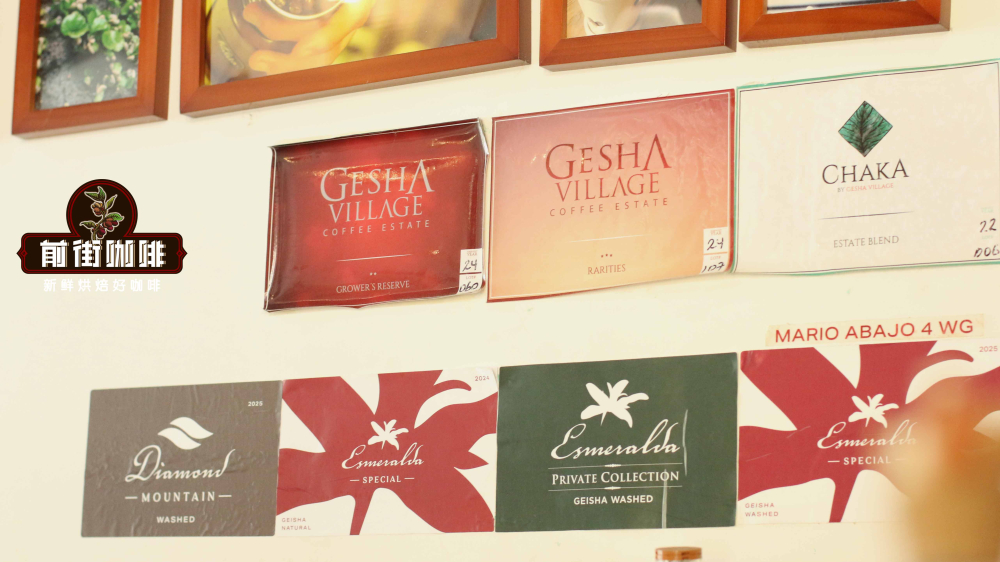
Gesha Village Coffee Estate has a strict internal grading system, namely Auction, Gold Label, Red Label, Green Label, and Chaka lots.
[Auction Lot]
Accounting for only 3.7% of Gesha Village's annual production, this is the estate's top lot after rigorous screening, and can only be obtained through the 2018 Gesha Village Coffee Estate global auction. The cupping scores of the 2018 auction lots were 88.15-92.67 points, and they are further divided into Champion's Reserve and Farm Reserve. For example, Gesha Village 2018 Auction Lot RSV.6 belongs to the auction lot.
[Front Street Gold Label Gesha Village Coffee]
Gold Label coffee accounts for about 10% of Gesha Village Coffee Estate's annual production, with complex flavors and extreme rarity. This grade is the most premium green bean from Gesha Village Coffee Estate apart from the auction lot. Many baristas choose the Gold Label lot as their competition coffee, and roasters with high quality requirements also purchase it. It has complete traceability, and each lot has prominent flavors and high complexity.
Gesha Village Oma 059 Gesha Village Oma Lot 059
Grade: Rarities (Gold) label Gold Label
Processing method: Natural (32 days)
Variety: Gesha 1931
Country: Ethiopia
Region: Bench Maji
Altitude: 1,931-2,040 m
Water-to-coffee ratio: 1:15 Grind size: medium-coarse grind, 80% passing through a No. 20 sieve Water temperature: 91°C Brewing equipment: v60
Method: Bloom with 30 ml water for 30 s, pour in stages to 125 ml taking 1 minute, then pour to 225 ml taking 1 minute 50 seconds; the total brewing time after extraction is 2 minutes 10 seconds.
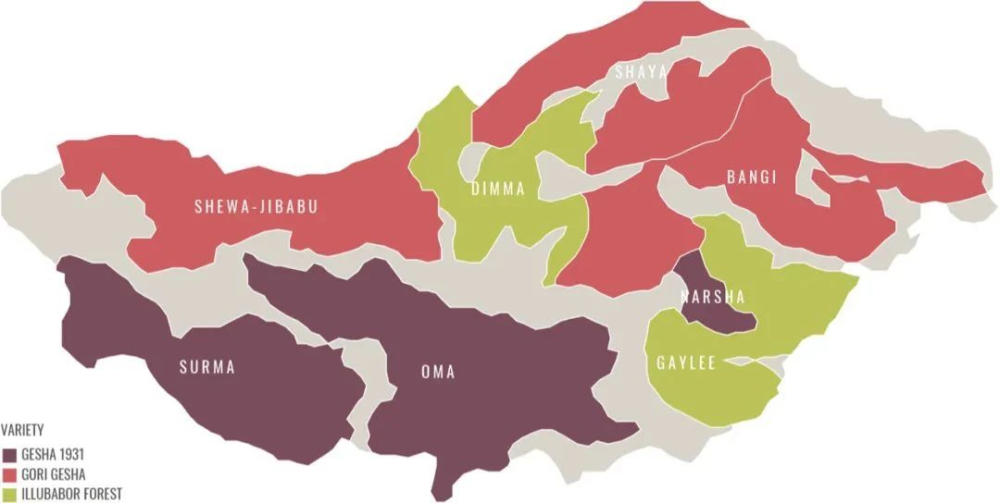
Front Street Gold Label Geisha flavor description: Fermented wine aroma, citrus and kumquat acidity, full-bodied berry juice.
[Front Street Red Label Gesha Village Coffee]
Red Label coffee beans account for about 15% of Gesha Village Coffee Estate's annual production. They are fully traceable lots with cupping scores above 88 points (SCA standard). Front Street Gesha Village Red Label has the typical Gesha Village flavor. Its flavor intensity and complexity are slightly weaker than the Gold Label lot, making it a very cost-effective single-origin lot.
Gesha Village Coffee Estate Grower Reserve
Front Street Gesha Village Red Label Geisha Coffee Beans
Region: Bench Maji
Altitude: 1909-2069 m
Variety: Gori Gesha
Processing method: Natural
Front Street barista brewing recommendations:
Water-to-coffee ratio: 1:15
Grind size: caster sugar grind (EK43s setting 10)
Water temperature: 91°C
Brewing equipment: v60
Method: Bloom with 30 ml water for 35 s, pour in stages to 125 ml taking 1'00, then pour to 225 ml taking 1'50; the total brewing time after extraction is 2'10.
Front Street Gesha Village Red Label Geisha flavor: coconut, licorice, cream, chocolate, toffee, citrus, almond, strawberry, with a fermented aroma on the nose. The overall flavor is relatively balanced, the mouthfeel is mellow, and the nutty flavor is prominent.
[Gesha Village Green Label Lot]
The Green Label lot comes from a single plot and a single variety at Gesha Village Coffee Estate. Each batch number in the Green Label lot provides complete traceability information, including the farm plot name, coffee variety, and processing date.
[Front Street Gesha Village CHAKA Lot Coffee]
Front Street Chaka lot blends coffee from all plots of the estate and the entire production season. Chaka lot coffee has two processing methods, natural and washed, and includes three coffee varieties from Gesha Village Coffee Estate: Gesha 1931, Gori Gesha, and Illubabor.
Gori Gesha (GG)
This variety replicates the genetic diversity found in the Gori Gesha coffee forest.
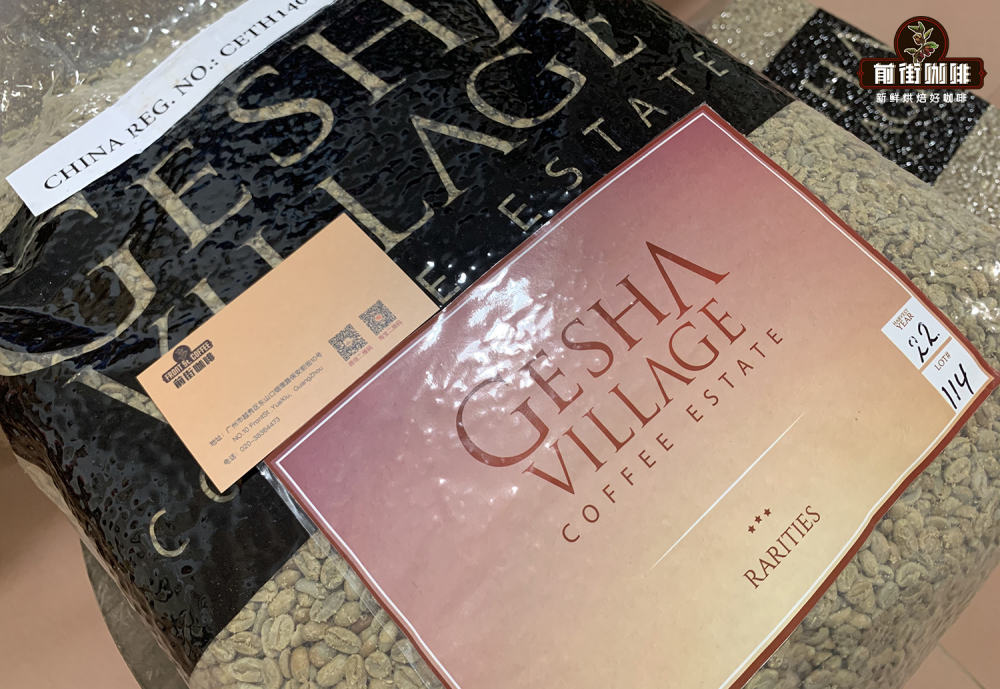
Gesha 1931 (G31)
A combination of varieties from various forests, very similar to Panama Geisha, selected by observing plant morphology, bean appearance, screen size, and cupping flavor.
Illubabor Forest 1974 (IF)
Discovered in 1974 during an expedition to the Illubabor forest, and later developed by the Ethiopian research center into a variety with resistance.
Gesha Village CoffeeEstate CHAKA
Front Street Gesha Village Chaka Geisha Blend Coffee Beans
Region: Bench Maji
Altitude: 1900-2100 m
Varieties: Gori Gesha, Gesha 1931, Illubabor
Processing method: Natural
Front Street barista brewing recommendations:
Water-to-coffee ratio: 1:15
Grind size: caster sugar (EK43s setting 10)
Water temperature: 91°C
Brewing equipment: hario v60
Method: Bloom with 30 g water for 35 s, pour in stages to 125 g taking 1 minute 00, then pour to 225 ml taking 1 minute 50 seconds; the total brewing time after extraction is 2 minutes 10.
Front Street Gesha Village Chaka flavor: a faint fermented aroma on the nose; on the palate there is citrus and grapefruit acidity, with cream, chocolate, and caramel flavors; the flavor is soft.
"Processing Method"
Gold Label, Red Label, and CHAKA are all naturally processed.
First remove floating impurities, then dry on African raised beds in thin layers covered with plastic sheeting. During drying on the drying beds, a second screening is carried out to remove insect-damaged beans and greenish coffee beans. The total drying time is 18-30 days.
"Plot Division of Gesha Village Coffee Estate"
The owner of Gesha Village Coffee Estate numbers the plots in great detail, which facilitates later management and flavor traceability.
The above content is compiled by CoffeeHunters, a coffee news website.


