







How does the Kenya coffee grading system separate AA from AB?
Kenya's grading system sorts green coffee mainly by bean size, weight, and shape, then confirms quality through cupping. AA covers the largest screen sizes, while AB combines A and B lots into a slightly smaller size range. Both grades can cup well; size alone does not decide flavor. The Coffee Board of Kenya has run weekly auctions in Nairobi since 1933, and grade heavily influences price.
Because beans of similar size roast more evenly, grading also supports consistency during the roasting process. Kenyan lots are usually separated as AA, AB, PB, E and others, and merchants add marks like TOP after cupping. Expect bright acidity in both AA and AB, with berry and red wine notes. Brewing parameters such as grind, ratio, and pour technique matter more than the label.
Kenyan coffee is renowned worldwide for its bright acidity and rich fruity flavors, and as the two most common grades, what exactly is the difference between AA and AB? This article will, from the perspective of Front Street Coffee, systematically sort out Kenya's coffee grading system—including the specific classification standards for eight grades such as AA, AB, PB, and E—and further explain the differences between green beans and roasted beans, as well as the factors affecting coffee bean prices. At the same time, we will also share the hot pour-over and iced pour-over practical parameters for two beans, Front Street Kenya Asalia and AA TOP, to help you better understand this high-quality coffee from the Thika producing region.
For more specialty coffee knowledge, please follow the WeChat public account: Front Street Coffee (FrontStreet Coffee)
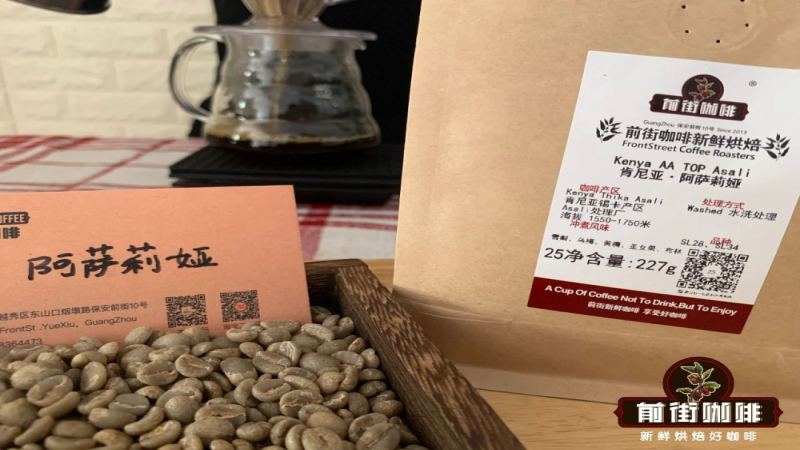
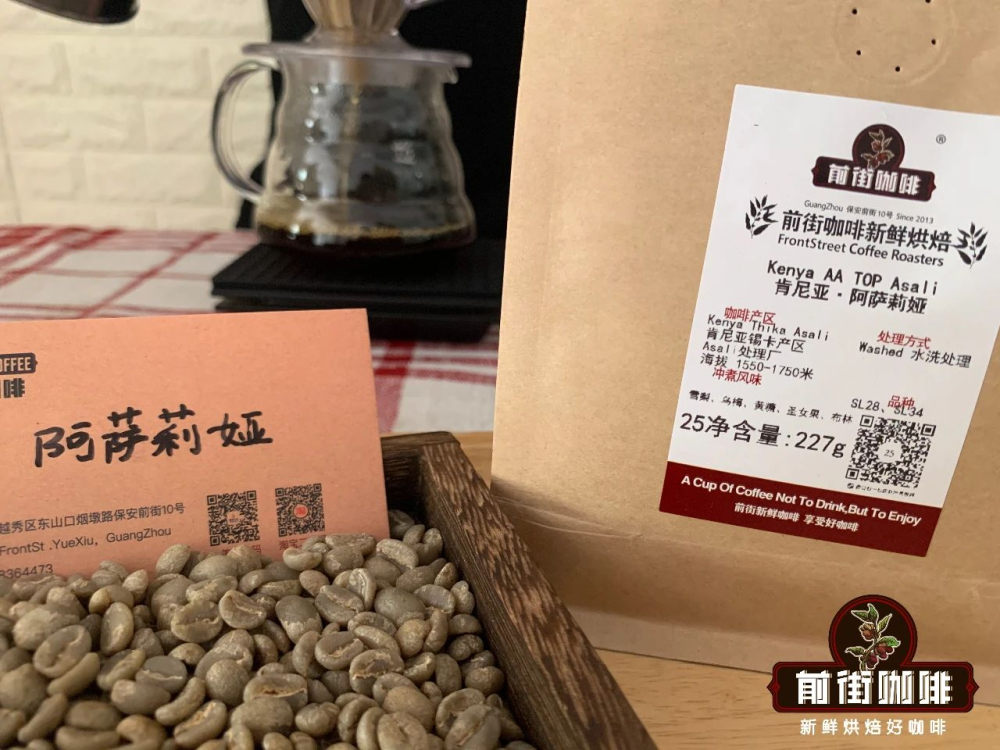
AA is the best coffee grade in Front Street Kenya quality . Coffee of this grade is the cream of the crop, so much so that Front Street is deeply in love with this Front Street Kenya AA TOP from the Thika producing region. TOP is marked by Kenyan coffee merchants after cupping. This Front Street Kenya bean uses the K72 double washed fermentation process, and its acidity is very bright and lively, as delicate and mouthwatering as berries and red wine. During brewing, the rich berry aroma instantly wafts out. On the palate, there are obvious flavors of cherry tomatoes and smoked plums, with sourness and fragrance lingering together in the mouth for a long time. The finish has a creamy sweetness and a lasting sweet aftertaste.
The Kenyan coffee grading system was established under a government-led policy of managing quality and guiding coffee farmers. After harvesting is completed, the official unit established by the government, the "Coffee Board of Kenya" (CBK), founded in 1933, holds a weekly auction at the Nairobi Coffee Exchange in the capital, Nairobi. Under this government-coordinated auction system, the grading system is based on "bean size," weight, and shape/appearance as the standard, and it serves as the main basis for auction prices.
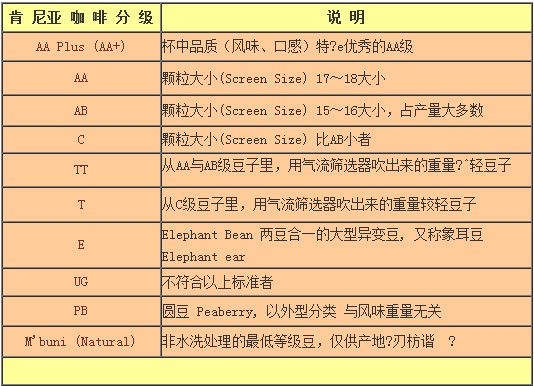
Considering that during the roasting process, beans of the same size are more consistent in roasting temperature and rate of temperature rise, which means greater stability, Kenya classifies green coffee beans by bean size and cupping score. According to the size, shape, and hardness of green coffee beans, Kenyan coffee beans can be roughly divided into eight grades: E, PB, AA, AB, C, TT, T, and MH/ML.
E: Kenyan E is called Elephant Bean. It is large in size, and its production is relatively small.
PB: The English name of PB is Peaberry, which is what everyone knows as round bean, oval in shape. A normal coffee cherry contains two coffee seeds, while a peaberry has only one seed.
AA: Kenyan AA can be said to be the most common grade. It generally grows at an altitude of about 6,600 feet or above, and its size is relatively large, with a bean size of 17/18 screen.
AB: The bean size is 16/17 screen. Kenyan AB coffee beans are composed of A and B coffee beans. Grade A is selected using a 6.8 mm screen, while Grade B is selected using a 6.2 mm screen. These two types of beans, A and B, are mixed together to form Kenyan AB grade.
C: Bean size is below 14 screen.
TT: Kenyan TT refers to light-density coffee beans separated by aspiration from Kenyan AA, AB, and E coffee beans. The screen size is large but the density is low, yet if the quality is sufficient, it can still be included in specialty coffee.
T: Below 14 screen, small beans, and density and quality are insufficient to be included in specialty coffee.
MH/ML: Low-quality natural sun-dried beans, mostly overripe beans dried on the tree.
The Front Street Kenya Asalia coffee beans launched by Front Street's own roasting are AA grade, from the Thika producing region, using the Kenyan 72-hour washing method, with varieties SL28 and SL34, and are the first choice of many sour coffee lovers. If you are tasting this Front Street Kenya Asalia coffee bean for the first time, Front Street suggests trying hot pour-over black coffee, which allows you to better feel the flavor characteristics of Front Street Kenya coffee.
Front Street Pour-over Recommendation
Lightly roasted coffee beans allow high-altitude coffee beans to retain more floral and fruity aromas. Compared with medium-dark roasting, lightly roasted coffee beans have a tighter internal structure and require higher water temperature and finer grinding to better extract the coffee's flavor substances. Here, Front Street uses hot water at 92–93°C for extraction, and for grind size, Front Street uses a No. 20 standard sieve with an 80% pass rate.
The flavor description of every Front Street coffee is based on freshly roasted beans. If the coffee beans have been stored for more than a month, part of the aroma may already have been lost, and it is difficult to reproduce it in brewing. Front Street also deeply understands the importance of freshness, so it ensures that only coffee beans freshly roasted within 5 days are shipped, so that everyone can enjoy the most complete peak flavor period upon receipt.
Dripper: V60 Water temperature: 92-93°C Dose: 15g Coffee-to-water ratio: 1:15 Grind size: fine granulated sugar size EK43s - setting 10 (sieve to 80% with No. 20 sieve cup)
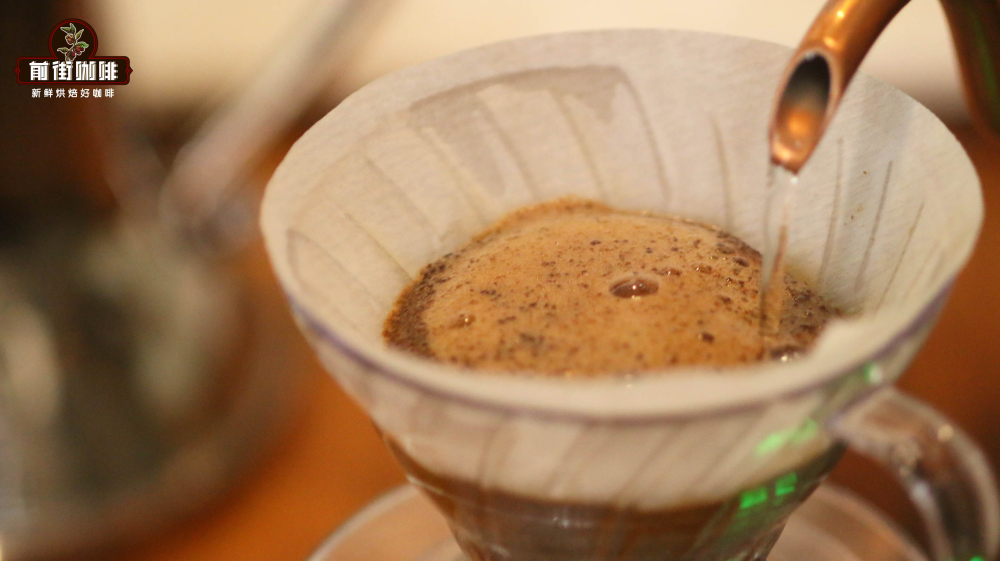
In the first stage, pour 30g of water for a 30-second bloom, then pour 95g (the electronic scale shows about 125g). Finish pouring in about 1 minute. When the water level drops to 2/3 of the coffee bed, pour the remaining 100g (the electronic scale shows about 225g). Finish pouring in about 1 minute 35 seconds. Dripping is completed at 2'10". Remove the dripper and extraction is complete.
Front Street Kenya Asali coffee pour-over flavor: The wet aroma has ripe tomato and floral notes. When hot, the entry is caramel and yellow sugar sweetness. As the temperature drops slightly, cherry tomato and smoked plum acidity emerge. The acidity is bright, the mouthfeel is clean, the body is medium, the mid-palate sweetness is prominent, with a juicy feel. The Front Street Kenya AA TOP beans are cleaner in flavor, with relatively rich layers, and also perform well in body, sweetness, and acidity.
At Front Street, many customers actively ask to order iced coffee, because compared with scalding hot drinks, they prefer refreshing, juicy iced coffee. Therefore, quite a few friends also ask us how to brew a delicious iced pour-over coffee.
As for what parameters to use for iced pour-over, Front Street has a special formula here : Iced pour-over = coffee grounds (fine grind) + 10 times hot water + 5 times ice . Here, combining a fruity-acid type medium-light roasted coffee bean, we further pair it with 91–93°C water temperature, a small stream of water poured in circles, and a three-stage method, so that the extraction time falls between 1 minute 50 seconds and 2 minutes, and you can easily brew a pot of iced coffee with excellent flavor.
The juicy sensation that appears in coffee is usually the rich fruity aroma smelled combined with the sweet-and-sour, juicy sensation felt in the mouth when drinking, reminding people of the experience of eating a certain fruit. When applied to today's iced pour-over topic, it means obtaining both the acidic aromatic substances in the front section and pursuing the sweetness in the middle and back sections, so as to satisfy a sweet-and-sour juicy mouthfeel. Such a requirement cannot be met by the agitation of the water stream alone, so Front Street also adds one action: stirring.
Coffee beans: Front Street Kenya · Asalia
Dose: 15g
Coffee-to-water ratio: 1:11 (160g hot water)
Ice: 75g
Grind size: fine granulated sugar / EK43s setting 9.5 (C40 about 22 clicks)
Dripper: Hario V60
Three-stage: 30g, 90g (+ stirring), 45g.
Before pouring, first put the ice cubes in the server, then add all the coffee grounds. The first stage bloom remains unchanged, keeping a small stream and pouring 30g in circles from the center outward.
After 30 seconds, begin pouring 90g of hot water in circles with a larger stream while raising the water level. When the timer scale shows 120g, stop pouring, use a small spoon to draw 5 circles along the wall of the dripper in one direction, then wait for the coffee liquid to slowly flow down.
When the water in the dripper is about to reach the bottom, use the small-stream, small-circle pouring method from the first stage to pour the remaining 45g of hot water until all the coffee liquid has dripped through. Then you can remove the dripper and finish extraction. The time will roughly fall within the range of 1 minute 55 seconds to 2 minutes 5 seconds.
The above content is compiled by CoffeeHunters, a coffee news website.


