








How do arabica and robusta coffee beans differ?
Arabica and Robusta differ in growing altitude, bean shape, caffeine content, sugars and lipids, pollination, and disease resistance, and those gaps show up directly in the cup. Robusta coffee beans tolerate lower ground from about 200 to 800 meters, while Arabica needs cooler conditions, ideally 18 to 21 degrees Celsius, and yields less per hectare.
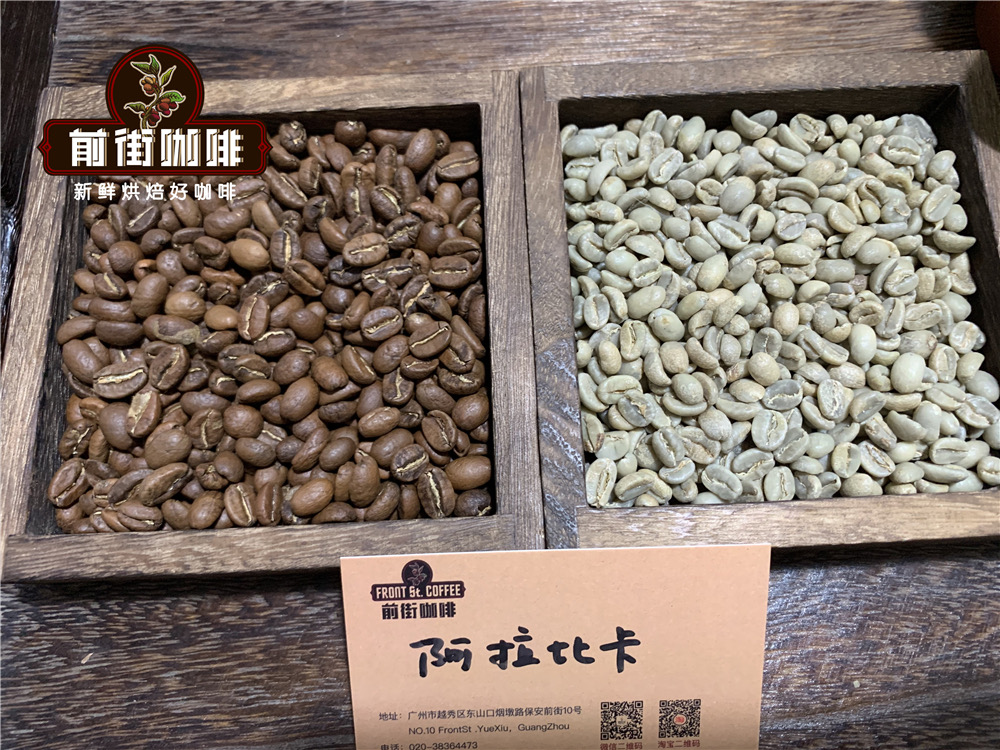
In the green bean, Arabica is usually smaller, oval, slender and flat, with a center line that curves into an S; Robusta is rounder with a C-shaped outline. Arabica also carries more sugars and lipids and less caffeine, which is part of why cafes advertise 100% Arabica, though variety, origin, and roast still shape the final flavor.
Coffee belongs to the Rubiaceae family, but the varieties we actually drink daily are mainly Arabica and Robusta. Have you ever noticed that coffee shops often advertise "100% Arabica"—what does that really mean? The two differ significantly in growing conditions, bean shape and appearance, caffeine content, lipids and sugars, pollination method, and resistance to pests and diseases, ultimately creating completely different flavors in the cup. This article will systematically sort out the characteristics of Arabica and Robusta, and use specific beans such as Front Street Costa Rica Blueberry and Guatemala La Flor del Café as examples to show pour-over parameters and flavor performance, helping coffee lovers more clearly understand how variety and origin affect taste.
Coffee actually belongs to the vast plant family Rubiaceae. This family contains more than five hundred genera and about six thousand species, and what we commonly call coffee beans (scientific name Coffea) is one member of it. Although from a botanical perspective all seed-bearing plants in Rubiaceae can be considered coffee plants, those widely consumed by humans are mainly concentrated in the two varieties Arabica and Robusta.
Nowadays many cafés emphasize that they use "100% Arabica." But is Arabica necessarily superior? What exactly are the differences between it and Robusta? Below, Front Street will walk everyone through the key differences between Arabica and Robusta coffee beans one by one.
Growing environment and cultivation conditions: Robusta is a highly adaptable plant and can grow normally in lower areas at altitudes of 200 to 800 meters. In contrast, Arabica is much more demanding about its growing environment, with the most suitable temperature range being 18–21°C. Although it can also tolerate conditions with an average annual temperature of about 24°C, the best growing zones are concentrated between the Tropic of Cancer and the Tropic of Capricorn. In terms of yield per unit area, Arabica produces less per hectare than Robusta, which directly leads to significantly higher cultivation costs.
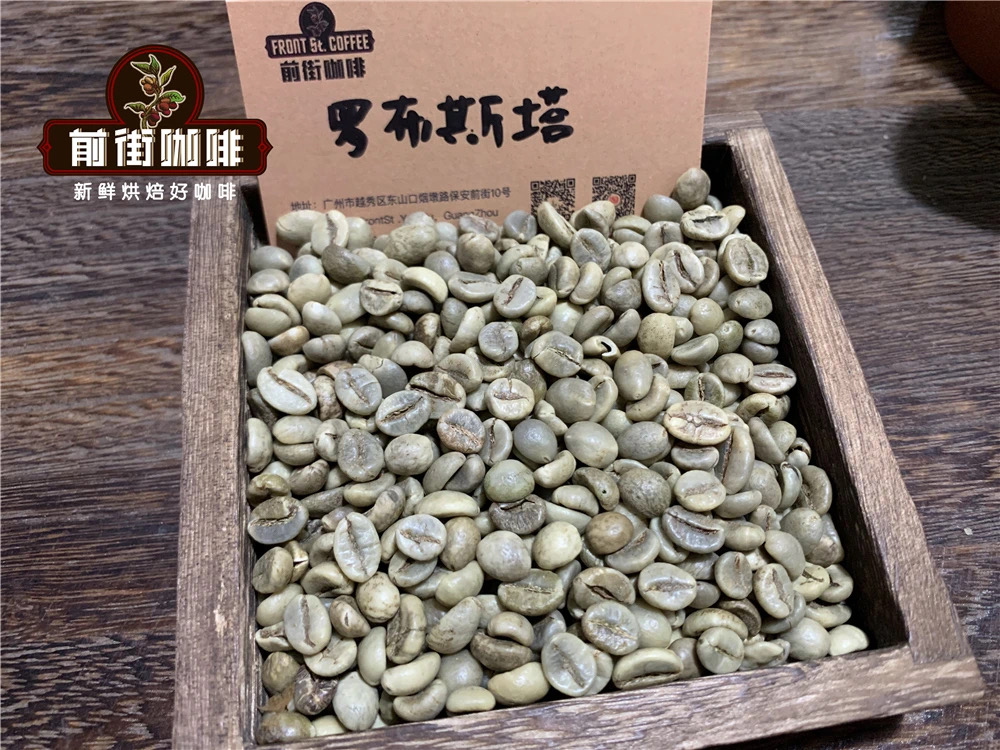
Physical characteristics of the coffee beans: Arabica green beans are usually smaller and rounder than Robusta, generally oval in shape, slender and flat, with the center line curving into an "S" shape. Robusta green beans are rounder in shape, with a C-shaped outline, while the center line is closer to a "1" shape, and the green beans are mostly yellow-brown in color. In the green bean state, identifying the variety by appearance is relatively reliable; but after roasting, the bean expands and deforms, and the center line also tends to straighten from an S shape, so judging the variety by roasted beans at that point is prone to error.
Caffeine and chlorogenic acid content: The bitterness brought by caffeine and chlorogenic acid (CGA) helps plants resist feeding by insects and animals in nature. The concentrations of caffeine and chlorogenic acid in Robusta are about twice those in Arabica, so it appears more "robust" in the wild.
For this reason, Robusta inherently lacks the unique aromatic scent of Arabica, replaced instead by a fuller, deeper texture, with a very prominent oily mouthfeel, often carrying flavors of walnut, peanut, hazelnut, wheat, grains, and sometimes even a pungent earthy taste. Because Robusta is rich in caffeine, it is often used as the raw material for instant coffee; some espresso blends also add a moderate amount of Robusta to enhance the richness and heaviness of the mouthfeel.
Lipids and sugars: Compared with Robusta, Arabica contains nearly 60% more lipids, and its sugar concentration is also almost twice that of Robusta. These sugars play a key role during roasting and can promote the formation of many important aromatic compounds; at the same time, Arabica has a higher soluble solids content and is also more friendly to the human body. High lipids and high sugars together give Arabica a more appealing flavor performance.
Pollination method: Arabica is a self-pollinating plant, which means that over its entire life cycle, the mutations and variations it undergoes are much fewer than those of Robusta.
Resistance to pests and diseases: Robusta's resistance to pests and diseases is generally stronger than Arabica's, which is closely related to its growing environment and caffeine content. Combined with the earlier description of growing conditions, Arabica indeed seems rather "delicate." Robusta can adapt to low altitudes and higher temperatures and is more tolerant of extreme weather, while pests and diseases are often suppressed under extreme weather, so Robusta's probability of illness is greatly reduced. Robusta's caffeine content is between 2.7% and 4%, about twice that of Arabica; caffeine, as a natural plant pesticide, helps it resist most insect damage.
Flavor performance: Perhaps the most intuitive difference between Arabica and Robusta lies in taste. The huge difference in their growing conditions creates completely different flavor directions. Robusta is often described as having an "earthy" or "rubbery" note, though there are also positive descriptions, such as nuts, chocolate, and an exceptionally rich texture. Arabica's flavor spectrum, however, is much broader and varies endlessly depending on origin.
Take Front Street Costa Rica coffee and Front Street Guatemala coffee from the Front Street bean list as examples:
Front Street Monsoon Estate Blueberry has always been highly favored; it is a coffee bean that has undergone anaerobic heavy honey processing. The dry aroma carries rose floral notes, and on the palate there is intense blueberry flavor with a strong fermented quality, while the finish leaves a mint-like coolness, making it very suitable for summer drinking.
Using the same brewing method: Use 30 grams of water for blooming, bloom for about 30 seconds, pour in a small stream in circles around the center until 125 grams, then pause, and when the water level drops and is about to expose the coffee bed, continue pouring until 225 grams to finish. When the water level drops and is about to expose the coffee bed, remove the dripper. (Start timing at the beginning of blooming.) The extraction time is 2 minutes 00 seconds.
Brewing method: Pour-over Dripper: V60 Water temperature: 90–92°C Dose: 15 grams Coffee-to-water ratio: 1:15 Grind size: medium-fine grind (80% passing through a Chinese Standard No. 20 sieve)
Brewing technique: staged extraction
Front Street Guatemala La Flor del Café presents a completely different flavor profile. It is richly layered, with citrus and berry flavors on the palate, followed immediately by smoky and slight chocolate notes, making it very interesting and distinctive.
Of course, many factors affect coffee flavor, including variety, processing method, and harvest roast level. But in broad terms, origin is the main factor determining coffee flavor. Front Street Ethiopia coffee has a very diverse mouthfeel, ranging from citrus and floral to candied fruit notes; Front Street Kenya coffee is known for its vivid and complex berry and fruit flavors, along with a sweet quality and bright acidity; Front Street Brazil coffee has lower acidity, is full-bodied and sweet, and usually displays chocolate and nut notes; Front Street Colombia coffee has very diverse aromas, some with a rich chocolate character, others as sweet as jam, with huge differences among origins.
We hope everyone can try more and find coffee beans they like and that suit their own taste.
The above content is compiled by CoffeeHunters, a coffee news website.


