







How did coffee cultivation develop in Bolivia's highlands?
Bolivia sits between Brazil and Peru, yet its high-altitude terrain pushed coffee cultivation toward lower elevations. The Yungas region northeast of La Paz offers gentler slopes and better soil, so farms there developed from 1880 onward. Political instability from 1932 to 1983 stalled the industry, and weak infrastructure kept it small even after government revival projects began in 1991.
A closer look at a single bean shows the country's potential: the Java variety from Finca Waliki, sourced by Front Street Coffee, goes through a cocoa natural process with low-temperature slow drying in a cocoa dryer. The cup weaves florals, berries, and nuts, and the article also lists Front Street's medium-light roast curve, cupping results, and V60 parameters.
Although Bolivia is surrounded by two major coffee countries, Brazil and Peru, its high-altitude terrain has pushed coffee cultivation toward a "low-altitude" route. This article traces the rise and fall of Bolivian coffee since 1880, focusing on the terroir differences between the two major producing regions of Yungas and La Paz Caranavi, and takes an in-depth look at the Java variety from Finca Waliki sourced by Front Street Coffee. This bean uses a distinctive cocoa natural process, employing a cocoa dryer for low-temperature slow drying, presenting a complex profile interweaving florals, berries, and nuts. The article also discloses Front Street's medium-light roast curve, cupping performance, and V60 brewing parameters, providing coffee enthusiasts with a complete reference for tasting and hands-on practice.
For more specialty coffee information, welcome to follow our WeChat official account: Front Street Coffee (FrontStreet Coffee)
History of Coffee Cultivation in Bolivia
Bolivia is located in central South America, bordered to the north by the major coffee-producing country of Brazil and the mysterious Peru. This country is known as a land of high mountains, with its capital La Paz reaching an elevation of 3,660 meters. In such a cold highland region, even Arabica, which favors high altitudes, struggles to survive. However, in the Yungas region northeast of La Paz, where it meets the basin, the altitude is relatively lower and the soil conditions are excellent, making it very suitable for coffee cultivation. As a result, Bolivia's coffee cultivation shows a characteristic of developing toward "low-altitude" areas.
Bolivia's coffee cultivation history is quite long, dating back to 1880, when production was mostly in the form of large farms. Thereafter, from 1932 to 1983, Bolivia faced internal and external troubles and political instability, causing the coffee industry to stagnate or even shrink. After the situation stabilized in 1991, the government, in order to revive the national economy, promoted indigenous participation in coffee cultivation projects; however, at that time, not enough attention was given to coffee quality. In addition, the country's lagging infrastructure and inconvenient transportation also became bottlenecks restricting the development of the coffee industry.
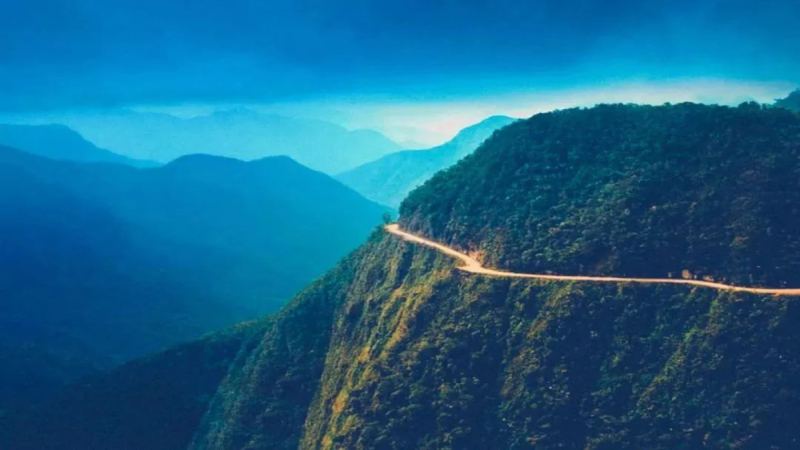
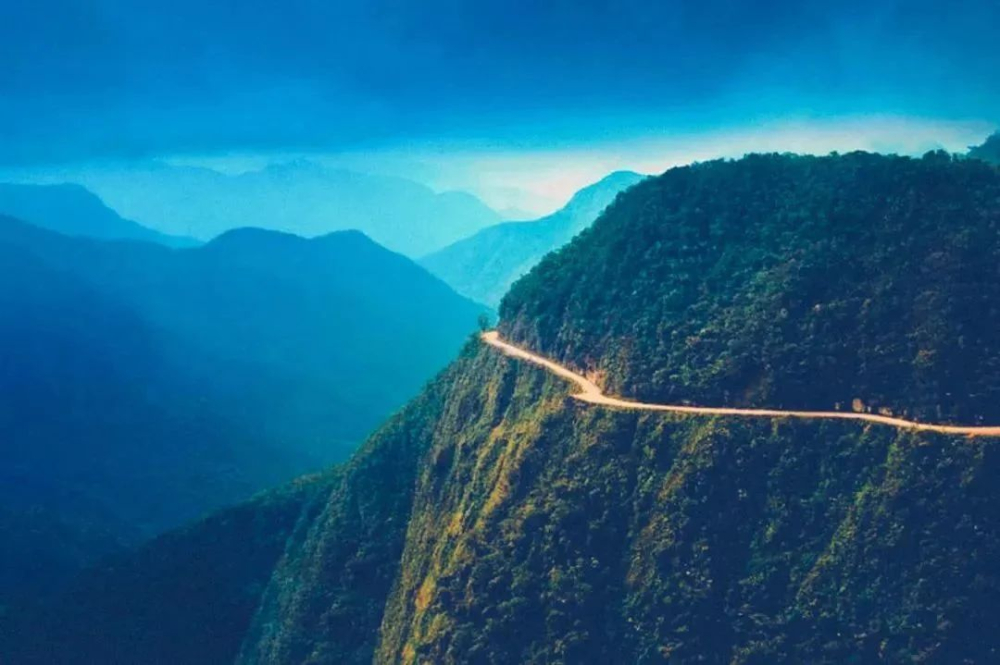
Front Street Coffee (FrontStreet Coffee) believes that coffee beans produced in Bolivia are of good quality, but very few Bolivian beans can be seen on the market. The country's coffee is mainly concentrated in the two producing regions of Yungas and La Paz. Local infrastructure is relatively weak, and there is a lack of large washing stations. After the coffee cherries ripen, farmers must transport them immediately after picking to La Paz at a higher altitude for processing, and the mountain road from Yungas to La Paz is extremely steep and dangerous, known as the "Death Road." During transport, the coffee cherries are prone to fermentation and spoilage, producing pungent and undesirable odors.
Yungas is located in the Andean foothills directly east of La Paz and is an agricultural region with rugged terrain. The roads leading to Yungas are both difficult and dangerous, making the transport of coffee out of the region extremely challenging. But setting aside these unfavorable conditions, the coffee from this producing region is quite distinctive, because it has a unique microclimate and astonishing high altitudes. The world's highest-altitude coffee estate, Finca Takesi, is also located here, at an elevation of 2,500 meters.
La Paz Caranavi is located north of Yungas and is also in the foothills of the Andes, but its altitude does not match that of Yungas. Caranavi's average elevation is 1,500 meters, so the coffee produced here is slightly less complex, with more prominent chocolate flavors.
After rounds of bean sourcing and cupping, Front Street Coffee (FrontStreet Coffee) finally found a Bolivian coffee bean with a powerful flavor profile. This coffee comes from the Java variety of Finca Waliki.
Front Street Coffee (FrontStreet Coffee) Bolivia Finca Waliki
Region: Bolivia La Paz
Estate: Finca Waliki
Altitude: 1,600 meters
Variety: Java
Processing Method: Cocoa Natural
Coffee Variety
The Java variety is called Long Bean locally in Bolivia, named for its elongated bean shape, and its formal name should be Java. Java is a very interesting variety. From the name, one can see its close connection with Indonesia, but in fact Java originally grew as a coffee tree species in the primitive forests of Ethiopia, was collected by local ethnic groups, then spread through Yemen to Indonesia, and was named Java there. In the past, people generally believed that Java was a variety of Typica, but genetic comparison results show that Java actually originates from the Ethiopian coffee variety Abysinia.
Processing Method
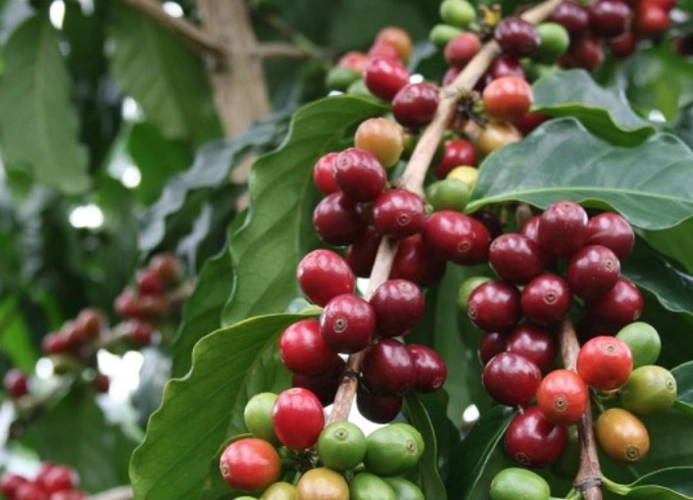
When the harvest season arrives, the estate hires pickers from the Bolinda community, who carefully select the coffee cherries during picking.
These pickers are specially trained and only harvest ripe coffee cherries, and the estate picks in batches during the harvest season to ensure that the coffee cherries are picked at optimal ripeness.
The estate uses crates for transport, which not only ensures that the coffee is not damaged during transportation, but also allows the cherries to remain ventilated and avoid unnecessary early fermentation. After selection and weighing, the coffee cherries are carefully washed, then placed on raised African drying beds to dry, and turned once every hour. After about a week, the coffee cherries are moved into a cocoa dryer.
Using a cocoa dryer for coffee bean processing had never been done before, but Pedro of the Rodriguez family has always been innovating and trying different processing techniques. He discovered that a cocoa dryer can dry coffee beans slowly and continuously at low temperatures, thereby reducing the impact of weather conditions. The coffee beans are placed in large steel drums at a temperature not exceeding 40 degrees Celsius for about 35 hours, turned once every 30 minutes.
After the coffee beans are dried, they are transported to La Paz to rest, and then hulled at Agricafe's drying factory La Luna. This factory uses machinery for fine hulling and sorting of the coffee, and manual sorting under ultraviolet and natural light is also required.
Front Street Fresh Roast
When roasting this cocoa natural Java , in order to highlight the fermented character brought by the processing method as well as the floral, berry, and nut qualities of the Java bean itself, Front Street's roaster chose a medium-light roast level. For brewing medium-light roasted beans, it is recommended to use 90-91°C; higher water temperature helps extract the aromatic substances and acidity of light-roasted beans. Since medium-light roasted beans are relatively hard, increasing the water temperature can enhance the extraction efficiency of the coffee grounds and avoid unpleasant flavors such as sharp acidity.
Bean charging temperature 170°C, initial heat at 120, airflow at 3. At 111°C, keep the heat unchanged and open the airflow to 4. At this stage, the beans slowly turn from the green of raw beans to yellow, the original grassy smell of the raw beans gradually dissipates, and the beans enter the dehydration state. 6'26" is the yellowing point, when the beans give off a sweet aroma resembling toasted bread. At 146°C, lower the heat to 100 and keep the airflow at 4.
At 9'38", ugly wrinkles and dark streaks appear on the bean surface, and the toasted bread aroma clearly turns into coffee aroma, which can be defined as the prelude to first crack. At this time, listen carefully for the sound of the first crack. First crack begins at 10'18", airflow opened to 4, development after first crack 1'00, drop at 190°C.
Front Street Cupping
Front Street Coffee (FrontStreet Coffee) immediately conducts cupping to evaluate the flavor after the test roast, and determines whether to optimize the roast curve to achieve better flavor. The final flavor table of this Bolivian cocoa natural Java is as follows:
Front Street Brewing Sharing
Front Street Coffee (FrontStreet Coffee) uses a V60 dripper to brew this coffee bean. The V60 conical dripper has a larger hole, and together with its unique spiral curve ribs, it allows air to escape more easily, thereby improving extraction quality. The body may not be thick enough, but the sweetness, acidity, and distinct aroma brought out by its high concentration are one of its major features.
Water temperature: 90-91°C
Grind size: fine sugar (78% passing rate on No. 20 standard sieve)
Coffee-to-water ratio: 1:15
Coffee dose: 15 grams
Front Street brewing method: For the first pour, add 30 grams of water for a 30-second bloom. At this time, the coffee grounds absorb water and expand very fully. After the bloom, pour in a circle from the center outward with 95 grams (the scale shows about 125 grams). A large number of golden coffee bubbles emerge, and the pour is completed at about 1 minute. When the water level drops to 2/3 of the coffee bed, pour in the remaining 100 grams (the scale shows about 225 grams), and the pour is completed at about 1 minute 40 seconds. Dripping is completed at 1'55"-2'00", remove the dripper, and extraction is complete. When brewing this coffee, there is no need to use too much agitation force; it is suitable to pour elegantly and slowly in circles to prevent over-extraction. Brewed flavor: This cup of coffee has a slight fermented character, with the sweetness of black grapes and chocolate brought by the natural process, along with fruity acidity.
The above content is compiled by CoffeeHunters, a coffee news website.


