







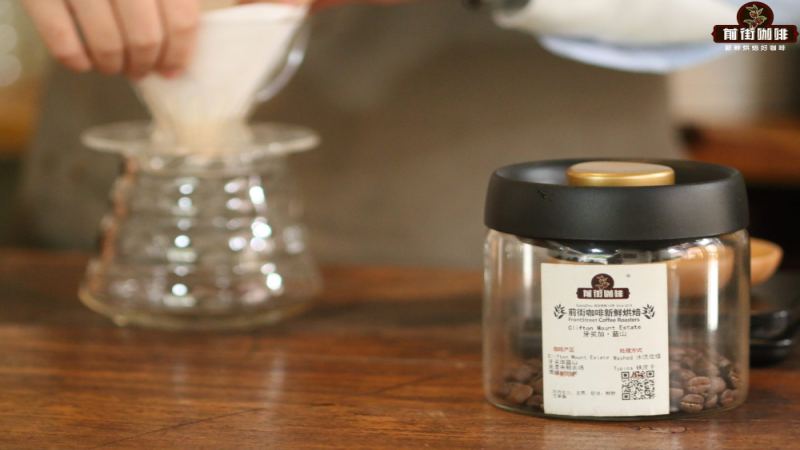
What does authentic Blue Mountain coffee taste like?
Authentic Blue Mountain coffee taste is mild and balanced rather than harsh or overly bitter, with gentle acidity and a clean finish. Jamaica's certified Blue Mountain growing area, defined by elevation and soil, plus careful processing, produces that profile. The article also covers how Blue Mountain No. 1 is brewed as pour-over to bring out its fuller flavor.
Grade matters when buying: Jamaican Blue Mountain is classified by bean size and quality, and only certified lots from the designated region carry the name. The market, especially in China, is full of fakes labeled Blue Mountain flavor, blend, or instant. Direct imports from Jamaica were recorded as early as April 2011, when a Zhejiang trading company bought 1,000 bags of 70 kg.
Blue Mountain coffee was once the top star of the coffee world, and it still draws many enthusiasts to make special trips to experience it. As one of the few physical stores selling authentic Blue Mountain coffee, Front Street Coffee often welcomes guests who come to check in after hearing about it. However, many people still have limited understanding of Blue Mountain coffee. This article will take you deeper into the taste characteristics of authentic Blue Mountain coffee, how it differs from ordinary coffee, the classification of Blue Mountain coffee, and how Front Street presents the rich flavor of Blue Mountain No. 1 through pour-over brewing. At the same time, we will also clarify the common fake Blue Mountain chaos on the market and introduce the origin certification, grade standards, and brewing details of Jamaican Blue Mountain coffee.
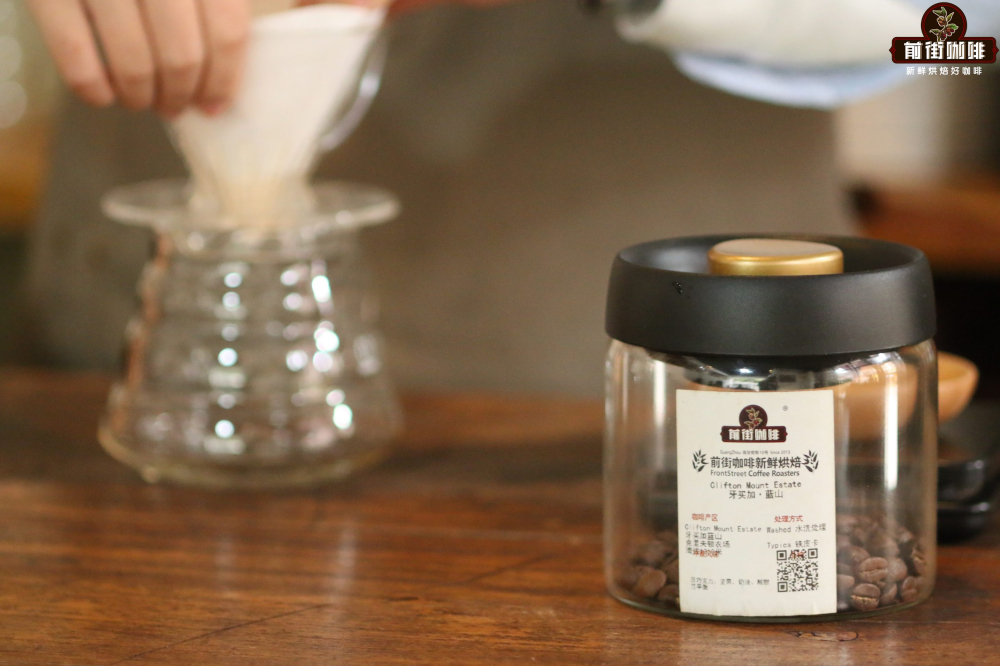
For more specialty coffee knowledge, please follow the WeChat official account: Front Street Coffee (FrontStreet Coffee)
Front Street is one of the few coffee shops that sells Blue Mountain coffee in a physical store, so coffee enthusiasts often make special trips to check in and taste the flavor of this former “top star” of the coffee world. Although people have heard of the great name “Blue Mountain” since the older generation, not many truly understand it. Without further ado, let’s talk about authentic Blue Mountain coffee below.
What does Blue Mountain coffee taste like?
If you type “Blue Mountain” into a search engine, a large number of articles teaching you how to identify real and fake Blue Mountain will pop up. Indeed, Blue Mountain coffee is internationally renowned, and some unscrupulous merchants borrow the name of Blue Mountain to pass off lower-quality commercial coffee as the real thing, so the market is flooded with a large number of fake Blue Mountain products. The most common terms include “Blue Mountain flavor,” “Blue Mountain blend,” “Blue Mountain instant,” and so on, none of which are actually related to real Blue Mountain coffee.
Although there is a lot of fake Blue Mountain in China, real Blue Mountain does not fail to exist either. In fact, as early as April 2011, there were records of Blue Mountain coffee being imported directly from Jamaica into China. At that time, Zhejiang DUNN'S RIVER Import and Export Trading Co. purchased 1000*70kg from Jamaica on behalf of the “Hangzhou Coffee and Western Food Association,” with a total amount of two million US dollars. Today, Jamaica also places great importance on the Chinese market, and many authorized domestic exporters can be found on the CIB official website.
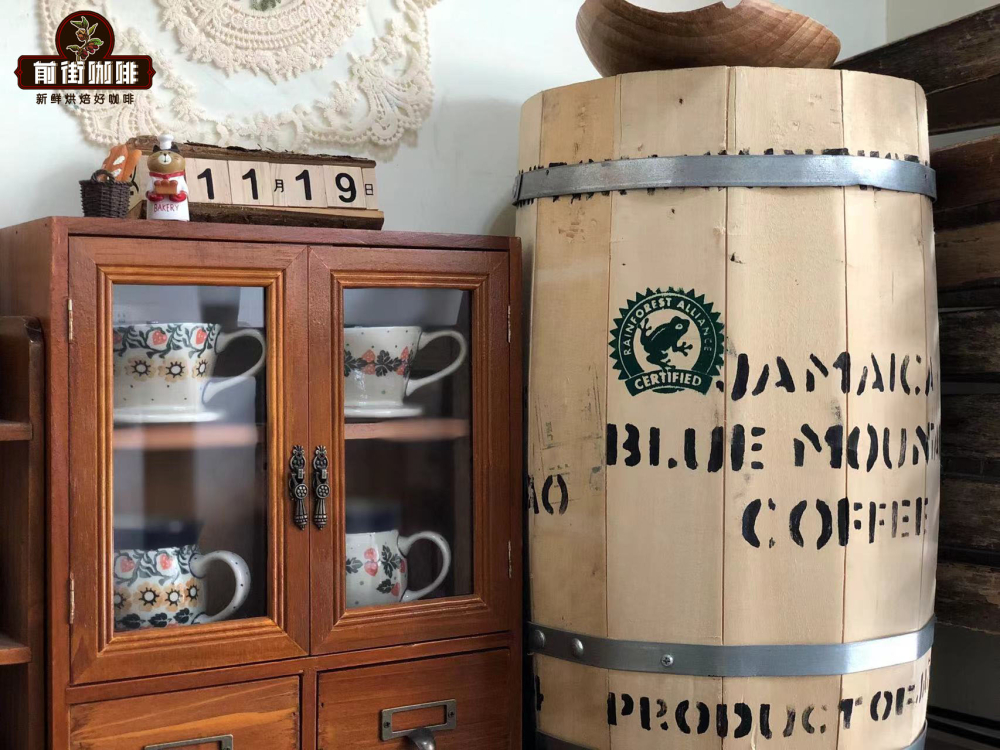
Front Street’s own roasted Blue Mountain No. 1 coffee comes from Jamaica’s Clifton Estate and has a quality certificate issued by the Jamaica Coffee Board, an authorized sales certificate issued by the Blue Mountain coffee producer, and a certificate of origin for Jamaican Blue Mountain coffee. The Dongshankou store also displays an oak barrel containing Blue Mountain green beans. When the store is full, it is even used as a small wooden table for guests to place their coffee on, which is quite interesting.
Blue Mountain coffee was once called the Hermès of the coffee world. Authentic Blue Mountain allows people to feel a rich, dense, and long-lasting aroma of chocolate and roasted hazelnut, while also achieving an excellent balance of acidity, sweetness, bitterness, aroma, and body. Front Street believes that the reason Blue Mountain coffee enjoys such a high reputation is inseparable from the careful management and strict grading of Jamaican growers.
What is the difference between Blue Mountain coffee and ordinary coffee?
Blue Mountain has exceptional terroir conditions, and the combination of various factors makes it an ideal place for growing coffee. However, coffee is ultimately a crop, and variety, altitude, picking method, and post-processing method all affect the final aroma expression.
According to the official classification of the Jamaica Coffee Industry Board (CIB), only Typica variety coffee grown in forest areas at an altitude of about 910 to 1700 meters can be called “Jamaican Blue Mountain coffee” in the true sense. Typica needs to be grown in a high-altitude environment for its flavor to become more prominent. In addition, this variety has poor disease resistance and is highly susceptible to infection, and the yield per plant is also low, so it requires more manpower for careful care. Moreover, the terrain at high altitudes in Blue Mountain is rugged, making management and picking quite difficult and placing high demands on the skill of pickers, which further affects yield. In recent years, less than 15% of the coffee beans produced in Jamaica can be labeled as Blue Mountain coffee, only about 900 tons.
I believe many friends have heard this rumor: “Authentic Blue Mountain coffee has all been monopolized by Japan.” This claim is not entirely unfounded. UCC is a Japanese coffee company, formerly Ueshima Coffee Co., Ltd. In 1981, it opened a farm in Jamaica to operate a Blue Mountain coffee project. Jamaica promised to sell 90% of the Blue Mountain coffee quota to Japan. Combined with Japan’s vigorous promotion of Blue Mountain, the phenomenon arose where Blue Mountain was expensive and hard to obtain. Today, with the flourishing development of coffee culture, drinking a cup of Blue Mountain coffee is no longer difficult. At Front Street, you can drink a cup of the highest-grade Blue Mountain No. 1 pour-over black coffee for 60 yuan.
What types of Blue Mountain coffee are there?
From the perspective of altitude and growing region, coffee from the Blue Mountain range can be divided into Jamaican Blue Mountain coffee, Jamaican High Mountain coffee, and Jamaican Prime coffee. Among them, the production areas of Jamaican Blue Mountain coffee are distributed across four administrative districts: Saint Thomas, Saint Mary, Saint Andrew, and Portland. In other words, only coffee produced at specific altitudes within these four districts can be called “Jamaican Blue Mountain coffee.”
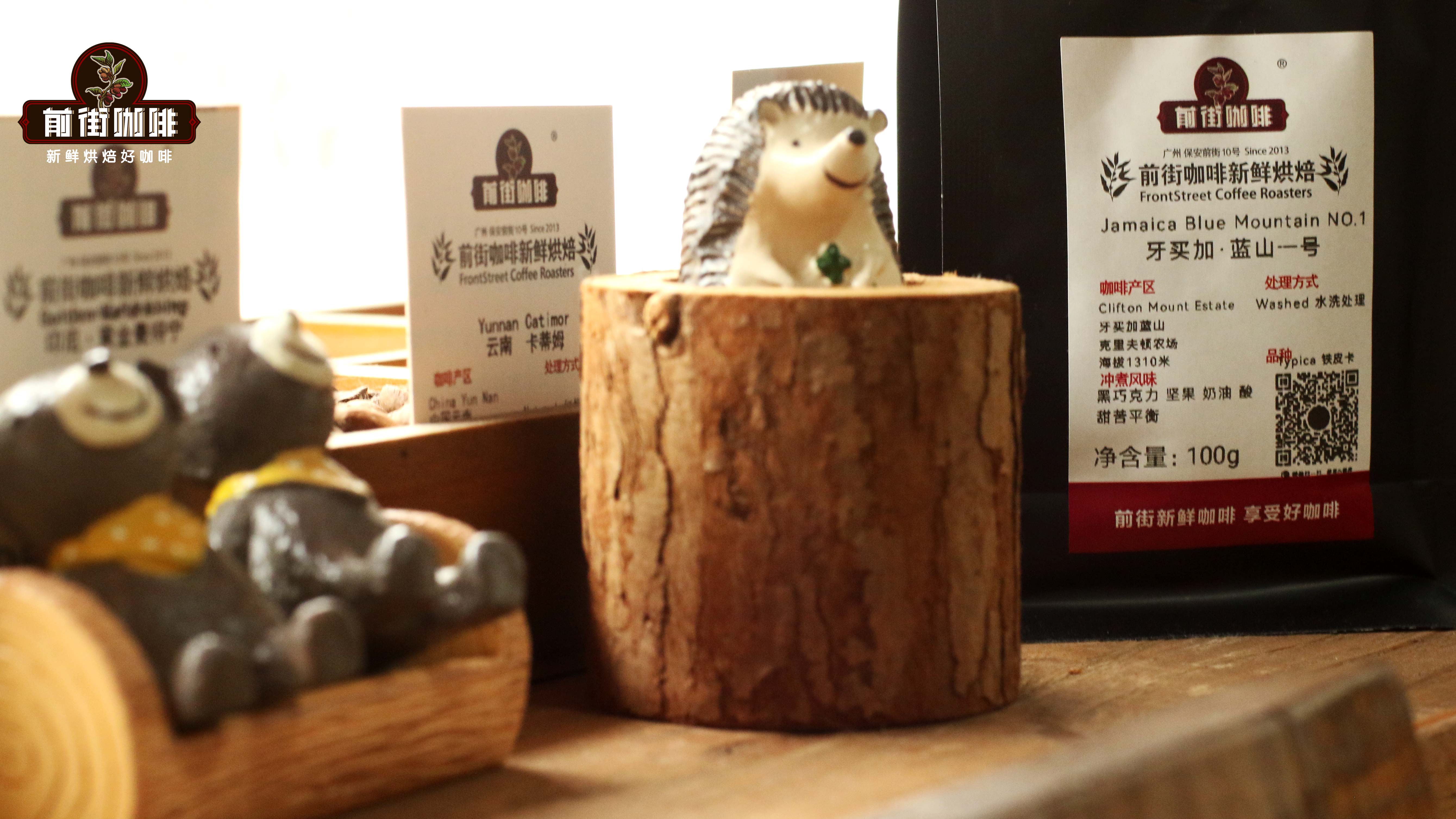
According to the quality of green coffee beans, Blue Mountain coffee is divided from high to low into: NO.1, NO.2, NO.3, and PB, with PB meaning Peaberry. The classification of coffee quality grades is based on many factors, including size, green bean color, roasting quality, aroma, cup quality, screen size, and so on. What Front Street has sourced is the highest grade, NO.1, which we call Jamaican Blue Mountain No. 1.
Can Blue Mountain No. 1 be made into black coffee?
Front Street hopes to highlight the mellow and rounded mouthfeel of Blue Mountain No. 1 coffee, so it uses a KONO coffee dripper for extraction. KONO’s ribs are less than half the height of the dripper. This design is intended to make the filter paper cling closely to the wall after the dripper is wet, restricting airflow, thereby increasing the water absorption time of the coffee grounds and making the extracted coffee more uniform overall.
Brewing parameters: 15 grams of coffee, coffee-to-water ratio 1:15, grind size: EK43s setting 10.5 (75% passing rate with China standard No. 20 sieve), water temperature: 87 to 88°C, brewing method: staged extraction.
Place the filter paper into the KONO dripper, pour water to wet the filter paper, and at the same time make the filter paper fit more closely. Add the coffee grounds and tap lightly so the coffee bed is evenly distributed. In the first stage, gently pour 30 grams of water for blooming, with a blooming time of 30 seconds; in the second stage, pour to about 125 grams of water, circling outward evenly and steadily. Then wait for the coffee liquid to drop. When it has dropped halfway, pour the final stage of water up to 225 grams, and wait for all the coffee to finish dripping. The total extraction time is generally about 2 minutes.
The pour-over Blue Mountain No. 1 coffee presents flavors of dark chocolate and nuts. It is very mellow, with an obvious almond-like sweet aftertaste. As the temperature drops, the sweet, silky sensation of roasted hazelnut and cream gradually emerges, accompanied by a hint of soft acidity and caramel sweetness, with the aroma lingering in the mouth.
The above content is compiled by CoffeeHunters, a coffee news website.


