







How Do Ethiopian and Panamanian Geisha Coffee Beans Differ?
Ethiopian and Panamanian Geisha coffee beans trace back to the same variety, first found in Ethiopia's Geisha forest in 1931, but they are grown, graded, and sold very differently today. Panama's Hacienda La Esmeralda sorts its lots into Red, Green, and Blue Labels, while Ethiopia's Gesha Village uses Auction, Gold, Red, Green, and Chaka lots.
The variety reached Kenya in the 1930s and Panama by 1970, and for decades its low yields kept it ignored, sometimes planted only as a windbreak. Cupping the two origins side by side shows how much estate grading, elevation, and processing shape flavor, even when the underlying panamanian geisha genetics are shared.
Geisha coffee is a star variety in the specialty coffee world, and when it is mentioned, most people first think of Panama's Hacienda La Esmeralda. However, Ethiopia, the birthplace of Geisha, now also has Gesha Village producing high-quality Geisha. Though both are called Geisha, what exactly are the differences between the coffees from these two major producing regions? What are the distinctive features of each estate's background, grading system, and flavor performance? Front Street Coffee will sort out the origin and spread of the Geisha variety in this article, explain in detail the Red Label, Green Label, and Blue Label grading system of Panama's Hacienda La Esmeralda, introduce the Auction, Gold Label, Red Label, Green Label, and Chaka lots of Ethiopia's Gesha Village, and present the flavor differences between the two places' Geisha through brewing comparisons, helping coffee lovers gain a comprehensive understanding of the unique charm of these two major Geisha producing regions.
For more specialty coffee knowledge, please follow the WeChat public account: Front Street Coffee
When Geisha coffee is mentioned, most coffee lovers first think of the Geisha coffee beans produced by Panama's Hacienda La Esmeralda. However, with the continuous development of the specialty coffee industry, Ethiopia, the original homeland of the Geisha variety, has also seen estates capable of producing high-quality Geisha in recent years, the most representative of which is Gesha Village. So, when the same Geisha variety is grown, what differences in flavor actually exist between these two producing regions? What characteristics does each estate have? Front Street Coffee will sort through these one by one for coffee lovers in this article.
The origin of the Geisha coffee variety
According to Front Street Coffee's understanding, the Geisha coffee variety was first discovered in 1931 in the Geisha forest of Ethiopia. After that, Geisha was sent to the Kenya Coffee Research Institute, introduced to Uganda and Tanzania in 1936, spread to Costa Rica in 1953, and introduced to Panama in 1970.
But according to Front Street, during this period Geisha coffee was never taken seriously, because Geisha coffee trees had extremely low yields, were difficult to cultivate, and had poor economic returns, so no one paid attention to it, and it was even used merely as a windbreak tree for other crops.
Panama's Hacienda La Esmeralda
Front Street Coffee will first introduce the Geisha coffee beans of Panama's Hacienda La Esmeralda. Although Geisha originated in Ethiopia, it was truly brought to prominence at Hacienda La Esmeralda, so it can be said that Hacienda La Esmeralda is the talent scout of Geisha coffee beans.
According to Front Street Coffee's understanding, the history of Hacienda La Esmeralda can be traced back to 1964. American banker Rudolph Peterson moved to Panama after retirement and bought Hacienda La Esmeralda in Boquete, initially focusing mainly on dairy farming. Later, his son Price resigned from his medical position to help his father manage the farm, introduced Caturra and Catuai coffee varieties in 1987, and established a wet mill in 1994, from then on having its own coffee processing facilities.
The discovery of Geisha coffee was purely accidental. Because Geisha coffee trees at the time had low yields and poor economic returns, they were used by the previous estate owner as windbreak trees to block strong winds and protect the Caturra and Catuai coffee in other high-yield areas.
It was against this background that the workers at Hacienda La Esmeralda who picked coffee cherries also harvested the Geisha coffee cherries along with them. During cupping, the estate owner found this coffee bean very special, with rich citrus and floral aromas, so he found the Geisha coffee trees and began to explore the potential of the Geisha variety. In 2004, Hacienda La Esmeralda sent Geisha coffee beans alone to compete. Geisha did not disappoint the estate and won first place in the BOP coffee cupping competition held in Panama, thus establishing Hacienda La Esmeralda's position in the specialty coffee world.
Characteristics of Geisha coffee beans
As Front Street Coffee mentioned above, Geisha coffee made a stunning debut in the BOP competition, and afterward Panama set off a wave of planting Geisha coffee trees. However, Geisha coffee trees are not easy to cultivate, have very low yields, have strict altitude requirements, and also involve many particularities in green bean processing and picking. Precisely because of these various limitations, not every estate can grow high-quality Geisha, which is also one of the reasons Panama's Hacienda La Esmeralda can occupy an important position in the Geisha coffee market.
In addition, Geisha coffee has a rather magical characteristic: the harsher the growing environment, the better the flavor of the coffee cherries produced, but the difficulty of picking also increases accordingly.
Therefore, Hacienda La Esmeralda devoted most of its energy to infrastructure development to support excellent strict lot separation and meticulous processing, grading Geisha by plot cultivation, namely the Red Label Geisha, Green Label Geisha, and Blue Label Geisha now seen in Front Street Coffee's shop.
Division of coffee-growing areas at Hacienda La Esmeralda
As Front Street Coffee said above, the coffee beans grown at Hacienda La Esmeralda are divided by area, mainly strictly according to altitude, microclimate, cupping performance, and planted variety, dividing the estate's growing areas into five brands for sale. Among them, the Geisha variety involves three brands: Esmeralda Special (Red Label), Private Collection (Green Label), and Geisha 1500 (Blue Label).
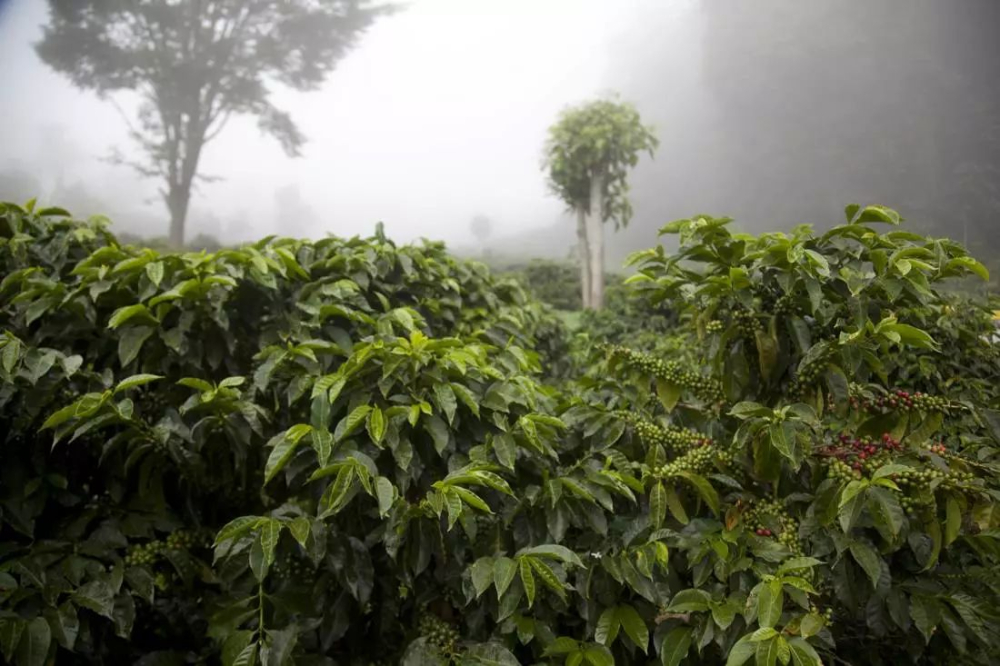
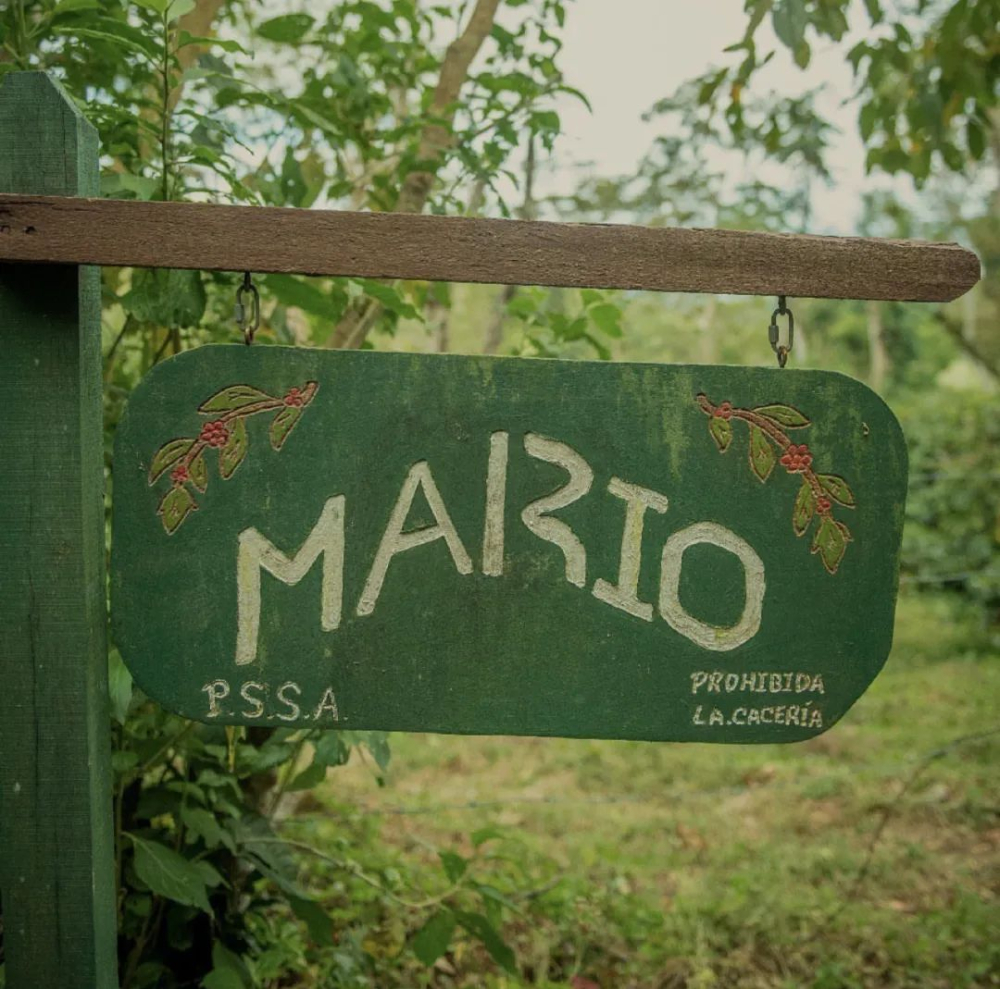
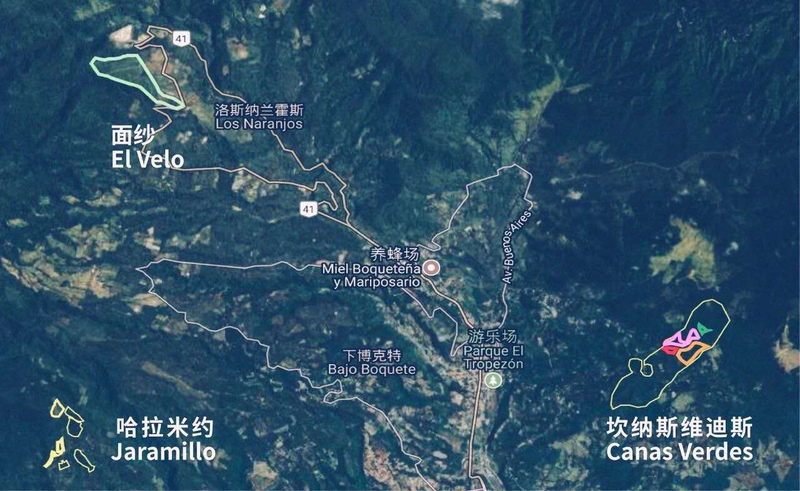
The three main plots of Hacienda La Esmeralda are Jaramillo, Canas Verdes, and El Velo. Each plot is further subdivided into smaller plots.
Jaramillo:
Annual rainfall 4000 ml, average daytime temperature 19-25°C, average nighttime temperature 11-15°C, average altitude 1600-1700 m. The Jaramillo plot is subdivided into 5 smaller plots: Mario, Noria, Reina, Bosque, and Buenos Aires.
Canas Verdes:
Annual rainfall 3500 ml, average daytime temperature 16-23°C, average nighttime temperature 10-15°C, average altitude 1600-1800 m. Canas Verdes includes 9 smaller plots in total: Lino, Coronado, Fundador, León, Montaa, Trapiche, Chinta, Cabaa, and Tumaco.
El Velo:
This plot is the most recently purchased plot of Hacienda La Esmeralda, with an average altitude of 1700-1900 m. In addition to growing Geisha and Catuai, it also has a small amount of other introduced varieties, such as Laurina, Pacamara, Mocha, and SL28. El Velo is divided into 7 smaller plots in total, namely: Guabo, Portón, Durazno, Mural, Higo, Buena Vista, and guila.
Grading standards for Hacienda La Esmeralda's Red Label, Green Label, and Blue Label
Hacienda La Esmeralda Red Label Geisha
The Geisha produced under Esmeralda Special is what we commonly call Red Label. It uses Geisha coffee beans grown at an altitude of 1600-1800 meters, with a cupping score above 90, and originating from the Jaramillo and Canas Verdes producing areas.
In addition, it must also participate in the independent auction held by Hacienda La Esmeralda itself. Only the Geisha lots put up for auction from the divided plots are auction Red Label. However, there are now also non-auction Red Labels on the market, which are actually Geisha selected from the same plots that did not participate in the auction and circulated to the market. The variety quality is the same, with only a difference in selling price.
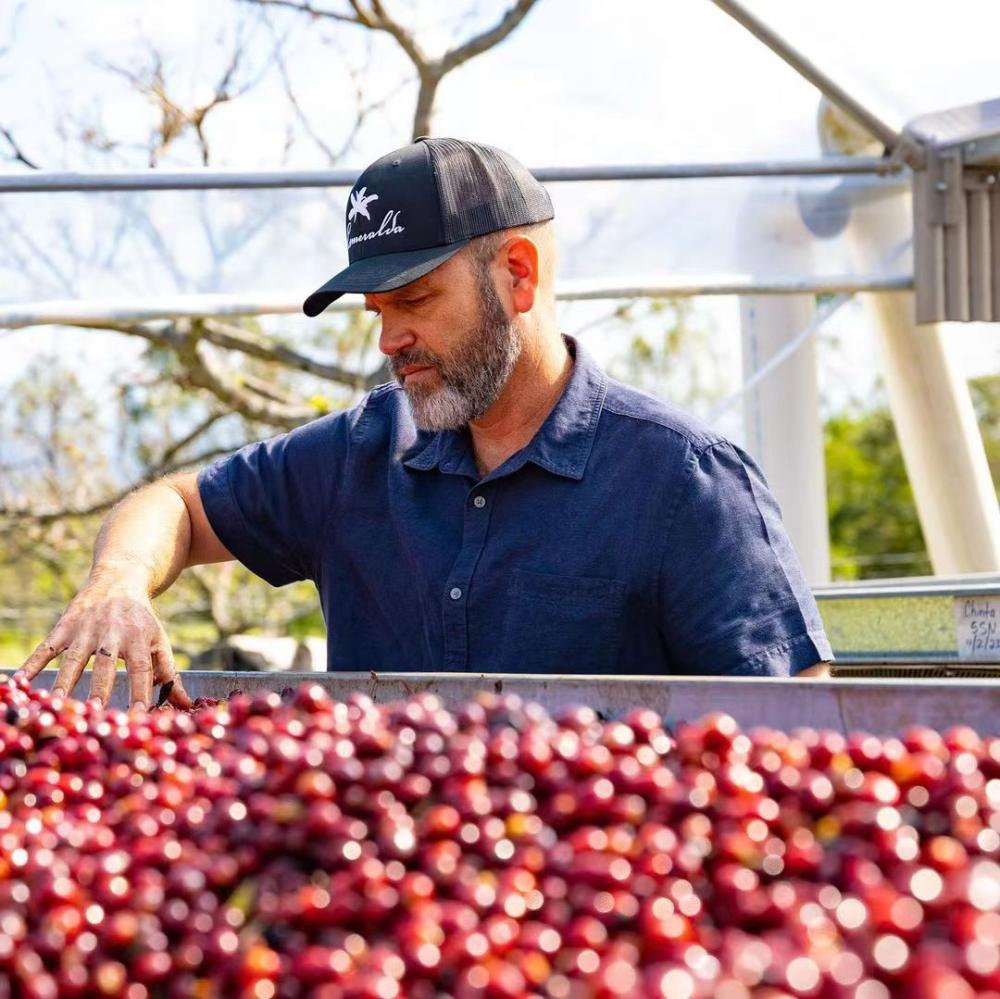
Front Street Coffee Panama Hacienda La Esmeralda Red Label Geisha Coffee Beans
Country: Panama Region: Boquete (Hacienda La Esmeralda) Altitude: 1700 m Variety: Geisha Processing method: Natural process Flavor: Citrus, complex fruits, rose tea, honey
Hacienda La Esmeralda Green Label Geisha
Private Collection, commonly known as Green Label, differs from Red Label Geisha in that it is not an independent competition lot, but its quality is still excellent. Green Label Geisha uses a blend of micro-lots grown at an altitude of 1600-1800 meters and sourced from different plots such as Jaramillo and Canas Verdes.
Because it uses a blended-bean model without detailed plot labeling, Green Label Geisha sometimes has a very high flavor similarity to Red Label Geisha.
Second, although Green Label Geisha is not as high-grade as Red Label, it still carries the classic flavors of Geisha, such as Geisha's distinctive floral aroma, fruity aroma, citrus acidity, and a thick, juicy mouthfeel. Therefore, Front Street Coffee believes that Green Label Geisha has the best value for money among these three labels.
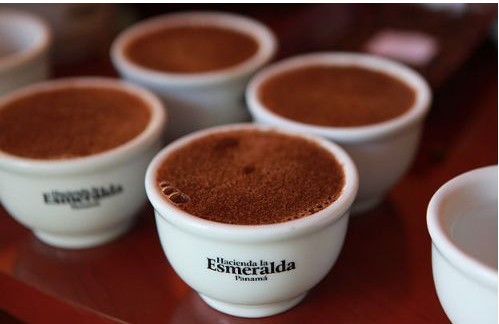
Front Street Coffee Panama Hacienda La Esmeralda Green Label Geisha Coffee Beans
Country: Panama Region: Boquete (Hacienda La Esmeralda) Altitude: 1700 m Variety: Geisha Processing method: Natural process Flavor: Jasmine, citrus, honeydew melon, berries
Hacienda La Esmeralda Blue Label Geisha
Geisha 1500, namely Blue Label, is Geisha coffee grown in a 1400-1500 meter environment, harvested as a blend from different plots of Esmeralda's three sub-estates. The Geisha produced in this area is sold for export and becomes Volcan Azul Geisha coffee beans, with a flavor consistent with the original Blue Label. At present, the Blue Label brand has been discontinued by Hacienda La Esmeralda, and this lot of Geisha is sold for export, becoming Volcan Azul Geisha coffee beans. The flavor of Volcan Azul is expressed as light floral notes and fruity sweet acidity, with a mouthfeel less full than the other two brands.
Front Street Coffee Panama Hacienda La Esmeralda Washed Blue Label Geisha Coffee Beans
Country: Panama Region: Boquete (Hacienda La Esmeralda) Altitude: 1400-1500 m Variety: Geisha Processing method: Washed process Flavor: Lemon, oolong tea, cane sugar, peach
The above is the relevant information compiled by Front Street Coffee about Panama Hacienda La Esmeralda Geisha coffee. Next, Front Street Coffee will introduce the producing-region flavor characteristics of Ethiopian Geisha coffee.
Ethiopia's Gesha Village
Gesha Village is the most famous Geisha coffee estate in Ethiopia. According to Front Street Coffee's understanding, the estate owner's cultivation of Geisha coffee began with an opportunity. In 2007, documentary director Adam Overton and his photographer wife Rachel Samuel came into contact with the Gera coffee forest located in the Bench-Maji region while filming a documentary about Ethiopian coffee for the Ethiopian government. In this process, they not only gained a new understanding of this great land of Ethiopia, but also conceived the idea of establishing their own coffee estate and brand.
In 2009, they were also fortunate to meet the famous Mule Estate owner and BOP judge Willem Boot, and Willem Boot's idea of "returning to Ethiopia to find the birthplace of Geisha" also provided an opportunity for the couple. In 2011 they returned to Bench-Maji, where several areas are called Gesha Village and are also the regions most likely to contain native Geisha varieties.
Adam followed Willem Boot and began exploring the surrounding forests. In a jungle wrapped in dense forest (called the Gori Gesha forest), they discovered many wild coffee tree species, among which what surprised them most was precisely the native Geisha variety. So they collected seeds from native Geisha trees, selected from them, and then planted them in Gesha Village. They decided to establish the estate here and named it Gesha Village Coffee Estate.
Coffee-growing conditions at Gesha Village
Gesha Village is located in the Bench Maji region of western Ethiopia, surrounded by dense jungle. The location of Gesha Village has beautiful scenery and a pleasant climate, and from high places one can look out over the ancient and vast forest. The estate owners Adam and Rachel once searched for three years to find a suitable estate, and under the guidance of local people went to the forest of Geisha's native homeland. It is a two-day drive from the capital Addis Ababa.
Gesha Village covers an area of about 471 hectares, with a coffee planting area of about 320 hectares and reddish-brown loamy soil. Planting density is maintained at 7,000 coffee trees per hectare. This plot is named after the person "Oma," in memory of a religious leader respected and loved by the people. The coffee beans of Gesha Village have complex flavors and are very rare, and are often chosen by baristas for international competitions. Because it emphasizes the maintenance of the local ecological environment and has established good cooperative relations with local residents, it also founded the Gesha Village Foundation, promoting educational development through two schools adjacent to the estate.
Coffee varieties at Gesha Village
According to Front Street Coffee's understanding, in just over a decade, the estate has planted three Geisha coffee varieties, among which Gesha1931 and Gori Gesha are both named after the expedition team when the coffee trees were discovered, and the other is Illubabor, provided by the Ethiopian Coffee Research Center.
Gesha1931 is the variety research has found to be closest to Panama Geisha, which was also confirmed by observing plant morphology, bean shape, size, and cupping. The Gori Gesha native variety was collected by the owner of Gesha Village in 2011 through his own expedition from the wild Gori Gesha coffee forest about 20 kilometers from the current Gesha Village, and no duplicate samples have yet been found elsewhere.

Gesha Village's Geisha coffee grading system
According to Front Street Coffee's understanding, Willem Boot also brought Panama's business model to Gesha Village, creating the current grading system for Geisha coffee on the estate, namely the Gesha Village Auction, Gold Label, Red Label, Green Label, and Chaka Geisha coffee beans on Front Street Coffee's shop menu.
But these grading standards are still very different from the Geisha grading of Panama's Hacienda La Esmeralda. Front Street Coffee currently has Gesha Village Gold Label lot Geisha, Red Label lot Geisha, and Chaka lot Geisha in its shop. Next, Front Street Coffee will briefly explain the grading standards of these several types of Gesha Village Geisha coffee beans.
Auction lot: Accounting for only 3.7% of Gesha Village's annual production, it is the estate's top lot after strict selection, obtainable only through the 2018 Gesha Village Coffee Estate global auction. The cupping score of the 2018 auction lot was 88.15-92.67 points, and it is further divided into Champion's Reserve and Farm Reserve. For example, Gesha Village 2018 Auction Lot RSV.6 belongs to the auction lot.
Gold Label lot: Gold Label accounts for only 5% of Gesha Village's annual production and can almost be said to be a work on the same level as the auction lot. Competition contestants around the world usually choose this lot. For example, at the 2018 WBC World Championship held in the Netherlands, the champions of Australia and Japan chose the Gold Label lot to compete. Roasters with high quality requirements also purchase it. It has complete traceability, and each lot has outstanding flavor and high complexity, making it the estate's finest label after the auction. The Gesha Village Gold Label that Front Street obtained comes from Oma lot 059.
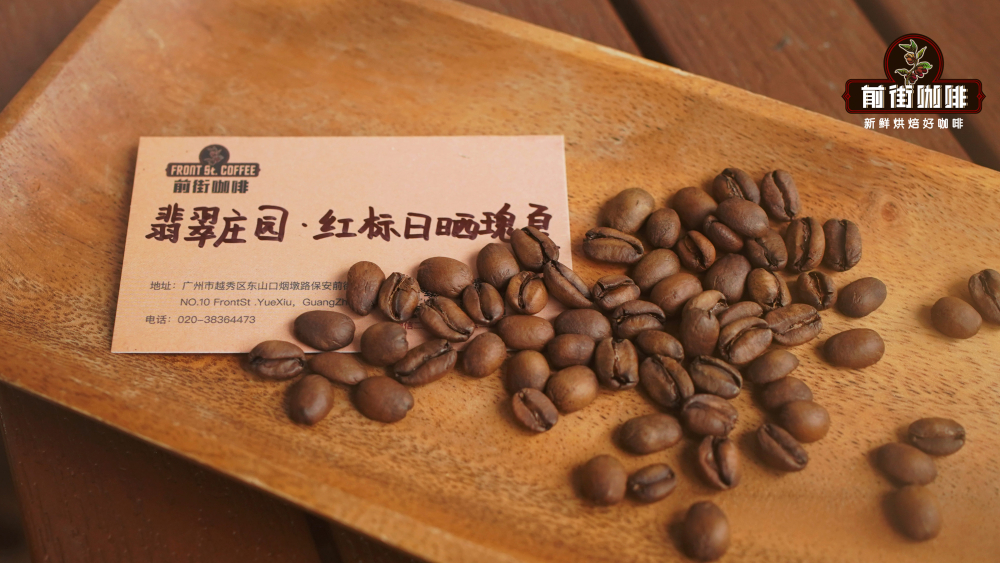
Front Street Coffee Ethiopia Gesha Village Gold Label Geisha Coffee Beans
Region: Ethiopia, Bench-Maji producing region Estate: Gesha Village, Oma plot Altitude: 1900-2040 meters Variety: Geisha 1931 Processing method: Natural process Flavor: Citrus, lemon, tropical fruits, cream, nuts, tea-like
Red Label lot: A lot with complete traceability, with typical Gesha Village flavor. Its flavor intensity and complexity are slightly weaker than the Gold Label lot, making it a single-origin lot with very high value for money.
Front Street Coffee Ethiopia Gesha Village Red Label Geisha Coffee Beans
Region: Ethiopia, Bench-Maji producing region Estate: Gesha Village Altitude: 1909-2069 meters Variety: Gori Gesha Processing method: Natural process Flavor: Coconut, licorice, cream, chocolate, toffee, citrus, almond, strawberry
Green Label lot: Its official name is SINGLE-TERROIR. This coffee bean comes from a single farm of Gesha Village. Complete traceability information for each lot number in the Single-Terroir series can be found, including farm name, coffee variety, and processing date. Front Street Coffee has not yet listed the Green Label lot Geisha for sale, but it will also be listed soon. Next, Front Street Coffee will also share the basic information of Gesha Village Green Label lot Geisha coffee beans.
Front Street Coffee Ethiopia Gesha Village Green Label Geisha Coffee Beans
Region: Ethiopia, Bench-Maji producing region Estate: Gesha Village Altitude: 1911-2001 meters Variety: Gori Gesha Processing method: Natural process Flavor: Citrus, cherry, berries, honey, fermented note
Chaka lot: This is a Geisha coffee bean blend produced by Gesha Village, containing three varieties, namely Gori Gesha, Gesha 1931, and Illubabor (a native Ethiopian disease-resistant variety).
Front Street Coffee Ethiopia Gesha Village Chaka Geisha Coffee Beans
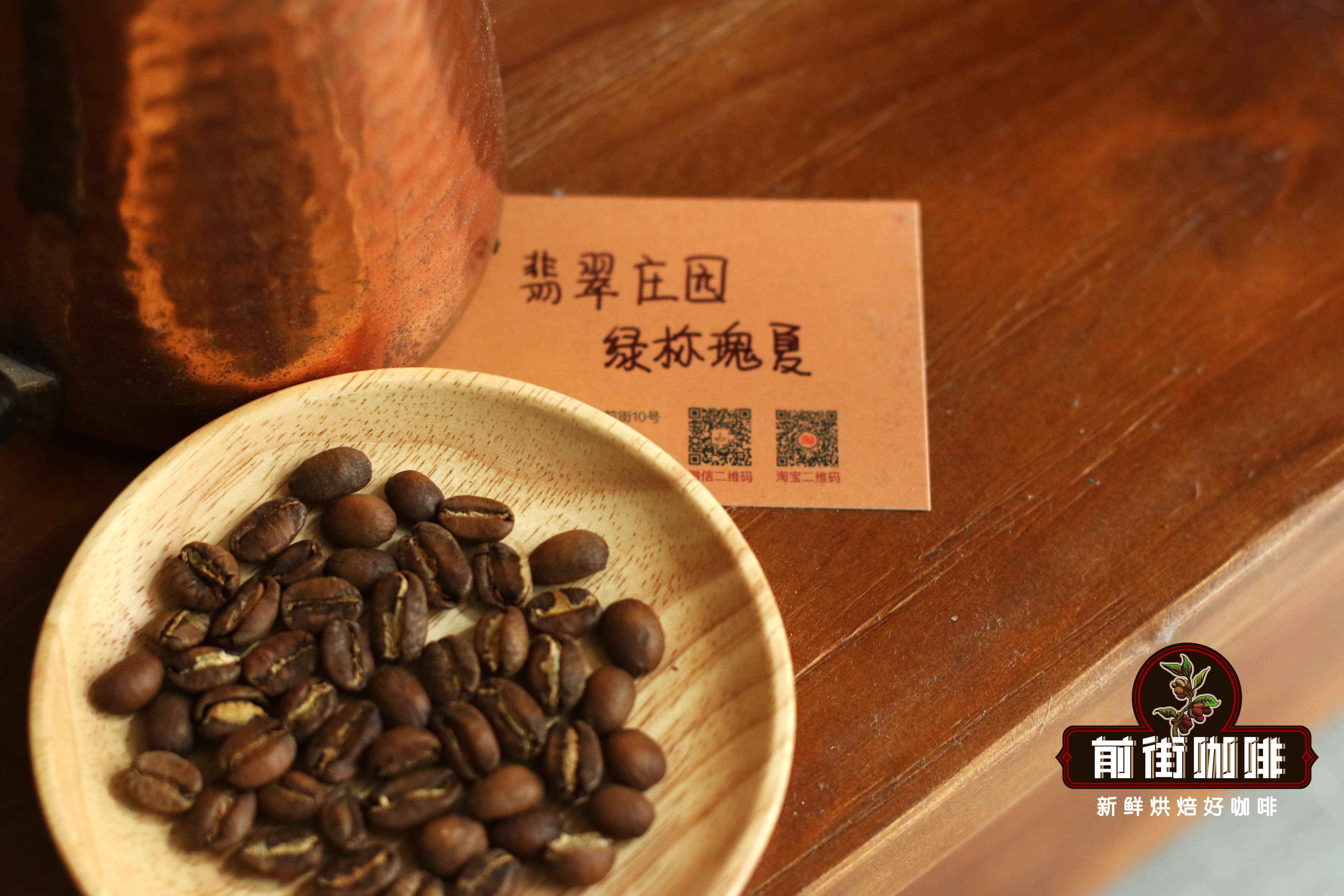
Region: Ethiopia, Bench-Maji producing region Estate: Gesha Village Altitude: 1909-2069 meters Variety: Gori Gesha Processing method: Natural process Flavor: Citrus, grapefruit, cream, chocolate caramel
The above is the producing-region flavor characteristics of Ethiopian Geisha coffee beans compiled by Front Street Coffee. In order to let coffee lovers understand the characteristics of Geisha coffee from these two producing regions more intuitively, Front Street Coffee will use Panama Hacienda La Esmeralda Red Label Geisha and Ethiopia Gesha Village Red Label Geisha coffee to make a brewing flavor test comparison.
Front Street Coffee Geisha Coffee Bean Roasting Suggestions
In order to highlight its floral and fruity notes and bright acidity, Front Street Coffee uses a light roast. However, it should be noted that even for the same Geisha variety, Front Street Coffee's parameters when roasting Red Label, Green Label, and Blue Label are all different, which requires the roaster's accumulated experience over time to judge the uniqueness of each bean.
Hacienda La Esmeralda Green Label: Charge at a drum temperature of 160°C, heat power 110, damper opened to 3; turning point at 1'28", when the drum temperature is 140°C open the damper to 3.5, heat power unchanged; when the drum temperature is 153.3°C the bean surface turns yellow, the grassy smell completely disappears, entering the dehydration stage; when the drum temperature reaches 161°C, adjust the heat power to 90, damper unchanged; at 6'54", wrinkles and dark patches appear on the bean surface, and the toast aroma clearly turns into coffee aroma, which can be defined as the prelude to first crack. At this time, listen clearly for the sound of the first crack point. At 7'50" first crack begins, open the damper to 4, develop for 1'20" after first crack, and drop at 192.5°C.
Gesha Village Green Label: Yangjia 800N, charge amount 500 g: charge at a drum temperature of 175°C, heat power 130, damper opened to 3; turning point at 1'36", when the drum temperature is 92.8°C, at 3 minutes open the damper to 4 and raise the heat power to 140; when the drum temperature is 152.6°C (6 minutes 26 seconds) the bean surface turns yellow, the grassy smell completely disappears, entering the dehydration stage, lower the heat power to 100; at 8'20", wrinkles and dark patches appear on the bean surface, and the toast aroma clearly turns into coffee aroma, which can be defined as the prelude to first crack. At this time, listen clearly for the sound of the first crack point. At 9'55" first crack begins, open the damper to 5, develop for 1'30" after first crack, and drop at 193.5°C.
Front Street Coffee Brewing Sharing
Dose: 15 grams Coffee-to-water ratio: 1:15 Grind size: fine grind for pour-over (78% passing a No. 20 standard sieve) Water temperature: 90°C
Brewing method: Front Street Coffee uses staged extraction, also called three-stage brewing.
Use 30 grams of water for blooming for 30 seconds, then pour in a small stream in circles until 125 grams, then pause for a stage; when the water level drops and is about to expose the coffee bed, continue pouring until 225 grams and stop pouring; when the water level drops and is about to expose the coffee bed, remove the dripper. (Start timing at the beginning of blooming.) The extraction time is 2'00".
Brewed flavor of Hacienda La Esmeralda Green Label coffee beans: Rich jasmine aroma, high sweetness, citrus, berries, juicy feel, cream, green tea, orange peel, cantaloupe; the overall flavor is richly layered, with a lingering finish of floral notes and citrus.
Brewed flavor of Gesha Village Green Label coffee beans: Sweet berry aroma, full and mellow mouthfeel, with a slight flavor of cherry, red berries, and honey. The finish has an aroma with fermented notes.
The above content is compiled by CoffeeHunters, a coffee news website.


