







Which Coffee-to-Water Ratio Suits Americano Coffee?
A pour-over ratio between 1:14 and 1:18 covers most brewing, and a 1:15 ratio, or 15 grams of grounds to 225 grams of water, is what most shops use. Testing 1:14, 1:16, and 1:18 with everything else held constant, the smaller ratios poured thicker and heavier, while the larger ones turned lighter and thinner.
Americano coffee is built differently, since espresso is extracted at a concentrate and then diluted with hot water, so its flavor layers separate from a pour-over's. The traditional Americano ratio works as a starting point, but the same beans and roast level can call for a different ratio once espresso extraction is involved.
Brewing a good cup of coffee—the coffee-to-water ratio is one of the key variables. Front Street Coffee, through comparative experiments, systematically analyzes the effects of different coffee-to-water ratios on coffee concentration, extraction yield, and flavor expression, and further explores whether the traditional ratio for Americano applies to all coffee beans. This article starts from the pour-over coffee-to-water ratio, combines it with the extraction logic of espresso, analyzes the essential differences between Americano and pour-over in taste and flavor layers, and provides practical methods for determining the appropriate ratio for Americano, helping coffee enthusiasts understand the relationship between extraction and flavor more scientifically.
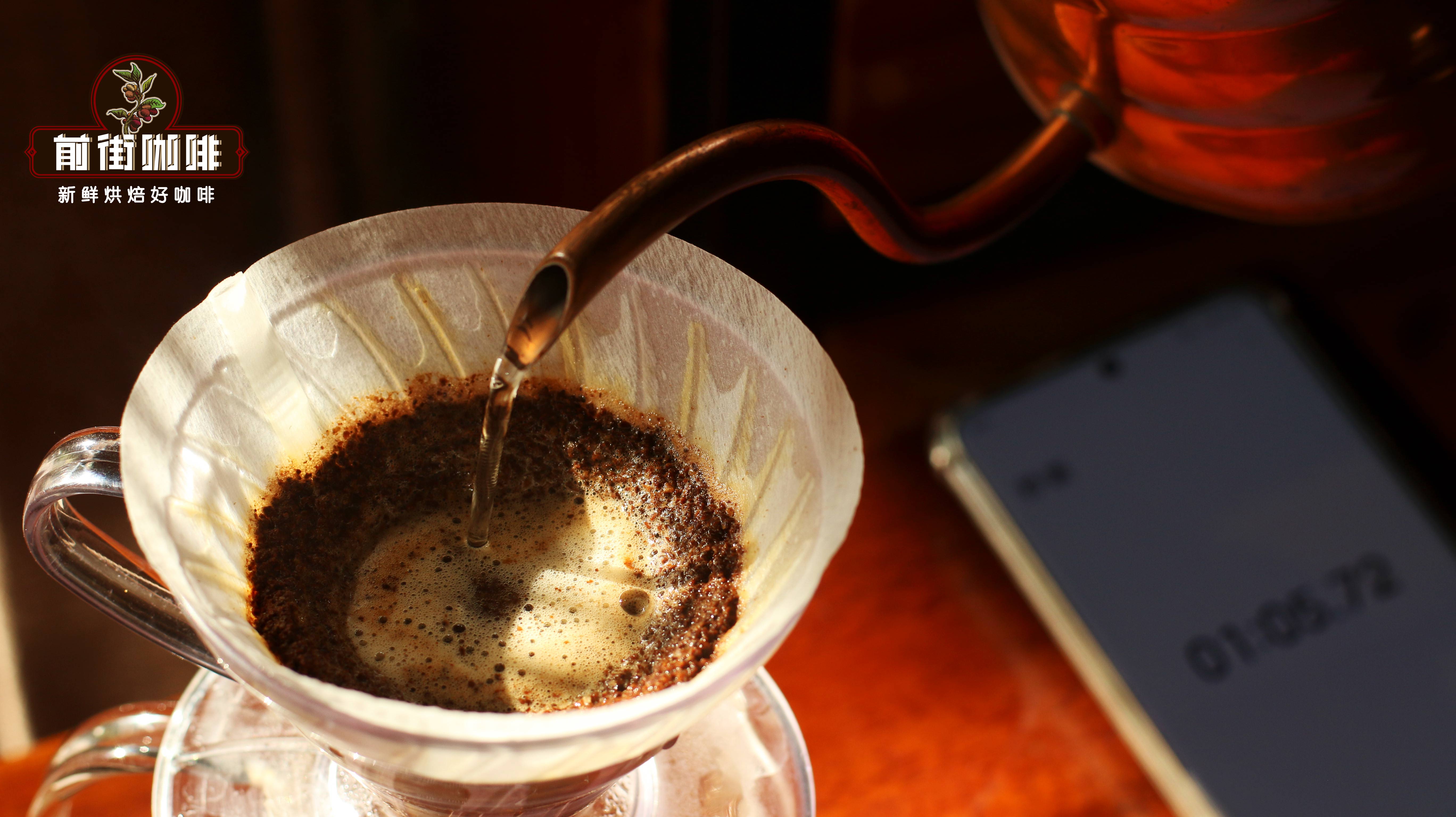
One of the topics that Front Street Coffee baristas are most frequently asked by consumers is: how exactly should pour-over coffee be brewed to taste good? This question is actually difficult to give a unified answer to, because Front Street Coffee (FrontStreet Coffee) has always believed that there are quite a few variables that influence the flavor direction of pour-over, among which those directly related to brewing include water temperature, grind size, coffee-to-water ratio, and extraction time. The so-called coffee-to-water ratio is the ratio between the weight of coffee grounds and the total amount of water poured. Today, Front Street Coffee (FrontStreet Coffee) will start from the dimension of coffee-to-water ratio and use comparative experiments to show the actual differences in coffee flavor brought by different ratios.
Before starting the experiment, the coffee-to-water ratio range recommended by Front Street Coffee (FrontStreet Coffee) is 1:14 to 1:18. The smaller the ratio, the more coffee and less water, and the flavor tends to be thicker; the larger the ratio, the less coffee and more water, and the taste tends to be lighter. When Front Street Coffee (FrontStreet Coffee) stores serve coffee, most coffee beans use a 1:15 ratio, that is, 15 grams of coffee grounds with 225 grams of water.
So, how exactly does the coffee-to-water ratio affect the taste of coffee?
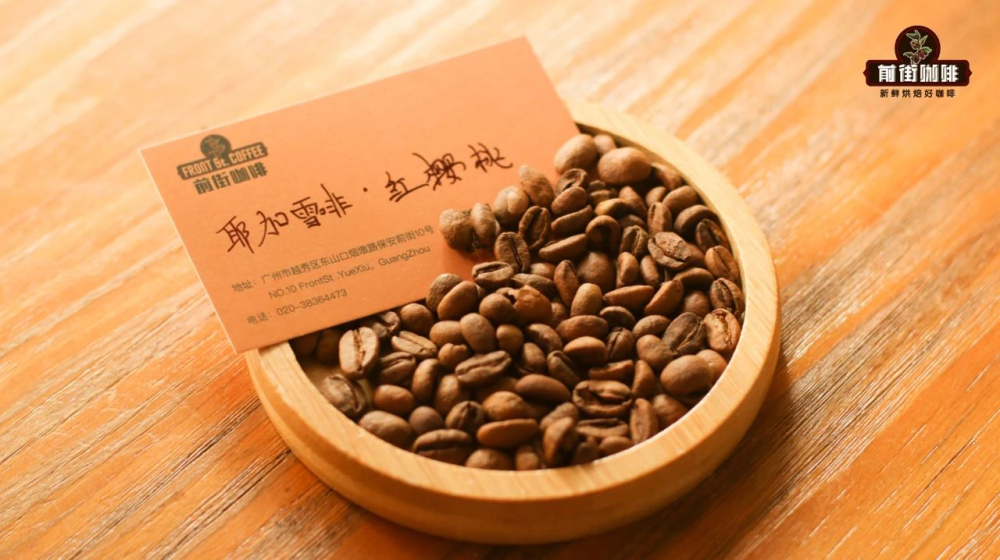
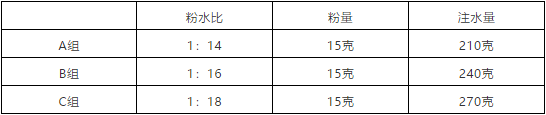
Front Street Coffee (FrontStreet Coffee) kept all other brewing conditions unchanged and set only the coffee-to-water ratio as the variable, selecting three groups for comparison: 1:14, 1:16, and 1:18. The beans used in the experiment were a sun-dried Red Cherry Project coffee bean from the Yirgacheffe region of Ethiopia.
All three groups used a V60 dripper, with water temperature controlled at 90 degrees Celsius, a medium-fine grind (calculated with a 0.85 mm standard sieve, with a pass rate of about 80%), and a three-stage pouring method, with 30 grams of water poured during the blooming stage and left to rest for 30 seconds. The first round of experiments changed the ratio by adjusting the amount of water poured. The specific variables were as follows:
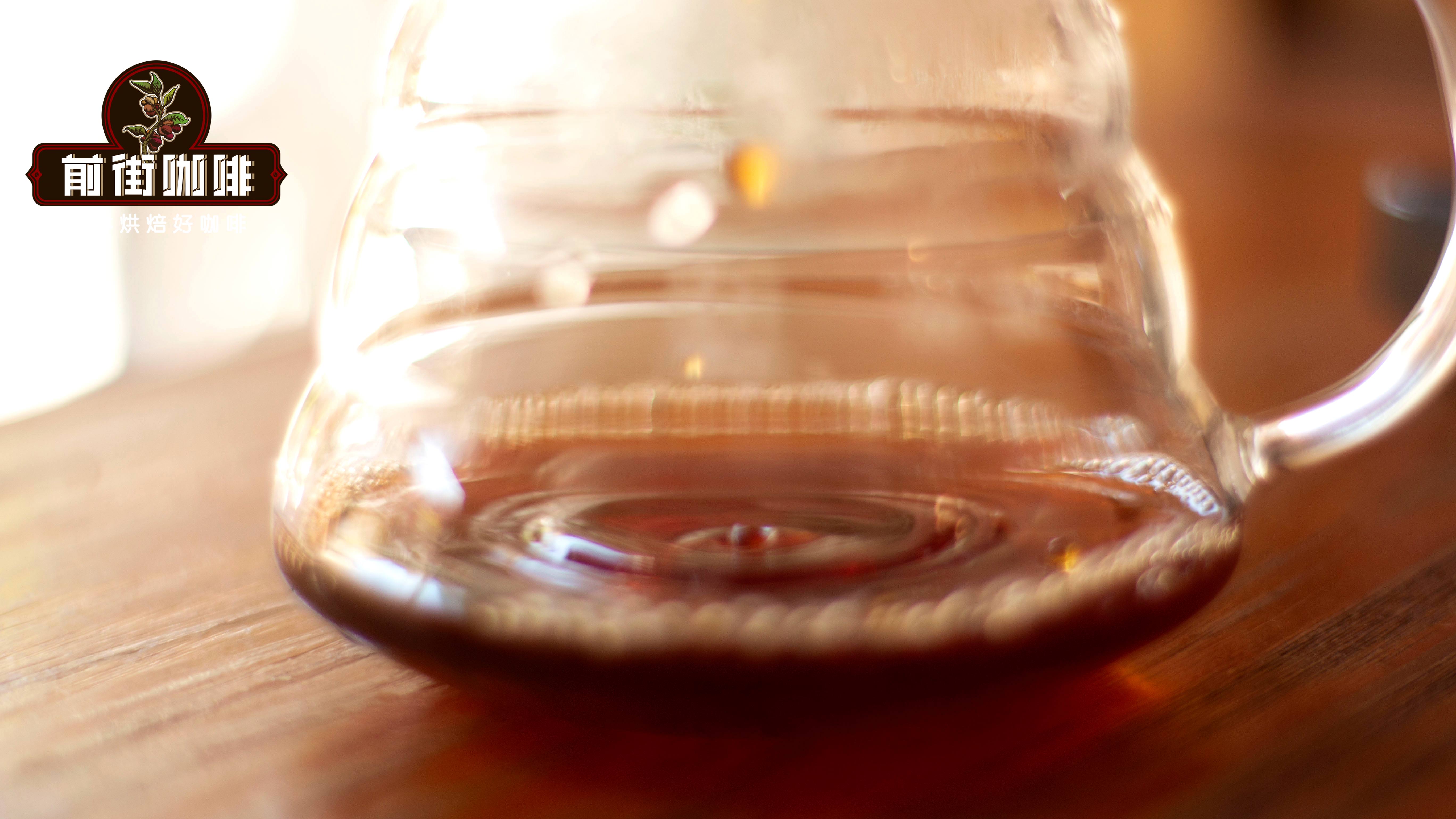
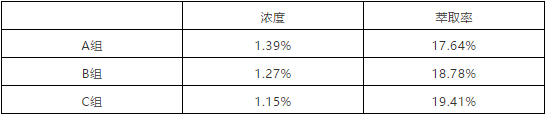
After the coffee liquid had completely dripped through, the dripper was removed and brewing ended. The three groups of coffee were then separately subjected to sensory tasting, concentration measurement, and extraction yield calculation.
From the results, as the coffee-to-water ratio increased, the concentration of the coffee liquid showed a downward trend. The reason is that concentration expresses the proportion of dissolved substances in the total liquid; increasing the amount of water poured means the denominator becomes larger. Even if the total amount of extracted substances increases somewhat, its increase is still less than the increase in water volume, so the concentration value goes down.
Extraction yield means the proportion of extracted substances relative to the original weight of the coffee beans. Since the amount of coffee grounds remained unchanged in the three groups, the denominator was fixed; the more water poured, the more solvent carried soluble substances out of the coffee grounds, so the extraction yield gradually rose. There is also a factor that cannot be ignored: under the premise of a consistent pouring speed, the larger the amount of water poured, the longer the pouring time, and the overall extraction time is accordingly prolonged, which also pushes up the extraction yield.
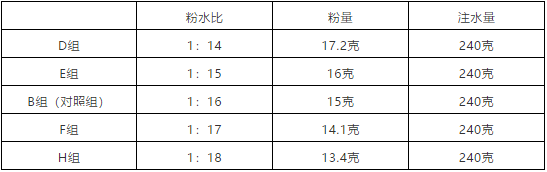
Of course, many variables in pour-over coffee often restrain each other. For example, grind size also affects filtration speed, thereby changing extraction time. In order to exclude the interference of the time factor as much as possible, Front Street Coffee (FrontStreet Coffee) conducted another four comparative experiments—this time changing the coffee-to-water ratio by adjusting the amount of coffee grounds.
The variable settings for these four groups were as follows:
The brewed coffee was likewise tasted, measured for concentration, and calculated for extraction yield, and the results obtained were as follows:
By analyzing the above data, it can be found that changing the amount of coffee grounds while keeping the amount of water poured consistent produces a completely different effect. Front Street Coffee (FrontStreet Coffee) believes that a change in the amount of coffee grounds actually changes the number of sites that water flow can contact and extract coffee substances from, which is to say there is an upper limit. The more coffee grounds, the more extractable sites there are. Under the same amount of water poured, more substances are naturally dissolved out, which explains why a smaller ratio (that is, increasing the amount of coffee grounds) results in higher concentration instead.
Combining the first three groups of experiments, it can be seen that water flow, as a solvent, has extraction capacity. The more sufficient the water, the more soluble substances can be carried out. But the later Group H did not conform to this pattern. As analyzed in the previous paragraph, Front Street Coffee (FrontStreet Coffee) believes that the weight of coffee grounds also restricts the number of sites that water flow can extract, that is, there is a saturation upper limit. Once this upper limit is reached, the extractable substances tend to become saturated, and continuing to increase the amount of water poured cannot extract more substances. This is precisely the reason why the extraction yield of Group H was lower than that of the other groups.
However, Front Street Coffee (FrontStreet Coffee) needs to specially explain that the meanings of the extraction yields labeled in the latter five groups are not the same. For example, the extraction yield of Group D means that 16.16% was extracted from 17.2 grams of grounds, while the extraction yield of Group E means that 17.58% was extracted from 16 grams of grounds, and so on. The denominators of each group are not consistent.
Front Street Coffee (FrontStreet Coffee) summarizes the above conclusions into the following three points: 1. The larger the coffee-to-water ratio, the lighter the coffee taste; the smaller the coffee-to-water ratio, the stronger the coffee taste. 2. By increasing the amount of water poured to enlarge the coffee-to-water ratio, more flavor substances participate in extraction, but the overall taste is lighter; by reducing the amount of water poured to shrink the coffee-to-water ratio, fewer substances participate in extraction, but the taste is richer. 3. By increasing the amount of coffee grounds to shrink the coffee-to-water ratio, the release of large-molecule substances in the tail end can be reduced while concentration is increased; by reducing the amount of coffee grounds to enlarge the coffee-to-water ratio, before reaching the limit, the extraction of flavor substances will be more complete, but the richness will correspondingly decrease.
That is all for the discussion of the coffee-to-water ratio's influence on pour-over coffee. Next, please follow Front Street to take a look at what role the coffee-to-water ratio plays in Americano. Americano is a coffee drink with an extremely high appearance rate in daily life. When you pick up a cup of Americano, have you ever thought about its origin, and what exactly is the difference between espresso and Americano? Below, Front Street Coffee (FrontStreet Coffee) will answer these questions one by one.
What is Americano?
The English name for Americano is "Americano," and it usually has two references: one is black coffee made with a drip brewer, and the other is a drink made by diluting espresso with water. At present, the Americano sold in most domestic coffee shops belongs to the latter, while the former is more customarily called "drip coffee" to distinguish it.
The traditional coffee-to-water ratio for Americano is 1:8, that is, double espresso (about 60 milliliters) plus 480 milliliters of water. Stores can of course also adjust flexibly according to the serving cup volume. However, under the third wave of specialty coffee, coffee beans from different regions and different estates are made into SOE, and the selection of beans for espresso shows a scene of a hundred flowers blooming. So can the ratio of 1:8 really adapt to all coffee beans?
Does the traditional ratio apply to all coffee beans?
Taking Front Street Coffee (FrontStreet Coffee) as an example, the beans used in stores to make Americano are the Sunflower Warm Sun blend, made by blending Honduras Sherry Barrel and sun-dried Yirgacheffe, with a ratio of 70% Sherry Barrel and 30% sun-dried Yirgacheffe. By adjusting the roasting curve to make it suitable for espresso service, Sherry Barrel provides the main flavor and mellow body, while Yirgacheffe contributes more acidity and aroma. In order to verify whether 1:8 is suitable for this Warm Sun blend, we decided to try ratios other than 1:8 (1:7.5, 1:7, 1:6.5) to make Americano. The espresso parameters were the state after adjustment that day: 20 grams of grounds extracting 40 grams of coffee liquid, with an extraction time of 28 to 29 seconds.
After sensory tasting, we found that the Americanos at 1:8 and 1:7.5 tasted rather weak, and the sherry wine aroma in Warm Sun was almost imperceptible. The concentrations of the two cups were also only 0.77% and 0.85%, respectively. By contrast, the ratios of 1:6.5 and 1:7 were better able to present the flavor characteristics brought by Sherry Barrel. It can thus be seen that the ratios of 1:8 and even 1:7 are not universally applicable, and at least are not suitable for Front Street's Warm Sun blend. However, in the traditional sense, Americano is indeed often used to describe coffee with a lighter taste, and the French even jokingly call it "sock coffee."
How do you confirm the ratio?
Since 1:8 cannot adapt to all Americano coffee beans, how can you find the ratio suitable for a certain bean? There is a most direct and simplest method, which is to gradually add water while tasting at the same time.
First extract double espresso (or extract according to the number of servings required for service), pour the espresso into a sharing pot placed on a scale, then add water little by little in proportion and taste to determine the appropriate range. For example, after extracting 40 grams of coffee liquid, start from 1:4, that is, add 160 milliliters of water, and taste once; then pour in another 20 grams of water (the ratio becomes 1:4.5), and taste again; continue adding 20 grams of water (ratio 1:5) and taste, repeating this operation until the appropriate ratio range is locked in.
Since each tasting consumes part of the coffee liquid, this method can only help find an approximate range and cannot pinpoint it precisely. After determining the range, it is necessary to remake Americano within that range for verification. For example, in the above test, the suitable ratio for making Americano with the Warm Sun blend fell between 1:4 and 1:5. Subsequently, three cups were remade at 1:4, 1:4.5, and 1:5, and it was finally confirmed that 1:4.5 was the most suitable. At this coffee-to-water ratio, the wine-like charm and cocoa finish of the Warm Sun blend can be more fully displayed, while the body is not compromised.
Which tastes better, espresso or Americano?
To compare the difference between espresso and Americano, Front Street believes that the positioning of Americano should first be clarified: is it traditional drip style, or espresso diluted with water? Espresso is the starting point and foundation of all espresso-based coffee. Very finely ground coffee powder is extracted under high temperature (90 to 93 degrees Celsius) and high pressure (9 bar) to obtain a cup of espresso, which then serves as the base for deriving other drinks. Why does Front Street emphasize very fine grinding? Because under a high-pressure environment, hot water penetrates the powder layer extremely quickly, and fine grinding can relatively increase resistance and prolong the contact time between water and grounds, thereby achieving normal extraction concentration. However, the grind size of traditional Americano machines is not the same as that of espresso machines. Because it belongs to filter extraction, the time is relatively prolonged, and the perforated spray also makes extraction more uniform, so using the same grind size as pour-over coffee is a quite suitable choice.
If espresso and Americano are compared, Front Street believes that Americano after dilution with water has a softer taste than espresso and better flavor extensibility, and can fully present the changes in the front, middle, and back sections. Espresso, by contrast, has a highly concentrated taste and will amplify a certain aspect of the coffee bean's characteristics, whether acidity, sweetness, or bitterness.
Milk coffee drinks derived from espresso, such as latte, cappuccino, and flat white, emphasize that milk and coffee liquid can blend perfectly. If you want to highlight the milk flavor, you need to weaken the coffee's own flavor characteristics. Of course, most coffee shops today still hope to show the flavor of coffee, and milk only plays the role of making the whole thing softer and smoother; after adding milk, coffee is easier to drink. Milk coffee is generally more popular than black coffee. Apart from a small number of people who order black coffee because they want to reduce fat, there are also some people who want to experience the flavor of the coffee beans themselves in Americano.
Professional coffee knowledge exchange
More coffee bean information
Please follow Coffee Workshop (WeChat public account cafe_style)
For more specialty coffee beans, please add the private WeChat of Front Street Coffee (FrontStreet Coffee), WeChat ID: kaixinguoguo0925
The above content is compiled by CoffeeHunters, a coffee news website.


