








How Does Coffee Bean Origin Shape the Flavor in Your Cup?
Coffee bean origin tells you more about flavor than almost any other label. African coffees such as Ethiopia and Kenya tend toward citrus, florals and berry-like acidity; Central and South American lots from Colombia and El Salvador read balanced and sweet, sometimes creamy; Asian origins are usually earthier and heavier in body.
Specialty coffee adds standards on top of geography: defect-free beans, distinctive varieties, and growing conditions for coffee that usually mean 1,100 meters of altitude or higher, with suitable rainfall, sun and temperature. High-yield varieties promoted for disease resistance, such as Ruiru 11 in Kenya, often lose cup quality, which is why variety and terroir still decide what reaches the menu.
Walking into a specialty coffee shop, the dazzling array of country names on the menu often leaves people at a loss. This article systematically sorts out the six core standards of specialty coffee beans, and provides an in-depth analysis of the flavor differences among the three major producing regions—Africa, Central and South America, and Asia—from the citrus and floral notes of Ethiopia to the berry-like acidity of Kenya, from the balanced sweetness of Colombia to the creamy passion fruit of El Salvador. The article also specifically recommends selected beans such as Front Street Fruit Ding Ding, Front Street Flower Leader, and Front Street Little Tomato, helping coffee lovers find the cup that suits them best according to their flavor preferences.

Nowadays, when you push open the door of a specialty coffee shop, the menu is no longer limited to classics like cappuccino, latte, and mocha. Instead, it features single-origin coffees labeled with the names of various countries and producing regions. For friends who are new to specialty coffee, once they understand the background of these producing regions, they can order with ease and confidence.
So, if you are still relatively unfamiliar with specialty coffee, how should you choose a bean suitable for your own pour-over when faced with all these diverse place names? Let's discuss this topic in detail below:
Characteristics of specialty (single-origin) coffee beans:
1. Specialty coffee beans must first of all be high-quality beans without any defects. What they pursue is not "the absence of bad flavors," but stunning and outstanding flavor.
2. Specialty coffee beans must come from excellent varieties. The coffee beans produced by these trees have unique aroma and flavor, far beyond what ordinary varieties can compare with, but the price is relatively lower yield. In recent years, in order to enhance resistance to pests and diseases and increase yield, many improved varieties have appeared. For example, Kenya once promoted the high-yield Ruirial11 variety on a large scale, but its taste and quality declined noticeably, so it naturally cannot be classified as "specialty coffee."
3. Specialty coffee beans also have strict requirements for the growing environment. They usually need to be planted at high altitudes of 1,100 meters or even 1,500 meters or above, with suitable rainfall, sunlight, temperature, and soil conditions. Some world-famous coffee origins also have unique geographical advantages, such as the mountain mist and clouds of the Blue Mountain region, the natural shade created by the "clouds that come from afar" drifting in during the afternoon in Kona, and the volcanic ash soil of Antigua. All of these lay the foundation for the growth of specialty coffee.
4. The preferred harvesting method for specialty coffee beans is manual picking. Only coffee cherries with just the right ripeness are picked, avoiding the mixing in of underripe and overripe fruits. Because fruits of varying ripeness will disrupt the balance and stability of coffee flavor, specialty coffee requires frequent and meticulous manual selection during the harvest period.
5. Specialty coffee beans adopt refined processing methods. Whether it is careful washing, natural drying, or various delicate green bean processing techniques, they can give coffee flavor expressions that are "layered," "fruit-acidic," "sweet," and "mellow."
6. Specialty coffee has a strict grading system. Rigorous grading ensures uniform quality. In addition, maintenance during storage and transportation is equally critical, such as controlling temperature and humidity, maintaining ventilation, and preventing the absorption of odors. Once there are omissions in these links, even the highest-grade beans will lose their specialty qualification.

The main coffee bean producing regions are divided into: Africa, Central and South America, Asia
Coffee trees are only suitable for growing in tropical or subtropical regions, so the zone between 25 degrees north and south latitude is most suitable for coffee cultivation. This area is usually called the "Coffee Belt" or "Coffee Zone." The most ideal growing conditions for coffee trees are: a warm climate with temperatures between 15℃ and 25℃, and annual rainfall of 1,500 mm to 2,000 mm, with the rainy season matching the flowering cycle of the coffee tree.
Of course, in addition to the coordination of seasons and rainfall, fertile soil is also indispensable. The soil most suitable for coffee cultivation should have good drainage and contain volcanic ash. As for the most ideal altitude, it is 1,000 m to 2,000 m. It can thus be seen that the conditions for cultivating high-quality coffee are quite stringent: sunlight, rainfall, soil, temperature, as well as the harvesting method and production process of the coffee beans, will all affect the quality of the coffee itself.
African Coffee
Flavor characteristics: fascinating fruit acidity
African bean flavors: Among them, Ethiopian coffee has a relatively rich orange aroma, with Front Street Fruit Ding Ding and Front Street Flower Leader as top choices; Kenyan coffee has a distinct berry aroma, as well as acidity like dark plum juice and grapefruit and a fresh sugarcane sweetness, with Front Street Little Tomato recommended. Ethiopia's orange aroma and Kenya's berry aroma are the most prominent characteristics of African beans, and also what coffee lovers are most enchanted by and devoted to studying.
The common characteristics of African coffee are a rich aroma and fascinating fruit acidity. Its acidity is bright, lively, and invigorating, but the body is often on the thin side, and the sweetness is not prominent enough. Because Africa is dry and short of water, natural drying is often used to process green beans, so the bean shape is often not uniform or attractive, and the defect rate is relatively higher.
Representatives:
Kenya
Kenya grows high-quality Arabica coffee beans. The coffee beans have absorbed almost the essence of the entire coffee cherry, with slightly acidic and thick aroma, and are deeply loved by Europeans. Especially in the United Kingdom, Kenyan coffee has even surpassed Costa Rican coffee to become one of the most popular coffees.
Kenya AA coffee is the finest among African coffees. It has a solid, full body, slight acidity, a smooth mouthfeel, and a hint of wine aroma. AA represents the highest grade of Kenyan coffee beans. Kenyan cultivation methods are mainly divided into two types: large estates and cooperatives. The former usually have larger planting areas and independent coffee processing facilities; while most coffee production is carried out by numerous smallholder farmers, who form coffee cooperatives. Coffee from different producing regions presents subtle flavor differences due to microclimate differences, with an overall expression of rich and intense aroma, bright and vibrant acidity, full and elegant body, and berry flavors.
Varieties: Kenya [SL28] and [SL34] (direct descendants of Bourbon), developed in 1930 by Scott Laboratories, abbreviated as SL. Agronomists hoped to find a Bourbon that was both resistant to pests and diseases and high-yielding, and through experiments they obtained SL28. Kenya's high-concentration phosphoric acid soil nurtures the special acidity and aroma of Kenyan beans, which taste of plum fruit with fascinating acidity.
[Kenya AA] (washed light roast) — sharply defined, powerful fruit acidity, yet this Kenyan let me feel gentleness, like facing the sea with a breeze on my face. Unlike previous Kenyans dominated by berry flavors, this Kenyan has delicate red wine-like fruit acidity, cherry-like sweetness, blackberry-like lingering fragrance, and a finish of dark plum and sugarcane. It also performs very well as a cold drip.
Ethiopia
Ethiopia has a history and tradition that can be called the birthplace of coffee. Yirgacheffe is one of the producing regions in southern Sidamo. About 12 million people are engaged in coffee production, making it a major exporter of Arabica coffee in Africa. The high-quality coffee here is outstanding and worth seeking out. It has a soft mouthfeel, a wild wine-like aroma, and slight acidity, and is unforgettable after drinking.
Why are Ethiopian coffee beans always of different sizes? Is there any difference in taste? | Coffee Workshop Study Room
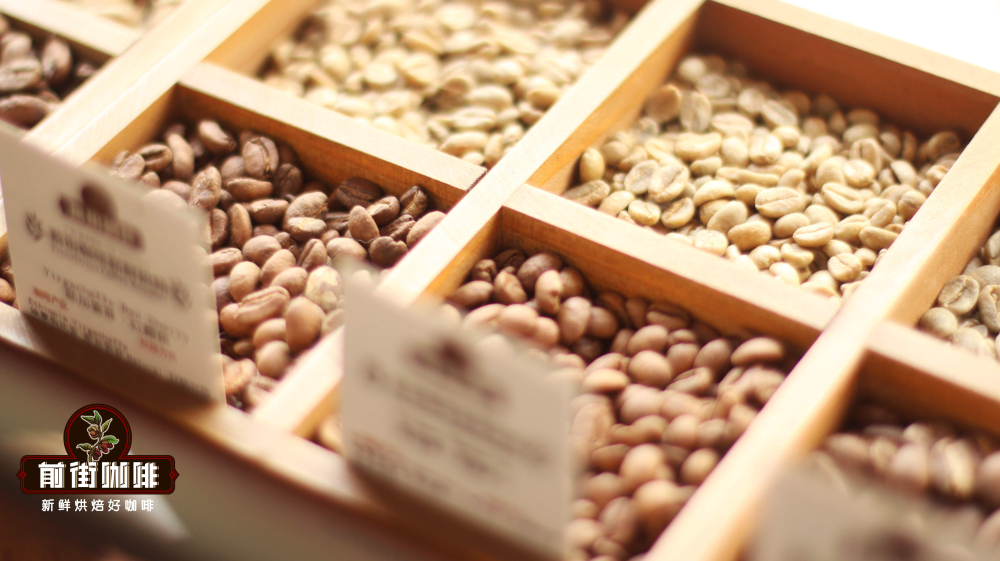
If you are a student who really likes African beans, it should be easy to notice that compared with Kenya, Ethiopian beans are generally uneven in size, with obviously lower uniformity. Whether Yirgacheffe or Sidamo, whether washed or natural, sometimes in the same batch of coffee beans you can observe clearly different roast colors and particle sizes. Nearly 2,000 coffee varieties have been recorded in Ethiopia, including 1,927 native varieties and 128 introduced foreign varieties. So if you judge only by appearance, Ethiopian coffee varieties are like a "Grand View Garden," containing everything: long, short, thin, fat...
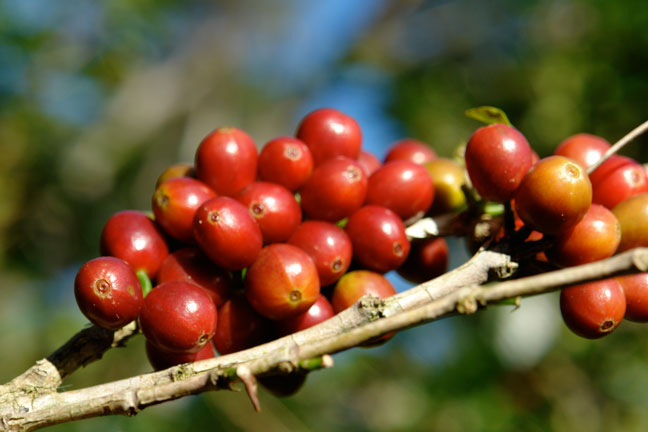
Yirgacheffe itself is a small town with a population of about 20,000. The three nearby small producing areas, Wenago, Kochere, and Gelena Abaya, are also classified under the Yirgacheffe regional category because the flavor of the coffee they produce is almost identical to that of Yirgacheffe. Whether in culture or geographical environment, Yirgacheffe is similar to nearby Sidamo, but Yirgacheffe seems even more favored with exceptional conditions. Top-quality Yirgacheffe coffee has floral aromas, bright citrus acidity, lemon-like notes, and a silky smooth mouthfeel.
[Differences between washed and natural Yirgacheffe] Tasting | What is the difference in taste between washed and natural Yirgacheffe?
Green beans: Generally, washed green beans are blue-green, while natural green beans are yellow-green.
Roasted beans: Washed Yirgacheffe has more silver skin, while natural Yirgacheffe has less silver skin.
"Front Street Natural Red Cherry Yirgacheffe" (natural light roast) — light fermented wine aroma, sweet orange, spice, honey sweetness. The natural Aricha from the Aricha processing station is rated G1, the highest grade, by ECX, and is excellent from green bean appearance, consistency, and freshness to dry aroma and flavor.
[Front Street Fruit Ding Ding Yirgacheffe] (washed light roast) — lemon, kumquat, white grape juice. The Fruit Ding Ding cooperative joined the famous Yirgacheffe Coffee Farmers Cooperative Union, and its high-quality washed Ethiopian coffee can reach the highest grade G1.
Sidamo
Sidamo grows in the southernmost Ethiopian highlands between 4,600 and 7,200 feet above sea level (Sidamo Province). It is a famous specialty coffee region in southern Ethiopia, bordering Kenya, located southeast of Jima and due south of the capital. It usually has obvious sweetness and is also relatively popular with most people. Its annual output is about 225,000 bags/60 kg. The beans are relatively small and grayish-green. In Sidamo's natural drying yards, coffee is placed in hemp nets on wooden racks, and workers take turns manually turning the coffee under the sun. Natural Sidamo is usually exported mostly as G4, while washed Sidamo, because its processing is more complete than natural, is mostly exported as G2.
Natural sun drying (African drying beds):
The coffee fruit is spread directly on concrete ground or drying racks to dry, with the aim of making the coffee dry and easy to store. It usually depends on weather changes, and the drying time is about 2-4 weeks.
Coffee usually intended for commercial use is placed on concrete ground to dry, and the coffee fruit needs to be turned promptly and continuously so that both the front and back are heated evenly, which helps drying and also prevents the bottom from contacting the ground for too long and becoming moldy.
Hand-selected fruits and coffee beans used for specialty coffee are processed by natural drying using African Beds. The coffee fruits are spread on breathable mesh beds to sunbathe, and the thickness of the layer on the racks varies according to local conditions.
[Front Street Natural Flower Leader] (natural light roast) — berries, floral aroma, grapes, rich aromas of multiple tropical fruits, obvious floral, lemon, and citrus notes, lime-like acidity, and after cooling, peach aroma.
Central and South America
Flavor characteristics: balanced, moderate acidity, and aromatic and mellow
Central and South American bean flavors: Overall, the flavors are relatively conventional. Among them, Brazilian coffee is smooth and lightly sweet, Costa Rican coffee is mild and smooth, with acidity, sweetness, and chocolate aroma blended together in an extremely balanced way. The overall flavor of Latin American coffee is known for balance, and all coffee flavors can be found in Latin American coffee. The widespread use of wet processing for green beans is also one of the characteristics of Latin American coffee. The good processing also makes its bean shape larger and more uniform than African coffee, with a lower defect rate.
[Representatives]:
Colombia
Colombia is one of the largest producers of high-quality coffee in the world, a shining pearl on the world coffee map, and a coffee land favored by God. Arabica coffee is grown on steep slopes at elevations of 800 to 1,900 meters, all manually picked and washed.
Colombian coffee has a balanced flavor and a relatively smooth mouthfeel, like a gentleman among coffees, proper and moderate. Its producing areas are extensive, with the most famous ones including Medellin, Armenia, and Manizales, conventionally collectively referred to as "MAM."
Colombia's specialty bean producing areas are mainly in the south, at elevations above 1,500 meters, including San Augustin in Huila, Popayan in Cauca, Nariño, and Tolima. The products from these places all have delicate acidity and berry aroma, along with caramel aroma and abundant sweetness.
[Cauca] is a region certified as a Colombian coffee origin. The average altitude is 1,758 m-2,100 m. 80% of Cauca is mountainous. The soil in the producing area prepares sufficient nutrients for coffee growth. The low nighttime temperatures and relatively higher altitude slow down the coffee's growth rhythm. Coffee from the Cauca producing area has excellent acidity and widely praised sweetness.
[Front Street Colombia Huila] (washed medium-dark roast) — sugarcane, clean, medium body. The coffee is processed in a traditional way: coffee cherries are manually picked, then the coffee fruit undergoes traditional washing, and the processed coffee beans are spread on raised beds to dry in the sun. We use a medium roast for this bean. [Flavor] has mild plum acidity and balanced nuts, with a caramel aftertaste and a clean mouthfeel.
El Salvador
El Salvador's coffee quality is also extremely high, and its flavor is unique: strong balance, fresh and lively, mild mouthfeel, sweet and pleasant, one might call it "pure and beautiful natural breath." This is because of the fertile soil, suitable altitude, good climate, cultivation techniques passed down through generations, and excellent pedigree varieties.
[El Salvador Pacamara] (washed medium roast) — nutty chocolate, passion fruit, cream, strawberry. The national average altitude is relatively high, and such a geographical environment is very favorable for coffee growth. Farmers use traditional cultivation methods: almost 100% shade-grown. The Pacamara variety is an artificially bred variety of Pacas and Maragogipe. Pacamara is a rare excellent variety under artificial selection.
Maragogype elephant bean: a mutant of Typica, first discovered in Brazil in 1870. The fruit is very large and long, somewhat twisted, and the plant has long internodes and large leaves. Yield is relatively low.
Pacas: a Bourbon variety discovered in El Salvador. In 1935, Salvadoran coffee farmer "Don Alberto Pacas" selected high-yielding San Ramon Bourbon varieties and moved them to his farm for planting. In 1956, his coffee trees bore more fruit than coffee trees of the same type. University of Florida professor "Dr. William Cogwill" determined that this was a genetic mutation of Bourbon and named it "Pacas." Pacas has high yield and good quality, and is very popular in Central America.
The above content is compiled by CoffeeHunters, a coffee news website.


