







How does french coffee brewing differ between press and siphon?
French press and siphon brewers both use immersion extraction, yet the cup that results differs in body, cleanliness, and flavor layers. The French press is a cylindrical carafe with a plunger and metal filter: hot water soaks the grounds, then the plunger separates them. The siphon pushes hot water upward by thermal expansion and extracts at a constant temperature.
Operation separates them clearly. The French press needs correct beans and grind size, then a few minutes of steeping, much like brewing tea. The siphon involves many steps plus cleanup before and after brewing, which discourages beginners. Both count as french coffee immersion methods, so the choice usually comes down to the taste profile and the routine each drinker prefers.
Front Street Coffee has introduced many coffee brewing methods in its daily sharing. Among them, the French press is known for being easy to operate, while the siphon brewer makes many beginners hesitate because of its complicated steps and strong sense of ritual. Although both are classified as immersion extraction, the coffee they actually brew differs noticeably in body, cleanliness, and flavor layers. Based on Front Street's practical experience, this article first explains the structure, usage, and parameter control of the French press, then explains how the siphon brewer relies on thermal expansion and contraction to push hot water upward and extracts through constant-temperature immersion, and finally compares the two in terms of taste and suitable scenarios to help coffee lovers make a choice according to their own needs.
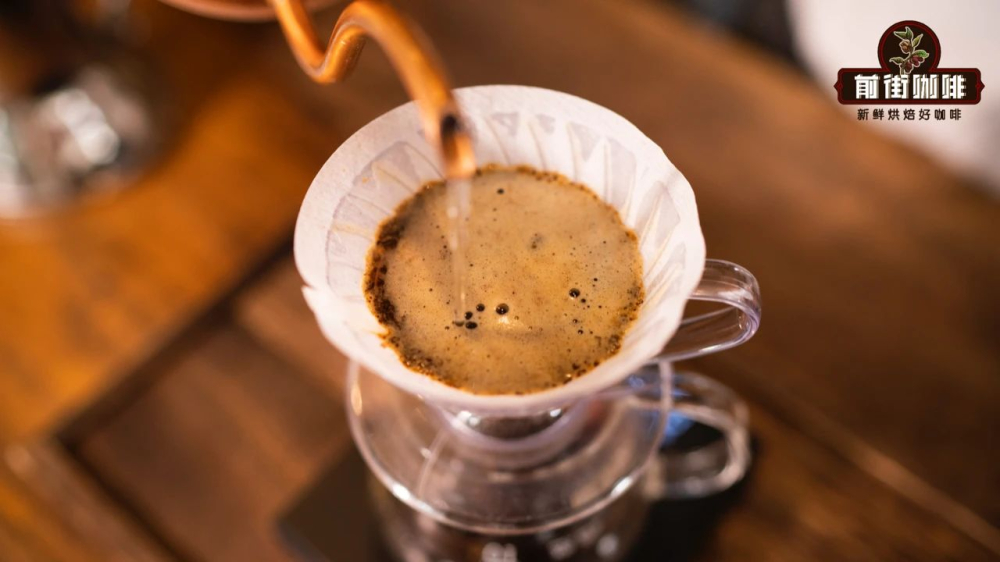
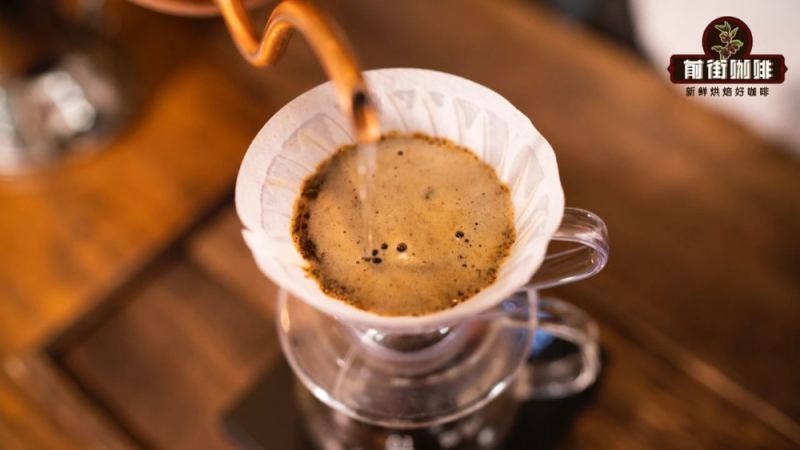
When it comes to coffee brewing methods, Front Street has already written about hundreds of devices and approaches, some mainstream, some labor-saving, some niche, and some emphasizing ritual. All kinds are covered.
If ranked by operating steps, Front Street thinks the French press can be considered the most worry-free. As long as you choose the right beans and grind size, you can get a cup of rich black coffee in a few minutes, just like brewing tea. By contrast, when using a siphon brewer to make coffee, Front Street finds every operation more troublesome than with other devices. Not only are there many steps, but cleanup before and after brewing is also a hassle, which directly discourages many friends who were thinking of buying one. So is the difference in taste between these two methods actually obvious? Below, Front Street will make a practical comparison.
What is a French Press? How is it used?
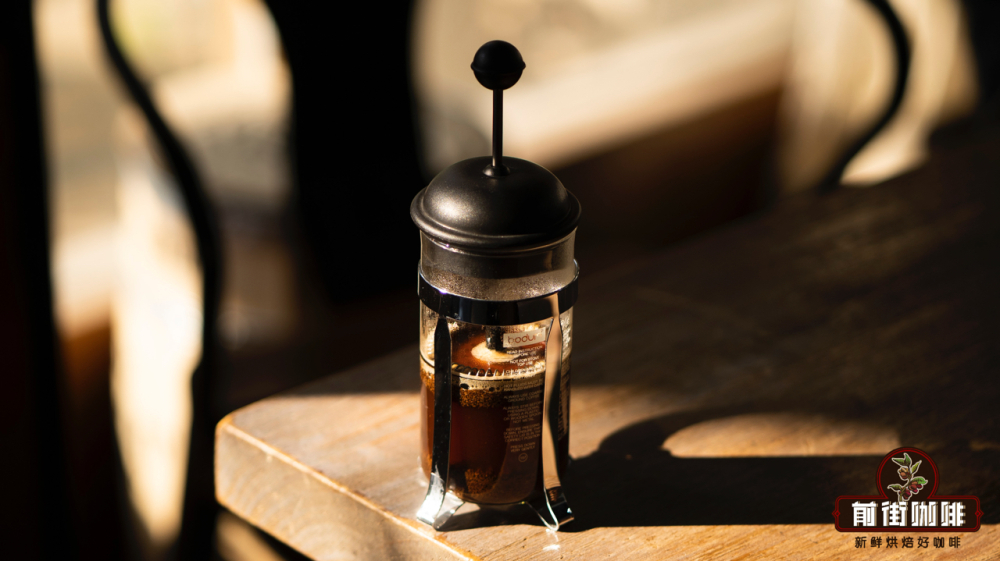
It originated in France. Structurally, it is a cylindrical carafe plus a lid, with a metal filter rod in the center of the lid that can be pressed up and down to separate the coffee grounds from the coffee liquid, thereby controlling the degree of extraction.
The working logic of the French press is very similar to brewing tea. Hot water is used to soak the coffee grounds for a period of time, and then the plunger is pressed down to filter out the coffee liquid. Specifically, hot water is poured all at once into the ground coffee so that the water fully contacts the powder, waits for flavor substances to dissolve out, and finally the coffee grounds are separated from the liquid to obtain a cup of black coffee. The biggest advantage of immersion devices is that they do not require a high level of brewing skill or any special accessories, and they are easier to get started with than pour-over methods, so they are also called "lazy person's coffee devices." Because the entire process remains in an immersion state, coffee made with a French press tends to be fuller-bodied, and the flavor is relatively balanced.
Compared with pour-over coffee, the French press's "all-at-once pouring" method is much simpler, which also means there are only 4 variables that can affect the result: coffee-to-water ratio, grind size, water temperature, and immersion time. It is somewhat similar to cupping, with high extraction stability, and the coffee's own flavors are also easier to restore.
Because the French press pours all the water in at once, the temperature gradually decreases over time during extraction, so the water temperature should be slightly higher than for pour-over. If brewing light-to-medium roasted coffee with acidic notes, 92–94°C can be used; for medium-dark roasted coffee with bitter notes, 89–90°C is recommended. In autumn and winter when room temperature is low, you can first rinse the French press with boiling water to preheat it, reducing heat loss during extraction.
Time is a variable that can be freely adjusted with the French press. Without the factor of manual stirring, immersion duration becomes one of the keys affecting extraction yield. Under the same conditions, usually the longer the immersion, the stronger the taste, but it is also more likely to over-extract, producing bitterness, astringency, and woody notes. Paired with a coarse grind, Front Street recommends soaking light-to-medium roasted coffee for about 4 minutes. Medium-dark roasted coffee more easily extracts bitterness, so soaking for 3 minutes 30 seconds is enough. This time can both fully release the positive flavors and avoid the bitter, astringent, and miscellaneous off-flavors caused by soaking too long.
What is the principle behind brewing coffee with a siphon?
The English name of the siphon brewer is "SIPHON," so it is also called a siphon pot. It uses the thermal expansion and contraction caused by steam after water is heated to push hot water from the lower pot up to the upper chamber to mix with coffee grounds. After the temperature drops, the water flows back down through the vacuum tube into the lower pot, thereby obtaining coffee liquid.
Many friends may think that the extraction method of siphon coffee is "siphon-style," but this is actually incorrect~ because the siphon brewer only borrows the siphon principle to draw hot water up to the upper pot, and this action is not used to extract coffee.
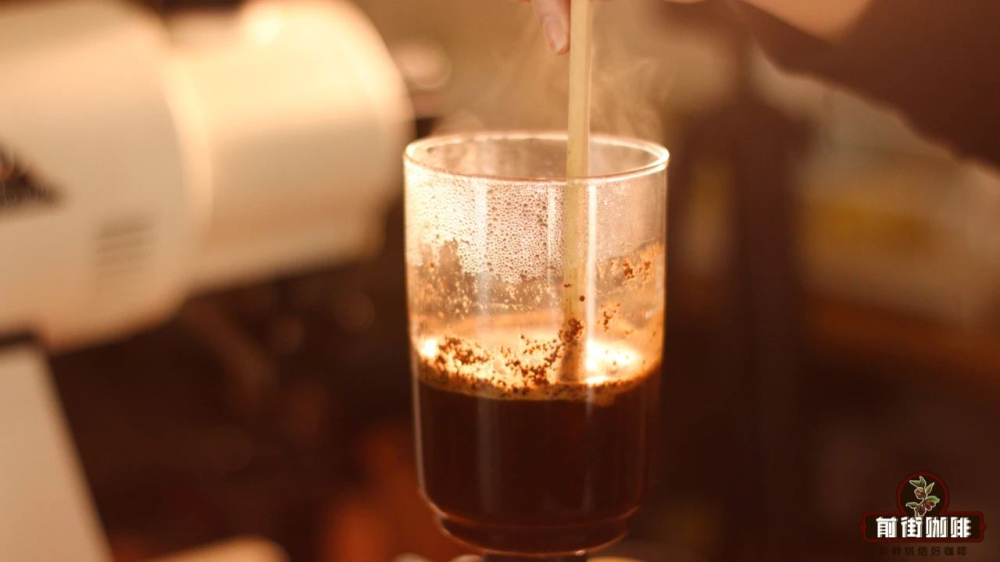
After the hot water is drawn up to the upper pot, coffee grounds are added and soaking begins, which is when the extraction stage formally starts. So accurately speaking, the extraction method of siphon coffee should be classified as "immersion." Through the soaking of water and coffee grounds, flavor substances in the powder are extracted.
Because immersion extraction means all the hot water contacts the coffee grounds, once the concentration of substances in the water reaches a certain level, the dissolution rate slows down and no longer excessively draws out flavor substances from the coffee, which is what is commonly called the saturation state. Therefore, siphon coffee has a relatively balanced taste, a round mouthfeel, and solid aroma, but compared with pour-over coffee, its flavors are not too bold or jumpy.
It is worth mentioning that, compared with conventional immersion extraction, the immersion style of the siphon brewer is somewhat different. Because of the siphon principle, the hot water is continuously heated during extraction, and the lower pot has enough air pressure to keep the hot water in the upper pot the whole time, so the immersion extraction of the siphon brewer is completely at constant temperature, while conventional immersion and drip extraction continuously lose heat, with water temperature gradually decreasing over time. This allows the siphon brewer to achieve a higher extraction yield, and with stirring, extraction can be completed in a shorter time.
In addition, the main filter tool used by the siphon brewer is a flannel filter cloth. Although filter paper can also be used, because it cannot fully cover the area, it cannot form a "sealed" space like pour-over. Fine particles, oils, and other substances will fall through the gaps into the lower pot and mix into the coffee liquid, so siphon coffee looks relatively cloudy. Although oils and fine particles make the coffee liquid less clean, they can bring a fuller mouthfeel. That is why siphon coffee tastes fuller-bodied.
The above content is compiled by CoffeeHunters, a coffee news website.


