







How do you brew Jamaican coffee with a pour-over?
Brewing authentic Jamaican Blue Mountain coffee at home starts with recognizing the bean itself: check the varietal character, the regional grading and the roast level before touching the grinder. From there, water temperature, grind size and pouring rhythm decide the cup. Front Street Coffee uses Clifton Farm Jamaican Blue Mountain to show the full pour-over method step by step.
The core of the method is a three-stage pour with a controlled coffee-to-water ratio. Blue Mountain flavor coffee is not the same product as authentic Blue Mountain, so verify the label first. Once the bean is confirmed, adjusting grind to the dripper and keeping the pour steady lets a balanced, full-bodied cup be reproduced at home rather than left to chance.
To brew an authentic Jamaican Blue Mountain coffee at home, having the beans alone is not enough. The key lies in understanding this bean's varietal characteristics and regional grading, then pairing them with the right water temperature, grind size, and pouring rhythm. This article draws on the hands-on experience of Front Street Coffee to first help you recognize the difference between authentic Blue Mountain and Blue Mountain flavor coffee, then gradually breaks down the powder-to-water ratio, water temperature selection, dripper pairing, and three-stage pouring technique for pour-over Blue Mountain coffee, so you can consistently reproduce a balanced, full-bodied cup of Blue Mountain coffee at home.
Walking into a Front Street Coffee shop and looking up at the blackboard, you'll notice that besides a few espresso drinks, the left side is filled with the names of various coffee beans—Panama Geisha, Jamaican Blue Mountain, Kenya, Guatemala, Ethiopia Yirgacheffe, and so on. If you look more carefully, you'll also see that beside the bottles holding coffee beans, quite a few pour-over tools are neatly displayed. These tools are actually the right-hand helpers that Front Street Coffee baristas use every day in production, and every cup of coffee Front Street produces relies on them.
Today, more and more people are becoming fascinated by coffee's rich flavors and are adding pour-over equipment at home to enjoy the pleasure of brewing it themselves. But Front Street wants to remind everyone that pour-over coffee looks simple, yet it is quite particular when you actually do it. Just controlling the flow rate, extraction time, and water temperature requires extra care. That said, brewing pour-over at home is originally about enjoying the process and the pleasure coffee brings, so there's no need to obsess over every parameter the way a professional coffee shop does—being able to brew a delicious cup of coffee is what matters most.
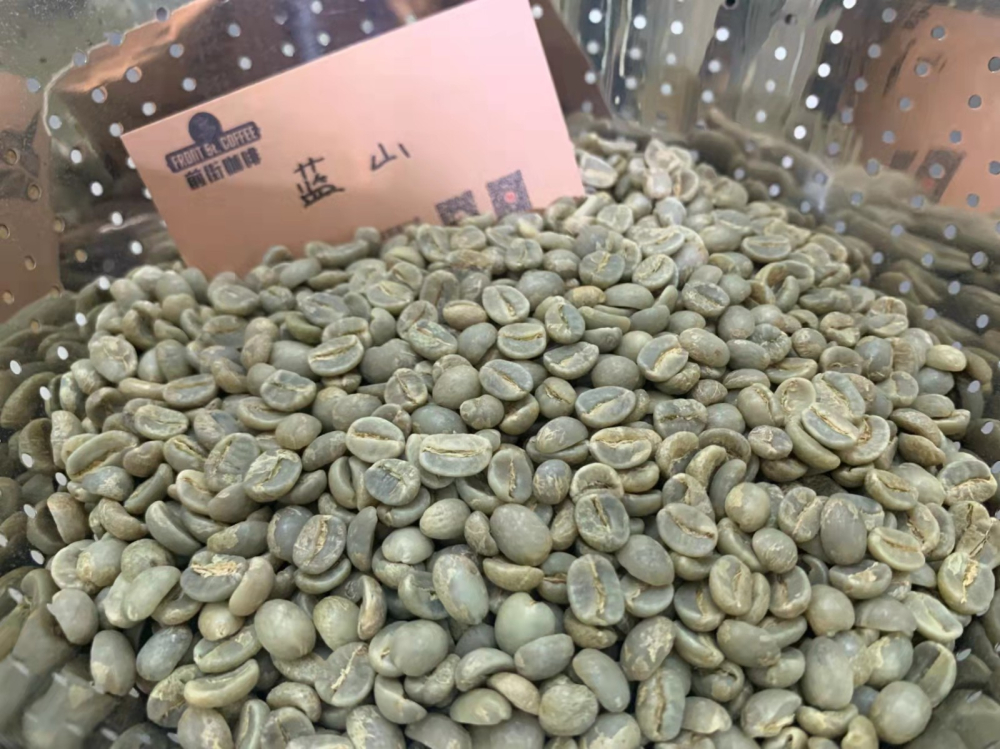
So today Front Street will talk with everyone about how to easily brew a delicious cup of pour-over coffee at home. Front Street chose the recently listed Clifton Farm Jamaican Blue Mountain for the demonstration. At Front Street Coffee, before brewing any bean as pour-over, you must first master its basic information, such as the terrain of the producing region, altitude, processing method, and roast level.
Next, let's follow Front Street to learn about the basic situation of this Jamaican Blue Mountain coffee bean. The variety of authentic Jamaican Blue Mountain coffee is Typica, one of the oldest varieties in the world. Its flavor performance is excellent, but its disease resistance is relatively weak, leading to limited production, which is also one of the reasons the price of Jamaican Blue Mountain coffee remains high. Front Street advises everyone to do their homework in advance when buying Jamaican coffee, otherwise it is easy to buy counterfeit Blue Mountain coffee.
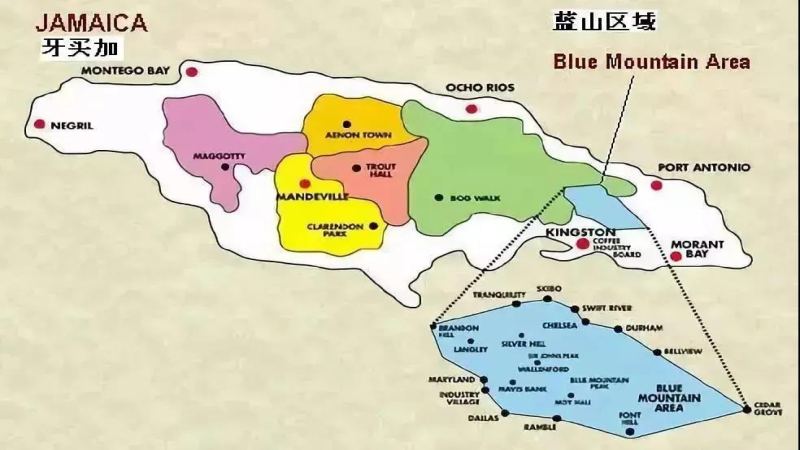
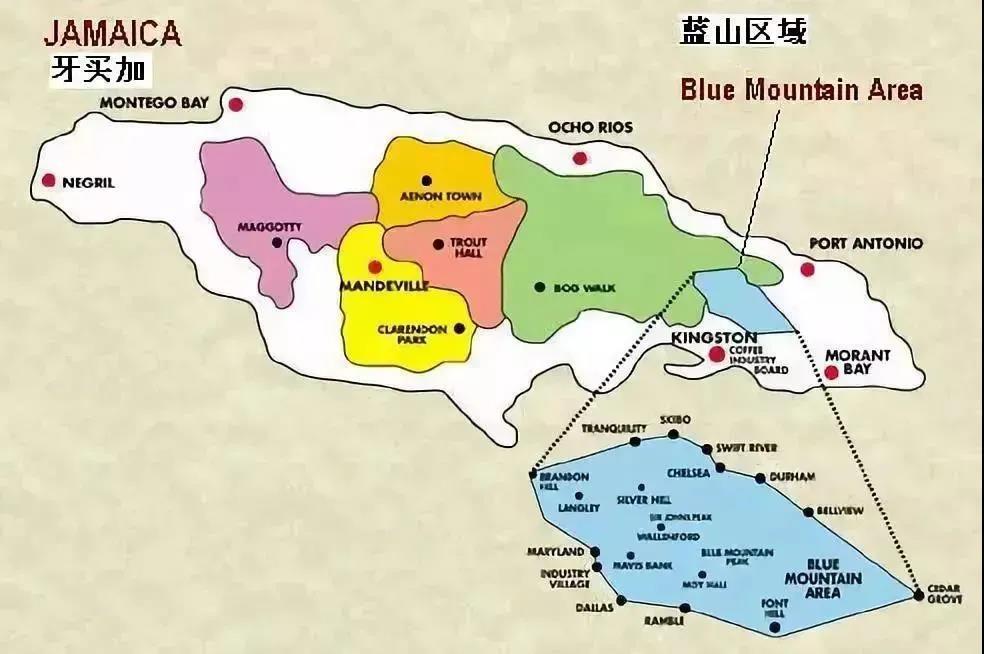
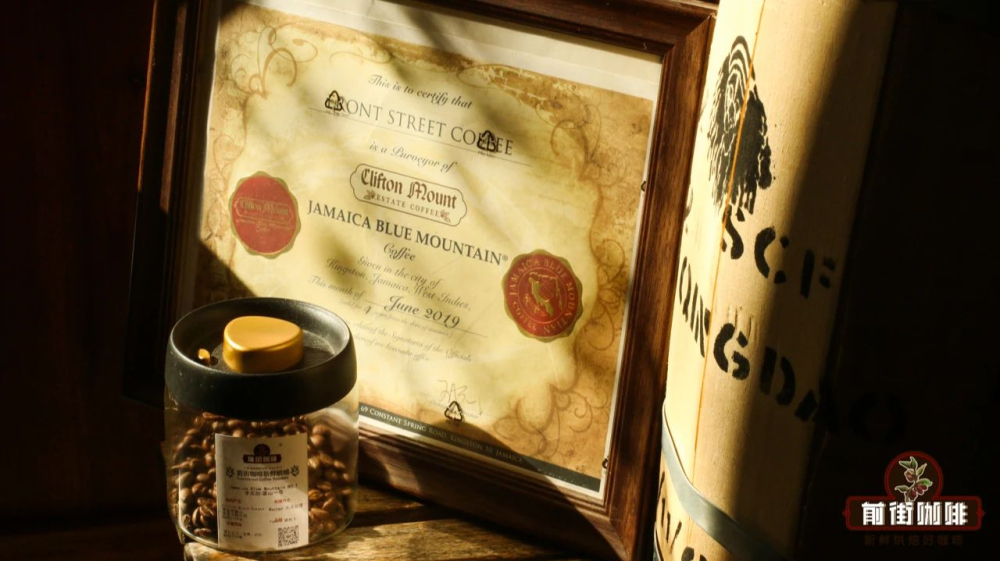
Usually, what Front Street calls authentic Blue Mountain refers to coffee grown at altitudes between 1,000 and 1,700 meters. Only coffee grown within this altitude range can be called authentic Blue Mountain coffee. Coffee grown within the same four administrative districts but at altitudes of only 500 to 1,000 meters is downgraded to Jamaican High Mountain coffee. Coffee below 500 meters belongs to the even lower grade Jamaican Supreme coffee. Coffee grown outside this regional range cannot be labeled with the Blue Mountain name, and authentic Blue Mountain barrel packaging will be printed with the tropical rainforest frog logo and a certificate issued by the Jamaica Coffee Board.
The commonly seen "Blue Mountain flavor coffee" on the market requires special attention, as it differs greatly from true Blue Mountain coffee. Generally speaking, authentic Blue Mountain coffee is 100% Blue Mountain beans, while so-called Blue Mountain blend coffee usually contains only 60% Blue Mountain coffee beans. As for what people often call Blue Mountain flavor coffee, it actually contains no Blue Mountain coffee beans at all; the roasted beans are simply made to carry a Blue Mountain-like flavor through other means, and those beans do not come from the Jamaican Blue Mountain range. Therefore, Front Street advises everyone to clearly check this basic information when buying Blue Mountain coffee.
After understanding the basics of Blue Mountain coffee, you can begin preparing for pour-over. According to Front Street's understanding, professional specialty coffee shops usually test in advance the most suitable grind size, water temperature, and powder-to-water ratio for each coffee, then determine the pouring method and dripper choice before formally entering the brewing stage.
Taking Front Street Coffee's brewing of this Blue Mountain coffee as an example, the powder-to-water ratio used is 1:13, and the grind size has a 60% passing rate on a No. 20 standard sieve. Since Front Street Coffee's Blue Mountain coffee is a medium-dark roast, in order to highlight Blue Mountain coffee's balanced, full-bodied, and gently fruity acidity, the water temperature should be controlled at 88 degrees. As for the dripper, priority should be given to slower-flow tools such as the KONO dripper, Kalita trapezoidal dripper, or cloth filter. This time Front Street Coffee chose the KONO dripper.
You may not be familiar with the above pour-over parameters and water temperature, but there is actually no need to worry too much about these figures. For example, Front Street suggests that when buying coffee beans, you can directly ask the merchant, since they usually provide this information. If the coffee was purchased from Front Street, you can go to a Front Street Coffee shop and ask the baristas; if the distance is too far and it is inconvenient to come over, you can also follow our official account to get the relevant pour-over data.
When brewing Blue Mountain coffee, Front Street generally uses the three-stage pouring method. This is a very simple pour-over method, very suitable for everyone to practice at home and easily brew a delicious cup of coffee. First, prepare all the needed tools, then follow Front Street step by step. The first step is to bloom with 30 grams of water. When pouring, do not use too strong a stream, otherwise the coffee grounds will be scattered and the blooming effect will be lost.
The process of pouring 30 grams of water takes about 10 seconds, then let it sit for 20 seconds. After the total time reaches 30 seconds, you can move on to the second step of brewing Blue Mountain coffee. Then, using a small stream, slowly pour 100 grams of water in circles from the center outward. At this point the total time is about one minute. After the coffee bed drops, proceed to the next pour. In the third step, continue pouring. When the total water amount reaches 195 grams and the time is about two minutes, you can stop pouring. Next, wait for all the coffee liquid in the dripper to flow into the server, then remove the dripper. But it is not over yet. The final step is to shake the server containing the coffee liquid evenly so the concentration is consistent. Then you can drink a delicious cup of Blue Mountain coffee.
A delicious cup of true Blue Mountain coffee should taste balanced and rich, without any one flavor standing out particularly or being clearly missing. This is also difficult for other coffee beans to match, and it is the most crucial point for identifying Blue Mountain coffee. The first time you brew Blue Mountain coffee as pour-over, the taste may differ from what you expect, but Front Street believes there is no need to rush. You can review which step went wrong—whether the flow rate during pouring was not well controlled, whether the extraction time was too long, or whether the water temperature was too high or too low. These details all affect the final flavor of Blue Mountain coffee. Therefore, Front Street suggests that when brewing this Blue Mountain coffee, practice the pour-over flow rate more first. Once the water flow control is stable, the success rate of brewing a delicious cup of Blue Mountain coffee will greatly increase.
For professional coffee knowledge exchange and more coffee bean information, please follow Coffee Workshop (WeChat public account: cafe_style)
For more specialty coffee beans, please add the private WeChat of Front Street Coffee: kaixinguoguo0925
The above content is compiled by CoffeeHunters, a coffee news website.


