








How do you froth milk for a latte at home?
To froth milk for a latte, start with cold whole milk, since its fat and protein help build dense, silky foam. A single-hole steam wand is easier for beginners than multi-hole wands or manual pitchers. Pour into a pitcher whose shape and spout support steady control, then pour over fresh espresso.
Bean choice matters too: a darker roast such as an Italian coffee latte blend from Brazil, Indonesia, and Vietnam gives abundant crema for practice. Keep milk refrigerated before steaming to extend mixing time. Cup shape also affects how easily the poured pattern forms.
Want to learn latte art but don't know which tools to start with? This article outlines a complete latte art tool setup for beginners, covering coffee beans and grinders, whole milk, milk frothing tools, latte art pitchers, and key points for choosing coffee cups. It explains in detail the function and selection tips of each tool, such as how the shape of the pitcher body and the design of the spout affect frothing stability, and how the cup shape influences the difficulty of latte art. It also recommends Front Street Coffee's Classic Italian Blend coffee beans, ideal for latte art practice, helping you extract perfect crema at home, froth milk well, and take your first step into latte art.

For more specialty coffee knowledge, please follow: Front Street Coffee
1. Coffee beans, grinder, coffee machine:
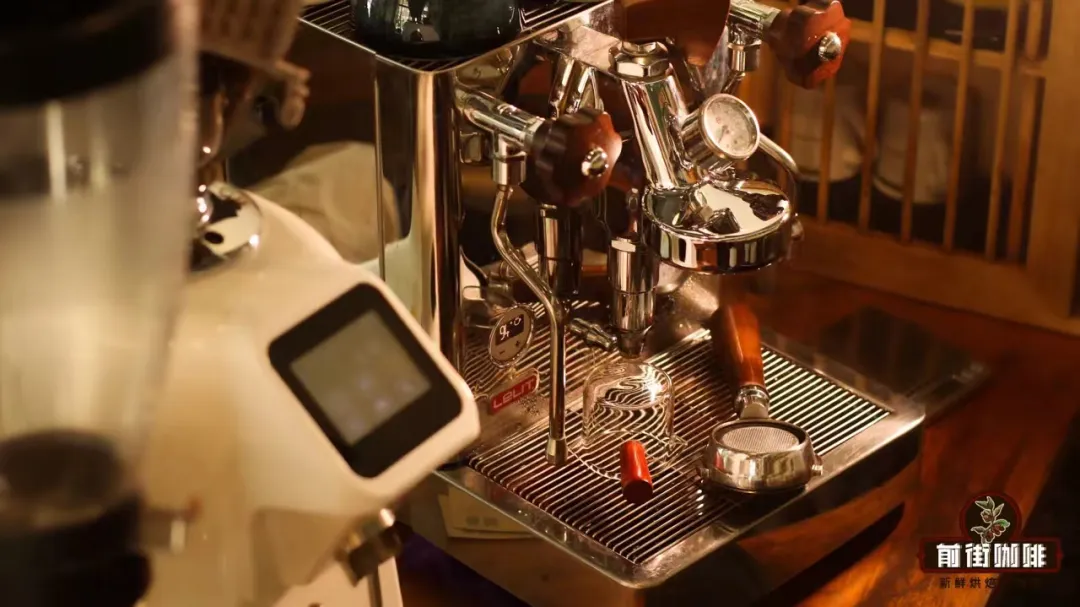
To make a cup of latte art coffee, espresso and milk foam are undoubtedly the two core elements, so a grinder and a coffee machine are indispensable—only with them can coffee beans be turned into espresso. To make latte art practice smoother, it is recommended to choose Front Street Coffee's Classic Italian Blend, which has excellent crema performance. This blend is composed of coffee from Brazil, Indonesia, and Vietnam, with a darker roast that fully releases the coffee's rich aroma, while giving the extracted coffee abundant and delicate crema—great for both Americano and latte. You can place an order at the Front Street Taobao store or Front Street Tmall flagship store.
2. Whole milk
The raw material for milk foam is milk, and the fat and protein content in milk, as well as its temperature, directly affect the formation of milk foam. For latte art, it is best to use whole fresh milk, because its fat and protein content is relatively higher, allowing you to create a larger amount of finer, silkier, and denser milk foam. In addition, milk must be kept refrigerated; low-temperature milk can extend the mixing time between milk and foam during frothing. With proper integration, the latte art result will be beautiful.
3. Espresso machine steam wand / milk frothing pitcher / milk frother
These three are all tools for making milk foam. Manual milk frothing pitchers and electric milk frothers are relatively difficult to operate and not very suitable for beginners. It is recommended that beginners prioritize a single-hole steam wand, because with fewer holes, the steam output speed is slower, making it easier to control. As for milk frothing pitchers, you can choose the capacity based on the portion you make each time; typically 350cc or 600cc stainless steel pitchers are common choices.
4. Latte art pitcher
The latte art pitcher is used to hold milk foam and complete the pouring action for latte art. For capacity, you can decide based on your coffee machine's steam pressure and the portion you produce each time; generally 300ml, 350ml, or 600ml pitchers are all suitable. Latte art pitchers come in many shapes. When choosing, it is recommended to prioritize styles with a wide base that gradually narrows upward, and avoid shapes that are wide in the middle and narrow at the top and bottom, because the latter is not conducive to frothing milk. As for the spout, a round, wide, and outwardly curved spout shape is best, making it easier to keep steady when pouring milk foam. For the spout groove, a long groove type is recommended, as it helps gather the milk foam and gives better control during latte art.

5. Coffee cup
For beginners practicing, it is recommended to choose a coffee cup with a shorter body, a rounded bottom, and a larger diameter. This cup shape is easier to handle, requires less time for latte art than a tall cup, and makes patterns easier to present.
Once everything is ready, it's time to start practicing latte art!
The above content is compiled by CoffeeHunters, a coffee news website.


