







Which Coffee Producing Countries Lead Global Output?
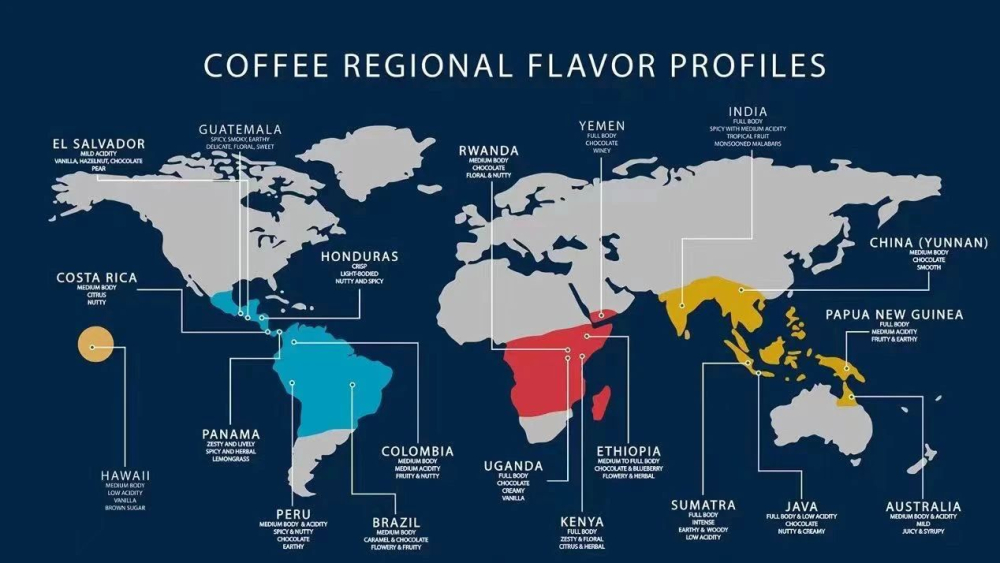
The coffee tree grows between the Tropic of Cancer and the Tropic of Capricorn, a band known as the Coffee Belt, but production is not evenly spread. South America accounts for 43 percent of global supply, Asia 32 percent, Central America 13 percent and Africa 12 percent. The top ten coffee producing countries and their bean characteristics follow.
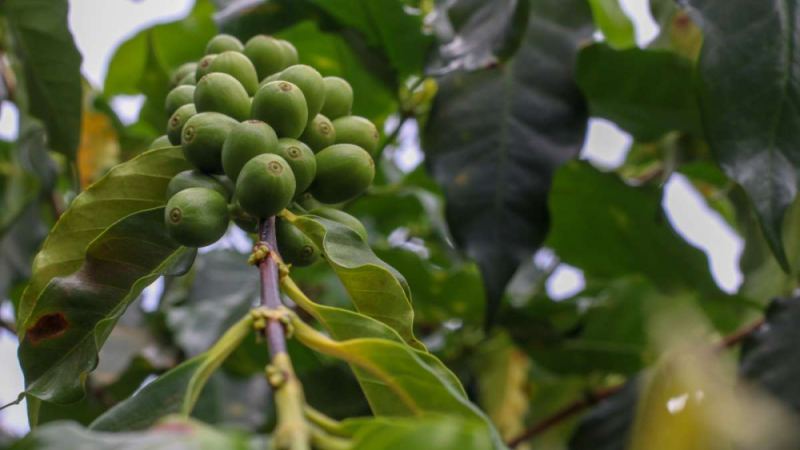
Good yields need more than latitude. Coffee is an evergreen shrub that dislikes extreme heat, humidity and all-day sun, so most farms sit on well-drained hillsides with moderate temperatures and shorter sunlight hours. Arabica dominates commercial output at roughly 70 percent, ahead of Robusta and Liberica.
The coffee tree is an evergreen shrub that thrives in subtropical and tropical regions, primarily distributed between the Tropic of Cancer and the Tropic of Capricorn, an area also known as the Coffee Belt. However, not all coffee seedlings within the Coffee Belt can grow successfully; other environmental conditions must also be considered. Although the coffee tree is a tropical plant, it cannot tolerate extreme heat and humidity, nor can it withstand all-day sunlight. Therefore, most are planted on well-drained hillsides, where temperatures are moderate and sunlight hours are shorter than on flat land. It is precisely these conditions that explain why Africa, despite having most of its territory within the Coffee Belt, is not the highest-producing region. Currently, Asia accounts for 32% of global production, Africa 12%, Central America 13%, and South America 43%. Next, Front Street Coffee will introduce the top ten coffee-producing countries and the characteristics of their coffee beans one by one.
For more specialty coffee knowledge, please follow our WeChat official account: Front Street Coffee (FrontStreet Coffee)
The coffee tree is an evergreen shrub that thrives in subtropical and tropical regions, distributed between the Tropic of Cancer and the Tropic of Capricorn, an area also known as the Coffee Belt or Coffee Zone. However, it is not the case that any coffee seedling planted within the Coffee Belt will grow; other environmental factors must also be met. Although the coffee tree is a tropical plant, it cannot tolerate extreme heat and humidity, nor can it withstand all-day sunlight. Therefore, coffee trees are mostly planted on well-drained hillsides, where, in addition to suitable temperatures, sunlight hours are relatively shorter than on flat land. Based on these conditions, although most of Africa's area lies within the Coffee Belt, it is not the highest-producing region. Currently, Asia accounts for 32% of global production, Africa 12%, Central America 13%, and South America 43%.
Due to differences in terrain and microclimates within the Coffee Belt, the varieties suitable for cultivation also vary. Currently, the coffee varieties widely used commercially are Arabica, Robusta, and Liberica. Among them, Arabica has the best flavor and accounts for the largest share of production (70%). Therefore, 9 of the top ten highest-producing countries primarily grow Arabica. Below, Front Street Coffee introduces the coffee bean characteristics of these coffee-producing countries one by one.
Brazilian Coffee Beans
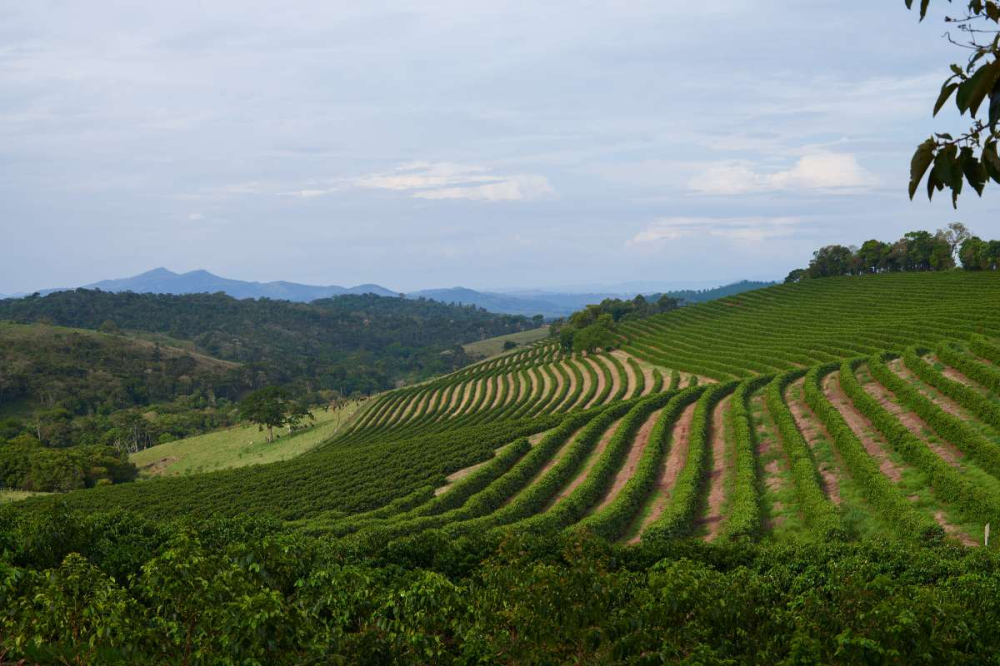
Brazil is the largest coffee-producing country. Its main producing regions include Minas Gerais, Sao Paulo, Bahia, and Espirito Santo, which together account for 90% of the nation's exports. The commonly seen Santos and Mogiana come from Sao Paulo. Within Minas Gerais, Cerrado and Sul de Minas, due to their higher altitudes, mostly produce specialty Brazilian coffee beans. Cerrado is located west of Minas Gerais, a flat plateau with an altitude of 750m–1200m.
Sul de Minas is a hilly area with an altitude of 700m–1200m and is Brazil's earliest coffee-producing region. Due to rising labor costs, mechanical harvesting is now mostly used, and it is also the earliest commercialized coffee region. We can see many large exporters established here. The Bahia producing region in northern Brazil mainly produces washed Brazilian coffee, while the Espirito Santo producing region near the coast is the main export area for Brazilian Robusta varieties.
Brazilian Arabica beans are mainly Red Bourbon, with flavors of chocolate, peanut, and cream, and a balanced, full-bodied taste. If friends want to try the flavor of Brazilian beans, you can choose Front Street's Brazilian everyday beans. These come from the Cerrado producing region, use semi-washed processing, and Front Street uses a medium-dark roast level, highlighting the bean's nutty creamy aroma and caramel chocolate notes.
Vietnamese Coffee Beans
Vietnam is the second-largest coffee-producing country. Because its altitude is generally below 800 meters, it primarily grows Robusta. Front Street also imports Vietnamese Robusta coffee beans, but they are not used for single-origin beans; rather, they serve as an ingredient in blended bean recipes. This is because Robusta's inherent flavor is not particularly pleasant—usually resembling bitter barley tea—but it has a relatively rich and full-bodied mouthfeel. Therefore, adding a small amount of Robusta to a blend can enhance the overall body.
Front Street's commercial espresso blend is made from 60% Brazilian Arabica, 30% Colombian Arabica, and 10% Vietnamese Robusta. The extracted espresso has a rich crema and a very intense coffee flavor.
Colombian Coffee Beans
Colombia is the third-largest coffee-producing country, but its production is far lower than the previous two. All of Colombia grows Arabica coffee beans, and the main varieties currently cultivated are Caturra, Catuai, and Castillo.
Colombian coffee beans are divided into two types in terms of flavor expression: one is the traditional washed coffee flavor, and the other is the new-style anaerobic processed coffee flavor.
Front Street selected washed coffee beans from the Huila producing region as Colombia's basic everyday beans. Coffee in the Huila region is grown at altitudes of 1500–1800 meters, and the cultivated variety is Caturra. Its flavor characteristics are nuts, dark chocolate, caramel, and soft fruit acidity.
Indonesian Coffee Beans
Indonesia is the fourth-largest coffee-producing country, mainly producing Robusta beans, but its Arabica beans are also very famous. Arabica beans produced in North Sumatra are called Mandheling and have a very full-bodied taste. Among them, the Golden Mandheling from the Pawani company is the most famous.
PWN is Indonesia's largest green bean buyer. Currently, the Golden Mandheling series mainly comes from the Gayo Mountain producing region in Aceh Province. After purchasing green coffee beans, they must undergo three rounds of manual hand-sorting to select beans of consistent, plump appearance. Only those with a defect rate below 3% qualify as Golden Mandheling, and only those produced by this company are truly Golden Mandheling. Golden Mandheling coffee has a rich, mellow taste with caramel and dark chocolate flavors.
Ethiopian Coffee Beans
Ethiopia is the birthplace of Arabica coffee beans. In Ethiopia, many coffee trees are wild and native, so the production model here is very different from that of the Americas. In recent years, many excellent small producing regions have emerged in Ethiopia, such as Yirgacheffe, Guji, Uraga, and more. Because there are many types of coffee trees here with complex genetic diversity, the varieties are generally collectively referred to as heirloom varieties.
The most famous coffee bean is undoubtedly Yirgacheffe. Front Street also uses washed Yirgacheffe coffee beans as the representative of Ethiopia's everyday beans. The flavor characteristics of washed Yirgacheffe are jasmine floral aroma, citrus, honey, and green tea.
Indian Coffee Beans
India is also a major coffee bean-producing country, mainly producing Robusta. Karnataka, Kerala, and Tamil Nadu are India's main coffee-producing regions, together accounting for over 90% of the national coffee production. Today, two-thirds of Indian coffee is Robusta, with Arabica accounting for only one-third. Coffee is mainly distributed in Karnataka in the southwest, where both types are grown, accounting for 50% of India's total coffee production; Kerala in the south focuses on Robusta, accounting for 30% of total production; Tamil Nadu in the southeast grows both, accounting for 10% of India's total coffee production; the remaining 10% is scattered across emerging northern producing regions.
Among the more famous coffee beans is monsoon-processed coffee. Monsoon coffee must be made from sun-dried beans. All factories processing monsoon coffee face west to catch the salty, humid monsoon winds blowing from the southwest sea. The coffee beans are spread out flat in the monsoon yard with all windows open. After monsoon exposure reaches a certain level, the beans are bagged. However, because the beans expand considerably during the process, the bags cannot be filled too full, and the coffee bags cannot be stacked too densely, lest lack of ventilation cause mold and spoilage. The beans must also be periodically poured out and the burlap bags changed to prevent mold growth—a rather time-consuming and labor-intensive process.
The monsoon exposure period lasts about twelve to sixteen weeks. After maturation, the beans undergo fumigation to repel weevils, and finally manual screening to remove failed beans that have not turned golden yellow. After three to four months of monsoon processing, the green coffee beans expand to one or two times their size, and their weight and density decrease.
Honduran Coffee Beans
Honduran coffee can be divided into six major producing regions, mainly located in the western and southern areas: Copan, Opalaca, Montecillos, Comayagua, Agalta Tropical, and El Paraiso. The average cultivation altitude in these specialty-producing regions is over 1,100 meters. Of the coffee grown in these regions, 69% is HG grade, 12% is SHG, and 19% is CS.
Honduran coffee has a rich, full-bodied taste, neither astringent nor sour, with high body and aroma, and quite a distinctive character. Honduran coffee can bring out multi-layered flavors depending on the roast level. If we were to name Honduras' most famous coffee bean, it would certainly be Sherry coffee beans, produced at the Moka estate in Marcala, using refined washed whiskey barrel fermentation processing. It has flavors of vanilla cream, sherry wine, and chocolate.
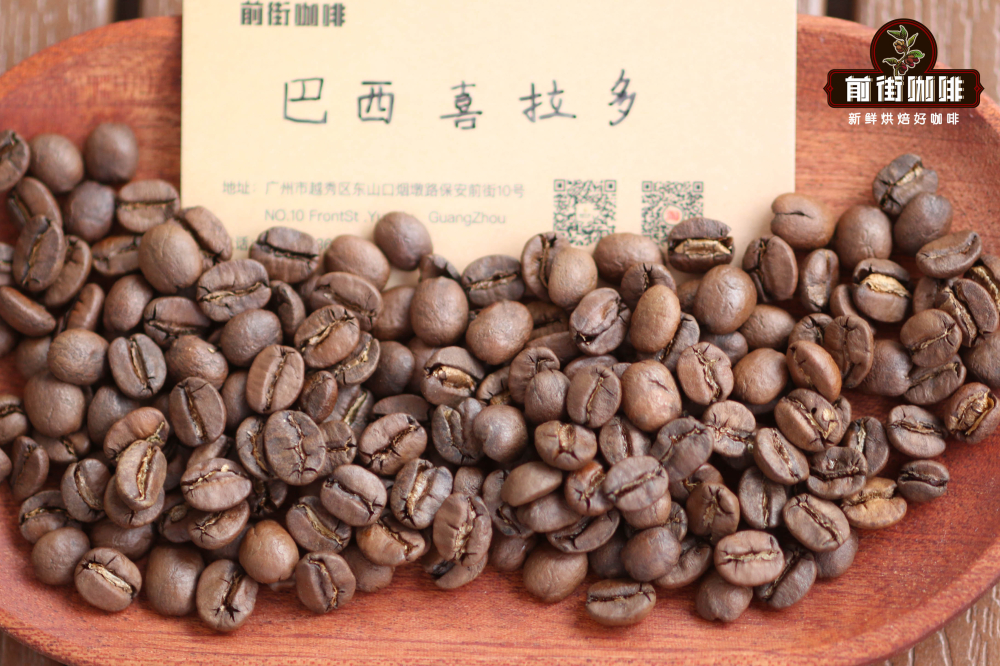
Kenyan Coffee Beans
Kenyan coffee is famous for its bright acidity. In the 1930s, Kenya selected SL28 and SL34 through the Scott Laboratories screening and promoted them nationwide. Kenyan coffee beans are classified by size, with AA being the best, followed by AB. The advantage of size classification is that after variety selection, larger coffee beans represent plumpness and quality, and are also very roast-friendly. This ensures consistency in Kenyan coffee quality.
Front Street believes that Kenya's classic acidity is owed to Kenya's 72-hour washed processing method. Kenya's procedure is: first, a 24-hour washing and fermentation process, then cleaning off detached mucilage, fermenting again in a clean water tank for 24 hours, then cleaning again, and fermenting for another 24 hours, totaling 72 hours. This high degree of washing stably controls quality and expresses bright acidity and a clean, sweet taste.
Taking Front Street's Kenya Little Tomato as an example, its flavor is solid cherry tomato acidity, plum, and brin.
Costa Rican Coffee Beans
Costa Rica was the first country in Central America to cultivate coffee, with a long history, and its coffee organizations have a complete system from production to sales. Because it is located in the Central American isthmus, the volcanic soil is very fertile and well-drained, especially in the Central Plateau. Here, coffee-growing areas have fertile volcanic ash from volcanic terrain, mild and suitable temperatures, and stable, abundant rainfall—one of the factors making coffee a major agricultural product. Its coffee beans are all Arabica. The flavor is pure, the aroma pleasant, and both acidity and mouthfeel have impeccable balance. The coffee beans are plump, with ideal acidity and a uniquely intense aroma.
Front Street selected coffee beans from the Tarrazu producing region as the representative of Costa Rica's everyday beans. The coffee here is grown at an altitude of 1500 meters, the variety is Caturra, washed processing is used, and the flavor characteristics are sweet orange, toffee, and chocolate.
Guatemalan Coffee Beans
Guatemalan coffee beans are famous for their distinctive smoky flavor. Front Street selected coffee beans from Huehuetenango as the representative of Guatemala's everyday beans.
The Huehuetenango producing region is located in the highlands of northwestern Guatemala and is famous for producing excellent-quality beans. Coffee from this region has citrus-like acidity, a rich and full-bodied taste, relatively high body, and a smoky flavor as its most distinctive characteristic.
In addition to the classic coffee-producing regions mentioned above, for those who enjoy trying new flavors, there are also some single-origin beans that have gained increasing attention in recent years and are particularly worth trying. For those who like floral flavors, we recommend Front Street's Panama Geisha coffee, one of the most expensive coffees in the world; for those who like fresh, slightly sour coffee, we recommend Front Street's Ethiopian Huakui coffee beans, with notes of black tea and berries; for those who like a balanced nutty caramel flavor—that is, coffee that is neither sour nor bitter—we recommend Front Street's Brazilian coffee beans. All of the above coffee beans can be purchased at Front Street stores and the Front Street Tmall flagship store.
The above content is compiled by CoffeeHunters, a coffee news website.


