







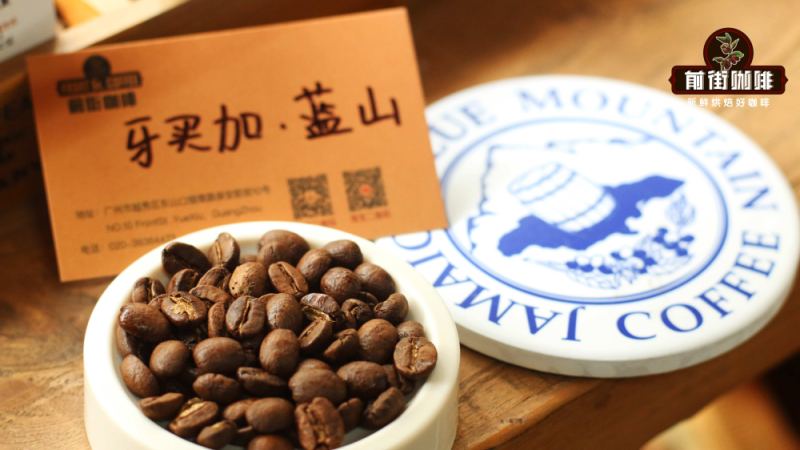
What is the coffee beans origin of Jamaican Blue Mountain?
Jamaican Blue Mountain coffee comes from the Blue Mountain range in eastern Jamaica, where Arabica seeds arrived in 1717 via Governor Nicholas Lawes. The range sits inside the coffee belt at 2,256 meters, with coffee grown below 1,700 meters, and its volcanic soil, fog, and roughly 1,980 millimeters of annual rain shape a mellow, balanced cup with low acidity.
Jamaica's CIB grading separates high-altitude Blue Mountain coffee, High Mountain coffee, and Jamaican coffee, and Clifton Mount Estate sits at about 1,300 meters growing the Typica variety, washed. Blue Mountain No. 1 is mild enough to drink black, and its balance also holds up when milk or sugar is added.
Jamaican Blue Mountain coffee has long been celebrated for its balanced, smooth, mellow body and sweet aftertaste, yet many enthusiasts still have questions about its acidity and how best to drink it. This article begins with Blue Mountain's historical origins, growing region definitions, and CIB grading standards, then explains in detail the specifications, processing flow, and roasting key points of authentic Blue Mountain No. 1, and presents Front Street Clifton Mount Estate Blue Mountain No. 1's pour-over parameters and extraction technique. It also answers a common question: whether Blue Mountain black coffee is suitable for adding sugar and milk. Whether you pursue pure original tasting or prefer the smooth mouthfeel of milk-blended coffee, this content provides clear reference and practical advice.
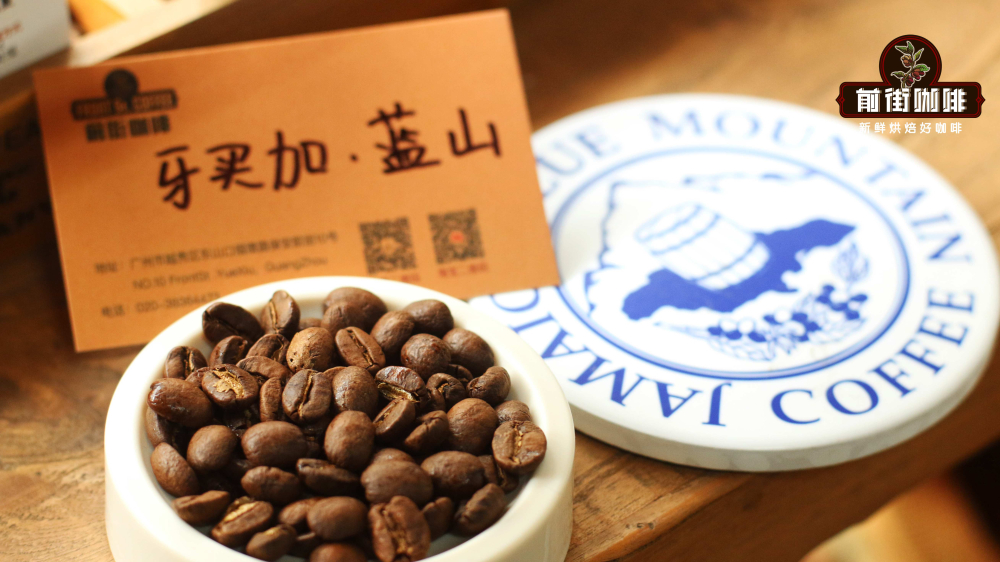
Front Street Coffee (FrontStreet Coffee) Jamaica Blue Mountain No. 1 Coffee Beans
Origin: Jamaica Blue Mountain Clifton Farm
Altitude: 1300 meters
Variety: Typica
Processing Method: Washed Processing
The Planting Origins of Jamaican Coffee
Records of coffee cultivation in Jamaica date back to the eighteenth century. In 1717, King Louis XV of France issued a decree requiring coffee to be introduced to Martinique; subsequently, Sir Nicholas Lawes, then Governor of Jamaica, brought Arabica seeds into Jamaica and first promoted them in the St. Andrew region. Coffee trees thus took root in the Blue Mountain range and gradually formed three tiers—high-altitude Blue Mountain coffee, High Mountain coffee, and Jamaican coffee—with the grade differences directly reflected in market prices.
The Blue Mountain range sits in eastern Jamaica, surrounded by the Caribbean Sea. On clear days, sunlight strikes the azure sea surface directly, and the peaks reflect a blue halo refracted from the seawater, which is how Blue Mountain got its name. The main peak stands at 2,256 meters (areas above 2,256m are protected forest, and coffee can only be grown below 1,700m), making it the highest point in the Caribbean region and a well-known tourist destination. Located within the coffee belt, it has fertile volcanic soil, clean air, high humidity, and year-round fog and rain, with average annual rainfall of about 1,980 millimeters and temperatures maintained around 27 degrees. It is precisely this terroir that nurtures the world-renowned Jamaican Blue Mountain coffee and creates one of the most expensive coffees in the world.
According to the official zoning of the Jamaica Coffee Industry Board (CIB), only Typica varieties grown within the forest zone at approximately 910–1,700 meters altitude qualify to be called "Jamaican Blue Mountain Coffee" in the true sense. The Blue Mountain coffee on Front Street Coffee's (FrontStreet Coffee) bean list comes from Clifton Mount Estate, at 1,310 meters altitude, using traditional washed processing, and in quality it is selected from the highest grade, Blue Mountain No. 1.
Authentic Blue Mountain coffee currently circulating on the market all uses washed processing. After manual harvesting, coffee cherries first undergo preliminary screening to remove unripe and overripe fruit, then are depulped, with this step ensured to be completed within 12 hours. Next comes traditional washed fermentation, followed by moving to cement platforms for sun drying. Long, slow sun drying helps intensify the flavor. Once dried to a moisture content of 11%–13%, the beans are bagged and stored for resting and aging, with warehouse temperature controlled at 24–25°C and humidity managed with dehumidifiers. Only after 2 to 3 months of stable flavor aging can they be shipped.
After an order is received, the beans undergo small-batch low-temperature hulling, polishing, and blowing to remove silver skin dust, and defective beans such as broken, abnormally colored, or mold-infected ones are manually removed. A skilled worker can sort only about 75 pounds of green beans per day. Green beans are transported between workstations in wooden tubs to avoid breakage or other processing defects. Once completed, they are sealed and stored in wooden barrels unique to Jamaican Blue Mountain. The Coffee Industry Board of Jamaica (CIB) Regulatory Section inspects each batch before air export to verify whether the coffee flavor meets standards.
Front Street Clifton Mount Estate Blue Mountain Coffee
The Blue Mountain range is located in eastern Jamaica, surrounded by the Caribbean Sea. On clear days, sunlight strikes the azure sea surface directly, and the peaks reflect the brilliant blue glow of the seawater, hence the name. Jamaican Blue Mountain has a delicate, fragrant, and subtly sweet character, with a wine-like richness, and has long been a favorite of Japanese coffee connoisseurs. With scarce production, it can be called a representative of specialty coffee.
But not all coffee produced in Jamaica can carry the Blue Mountain label. In 1953, the Jamaican government established the Coffee Industry Board (CIB) to improve coffee quality. Jamaica was the first country to register a coffee production region as a trademark. Coffee exported from Jamaica must be certified by the Coffee Industry Board (CIB), and only coffee produced in specific Blue Mountain administrative districts and at a certain altitude can obtain Blue Mountain certification.
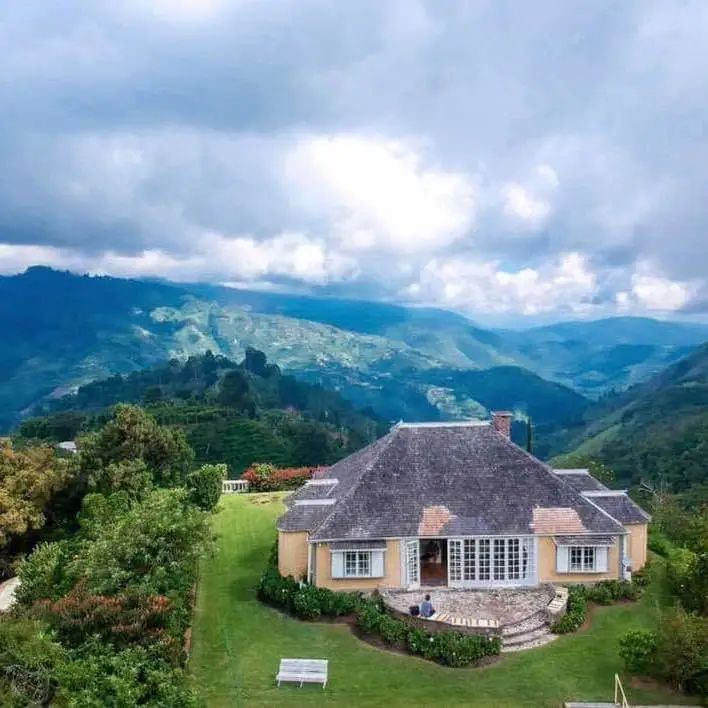
Since 1790 (the mid-eighteenth century), Clifton Mount Estate has been cultivating Blue Mountain coffee, all of the Typica variety. It is one of the highest-altitude and oldest coffee estates in the Blue Mountain region, and the only single-estate Blue Mountain coffee locally, having also obtained Rainforest Alliance certification. Sufficient altitude, gentle afternoon clouds and mist shrouding the mountain forests for shade, ample sunlight, and mineral-rich planting soil provide excellent growing conditions for the coffee trees.
Rainforest Alliance certification means the crop complies with:
1. Less water pollution 2. Less acid damage 3. Reduced impact on the environment and human health 4. Protection of wildlife habitats 5. Less waste 6. Use of less water 7. Highly effective farm management mechanisms 8. Protection of agricultural workers' rights and welfare 9. Protection of agricultural workers' income and competitiveness 10. Increased cooperation between agricultural workers and environmentalists.
What grade is Front Street Blue Mountain No. 1?
Compared with other coffee origins, Jamaica was the earliest country to recognize that coffee has a "taste of place." The local standards for evaluating Blue Mountain green bean quality cover multiple categories: green bean size specifications, defect rate, color, uniformity, and post-roast cupping performance (dry aroma, wet aroma, acidity, flavor, body, cleanliness, etc.).
Bean size specifications are measured using screens with different hole sizes; coffee beans that do not pass through the holes meet the corresponding standard. Color evaluation includes visual observation and colorimeter readings, with blue-green being the highest grade. Based on the above standards, Blue Mountain coffee is divided into 4 grades, from highest to lowest: NO.1, NO.2, NO.3, PB, and mixed. NO.1 is the highest-grade top Blue Mountain, known domestically as "Blue Mountain No. 1." Blue Mountain No. 1 must meet specifications of 17 mesh or above, a defect rate below 3%, and a moisture content of around 13%, and in cupping it must present rich coffee aroma, a smooth and balanced mouthfeel, low mild acidity, and a lasting sweet aftertaste.
Regarding roasting, the CIB has also proposed roast level recommendations for the classic Blue Mountain flavor. Front Street's roaster follows this principle, using a medium roast so that Blue Mountain No. 1 presents both a mellow chocolate sweetness and a suitably gentle fruity acidity.
Can Blue Mountain No. 1 be made as black coffee?
Front Street hopes to highlight the mellow, rounded mouthfeel of Blue Mountain No. 1 coffee, so it uses a KONO coffee dripper for extraction. KONO's ribs extend less than half the height of the dripper. This design is intended to let the dripper cling tightly to the wall after wetting, restricting airflow and thereby extending the water absorption time of the coffee grounds, making the extracted coffee more uniform overall.
Brewing parameters: 15 grams of grounds, coffee-to-water ratio 1:15, grind size: EK43s setting 10.5 (75% passing rate with China No. 20 standard sieve), water temperature: 87–88°C, brewing technique: staged extraction.
Place the filter paper in the KONO dripper, pour in water to wet the filter paper while also making it fit more closely to the dripper wall. Add the coffee grounds and tap lightly to distribute the coffee bed evenly. For the first stage, gently pour 30 grams of water for blooming, with a blooming time of 30 seconds; for the second stage, pour to about 125 grams of water, circling outward evenly and steadily. Then wait for the coffee liquid to drop; when it has dropped by half, pour the final stage of water up to 225 grams, and wait for all the coffee to drip through. The total extraction time is generally about 2 minutes.
The pour-over Blue Mountain No. 1 coffee presents dark chocolate and nutty flavors, very mellow, with an obvious almond sweet aftertaste. As the temperature drops, it becomes roasted hazelnut and creamy, sweet, and silky, carrying a hint of gentle acidity and caramel sweetness, with the aroma lingering in the mouth.
Of course, for friends who like milk coffee, you can also add 50–100g of milk to Front Street Blue Mountain black coffee to neutralize Blue Mountain coffee's bitter notes and make the overall layers richer.
The above content is compiled by CoffeeHunters, a coffee news website.


