







Where Do Sidamo Huakui Coffee Beans Come From?
Huakui coffee beans come from Ethiopia, and their origin label has shifted over time. Early lots were listed as Sidamo, while recent ones are labeled Guji, and sometimes both names appear together. The change reflects how Ethiopia's coffee regions were redrawn: Sidamo was once a vast southern zone covering 23 areas, more than 50 cooperatives and over 200 processing stations, and Yirgacheffe was originally part of it.
The same naming question comes up with other origins, such as where is cafe bustelo made or where is nescafe coffee from, because a label on a bag rarely tells the whole story. Huakui rose to attention after its 2017 TOH win and has since reached version 8.0. The natural process at the Buku Abel station shapes its tropical fruit sweetness and light floral aroma, and each generation differs in cup profile.
As the birthplace of coffee, Ethiopia's coffee-producing regions are far more complex than one might imagine. Huakui coffee beans have captured many enthusiasts with their rich tropical fruit sweetness and subtle floral aroma, but their origin label has changed from Sidamo to Guji, or even both are used interchangeably, and behind this lies the story of the transformation of Ethiopia's coffee-producing regions. From the perspective of Front Street, this article sorts out the connections among Sidamo, Guji, and Yirgacheffe, reviews the evolution of Huakui from its 2017 TOH championship to version 8.0, and explains in detail the natural process at the Buku Abel processing station, the flavor comparisons of each generation of Huakui, and Front Street's roasting and brewing recommendations.
Ethiopia is globally recognized as the birthplace of coffee, with a long history of cultivation. As the industry continues to evolve, the commercial importance of this country's coffee beans has become increasingly prominent. In Front Street's view, understanding what makes Ethiopian coffee unique requires not only looking at administrative divisions, but also delving into more finely divided coffee-producing regions and starting from specific traceability information.
Front Street has observed that when learning about a certain coffee-producing region, people usually prefer to combine it with actually drinking the beans, so that they can both broaden their knowledge and intuitively experience the flavor characteristics of that origin. For example, Huakui coffee is widely popular because of its abundant tropical fruit sweetness and elegant light floral aroma. However, some have noticed that earlier Huakui origin information mostly said "Sidamo," but in recent years it has changed to "Guji," and sometimes both labels appear at the same time. What exactly is the reason for this?
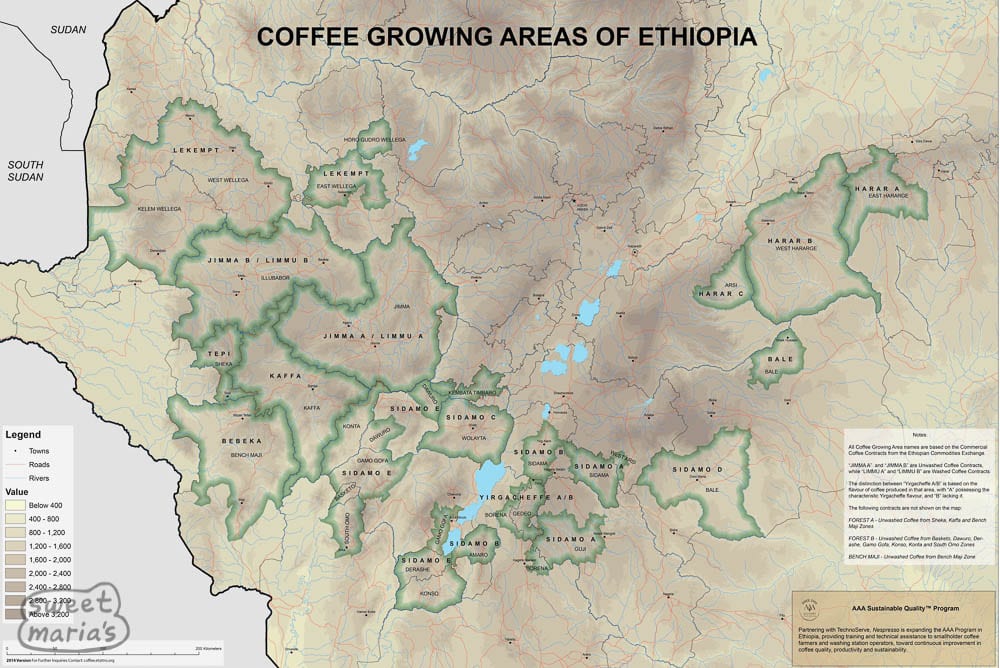
Sidamo is located in southern Ethiopia and was once a vast coffee-producing region, overseeing 23 areas, more than 50 cooperatives, and over 200 coffee processing stations. Its coverage spanned multiple administrative districts, and each small origin had different terroir conditions and climate characteristics, so the coffee produced in each place showed more or less variation, creating a rich and diverse flavor profile.
In the last century, Yirgacheffe originally belonged to the Sidamo producing region and was uniformly labeled "large sidamo" when exported. However, because Yirgacheffe won international attention very early for its outstanding flavor, it became the first origin to be separated from the Sidamo classification. With the promotion of the Ethiopian government, the coffee of this small town was successfully registered globally in 2007 as the "Yirgacheffe®" flavor trademark.
Coincidentally, when the Ethiopia Commodity Exchange ECX was established in 2008, Guji coffee was also included under the "Sidama A" category in auction classifications. After that, more and more small origins under Guji ranked highly in international green bean competitions such as COE thanks to their excellent flavor performance, and Guji's reputation rose accordingly. Therefore, in 2015 ECX separated Guji as a new representative category.
When Front Street opens the coffee-producing region distribution map to take a look, Guji's well-known sub-origins include Ana Sora, Hambela, Shakiso, Uraga, and Rogicha. The previously mentioned Huakui 8.0 comes from Hambela, and the more detailed traceability information points to the Buku Abel processing station, processed by the natural method. Below we will introduce them one by one.
The Guji producing region once belonged to Sidamo. In 2017, it won first place in the TOH (Ethiopia National Taste of Harvest Competition) with an outstanding strawberry cream flavor, truly deserving the title of Huakui. Now Huakui has been iterated to 8.0. Front Street compared multiple batches of Huakui coffee beans and found through roasting and cupping that the flavor of Huakui 8.0 is very close to the "debut version" of Huakui, but compared with the original 2017 Huakui, it has a little more citrus acidity and caramel notes.
Compared with other traditional producing regions, Guji is definitely a remote place in Ethiopia. Transportation is inconvenient, the mountains are high and the forests dense, and it was isolated from the outside world for a long time in the past. The local residents originally made a living by herding, and later discovered that the underground contained large amounts of minerals, so mining gradually rose. Only in recent years, as Guji's high-quality coffee attracted more and more attention from international buyers, did the coffee industry grow rapidly and become a new important economic pillar of the region.
Unlike Yirgacheffe, Guji, as a latecomer, started its coffee industry relatively late, but it has advantages such as high altitude, mineral-rich soil, and ample available land, creating favorable conditions for establishing large-scale washing stations and natural drying yards. In addition, the protection of primary forests here is more complete, providing a good guarantee for water and soil conservation and the uniqueness of flavor.
Guji sub-origin Hambela
Western Hambela faces Yirgacheffe's Kochore across the mountains, and its southeast and north sides border other Guji sub-origins, namely Shakiso, Uraga, and Kercha. At present, the Hambela producing region has about 20 processing stations of different sizes.
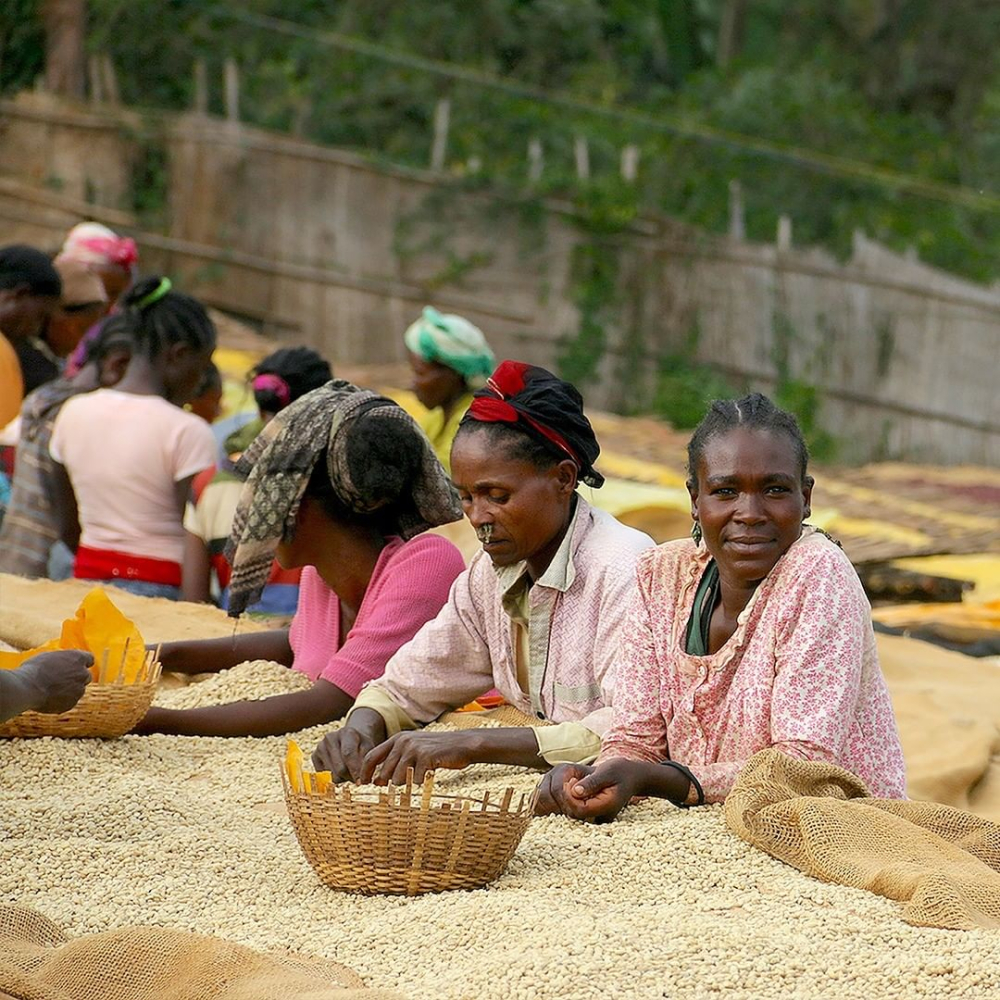
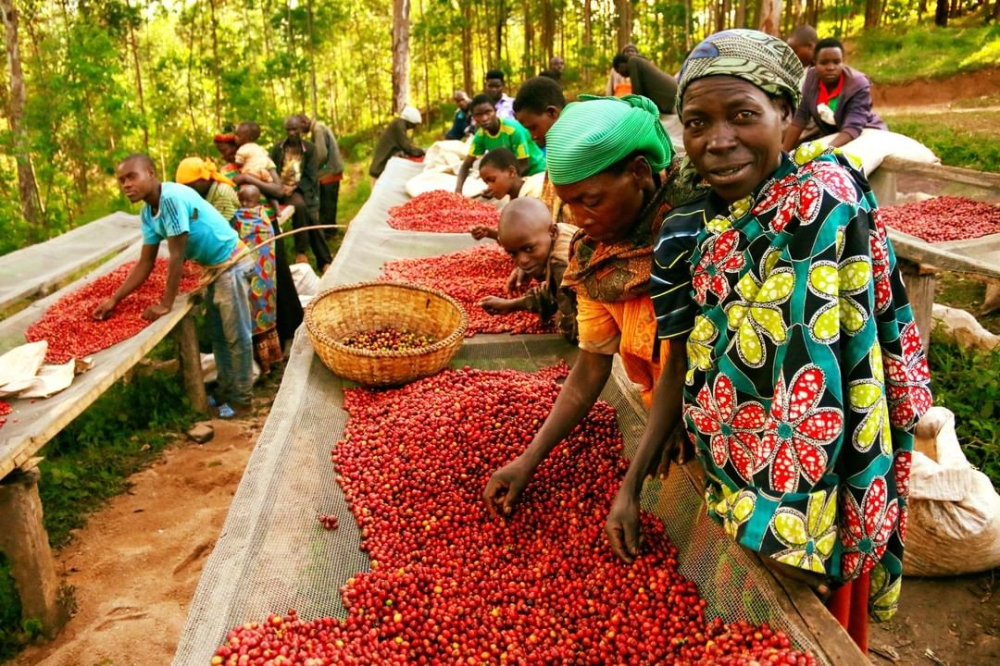
In the Hambela mountains, villagers live deep in the mountains at an altitude of 2,000 meters, with no roads and no electricity. The water tap supported by the government at the village entrance is the only source of drinking water for the whole village. Although the villagers have to share the same thatched hut with livestock, the air here is free and happy. Local children ride small donkeys to fetch water at the village entrance. They are always cheerful and shyly exchange corn and avocados found from who knows where for candy from the world beyond the mountains. On the drying yard, the coffee farmers turning the red coffee cherries sing cheerful songs barefoot, with touching smiles. The Huakui coffee beans everyone loves enter the cup precisely after being hand-selected piece by piece by these simple villagers.
In 2017, a naturally processed lote from DW Company's Buku Abel processing station won the TOH championship. A Chinese green bean importer named this lote Huakui. At that time, it had a rich strawberry and cream aroma. Subsequently, DW Company expanded its estate processing stations in Dimtu, the core production area of Hambela, to four: Buku Abel, Buku Saysay, Haro Soresa, and Tirtiro Goye, with an annual coffee output of about 1,100 tons.
Strictly speaking, among all these estates and processing stations, only the naturally processed coffee from the "Buku Abel" processing station can be called Huakui coffee beans. This also explains why Huakui 2.0, Huakui 3.0, and Huakui 3.1 appeared in 2018 and 2019 respectively.
In the Huakui coffee beans from the above two vintage batches, Front Street found that the flavor was very close to the original Huakui, but the body and aftertaste were not as good as the original 2017 Huakui. Unexpectedly, we can sometimes still identify green beans exactly the same as the original Huakui batch among these two batches of green beans. As for Huakui 3.1, Front Street found in cupping that its flavor was far from the original Huakui and instead closer to the flavor of Geisha (not Panama Geisha, but a Geisha style similar to that of Gesha Village; these two are actually completely different styles of beans). Front Street also confirmed this change with the green bean supplier.
It is not common for the same bean from the same year to show multiple flavors. Once you understand the origin of Huakui and then learn about its development and changes after winning the championship, you can understand the reason for the inconsistency in flavor before and after. Similarly, measured by the flavor standard of the old Huakui, Huakui 4.0 is not the same style, but the sweetness and aroma of 4.0 are better than those of 3.0.
Natural processing process of Huakui coffee beans
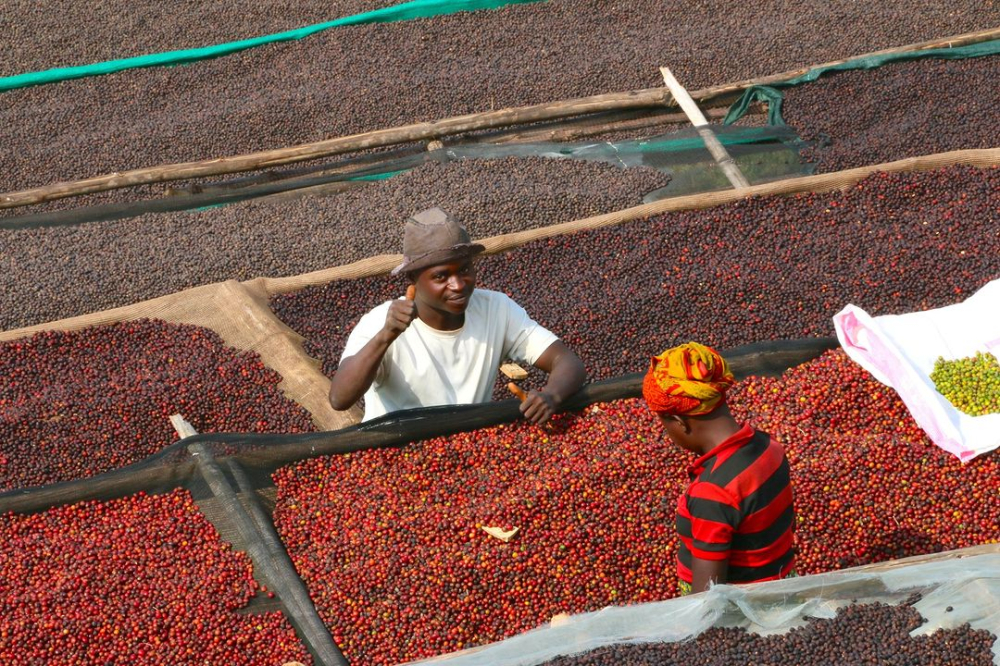
Every year during the coffee harvest and processing season (December to January), the red coffee cherries picked by farmers must reach a sugar content of 30 or above before natural processing can begin. In the first two days of natural drying, the moisture of the red coffee cherries must be maintained so that the fruit sugars fully undergo fermentation. At the same time, the high-altitude location allows the processing station's nighttime temperature to drop to around 12 degrees Celsius, and it will not cause excessive fermentation due to overly high temperatures. At noon, when the temperature is higher, the cherries are shaded in time to prevent sunburn. At night, to prevent sudden rain, they are wrapped with thick plastic sheeting.
In this way, the red coffee cherries ferment and dehydrate at a relatively low temperature. After 18 days of natural drying, when the moisture content of the green coffee beans drops to about 13%, drying is stopped. They are put into jute bags and placed in a warehouse under natural conditions of 12 to 22 degrees Celsius and 45% to 55% humidity for about 50 days of green bean resting and further dehydration. When the moisture content of the green beans reaches about 11%, they are transported to the processing station for hulling, screening, and sale.
FrontStreet Coffee: Ethiopia Huakui G1 Coffee Beans Region: Guji Hambela Processing Station: Buku Able Altitude: 2,250-2,350 meters Variety: Local Heirloom Grade: G1 Process: Natural Flavor: Strawberry, passion fruit, berries, pineapple, cream, nuts
FrontStreet Coffee: Ethiopia Huakui 2.0 Coffee Beans Region: Guji Hambela Processing Station: Goro Processing Station Altitude: 2,316 meters Variety: Local Heirloom Grade: G1 Process: Natural Flavor: Floral, tropical fruit, red wine, nuts
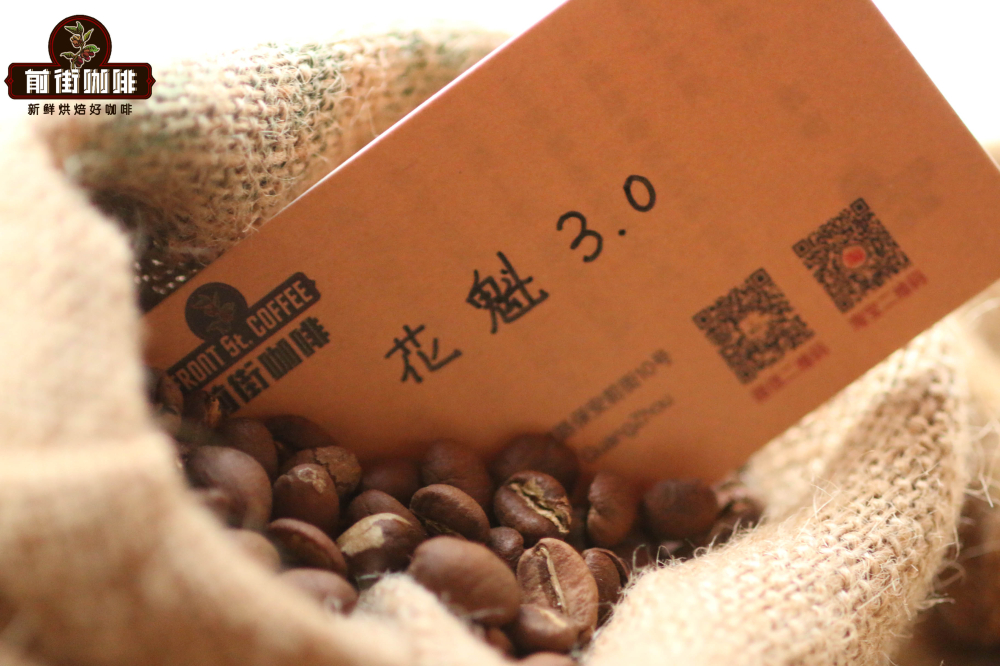
FrontStreet Coffee: Ethiopia Huakui 3.0 Coffee Beans Region: Guji Hambela Processing Station: Goro Processing Station Altitude: 2,300 meters Variety: Local Heirloom Grade: G1 Process: Natural Flavor: Floral, berries, mango, pineapple, apricot
FrontStreet Coffee: Ethiopia Huakui 3.1 Coffee Beans Region: Guji Hambela Processing Station: Mansa Shantang Processing Station Altitude: 2,125 meters Variety: MANSA Heirloom Grade: G1 Process: Natural Flavor: Tropical fruit, citrus, caramel, cream
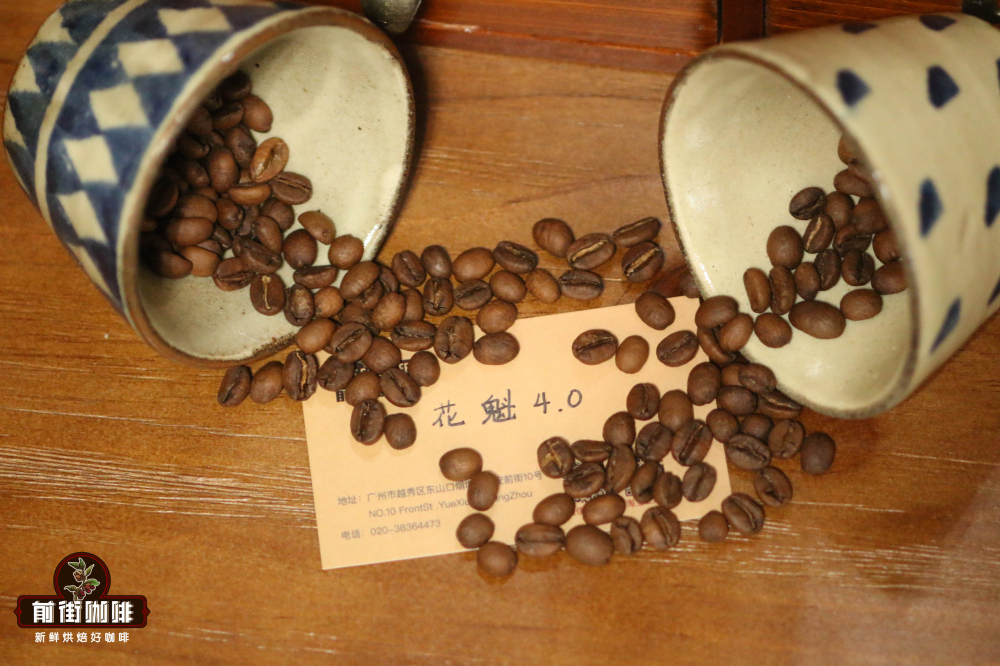
FrontStreet Coffee: Ethiopia Huakui 4.0 Coffee Beans Region: Guji Hambela Processing Station: Buku Able Altitude: 2,350 meters Variety: Dega Process: Natural Flavor: Rose, cream strawberry, citrus, passion fruit, oolong tea
FrontStreet Coffee: Ethiopia Huakui 5.0 Coffee Beans Region: Guji Hambela Processing Station: Buku Able Altitude: 2,350 meters Variety: Local Heirloom Process: Natural Flavor: Citrus, passion fruit, strawberry, oolong tea
Roasting comparison of Huakui coffee
FrontStreet Coffee Huakui G1 roasting curve
FrontStreet Coffee Huakui 2.0 roasting curve
FrontStreet Coffee Huakui 3.0 roasting curve
FrontStreet Coffee Huakui 3.1 roasting curve
FrontStreet Coffee Huakui 4.0 roasting curve
Brewing parameters & method
In terms of dripper selection, Front Street believes that Huakui should display rich berry layers, so the FrontStreet Coffee barista uses a resin V60 dripper. The V60 dripper body has ribs connecting the top and bottom and a large central hole, which speeds up the flow of water, while the spiral-shaped exhaust groove design extends the water flow path and increases the contact time between coffee grounds and hot water. Each stream of water converges along the grooves toward the center of the dripper, concentrating the pressure on the coffee grounds and extracting a coffee with richer layering.
Front Street recommends using freshly roasted coffee beans for brewing, as this is the best way to experience the coffee's rich flavor to the greatest extent. The coffee beans shipped by FrontStreet Coffee are all within 5 days of roasting, because Front Street deeply understands that freshness has a huge impact on flavor. Front Street's roasting philosophy is "freshly roasted good coffee," so that every customer who places an order receives the coffee in its freshest state. The resting period for coffee is about 4 to 7 days, so when customers receive it, it is exactly at its best flavor stage.
The specific brewing parameters used by Front Street are: V60 dripper, water temperature 90°C, water-to-coffee ratio 1:15, coffee dose 15 g, grind size (80% passing through a Chinese standard No. 20 sieve).
Front Street uses staged extraction. The blooming water amount is twice the coffee grounds, that is, 30 grams of water for a 30-second bloom. Then pour in a small stream in circles until 125 grams, then pause. When the water level drops and is about to expose the coffee bed, continue pouring until 225 grams and stop. The total extraction time (including blooming) is 2 minutes.
Flavor description [Huakui G1] Smooth, passion fruit, fermented wine aroma, jackfruit, strawberry. [Huakui 2.0] The overall mouthfeel is clean, the berry aroma is more obvious, with nutty notes, and the mouthfeel is richer. [Huakui 3.0] Light strawberry jam, black tea tea-like quality, sweet aftertaste is short. [Huakui 3.1] Floral, cream, tropical fruit, caramel, long-lasting sweetness. [Huakui 4.0] Citrus acidity, full berry juice body, lemon black tea tea-like quality, long-lasting sweetness. [Huakui 5.0] Citrus acidity, strawberry-like aroma, oolong tea aftertaste, long-lasting sweetness.
For professional coffee knowledge exchange and more coffee bean information, please follow Coffee Workshop (WeChat public account: cafe_style)
For more specialty coffee beans, please add the private WeChat of FrontStreet Coffee: kaixinguoguo0925
The above content is compiled by CoffeeHunters, a coffee news website.


