







How Should Natural Geisha Coffee Be Brewed?
Natural-process Geisha from Panama's Finca Auromar shows white florals, berry acidity and a sweet orange juice-like quality. Estate owner Robert Brenes won the national Panama coffee championship with Ironman Geisha, and his natural-process Camilina lot took the top spot again in 2016. Geisha is prized for elegant floral aroma and bright fruit acidity rather than the nutty, caramel and chocolate notes common in Central America.
Pour-over recommendations for this Panamanian Geisha cover grind size, water temperature, coffee-to-water ratio and staged pouring technique. The variety first grew in Ethiopia's Geisha forest, reached Kenya's research institute, traveled to Uganda and Tanzania in 1936, and arrived at Costa Rica's CATIE in 1953 as T2722 before being planted in Panama for its leaf rust resistance.
Geisha coffee is known for its elegant floral aromas and bright fruit acidity, and the natural-process Geisha from Panama's Finca Auromar is among the finest examples. Estate owner Robert Brenes once won the BOP championship with Ironman Geisha, and his natural-process lot Camilina claimed the top spot again in 2016. The natural-process Geisha from Finca Auromar recently launched by Front Street Coffee impresses with white florals, berry acidity, and a sweet orange juice-like quality. This article will walk you through the spread of Geisha and the terroir of Finca Auromar, and share Front Street's roaster's pour-over recommendations for this bean, including grind size, water temperature, coffee-to-water ratio, and staged pouring technique, so you can brew a full-flavored cup at home.
When it comes to Geisha coffee, Panama's Hacienda La Esmeralda is undoubtedly the textbook example. With its delicate florals and pleasant sweet-tart balance, this coffee is regarded by many enthusiasts as a rare gem that can't be found just anywhere. Even newcomers just stepping into specialty coffee have mostly heard of Geisha's hefty price tag and its astonishing flavor profile.
The Rise of Geisha Coffee
Geisha first grew in the Geisha forest of Ethiopia, was later collected and sent to a coffee research institute in Kenya, and in 1936 made its way to Uganda and Tanzania. In 1953, it was introduced to Costa Rica's CATIE agricultural research institute under the designation T2722. At the time, coffee-growing regions in Central America were suffering from leaf rust, and Geisha was introduced to Panama because it was believed to have disease resistance. However, the Geisha variety has low yields and branches that break easily, so growers had little enthusiasm for it.
Before Geisha's flavor value was discovered by the world, Panama's Hacienda La Esmeralda, in order to improve coffee quality, cupped and documented hundreds of varieties grown on the estate one by one. It wasn't until 2003 that they unexpectedly discovered Geisha's flavor profile was completely different from the nutty, caramel, and chocolate notes common in Central America. The following year, before the BOP competition began, the estate followed the advice of a mentor and entered Geisha into the competition—and it was a sensation, taking the BOP championship that year outright.
From then on, the Geisha variety leapt to the forefront of the specialty coffee world. Later, to prevent Geisha from sweeping all the glory, the BOP competition specifically split the competition into a Geisha category and a non-Geisha category.
Geisha's flavor is simply too alluring, and its cultivation has gradually spread from Panama to producing countries such as Colombia, Costa Rica, and El Salvador—even Asian origins like Yunnan and Taiwan in China have seen Geisha coffee trees appear.
Although Geisha's flavor is exquisite, this near-transcendent quality depends heavily on specific terroir. Even Geisha grown in Costa Rica, just across a national border, often falls short of Panama's in flavor performance.
Finca Auromar
Today, top estates growing Geisha in Panama are springing up like mushrooms after rain. Hacienda La Esmeralda, as a veteran powerhouse, has a flavor profile that many coffee fans are already thoroughly familiar with, and Front Street's Hacienda La Esmeralda Geisha has remained a classic on Front Street's bean list. Even though Front Street's bean list already features nearly fifty coffees, it still periodically adds Geisha from other top estates for everyone to try. Recently, Front Street acquired a natural-process Geisha coffee bean from Finca Auromar.
Finca Auromar's owner, Robert Brenes, holds an MBA from Columbia University in New York and is a highly respected figure in Panama's financial circles. He has served as a leader of the Central Bank of Panama and is currently the CEO of the Panama Stock Exchange.
Robert Brenes didn't devote himself to coffee farming from the start—it wasn't until 2006, when he took over the land that is now Finca Auromar, that he began cultivating high-quality coffee in earnest. In 2013, he won the BOP competition with "Ironman Geisha," and the names Finca Auromar and Robert Brenes became widely known in the international coffee world from then on.
Finca Auromar's English name comes from combining the names of the owner's daughter Aurora and granddaughter Mar. The estate is located in the Volcán region in the northwestern corner of Panama's map, in the valley west of Barú Volcano, only about two kilometers from the border between Panama and Costa Rica. The estate covers a total of 30.5 hectares. To balance coffee cultivation and forest conservation, the farmland is carefully planned: 16 hectares are preserved as native tropical rainforest at an altitude of about 1,700 to 1,775 meters; the remaining 14.5 hectares are used for growing coffee trees at an altitude of 1,500 to 1,700 meters.
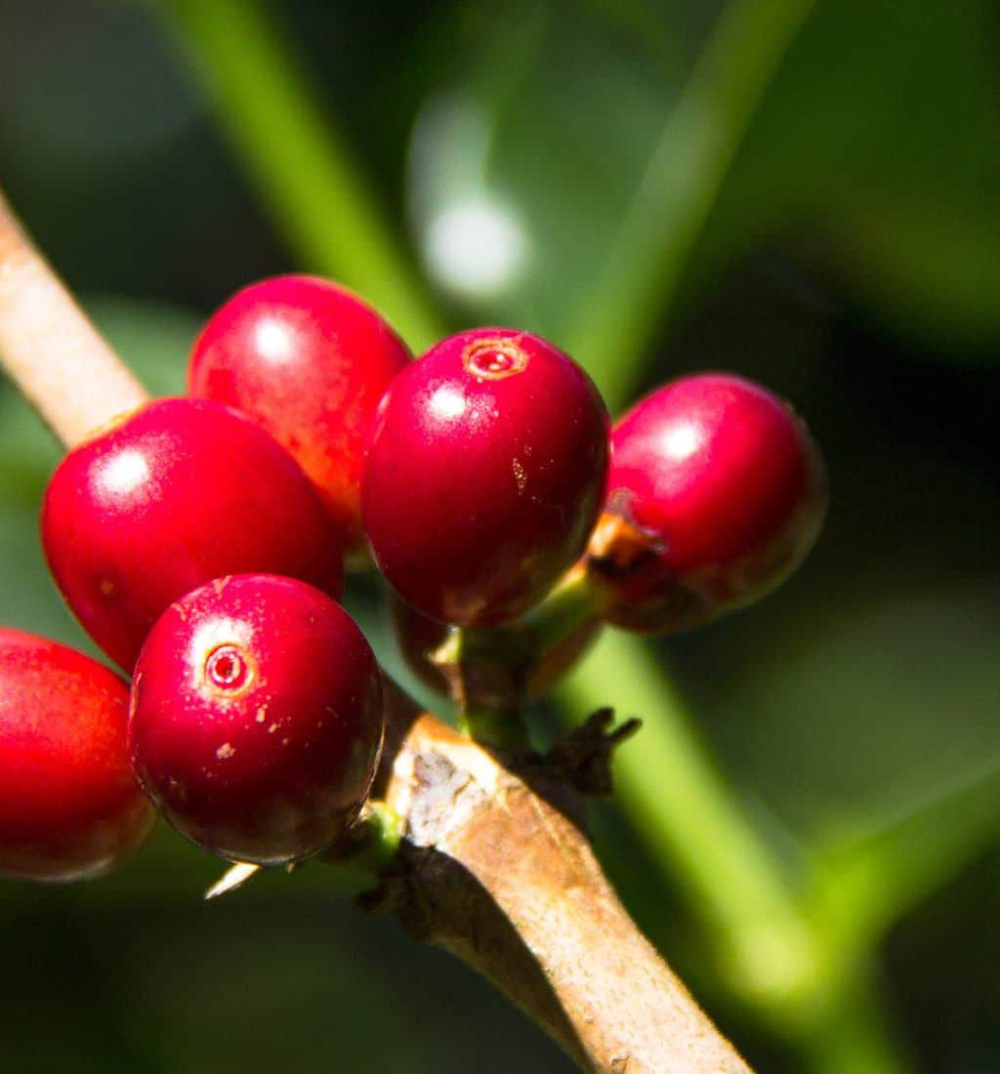
Finca Auromar's Geisha cultivation method is similar to that of many top Panamanian Geisha estates. The estate is rich in plant species, and the owner also transplants local tree species such as banana, avocado, and cedar to provide shade for the coffee, with shaded area covering about half. High altitude, microclimate, significant temperature differences between day and night, and annual rainfall of about 3,500 millimeters allow the coffee cherries here to accumulate more nutrients, and the fruit also contains richer flavor compounds.
Finca Auromar's harvest season usually begins in late December. Workers patiently pick ripe red cherries one by one from the branches, then transport them from the farm to a processing plant 3 kilometers away for processing.
Natural-Process Geisha
Owner Robert Brenes loves triathlon, so when naming the estate's green bean lots, he incorporated triathlon elements—one of which is named "Ironman," translated into Chinese as "铁人." The Finca Auromar Geisha that won the 2013 BOP championship used the washed process, and it's precisely because of this that many domestic consumers habitually refer to Finca Auromar Geisha as "Ironman Geisha."
However, at the 2014 BOP competition, a natural-process Geisha from Finca Auromar placed 10th. This natural-process lot was named after his beloved little granddaughter—Camilina Geisha. At the 2016 BOP competition, Finca Auromar once again took the championship of that year with a natural-process Geisha, and this winning lot was also named Camilina Geisha.
Finca Auromar's fame naturally caught the attention of Front Street Coffee, and to appreciate its splendor, of course we had to get a Front Street Finca Auromar Geisha.
Front Street Coffee Panama Finca Auromar Geisha
Region: Volcán, Panama
Estate: Finca Auromar
Altitude: 1,500–1,700 meters
Variety: Geisha
Process: Natural
For this natural-process Geisha from Finca Auromar that Front Street acquired, workers pick red cherries at just the right ripeness and spread them evenly on raised beds, tending them carefully to ensure each fruit dries uniformly, thereby giving Front Street Finca Auromar Natural Geisha a more pronounced sweetness and richer flavor.
After receiving this batch of green beans, Front Street immediately arranged for roasting and conducted cupping within 8 to 24 hours after roasting. The cupping results showed that this Front Street Finca Auromar Natural Geisha smells of clear white florals, has berry acidity on the palate, a juice-like quality similar to sweet orange juice, and a hint of green tea.
Brewing Recommendations
Front Street Coffee's roaster used a light roast when roasting this bean to highlight Panama Geisha's delicate white florals and full juice-like quality. Therefore, when brewing, Front Street recommends using a finer grind size and a higher water temperature.
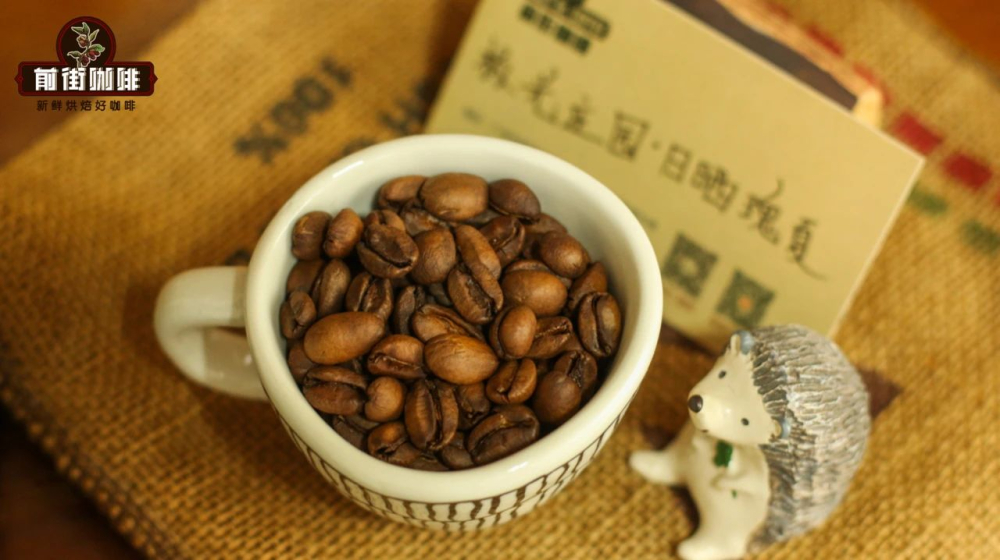
Dripper: Hario V60
Water temperature: 91°C
Dose: 15 grams
Coffee-to-water ratio: 1:16
Grind size: 80% passing through a Chinese standard No. 20 sieve
First pour 30 grams of hot water for a 30-second bloom, then from the center point use a thin stream of water to slowly pour in circles up to 130 grams for the first stage. When the water level in the dripper drops to just about to expose the coffee bed, continue pouring in circles up to 240 grams. Once the water in the dripper has completely dripped down into the server below, remove the dripper. Total extraction time is about 2 minutes.
You may have noticed that Front Street performs a bloom when brewing every coffee bean. This is because when customers order Front Street coffee beans, Front Street ships beans roasted within 5 days, and by the time they receive them, they've usually gone through a 4-to-7-day resting period. The carbon dioxide gas in the coffee beans forms a barrier around the coffee grounds, hindering flavor extraction, and blooming is precisely to release these gases, thereby stabilizing the later stages of extraction and releasing more flavor compounds.
Additionally, some friends don't have grinding equipment at home, so Front Street also offers a grinding service. But Front Street needs to remind you that once coffee beans are ground into powder, degassing intensifies and flavor compounds dissipate more quickly. Front Street recommends buying whole beans and grinding fresh right before brewing.
This Front Street Finca Auromar Natural Geisha, just after its resting period, greets you with a burst of white florals, has berry acidity on the palate, pronounced sweet orange and green tea notes, and a honey-like sweetness.
The above content is compiled by CoffeeHunters, a coffee news website.


