







How Does American Drip Coffee Differ From Pour-Over?
Pour-over and American drip coffee share the same basic principle: water passes through coffee grounds slowly and without pressure. The difference is control. With pour-over, the brewer manages grind, dose, water ratio, blooming and pouring rhythm by hand, which suits a single cup. An American drip coffee machine handles all of that automatically and is better for several servings at once.
Drip machines can also adjust grind size, coffee dose and water ratio, so their parameters match pour-over closely. Their water temperature is often set higher, and the keep-warm function is the real drawback: leave coffee on the plate for ten minutes and the aroma and acidity shift noticeably. Pour-over gives each cup more room to show a single-origin bean at its peak.
Pour-over coffee and American drip coffee makers are quite similar in their brewing methods, both relying on uniform dripping in a pressure-free environment. However, the differences between manual and machine brewing lead to distinctly different flavor profiles and suitable scenarios. This article, based on the production experience of Front Street Coffee, goes through key aspects that affect pour-over flavor one by one, from cup warming, grinding, and equipment combinations to blooming and brewing, while comparing the pros and cons of American drip machines to help coffee enthusiasts understand why pour-over is more favored, as well as the details and timing to pay attention to when practicing at home.
Nowadays, pour-over coffee is gaining more and more acceptance. Many people choose to brew it by hand at home, while a considerable number of consumers opt for American drip coffee makers. These two methods are essentially very similar—neither uses high pressure, but instead lets water pass through the coffee grounds at a slower and more uniform speed. The real difference lies in one being controlled by human effort and the other being left to a machine. Each has its strengths and weaknesses.
The reason Front Street Coffee believes that American drip coffee makers and pour-over coffee are similar is that American coffee machines can also adjust grind size, coffee dose, and water ratio, and these parameters are basically the same as those for pour-over coffee. However, the water temperature of American drip machines is often set higher, and most models have a keep-warm function. If coffee stays in keep-warm mode for a long time, its internal components are prone to change.
You might as well do a comparison at home. After ten minutes, smell and taste it again, and you will find that the aroma and acidity have clearly shifted. Therefore, American drip coffee makers are better suited for making multiple servings at once, while pour-over coffee is naturally suited for single-person drinking. Of course, it can also meet multi-person needs by increasing the coffee dose.
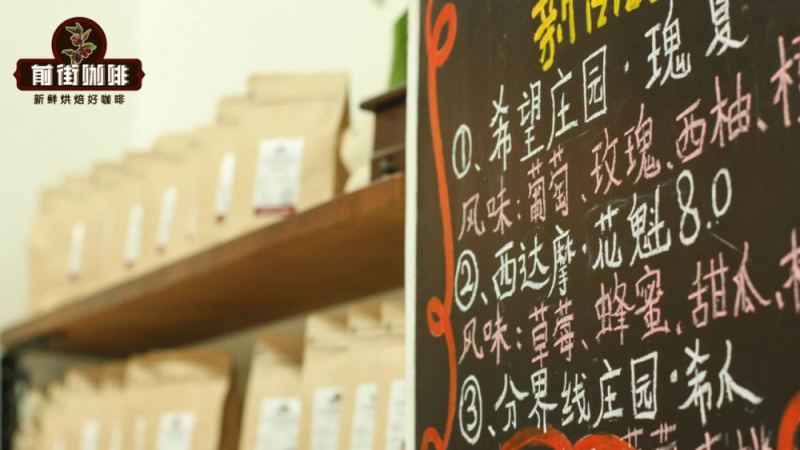
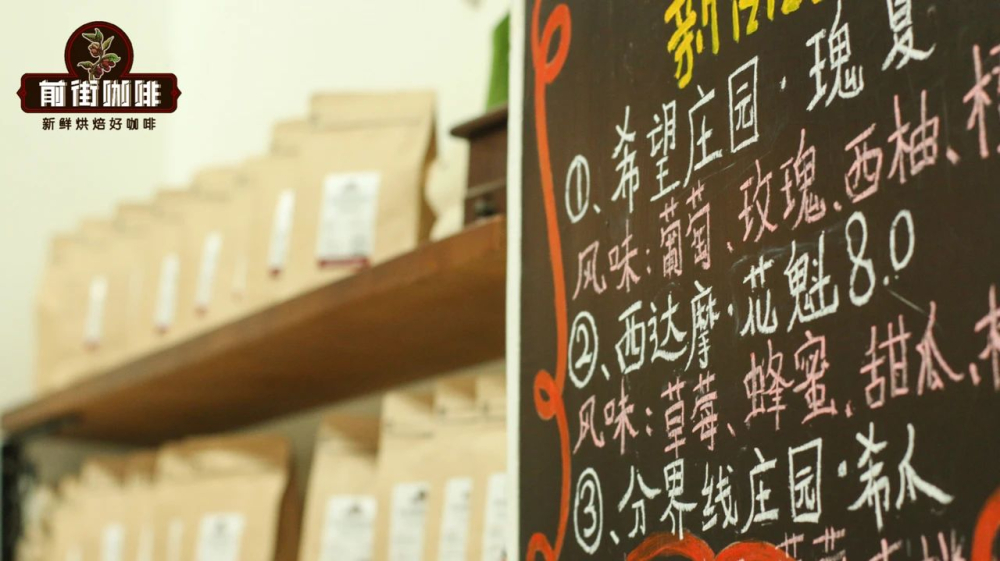
Front Street Coffee's bean list covers single-origin coffee beans from more than fifty producing regions. The shop usually chooses the pour-over method to serve every cup of coffee rather than using an American drip coffee maker, precisely to present each cup in its best condition. Pour-over may look simple, but brewing a delicious cup is not easy, and there are quite a lot of factors to consider. Here, Front Street Coffee shares with everyone one of the many factors that affect pour-over flavor.
1. Warming the cup for pour-over coffee
Once coffee encounters cold, the tannic acid in it becomes active and makes the taste more sour. So before formal brewing, Front Street Coffee first rinses the coffee cup with hot water to provide insulation.
2. Pour-over coffee beans Grind size
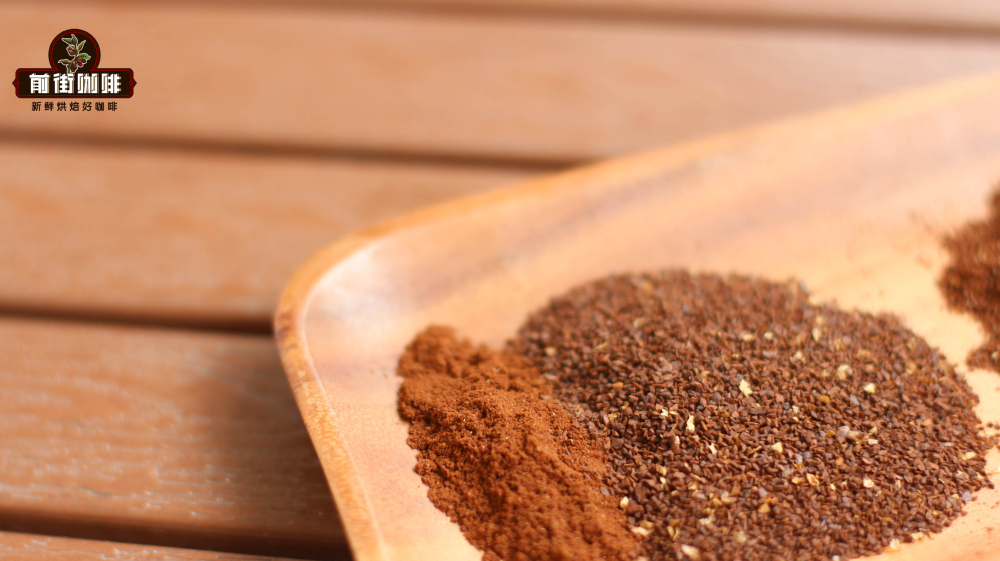
The grind size for pour-over should be adjusted according to the characteristics of the coffee beans. For dark-roasted beans, the grounds should be slightly coarser than for medium-dark roasted beans. Through repeated pour-over tests, Front Street Coffee has summarized a set of grinding standards, expressed by standard sieve pass-through rate:
Cold drip > pour-over siphon 80% > moka pot American drip 75-80% > cupping 70-75% > French press 65-70%. If you find it troublesome, Front Street Coffee stores offer a grinding service, but it is recommended to grind fresh before brewing for a richer aroma.
3. The combined equipment for pour-over coffee
Pour-over coffee equipment mainly consists of three parts: filter paper, dripper, and server. If you want to be more particular, there should also be a warming stove under the server to prevent the coffee from getting cold during brewing. The sizes and specifications of the filter paper, dripper, and server should match one another; for example, two-person filter paper should be paired with a two-person dripper.
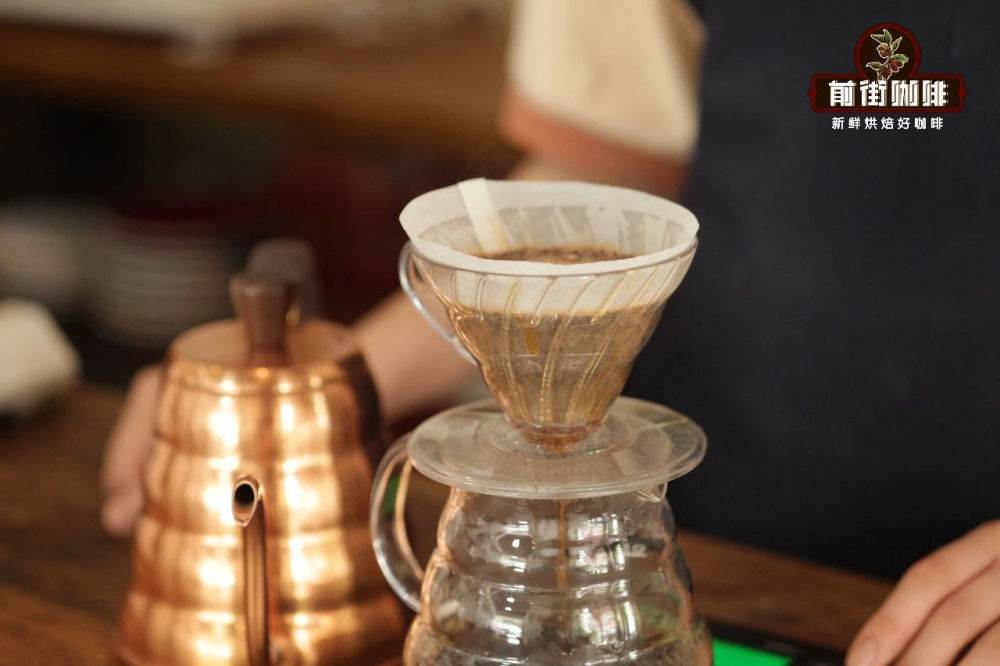
Taking the shop as an example, Front Street Coffee most often uses the V60 dripper and the Kono dripper. The V60 dripper is used for brewing lighter-roasted beans. Its large-hole spiral design not only increases the coffee's layers but also allows the flow rate to be adjusted according to the flavor characteristics you want to express. The Kono dripper is used for darker-roasted coffee beans. Its slower flow rate highlights body, and the short-rib design makes the filter paper fit the dripper more closely, which also slows the flow rate. Everyone can choose according to their own needs.
4. Pouring in the grounds
Pour the ground coffee into the prepared filter paper, gently tap the dripper to level the surface of the grounds, so that the coffee bed can be evenly saturated in the following steps.
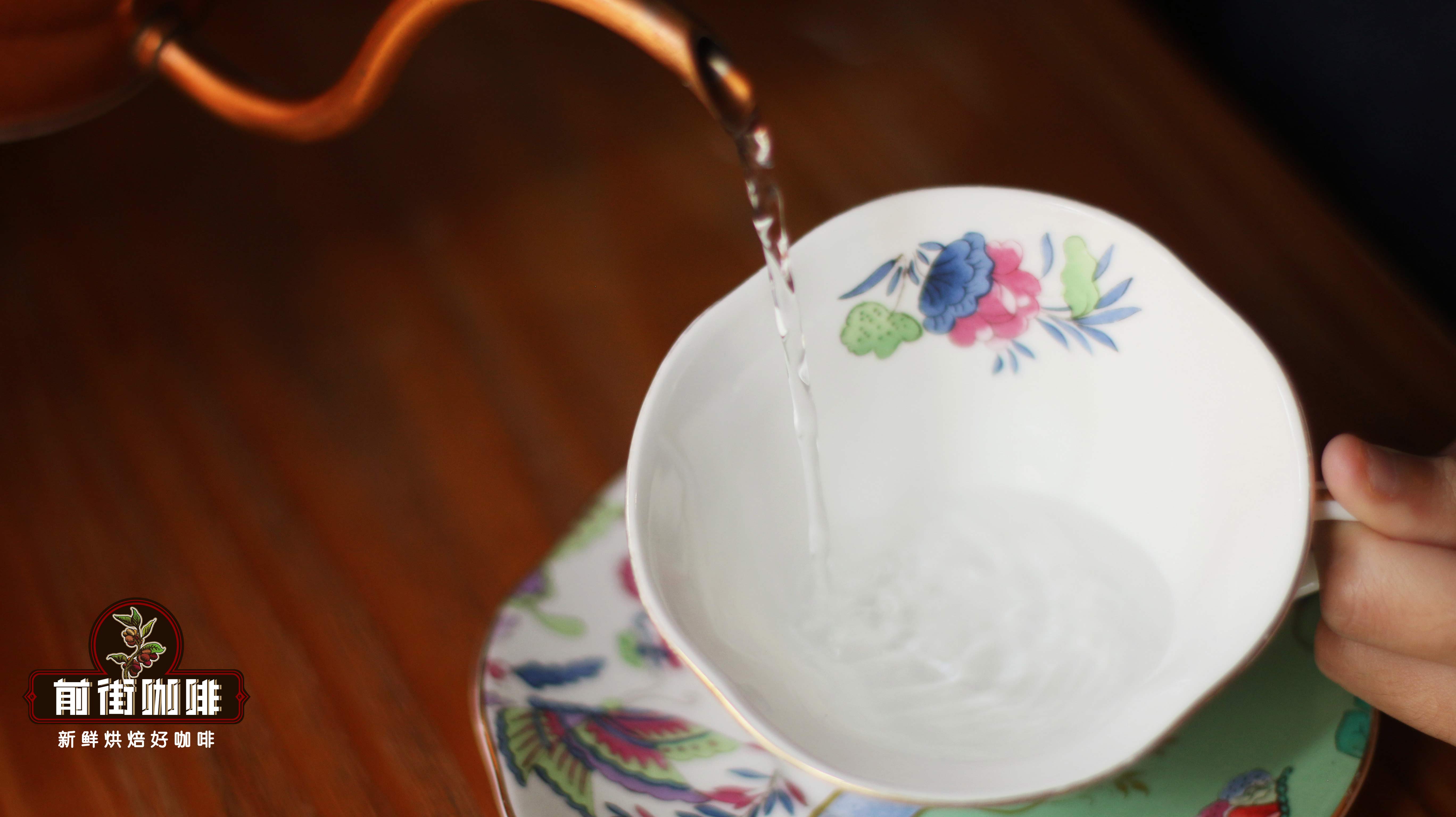
5. Warming the server for pour-over coffee
Pour a small amount of hot water into the server, swirl it a few times, then pour it out, and then place the leveled coffee grounds on top.
6. Blooming for pour-over coffee
Blooming is meant to release the coffee's aroma and prepare for the second pour. Front Street Coffee's method is to bloom with 30 grams of water for 30 seconds, starting from the center of the grounds and pouring in circles 2-3 times, so that all the grounds absorb water evenly, with 3-5 drops falling as the ideal. After absorbing water, the grounds expand, changing from a flat state to an upward-convex arc, and at this point you can smell the faint richness released by the coffee grounds. This step is one of the key factors determining the success of a cup of pour-over coffee.
7. Brewing pour-over coffee
After blooming is finished, place the brewing kettle on a damp cloth to cool down. After 25-30 seconds, when the water temperature drops to 89-91°C, you can begin brewing. Usually, medium-roasted coffee beans use a water temperature of 91°C to better extract aroma; dark-roasted coffee beans use 89°C, which is enough to extract aroma and bitterness. If the water temperature is too low, it will taste thin; if too high, it will seem overcooked and unusually bitter. The brewing stream can be slightly thicker than during blooming, but it must remain stable. The strength of the coffee can be controlled through the number of circles and the flow rate. Whether brewing one cup or three, the stream should start from the center and pour in circles outward, then circle back from the outer ring to the center, and finish at the center point, at which point brewing ends. During the process, be sure to note that the stream should not hit the filter paper, otherwise the pour-over coffee will become astringent. The amount of brewed coffee should generally be 0.5 more than the server's marked line, otherwise the final yield will be insufficient.
8. Pouring pour-over coffee into the cup
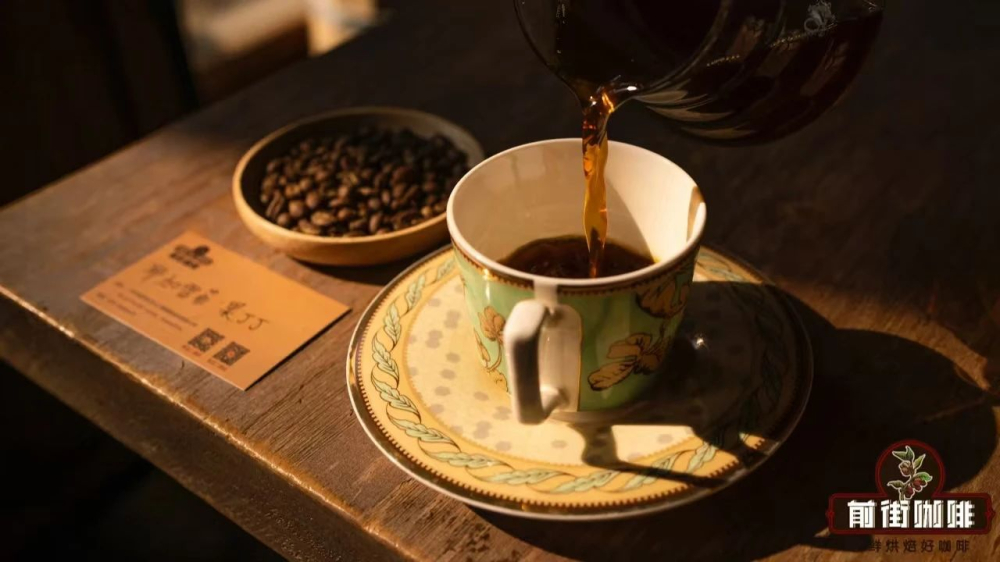
Before pouring into the cup, gently swirl the coffee in the server to fully mix the strength so that every cup tastes even. Then pour out the water used to warm the cup, pour the coffee into the cup, arrange the presentation, and it is ready to serve.
The entire pour-over process, from warming the cup to drinking, should not exceed 2 minutes, otherwise the coffee's taste will become sour and astringent, losing the richness that pour-over should have.
For professional coffee knowledge exchange and more coffee bean information, please follow Coffee Workshop (WeChat public account: cafe_style)
For more specialty coffee beans, please add the private WeChat of Front Street Coffee: kaixinguoguo0925
The above content is compiled by CoffeeHunters, a coffee news website.


