







What Does Arabica Mean on a Coffee Bag?
Arabica is one of the two coffee species planted on a large commercial scale, the other being Robusta, and the word on a bag does not by itself mean higher quality. Arabica generally grows at higher, more stable temperatures with steady rainfall and well-drained soil, and it carries less caffeine and a more delicate flavor than Robusta.
Coffee grows in the belt between the Tropic of Cancer and the Tropic of Capricorn, spanning more than 70 countries, of which about 50 have suitable conditions. The two ancient varieties Typica and Bourbon spread from that base. A medium-dark roasted Jamaica Blue Mountain No. 1, brewed as pour-over with controlled dripper, temperature, ratio, grind and pouring rhythm, shows how soft and sweet arabica beans can taste.
You often see "Arabica" printed on coffee packaging—what exactly does it represent? Does 100% pure Arabica mean higher quality? From the perspective of Front Street, this article first sorts out the core differences between Arabica and Robusta in growing conditions, caffeine content, and flavor performance, then traces the spread of the two ancient varieties Typica and Bourbon, and finally uses the medium-dark roasted Front Street Jamaica Blue Mountain No. 1 as an example to provide a complete pour-over plan covering the dripper, water temperature, coffee-to-water ratio, grind size, and pouring rhythm, helping coffee lovers brew Arabica beans to be soft with clear sweetness.
To get more specialty coffee-related knowledge, you can follow: Front Street Coffee (Frontsteet Coffee).
When buying coffee powder or instant coffee, the word "Arabica" often appears on the packaging. Many friends therefore wonder: what exactly is Arabica coffee? What is being emphasized by labeling it "100% pure Arabica"? Below, Front Street explains these common confusions one by one.
What does 100% pure Arabica mean?
Coffee is a tropical cash crop, usually grown in the coffee belt between the Tropic of Cancer and the Tropic of Capricorn. Suitable conditions for coffee trees include relatively high and stable temperatures, sufficient annual rainfall and sunlight, and fertile, well-drained soil. The coffee belt covers about more than 70 countries and regions worldwide, of which more than about 50 countries and regions have climate conditions that can meet the needs of coffee bean growth, thus becoming coffee-producing countries. Brazil, Colombia, Ethiopia, Kenya, Indonesia, as well as China's Yunnan and Hainan are all located in the coffee belt. The unique growing environments and microclimates of each producing region provide diverse growing conditions for coffee trees and also shape their different flavor expressions.
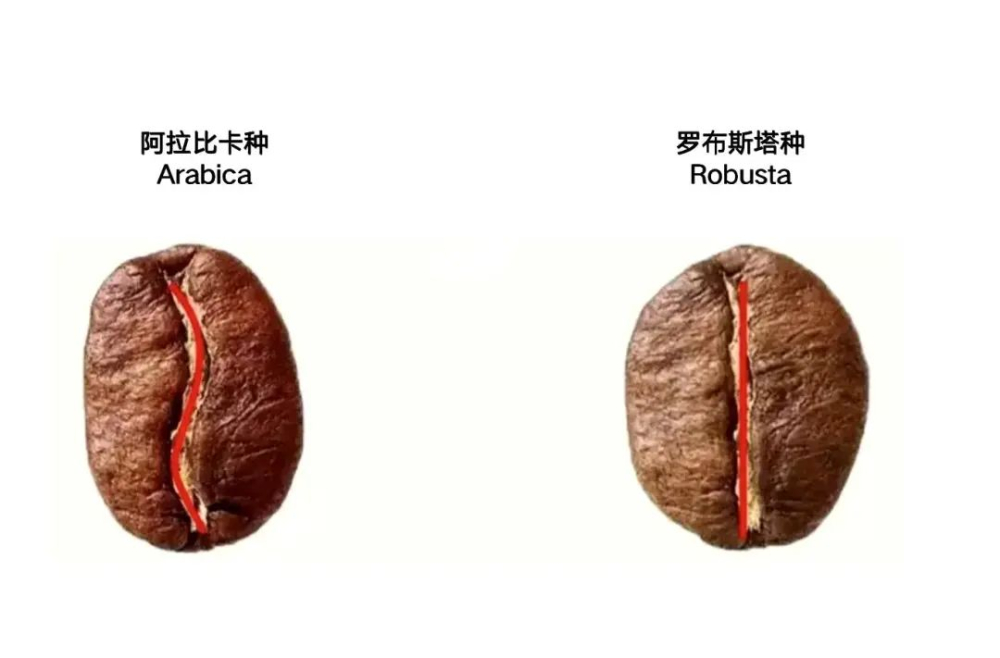
At present, there are mainly three major categories of coffee beans worldwide, but only two truly have commercial value and are planted on a large scale: Arabica (Coffea Arabica) among small-fruited coffee and Robusta among medium-fruited coffee. In addition, there is large-fruited Liberica coffee (Coffea Liberica), whose fruit is twice as large as that of small-fruited coffee. Because its flavor performance is average, it is relatively rare on the market.
As the main variety of coffee worldwide, Arabica is quite picky about its growing environment. It needs to be planted in highlands at an altitude of 800–2200 meters where frost does not occur. The higher the altitude, the more obvious the temperature difference between day and night, and the slower the coffee fruit matures, which is conducive to the accumulation of flavor substances and makes the aroma fuller. In addition to high altitude, Arabica also needs abundant rainfall, sufficient sunlight, loose soil with good drainage, and fertile soil, so its cultivation is strongly restricted by region. Therefore, to produce high-quality coffee beans, growers must invest more management, and labor costs are also higher.
Compared with the "delicate" Arabica, Robusta has a caffeine content of 2%–4%, twice that of Arabica. Caffeine is a natural defensive substance in plants and can help resist most insect damage, so Robusta is easier to grow and cheaper. In addition, because it has higher contents of amino acids and chlorogenic acid, it has a mellow, lower bitterness, and when not handled properly it can also have an earthy smell, so it is not very likable and is often used in dark-roasted espresso blend beans or instant coffee.
In the past, drinking coffee mainly pursued a rich, mellow bitterness. With the advancement of the specialty coffee wave, people have put forward higher requirements for coffee's taste, mouthfeel, and quality. Aromatic and diverse Arabica beans better meet the high demand of today's specialty coffee market than Robusta. In order to highlight that their products use higher-quality coffee beans, manufacturers emphasize "100% pure Arabica" in their promotion. But in the specialty coffee era, the vast majority of products on the market already use Arabica, so this statement is no longer very necessary. For example, the dozens of pour-over single-origin coffee beans on Front Street's bean list all belong to the Arabica variety.
Does Arabica taste better?
The bitterness and astringency felt when drinking coffee mainly come from chlorogenic acid in coffee. Robusta has relatively high contents of caffeine, amino acids, and chlorogenic acid, so it inherently lacks the aroma of Arabica and instead has a mellower, lower bitterness and woody notes.
Arabica has a lower caffeine content, about 0.9%–1.4%, which better fits the public's pursuit of a healthy diet. Its fat content is 60% higher than that of Robusta, and its sugar content is twice that of Robusta. After fine processing, Arabica beans, when brewed, have a soft mouthfeel, obvious sweetness, bright acidity, and rich layers, so they naturally become the market mainstream.
Two ancient and pure Arabica varieties
When browsing coffee history, Front Street learned that Arabica coffee spread around the world along two paths based on the ancient varieties Typica and Bourbon.
Typica
Typica is the oldest native variety in Ethiopia and was discovered roughly between the 15th and 16th centuries AD. Typica's top leaves are bronze-colored, and the beans are oval or slender-pointed. It has elegant acidity and aroma, but the plant is relatively weak, susceptible to leaf rust, and low-yielding, so farmers gradually replaced it with stronger varieties. The world-famous Jamaica Blue Mountain coffee is precisely the Typica variety.
Typica was introduced to Blue Mountain for planting in the 18th century and has been there for more than two hundred years. Blue Mountain's Typica has also adapted to the local island terroir and evolved better disease resistance, especially much stronger resistance to coffee berry disease than ordinary Typica. Front Street believes that Blue Mountain's refined and clean flavor cannot be separated from Jamaica's insistence on the Typica variety and careful cultivation. Front Street uses medium-dark roasting to maximize the coffee's chocolate and nutty aromas while retaining soft acidity and sweetness, making the overall mouthfeel balanced.
To experience the full aroma of Front Street Jamaica Blue Mountain, Front Street first recommends the pour-over method. Below is a demonstration using the store's production standard.
Considering that Front Street Blue Mountain No. 1 coffee uses medium-dark roasting and its flavor leans toward a rich, mellow tone like nuts and chocolate, the darker roast makes the coffee beans more porous and the coffee grounds more absorbent. To avoid extracting too many off-flavors, Front Street chooses a medium grind size. For water temperature, Front Street lowers it slightly to avoid excessive burnt bitterness in medium-dark roasted coffee, and pairs it with a KONO dripper for extraction.
Dripper: KONO dripper
Water temperature: 88°C
Coffee-to-water ratio: 1:15
Coffee grounds: 15g
Grind size: EK43s - setting 10.5 (75% pass rate with No. 20 standard sieve)
Pour the coffee grounds into a V60 dripper, wet the coffee bed with twice the amount of water as the coffee grounds to form a dome and bloom for 30s, then pour in a thin stream in circles from the inside out until 125g, pause, wait for the coffee bed to drop to half the height of the dripper, continue pouring the third stage with the same thin stream to 225g, and after all the coffee liquid has been filtered, remove the dripper. The time is about 2 minutes.
Bourbon
Bourbon evolved from a natural mutation of Typica, with the bean shape changing from slender-pointed to round. It was first discovered on Bourbon Island, Reunion Island, off the east coast of Africa. In 1715, France transplanted the round beans of Yemen Mocha to Bourbon Island off the east coast of Africa (renamed Reunion Island after the French Revolution), and only afterward was it named Bourbon. Bourbon round beans were introduced to Brazil in 1727 and began to be planted there. Because the plants can be planted densely and bear relatively more fruit, the yield is 20%–30% higher than Typica.
Most Brazilian coffee has lower acidity, and with its mellow aroma, it is very smooth on the palate with a pleasant aftertaste. Front Street Coffee chose a semi-washed Red Bourbon as its Brazilian representative. The flavor has obvious nuts and chocolate, medium caramel sweetness, a smooth mouthfeel, and overall balance. Front Street added it to its daily bean series. Front Street's daily beans are the signature representatives of each major producing region and present the region's basic flavor. Coffee beginners can use them to understand the basic flavor of a producing region, and then, according to personal preference, explore different producing region types in greater depth.
The above content is compiled by CoffeeHunters, a coffee news website.


