








Why Does Geisha Coffee Taste Floral and Fruity?
Geisha coffee delivers intense floral aroma and bright fruit acidity largely because of where it was grown and how it was handled after harvest. The variety was first collected in 1931 in the wild Kaffa forests of southern Ethiopia during a search for disease-resistant plants, and it takes its name from nearby Geisha Mountain before spreading to research stations in Kenya, Uganda, and Tanzania.
It reached CATIE in Costa Rica in 1953 as T2722, then moved to Panama in the 1960s. On Hacienda La Esmeralda's high-altitude Jaramillo farm, the Peterson family noticed Geisha trees surviving leaf rust that struck other trees, transplanted them apart, and raised the cultivation altitude, setting up the cup profiles now split across the farm's Red, Green, and Blue labels.
Geisha coffee, with its intense floral aroma and bright fruit acidity, has become a star variety in the specialty coffee world. But its rise to fame was not smooth sailing—from the wild forests of Ethiopia to Hacienda La Esmeralda in Panama, it took decades to be discovered. This article traces the variety's spread, explains in detail the grading and flavor differences of Hacienda La Esmeralda's Red, Green, and Blue labels, and shares Front Street Coffee's brewing suggestions and cupping comparisons, giving you a comprehensive understanding of this legendary variety's unique charm.
For more specialty coffee knowledge, please follow the WeChat public account: Front Street Coffee (FrontStreet Coffee)
When tasting a good cup of coffee, what do you think of? Have you ever wondered about its journey from branch to cup, or what processing method was used behind it? As a shop focused on specialty coffee, Front Street studies in advance the origin background, variety characteristics, cultivation and harvesting methods, and post-processing details of every bean before it goes on the shelf.
How Geisha emerged from obscurity
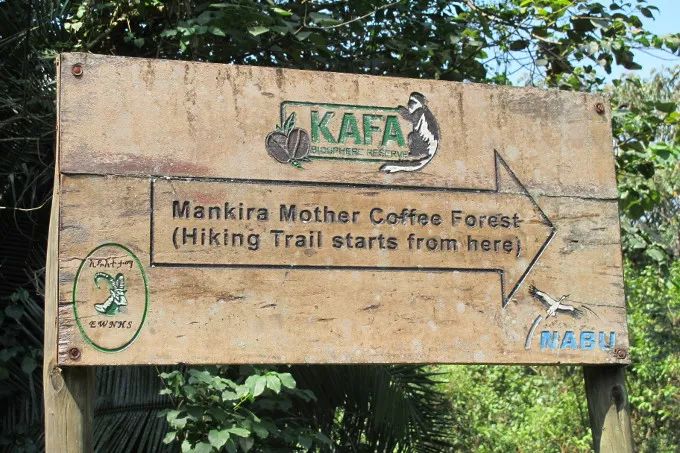
In 1931, Geisha was first collected in the wild Kaffa forests of southern Ethiopia. The goal at the time was to find disease-resistant new varieties, and it was named after the nearby Geisha Mountain. Afterward, it was sent to research stations in Kenya, Uganda, Tanzania, and elsewhere for trial planting. In 1953, the Geisha variety arrived at CATIE, the Tropical Agricultural Research and Higher Education Center in Costa Rica, recorded under the number T2722. Although several local farms had records of planting it, the Geisha tree was slender and fragile with low yields, so it failed to win farmers' favor and was not widely promoted.
By the 1960s, CATIE gifted T2722 Geisha to coffee growers in Panama, and Geisha finally set foot on Panama's fertile soil. In the 1990s, the Peterson family, owners of Hacienda La Esmeralda, began deeply developing coffee production and bought a new high-altitude farm, Jaramillo. At the time, many coffee trees on the farm were infected with leaf rust, but Daniel Peterson observed that the Geisha trees were almost unaffected, so he decided to transplant the Geisha that had originally been mixed among other varieties separately to more areas of the farm, while also raising its cultivation altitude.
In 2003, the Peterson family finally recognized Geisha's potential. In the first cupping, it showed an extremely intense white floral aroma, a very clean texture, and a finish reminiscent of berries, citrus, and bergamot, thus establishing the classic Panama Geisha flavor profile. Amid everyone's amazement, they decided to enter it in the 2004 BOP (Best of Panama) competition and named it "Geisha." Today's world-famous Panama Geisha is precisely that T2722 variety from back then.
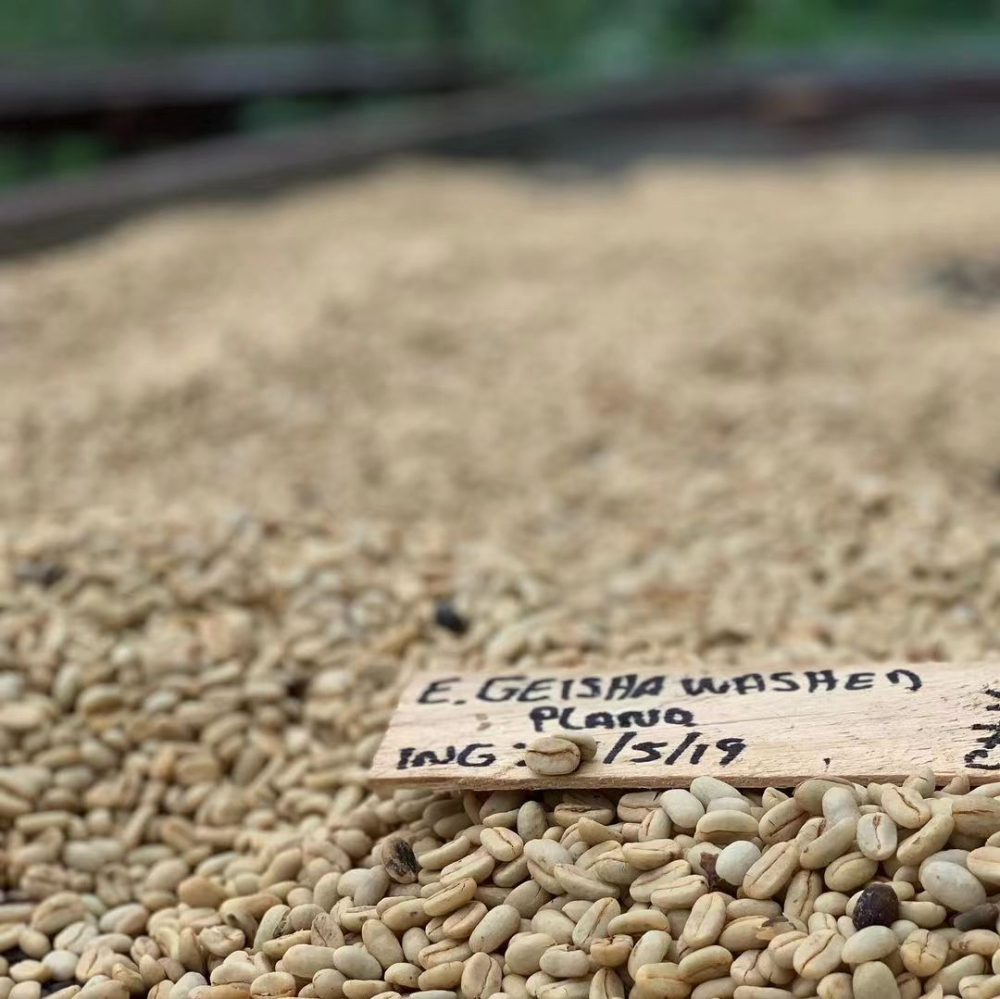
On Front Street Coffee's bean list, you can see that Front Street Panama Geisha coffee comes in three types, distinguished by Red Label, Green Label, and Blue Label. Many people can't tell the difference between these three Front Street Panama coffees, so today Front Street will briefly sort them out for everyone. These three Front Street Geisha coffees all come from Hacienda La Esmeralda in Panama, and the estate grades them according to Geisha's cultivation altitude and cupping performance.
Front Street Esmeralda Red Label Geisha Coffee Beans
Front Street Esmeralda Red Label Geisha is grown at an altitude of 1,600–1,800 meters, with a cupping score above 90. It mainly comes from the Jaramillo and Cañas Verdes farms and is Hacienda La Esmeralda's highest-quality Panama coffee bean. Produced from Geisha beans at the highest points of the Boquete mountain area, it carries a unique and bright floral fragrance and citrus aroma. Coffee of this grade can be made into sun-dried or washed green beans and is sold only through the annual global auction. The Front Street sun-dried batch of Esmeralda Red Label that Front Street acquired presents richer tropical fruit flavors.
Hacienda La Esmeralda's sun-dried processing begins by laying the harvested coffee cherries directly out in the courtyard to dry. As the fruit gradually dries, the coffee beans remain wrapped inside, slowly absorbing fruit and aromatic notes. The coffee cherries are dried evenly; depending on weather and site conditions, they are dried on concrete beds for 3 to 5 days (8 hours per day). After reaching sufficient dryness, they are placed in a Guardiola dryer and rotated for 72 hours to complete drying and prevent fermentation. After drying ends, machines are used to remove the pulp and other parts.
Front Street Esmeralda Green Label Geisha Coffee Beans
Front Street Esmeralda Green Label Geisha is grown at an altitude of 1,600–1,800 meters and comes from a blend of micro-lots from two different farms, Jaramillo and Quiel. Although it is not the highest-grade auction bean, this grade of Geisha still retains the classic flavor: floral aroma, fruit aroma, citrus acidity, and a thick, juicy body. Selecting the most suitably ripe cherries creates a rich sweetness, bright fruit acidity, and delicious flavor. This grade of Geisha also offers both washed and sun-dried green bean options. Front Street chose the washed Front Street Esmeralda Green Label, which has clear fruit flavors and a fresh, clean taste.
Front Street Coffee (FrontStreet Coffee) · Esmeralda Volcanic Rock Geisha Coffee Beans
Front Street Esmeralda Blue Label Geisha is grown at an altitude of 1,400–1,500 meters and comes from a blend of beans from three different farms: Jaramillo, Cañas Verdes, and El Velo. Front Street Blue Label Geisha has a slight floral aroma and an obvious fermented character, a berry-juice-like mouthfeel, and relatively high sweetness. Because Daniel and his sister Rachel wanted to elevate Hacienda La Esmeralda's brand positioning, the Blue Label Geisha lot was discontinued between 2019 and 2022, and the Geisha from that area was instead sold to a brand merchant, which launched "Las Rocas," namely Volcanic Rock Geisha coffee beans—what we call Blue Label.
Front Street Esmeralda Diamond Mountain Coffee Beans
In addition to growing Geisha, Hacienda La Esmeralda also cultivates the Catuai variety and has created two brands: Diamond Mountain and Palmira. Front Street has acquired the Front Street Diamond Mountain coffee beans launched by Hacienda La Esmeralda, which use sun-dried processing and present notes of citrus, berries, and cocoa. Whether Geisha or other varieties, Hacienda La Esmeralda uses a precise cultivation system and is highly forward-looking in coffee growing. The arrival of Hacienda La Esmeralda Geisha coffee has continued to raise Panama coffee's profile, and together with Panama's complex microclimates, it has shaped Panama coffee's flavor. Geisha coffee beans are usually plump but relatively light in weight, with soft acidity and a balanced flavor.
When Front Street receives Front Street Panama Geisha coffee beans, it finds that Geisha beans are plump and slender in shape. Front Street uses both cupping and pour-over methods to experience the aroma of Hacienda La Esmeralda Geisha coffee and compares the flavors of these three Front Street Geisha coffees.
To highlight the intense floral aroma and bright, varied fruit acidity of Front Street Panama Hacienda La Esmeralda Geisha coffee, Front Street uses a light roast. Since lightly roasted beans have a lower dissolution rate than dark roasts, to ensure full extraction of Geisha's flavor, a higher water temperature is used along with a finer grind. Front Street recommends extracting with the following brewing parameters: Hario V60 dripper, 91°C water temperature, 15 grams of coffee, 1:15 coffee-to-water ratio, and a grind size of EK43s setting 10 (80% passing through a Chinese standard No. 20 sieve).
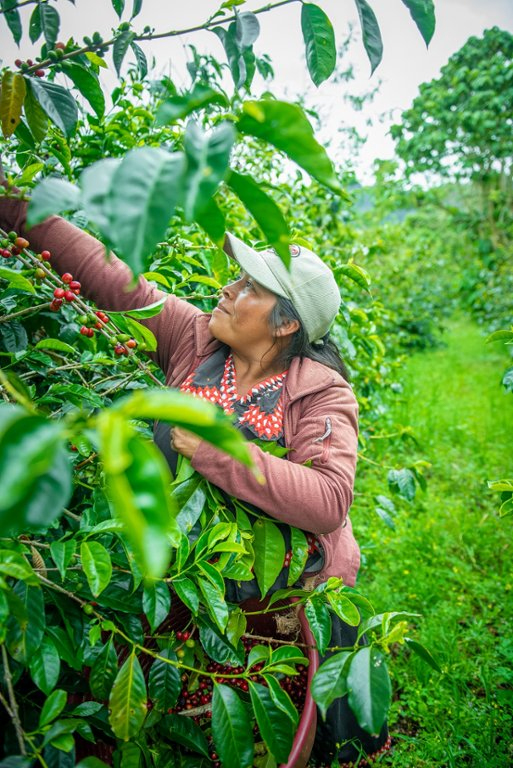
Front Street uses the common three-stage brewing method: in the first stage, bloom with 30 grams of water for 30 seconds; in the second stage, pour in a small stream in circles until the scale reaches 125 grams and then pause; when the water level drops and is about to expose the coffee bed, continue pouring in the third stage until 225 grams and stop; when the water level drops and is about to expose the coffee bed, remove the dripper. The extraction time (starting from the beginning of the bloom) is 2'00".
Front Street Esmeralda Red Label Geisha coffee has a very bright rose floral aroma, with a thick, juicy body reminiscent of berries and apricots, rich flavor layers, and very obvious sweetness. The floral aroma given off by Front Street Esmeralda Green Label Geisha differs from the Red Label's rose fragrance, leaning toward an intense jasmine floral note, with high sweetness, rich overall flavor layers, and a lingering finish of floral and citrus notes. Front Street Esmeralda Blue Label has a lighter floral aroma, and its mouthfeel is not as clean and bright as the Red and Green Labels; it has honey sweetness in the middle and an oolong tea note with brown sugar sweetness at the end.
The above content is compiled by CoffeeHunters, a coffee news website.


